Károlyi Castle
Carei, Satu Mare County · Maramureș

About Károlyi Castle
Károlyi Castle is the best-known monument in Carei and one of the most thoroughly restored noble residences in north-western Romania. Its story begins in 1482, when the Károlyi family built a stone house here, turned at the end of the 16th century into a fortress with bastions and a moat in the face of the Ottoman threat. In 1708 Prince Francis II Rákóczi stayed here for almost a month, and the talks held in the fortress paved the way for the Peace of Szatmár of 1711, which ended the Kuruc uprising.
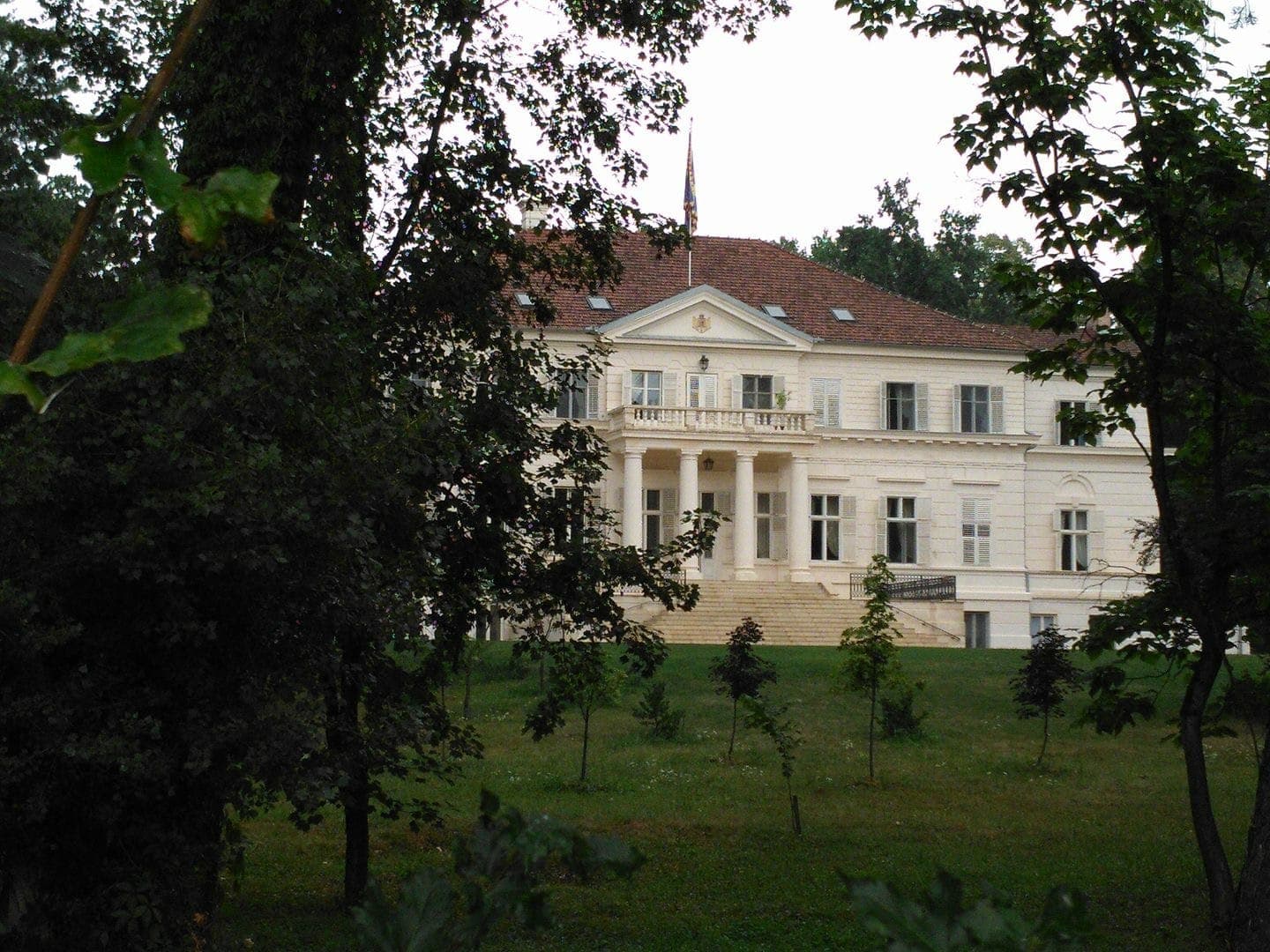
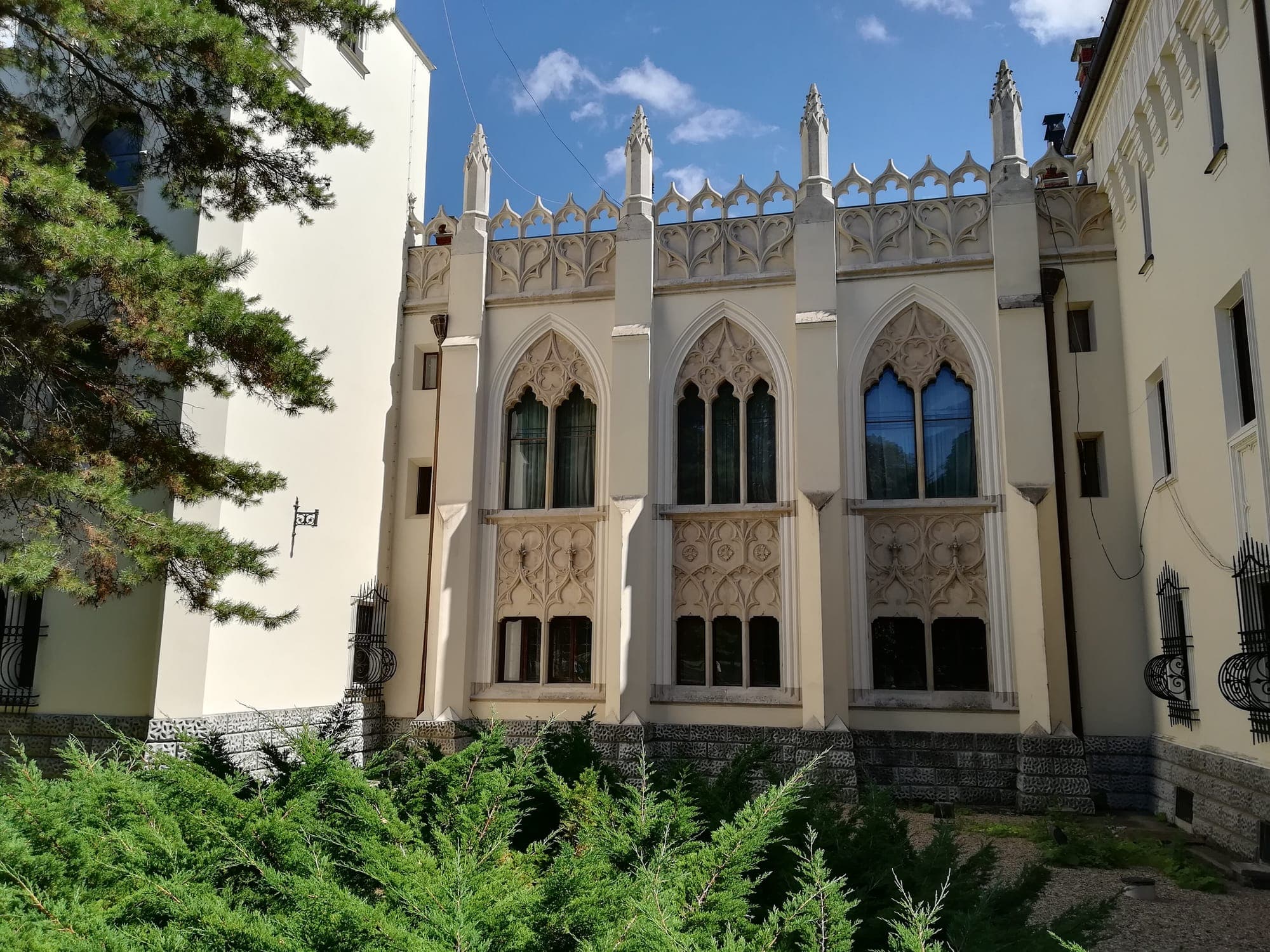
Once the fortress had lost its military purpose, Count József Károlyi had the bastions demolished and built, after 1792, to the plans of Joseph Bitthauser, a Baroque castle with 21 rooms upstairs and 20 vaulted rooms on the ground floor. Today's look, with towers of different shapes, battlements and a water-filled moat, dates from 1894–1896, when Count István Károlyi had it rebuilt in eclectic style to the design of the Budapest architect Arthur Meinig; the inner courtyard was covered with a coffered wooden ceiling and turned into a reception hall.
In the 20th century the castle served in turn as a sanatorium, casino, military school, hospital and house of culture. Fully restored with EU funds in the early 2010s, it now houses the Carei Municipal Museum, a branch of the Satu Mare County Museum, and is surrounded by a dendrological park with over 200 species of trees and shrubs.
What you can see
The visit starts in the Knights' Hall, the former covered courtyard, with its monumental wooden staircase, first-floor galleries and marble fireplaces. Upstairs, ten rooms recreate the atmosphere of the castle at the end of the 19th century, with period furniture in Baroque, Biedermeier and Neo-Renaissance style: the library, the ballroom, the dining room, the ladies' drawing room, the bedroom and the music room. An exhibition of 26 wax figures stages moments from the history of the family and the town, including the signing of the Peace of Szatmár and the visit of King Ferdinand and Queen Marie.
On the ground floor, the exhibition "Carei of Old" covers the archaeology, crafts and religious life of the area, while on the top floor Expo Africa displays hunting trophies from South Africa, from buffalo and ostrich to giraffe, rhinoceros and elephant. The 17th-century chapel and the rooms dedicated to the painter Magda Lukácsovits and the violinists Ștefan Ruha and Rudolf Fátyol complete the route. Outside, in the park laid out in 1698 and turned into an English garden in the 1790s, look for the plane tree planted in 1810, with a trunk over two metres across.
Good to know
On Sundays the museum opens only in the afternoon, and on Mondays it is closed. The park is free to enter but keeps its own hours, 09:00–16:00. Guided tours, in Romanian, Hungarian or English, must be booked by phone in advance.
- The Knights' Hall, the former inner courtyard, with its coffered wooden ceiling, monumental staircase and first-floor galleries.
- The ten rooms of period interiors upstairs, from the ballroom and library to the music room.
- The wax figures recreating the signing of the Peace of Szatmár in 1711 and the visit of King Ferdinand and Queen Marie.
- The trophies of Expo Africa, from buffalo and ostrich to giraffe and elephant.
- The plane tree planted in 1810 in the dendrological park, the oldest tree in the grounds.
Good to know before you go
- Getting there
By car: Carei is ~36 km from Satu Mare on the DN19 (~45 minutes), ~100 km from Oradea on the DN19 via Săcueni and Valea lui Mihai (~1 hour 40 minutes), and ~100 km from Baia Mare via Satu Mare (~2 hours). From Zalău it is ~85 km on the DN1F (~1 hour 30 minutes), from Cluj-Napoca ~175 km (~3 hours). The castle is in the town centre, on Strada 1 Decembrie 1918, at the edge of the dendrological park.
Public transport: Carei has a railway station on the Oradea–Satu Mare line, with trains from Debrecen too; from the station to the castle it is ~2 km, a 20–25 minute walk through the centre. Minibuses from Satu Mare stop in the town centre.
- Where to park
Visitors park for free on Strada 1 Decembrie 1918, along the park, a few minutes' walk from the castle entrance. The museum has no car park of its own.
- Fees & discounts
Adults 40 lei; under 18s, students and seniors 20 lei; pupils from accredited schools 10 lei. Family package: 30 lei per adult and 10 lei per child. Temporary exhibitions have a separate ticket (20 lei adults, 10 lei under 18s). Guided tour in Romanian, Hungarian or English 50 lei per group, booked by phone. Professional photo/video fee 100 lei per hour. Card payments accepted. The dendrological park is free to enter.
- Rules
The visit is self-guided, with information panels in Romanian, Hungarian, English and German in every room; guided tours must be booked by phone in advance. Last entry is at 16:30. Photos with a phone are allowed; professional photo shoots and events are arranged with the castle's foundation and charged separately. The upper floors are reached by stairs.
- Facilities
Toilets · souvenir shop · café on the ground floor · panels in Romanian, Hungarian, English and German · card payments · dendrological park with paths and benches · riding hall in the park · no lift