Bran Castle
Bran, BV
5.0
A medieval fortress built by the people of Brașov on a rock in the Bran Pass, later Queen Marie's summer residence and known around the world as “Dracula's Castle”.
20 results
A medieval fortress built by the people of Brașov on a rock in the Bran Pass, later Queen Marie's summer residence and known around the world as “Dracula's Castle”.
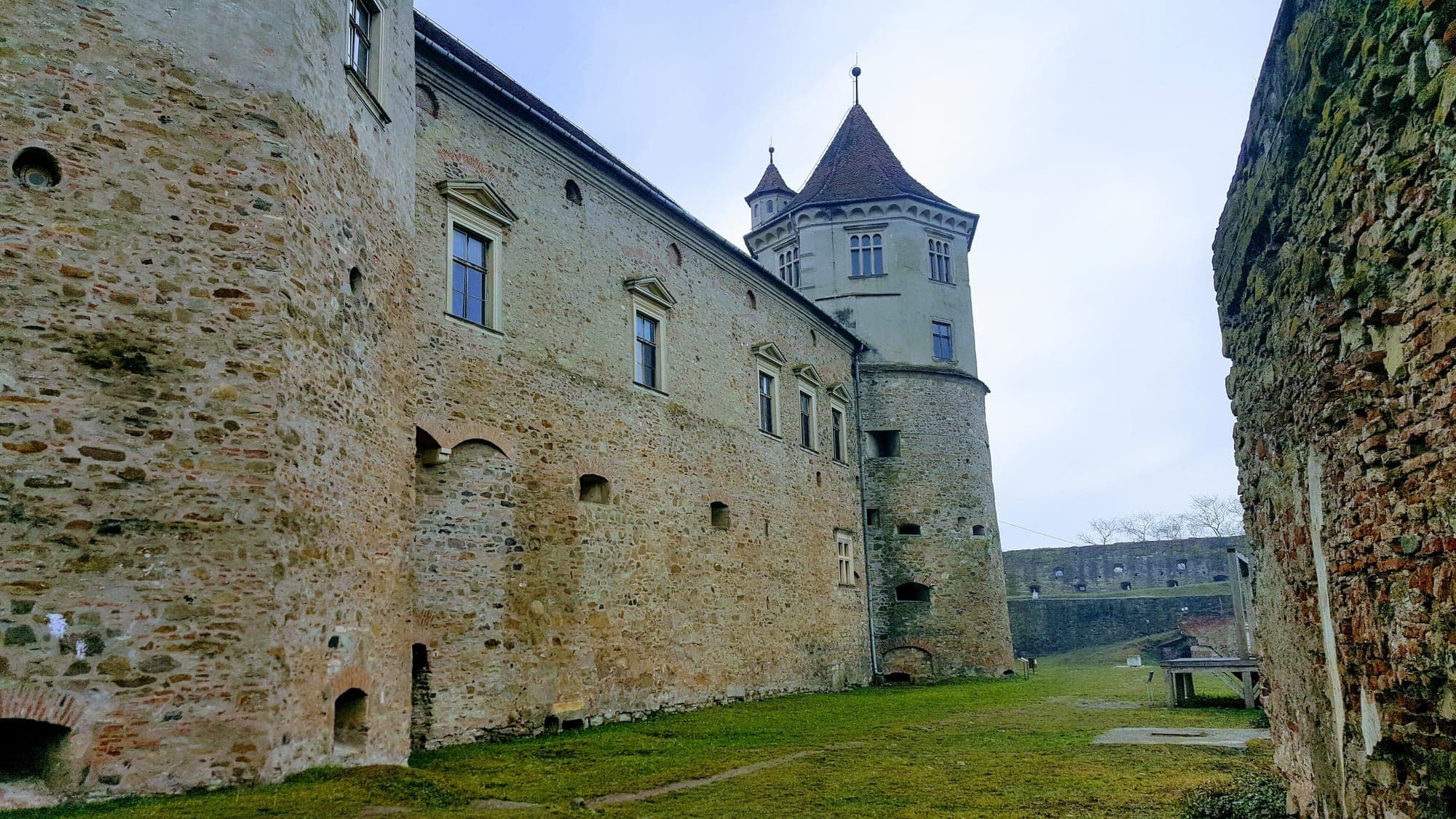
A moated, bastioned fortress in the centre of Făgăraș, seat of the princes of Transylvania in the 17th century and now home to the Făgăraș Land Museum.

John Hunyadi's Gothic residence, on a rock above the Zlaști river and reached by a long bridge on stone piers; inside, vaulted halls and towers from the 15th century.

The Saxon church on the hill in the middle of the village, guarded by three rings of walls and towers; inside, Romania's largest polyptych altarpiece and a door with a lock from 1515.

The heaviest building in the world, raised by Ceaușescu in the 1980s on Spirii Hill; the guided tour passes through marble-clad state rooms hung with crystal chandeliers weighing several tonnes.

King Carol I's summer residence, built between 1873 and 1914 at the foot of the Bucegi Mountains in Sinaia, with carved wooden interiors, armouries and stained glass.

Europe's largest wetland, a biosphere reserve and UNESCO site: channels, lakes, reed beds and 365 bird species, from pelicans to egrets; visited by boat from Tulcea.

Romania's highest road: the DN67C climbs from Novaci over the Parâng Mountains to 2,145 m at the Urdele Pass and drops past Lake Oașa to Sebeș, 148 km above the clouds.

The DN7C crosses the Făgăraș Mountains for 151 km, from the Vidraru dam up to the glacial Bâlea Lake at 2,042 m, then winds down in hairpin bends into Transylvania.

A salt mine worked from the Middle Ages until 1932 and turned into a spectacular underground park: a Ferris wheel, a lake with rowing boats, an amphitheatre and salt walls 120 m below ground, near Cluj.

Romania's largest bastion fortress, a seven-pointed star built by the Habsburgs in 1715–1738 at Alba Iulia; baroque gates, cathedrals, the Union Hall and a changing of the guard, all with free access.

The cemetery in Săpânța with over 800 oak crosses painted blue, showing naive scenes from the lives of those buried there and witty epitaphs in verse; begun in 1935 by the craftsman Stan Ioan Pătraș.

Romania's largest open-air museum, in the Dumbrava forest outside Sibiu: over 300 houses, mills, workshops and wooden churches brought from across the country, along ~10 km of paths.

A Saxon-built, still-inhabited medieval walled town on a hill above the Târnava Mare, with guild towers and the famous Clock Tower; a UNESCO World Heritage Site since 1999.

The church founded by Stephen the Great in 1488, painted on the outside with the Last Judgment on a background of "Voroneț blue"; a UNESCO site near Gura Humorului.