Prejmer Fortified Church
Prejmer, Brașov County · Transylvania
About Prejmer Fortified Church
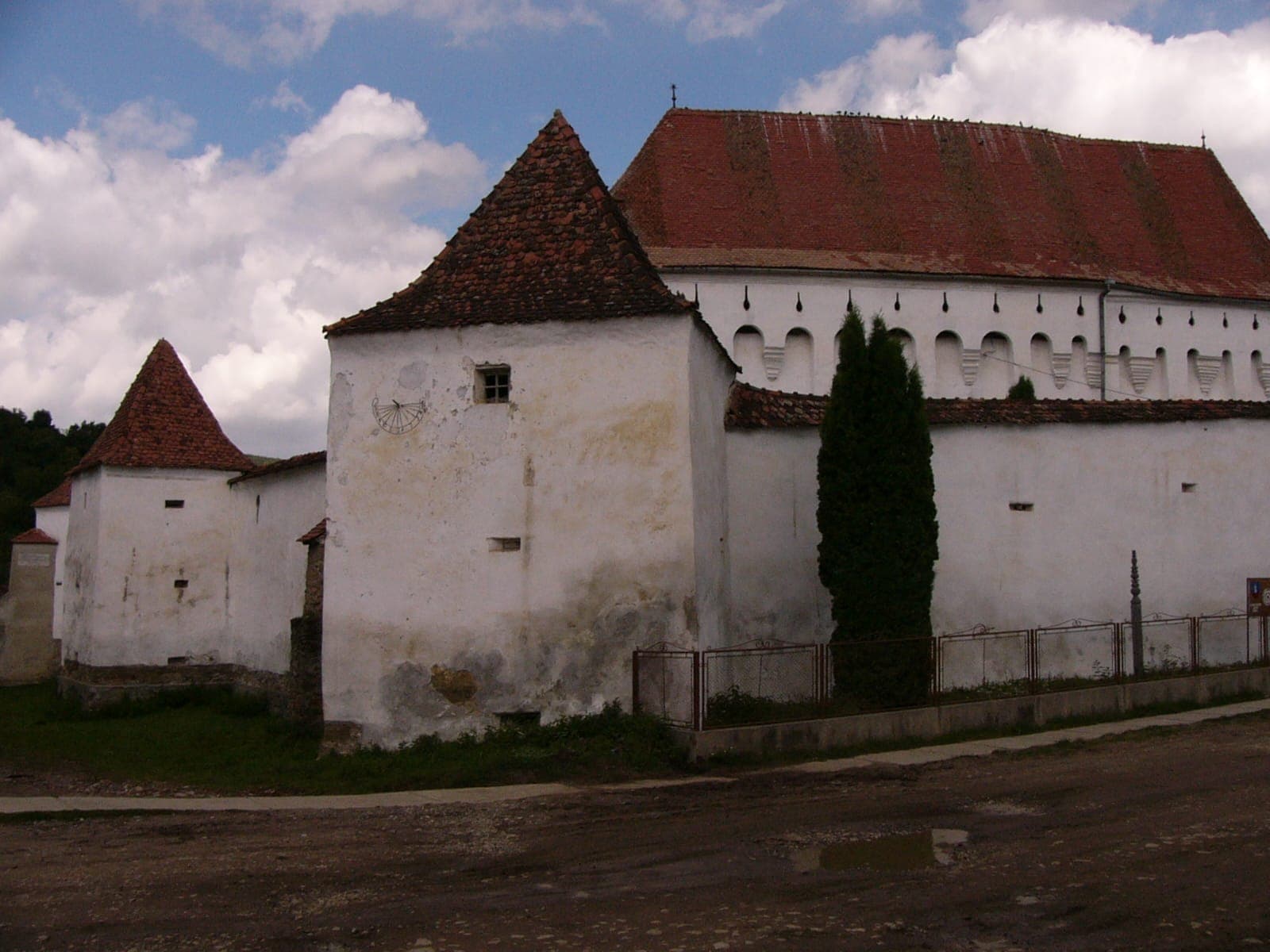
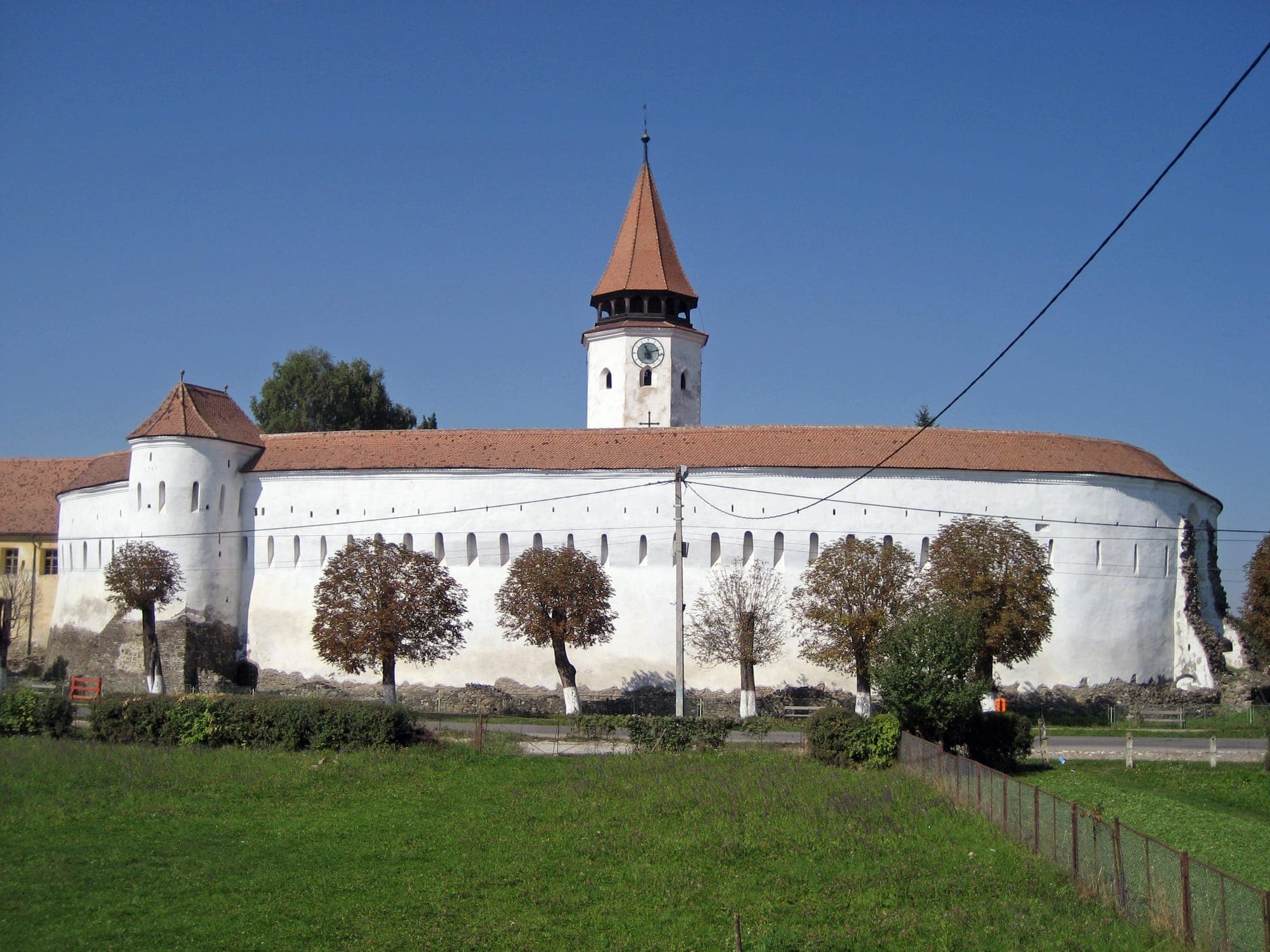
In the centre of Prejmer, on the eastern edge of the Burzenland, a church probably begun in 1218 lies hidden behind a white, rounded wall that looks from outside like a huge bastion. The village was the first in the path of armies coming down through the passes of the Curvature Carpathians, so its Saxon inhabitants turned their church into a refuge: in the 15th century they built an oval wall around it, 10–12 m high and 3–4 m thick, with towers, a water-filled moat and an entrance passage more than 30 metres long.
The church, dedicated to the Holy Cross, has a plan that is rare in Transylvania, a cross with four equal arms, and bears the marks of the Early Gothic Cistercian style, which came from the building site of Cârța Abbey. Between 1461 and 1515 it was extended to the west, and its central tower became the bell tower. The village was laid waste dozens of times in the Middle Ages, but the fortress held out almost every time. In 1999 Prejmer was added to the UNESCO site "Villages with Fortified Churches in Transylvania".
What you can see
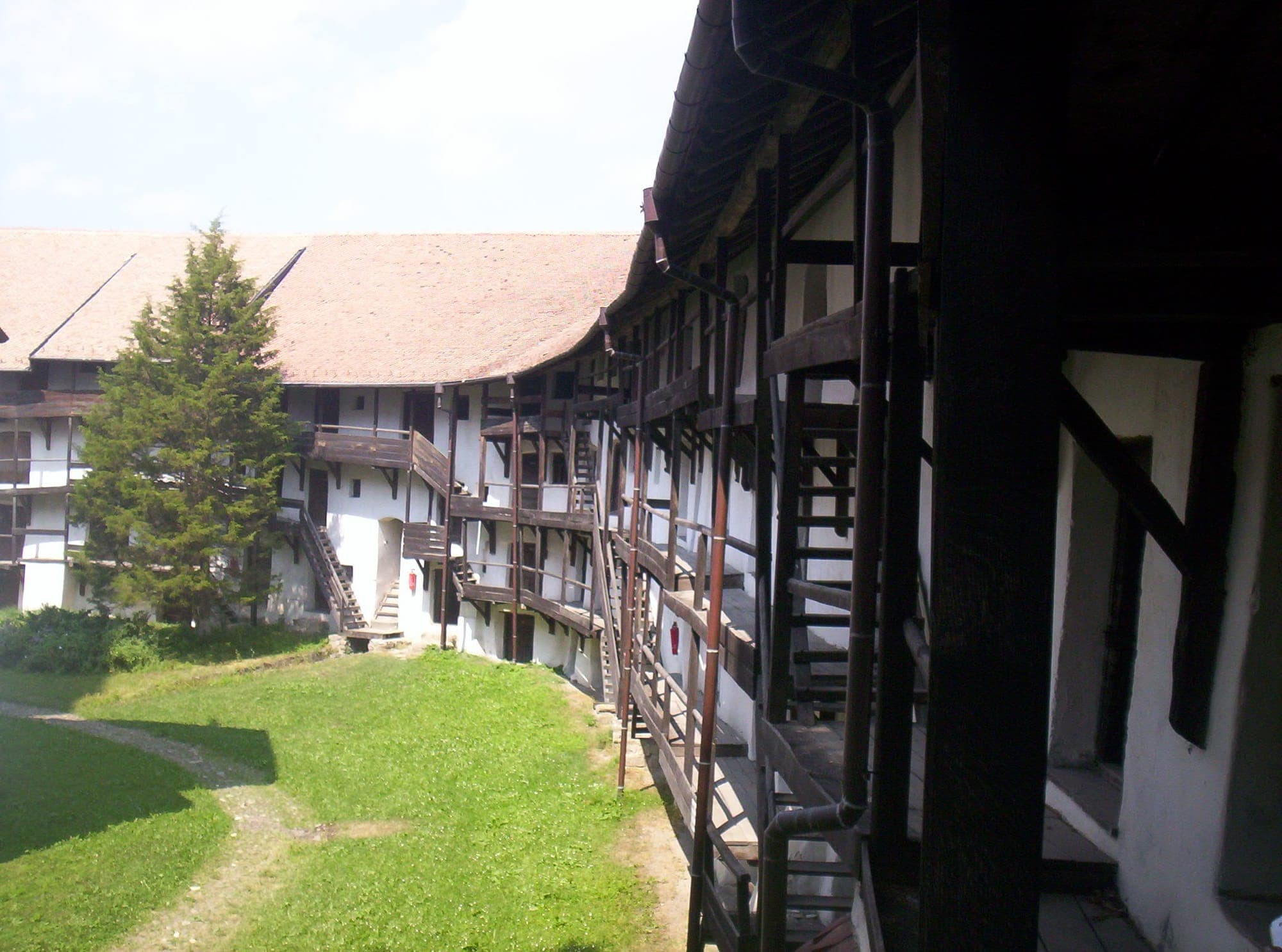
The surprise comes in the courtyard: along the inner face of the wall, on three or four levels, run more than 270 numbered storerooms, linked by timber stairs and galleries. Every family had its own room, where it kept grain and bacon, and during a siege it moved in altogether; among them were two classrooms, so that school carried on even in wartime. You can climb the galleries and the wall walk under the roof, with its gun loops and the remains of a multi-barrelled weapon nicknamed the "organ of death".
Inside the church, in the choir, stands a triptych altarpiece from around 1450–1460, with the Crucifixion on the central panel, considered the oldest of its kind in Transylvania. By the south door is a 50-pound standard weight stone, long used as a "stone of shame" for thieves. Above the entrance passage, the former tax storehouse of 1793 houses a small ethnographic museum, and a few of the rooms have been fitted out as craft workshops and an old schoolroom.
Good to know
The galleries are reached by steep, narrow timber stairs, and some of the rooms are low: wear comfortable shoes and keep an eye on small children.
- The inner courtyard, with more than 270 numbered storerooms lined up on three or four levels of timber galleries.
- The wall walk under the roof of the ramparts, with gun loops and the remains of the "organ of death".
- The triptych altarpiece from around 1450–1460, with the Crucifixion on the central panel, in the church choir.
- The schoolroom recreated in one of the storerooms, a reminder of the school that kept going even during sieges.
- The vaulted entrance passage, more than 30 metres long, beneath the former tax storehouse of 1793.
Good to know before you go
- Getting there
By car: from Brașov take the DN11 towards Sfântu Gheorghe as far as Hărman, then the DN10 towards Buzău to Prejmer; the fortress is in the centre of the village. Brașov is ~18 km away (~25 minutes).
Public transport: RAT Brașov bus 520 links Brașov with Prejmer and stops right by the fortress ("Biserica Fortificată"). Regional trains between Brașov and Sfântu Gheorghe call at Prejmer station, ~2 km north of the fortress.
- Where to park
There are several free car parks around the fortress and in the village centre, a few minutes' walk from the entrance. At weekends and during events (Fasching, the Pancake Festival) they fill up quickly.
- Fees & discounts
Adults 30 lei, pupils and students 15 lei. A photo shoot for an event (wedding, christening) costs 100 lei. You can pay in cash or by card.
- Facilities
small ethnographic museum above the entrance passage · Lutheran parish guesthouse on Strada Mică · the galleries can only be reached by timber stairs
Reviews
Other attractions nearby
The closest attractions to Prejmer Fortified Church, sorted by distance.
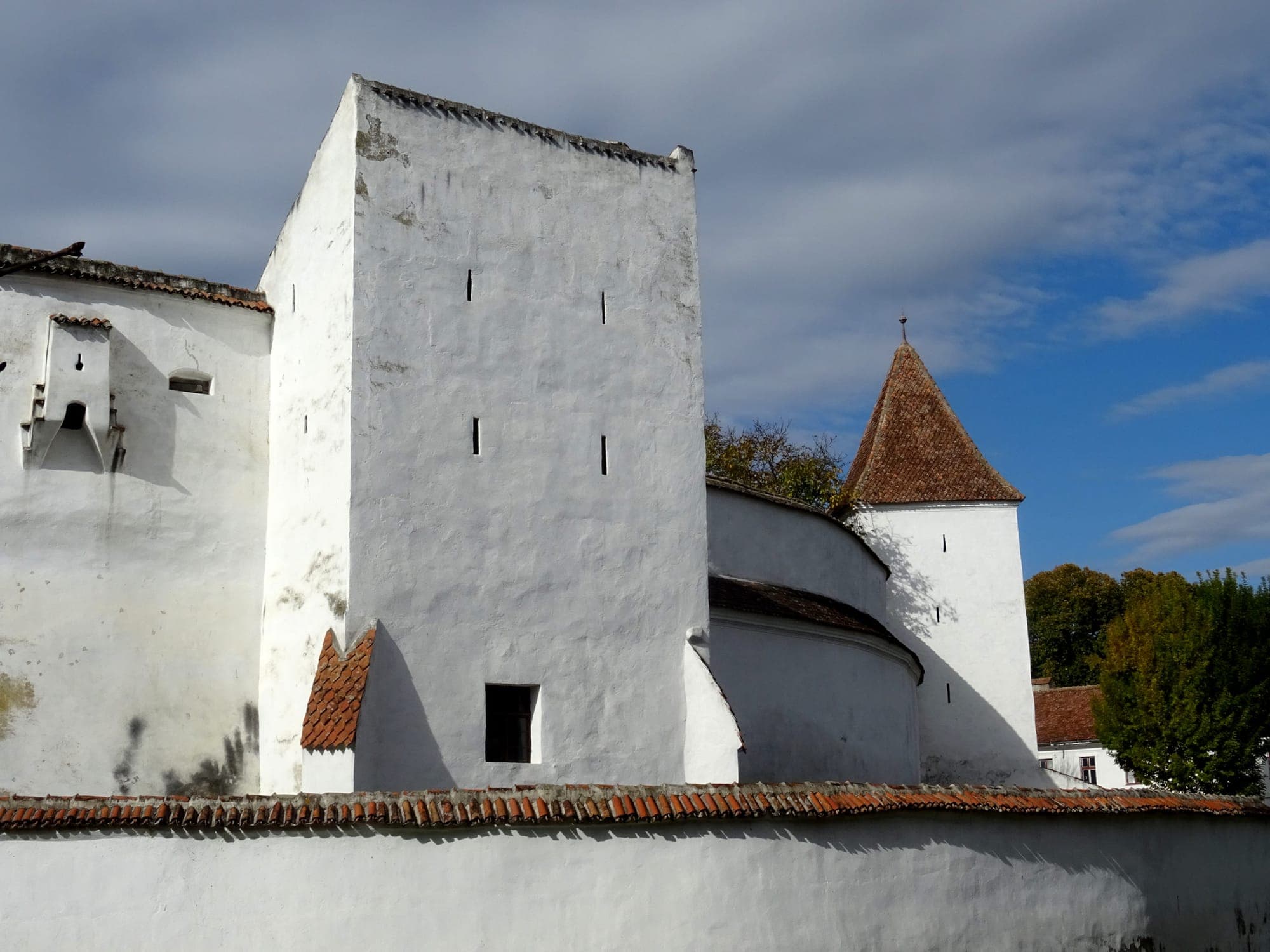 9 km from Prejmer Fortified Church
 32 km from Prejmer Fortified Church