Bran Castle
Bran, BV · 29 km from Brașov
5.0
A medieval fortress built by the people of Brașov on a rock in the Bran Pass, later Queen Marie's summer residence and known around the world as “Dracula's Castle”.
Brașov county sits in the south-eastern corner of Transylvania, where the Eastern Carpathians meet the Southern ones: the Bârsa Land, a wide basin, is ringed by the Bucegi, Piatra Craiului, Postăvaru and Ciucaș Mountains, while to the west the Făgăraș Land spreads out beneath the highest ridge in the country. Brașov, with its old Saxon centre squeezed between the walls and Mount Tâmpa, is the most visited city in the region; Făgăraș, Codlea, Râșnov and Zărnești are small towns with fortresses and access to the mountains. The list of things to see in Brașov county is long: castles, fortified churches, trails and resorts.
Bran Castle remains the best known, but the Black Church, the largest Gothic church in Romania, and the Council Square give the measure of the city. A few kilometres away, Râșnov Fortress keeps watch from its hill, and the fortified churches of Prejmer and Viscri, both on the UNESCO list, show how the Saxon villages defended themselves. Făgăraș Fortress, with its moat and museum, rounds off a two- or three-day tour.
71 results
A medieval fortress built by the people of Brașov on a rock in the Bran Pass, later Queen Marie's summer residence and known around the world as “Dracula's Castle”.
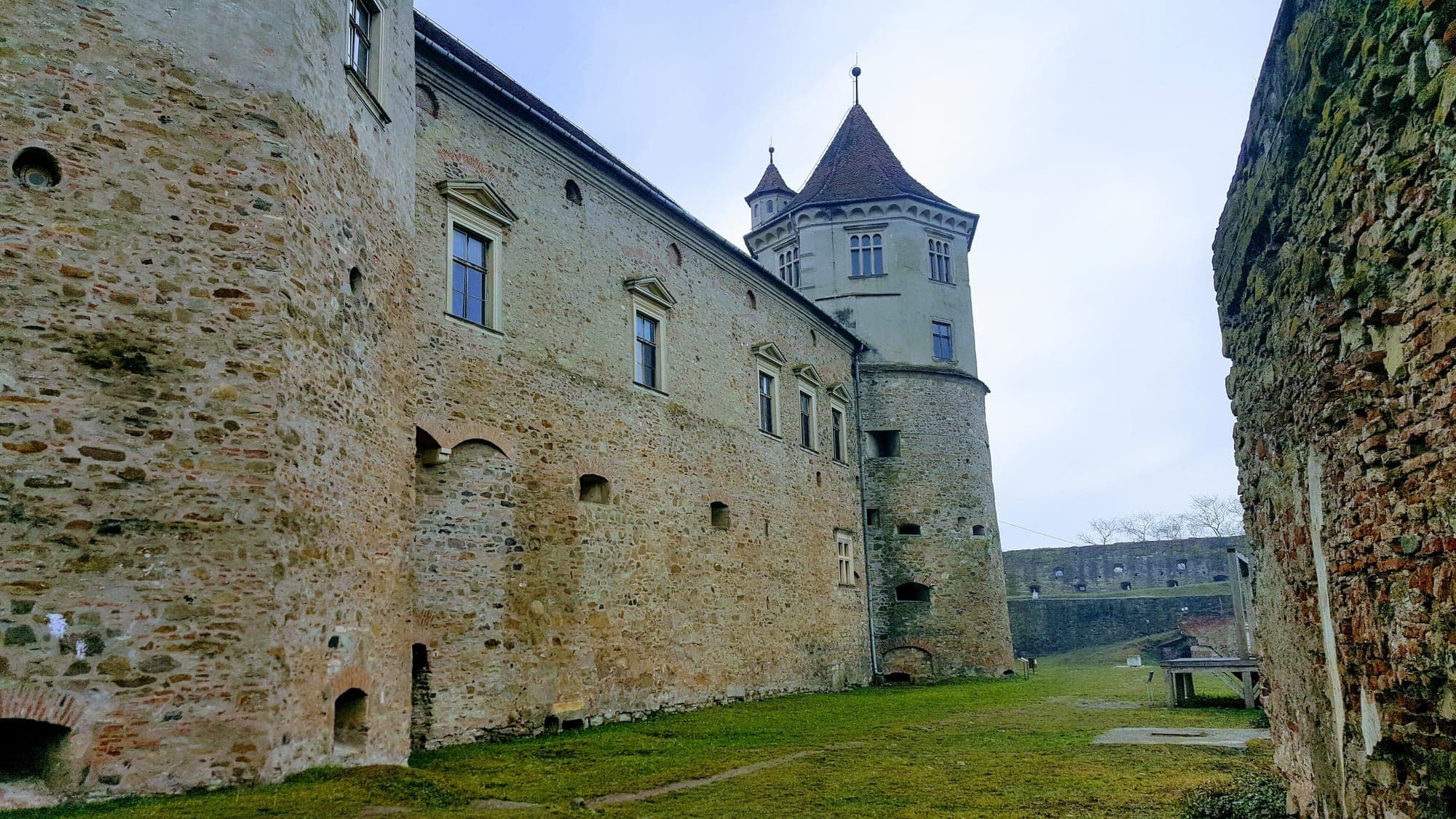
A moated, bastioned fortress in the centre of Făgăraș, seat of the princes of Transylvania in the 17th century and now home to the Făgăraș Land Museum.

Romania's largest Gothic church, built by the Saxons of Brașov between 1383 and 1477; inside are the 1839 Buchholz organ and a rare collection of Anatolian carpets.
A narrow limestone gorge in the Piatra Mare Mountains near Brașov, with seven rock steps climbed on metal ladders and walkways; at the top you can ride a zip line back down.

A Saxon peasant fortress climbing in tiers up a basalt hill above the town of Rupea, first recorded in 1324 and restored in 2010–2013, with wide views over the Transylvanian hills.

One of the largest Saxon fortified churches: a Gothic church on a cross-shaped plan, ringed by an oval wall with over 270 refuge rooms reached by timber galleries.

A medieval peasant fortress on a rocky hill above Râșnov, looking out to the Bucegi and Piatra Craiului mountains; the upper enclosure is under restoration, but the Fortress Garden and Báthory Tower are open.

The main square of old Brașov, lined with merchants' houses and dominated by the Council House, the old town hall with its watchtower, now the County History Museum, with Tâmpa as a backdrop.

A small white church on the hill above the village, grown from a 12th-century Romanesque chapel and ringed by walls, towers and grain galleries, in a Saxon village that has survived almost intact.

A chain of five waterfalls in a narrow limestone gorge in the Piatra Mare Mountains, above Timișu de Sus; reached in about an hour's climb on the blue-stripe trail.

Romania's best-known ski resort, above 1,000 m beneath Postăvaru: 12 slopes, among them Bradul, Lupului and Drumul Roșu, cable cars almost to the summit and summer trails.

The zoo in the Noua district, at the foot of the forest, enlarged to 10 hectares after the 2012–2014 modernisation, with tigers, lions, bears, sea lions, penguins and a planetarium on site.

The Libearty Bear Sanctuary, on 69 hectares of forest near Zărnești: home to more than 120 brown bears rescued from captivity, visited only on guided tours. It is not a zoo.

A medieval hilltop fortress in the Burzenland, 20 km from Brașov, with roots in the age of the Teutonic Knights; its walls and towers were rebuilt in 2013–2017 and can be climbed.

The pass between Piatra Craiului and the Bucegi: the DN73 climbs from Rucăr onto the Fundata plateau, over the Giuvala Pass at about 1,260 m, and descends to Bran past hamlets scattered on the ridges.