About Sighișoara Citadel
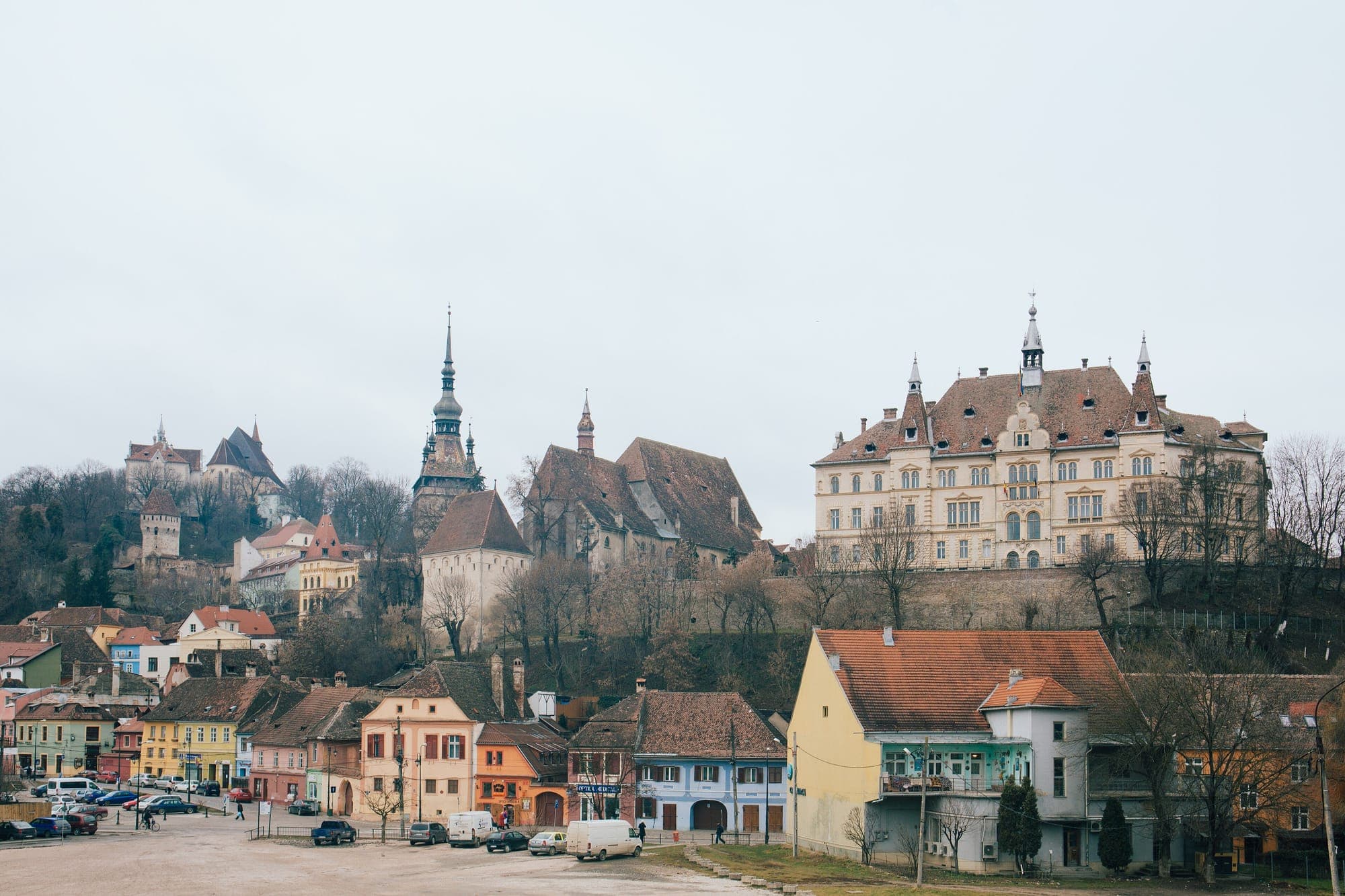
Sighișoara Citadel crowns the Citadel Hill above the Târnava Mare valley and is one of the few fortified medieval towns in Europe that people still live in. It was founded by Saxon settlers, and its Latin name, Castrum Sex, appears in documents in 1280. Between the 14th and 17th centuries the townspeople ringed both terraces of the hill with a wall roughly 930 metres long, defended by 14 towers, each looked after by a craft guild.
Nine of the towers survive, together with the cobbled streets, the squares and over a hundred houses listed as historic monuments. Vlad Dracul, father of Vlad the Impaler, lived here from 1431 to 1436, and tradition holds that his son was born in the house on Citadel Square. In 1999 the historic centre was added to the UNESCO World Heritage List as a testament to the culture of the Transylvanian Saxons.
The citadel is explored on foot and is open at all hours; you only pay to enter the museums and the Church on the Hill.
What you can see
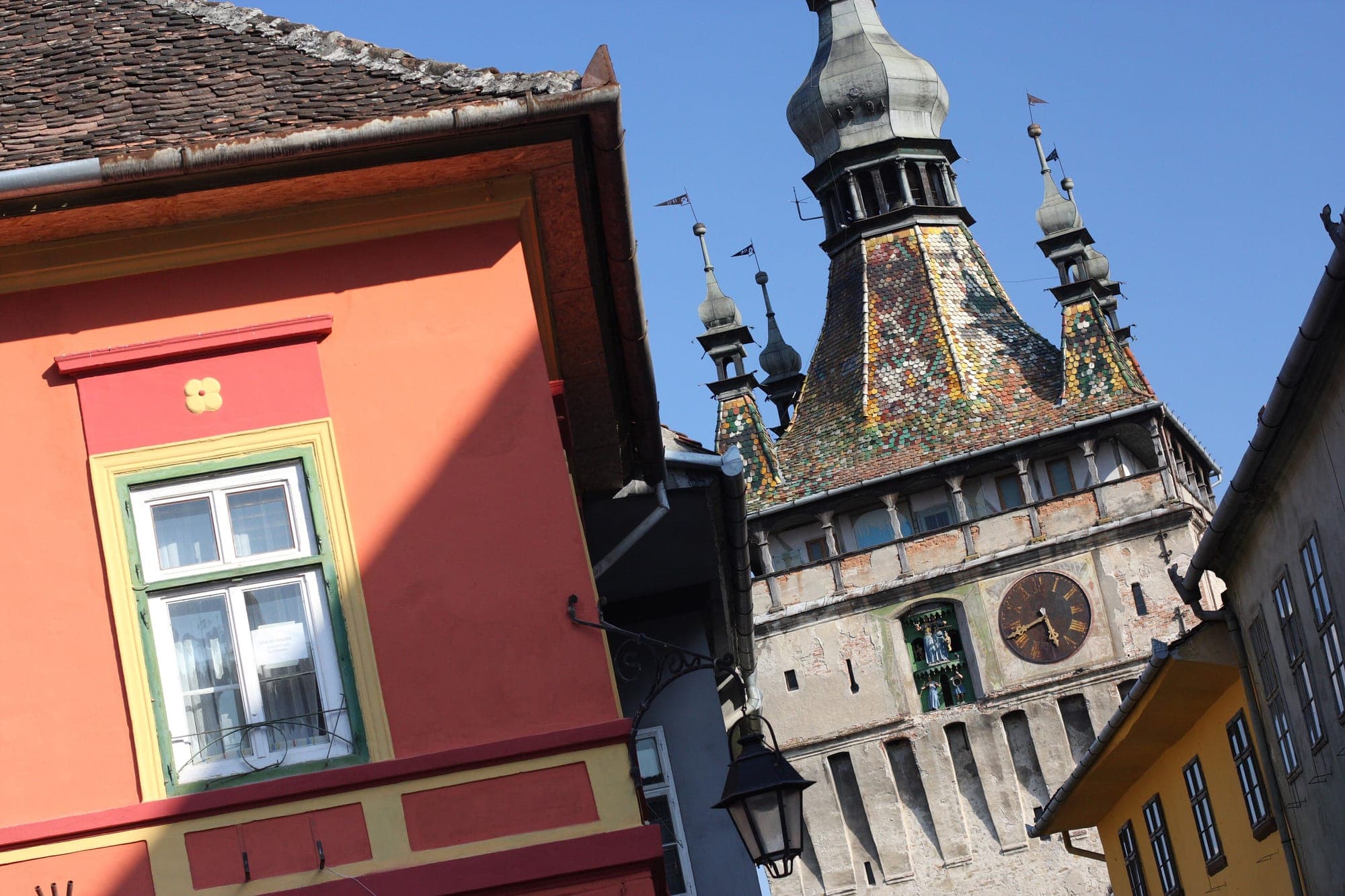
You enter the citadel beneath the Clock Tower, 64 metres high, with a colourful tiled Baroque roof built after the fire of 1676. Its clock has limewood figures that change every day, one Roman deity for each day of the week. The tower houses the History Museum, and the climb ends at the top gallery, with a view over the town's rooftops.
Further up, Citadel Square gathers colourful houses, including the Vlad Dracul House. The wooden Covered Staircase climbs to the Church on the Hill, a Gothic Lutheran church built between 1345 and 1525, with 15th-century murals and the only known crypt of its kind in Transylvania. The Saxon cemetery spreads around it, and along the surviving wall stand the Shoemakers', Tailors', Tinsmiths' and Ropemakers' towers.
Good to know
The citadel is lived in, and only residents and guests staying inside may drive in. The streets are cobbled and sloping, with many steps.
- The wooden figures of the Clock Tower's clock, one for each day of the week.
- The view over the upper town's rooftops from the Clock Tower gallery.
- The wooden Covered Staircase leading up to the Church on the Hill.
- The 15th-century murals and the crypt of the Church on the Hill.
- The Saxon cemetery on the hill and a walk past the surviving guild towers.
Good to know before you go
- Getting there
By car: Sighișoara lies on the DN13, ~55 km from Târgu Mureș (~1 hour) and ~120 km from Brașov (~2 hours); Sibiu is ~95 km away (~1 hour 45 minutes). Leave the car in the lower town, as driving into the citadel is restricted.
Public transport: train on the Brașov–Cluj-Napoca line to Sighișoara station, then ~15–20 minutes on foot to the Clock Tower.
- Where to park
You cannot park inside the citadel: only residents, guests staying inside (with a permit) and deliveries may drive in. Public car parks are in the lower town, a few minutes' walk from the foot of the citadel; they are paid on weekdays and usually free on Sundays and public holidays. They fill up quickly in summer and during festivals.
- Fees & discounts
Walking around the citadel is free. History Museum in the Clock Tower: adults 50 lei, pupils and students 15 lei. Medieval Arms Collection: adults 20 lei, pupils and students 5 lei. Torture Chamber: adults 15 lei, pupils and students 4 lei. A combined ticket for all three costs 70 lei. The Church on the Hill has a separate ticket (~15 lei).
- Rules
The citadel is a lived-in neighbourhood: respect the quiet and private property. The Clock Tower is climbed only by narrow stairs, with no lift, so it is not accessible by wheelchair or pushchair. Photography is fine in the streets; in the museums and the church, check the rules at the entrance.
- Facilities
Restaurants and cafés · souvenir shops · accommodation inside the citadel · tourist information centre · toilets in museums and cafés
Reviews
What visitors say
- RRaduP
nu am fost
Other attractions nearby
The closest attractions to Sighișoara Citadel, sorted by distance.
 15 km from Sighișoara Citadel
 Top 10017 km from Sighișoara Citadel
 22 km from Sighișoara Citadel