Sighișoara Citadel
Sighișoara, MS · 52 km from Târgu Mureș
A Saxon-built, still-inhabited medieval walled town on a hill above the Târnava Mare, with guild towers and the famous Clock Tower; a UNESCO World Heritage Site since 1999.
Mureș is a county of hills and broad valleys in the centre of Transylvania, crossed by the river that gives it its name and by the Târnava rivers, with the Călimani and Gurghiu Mountains to the east. Târgu Mureș, the county seat, is a city with a long central square lined with Secession buildings; Sighișoara keeps one of the few inhabited medieval citadels in Europe, Reghin is the town of the violin makers, and Sovata the resort with salt lakes. What there is to see in Mureș county combines Saxon and Hungarian heritage with the quiet hills of the Târnava valleys.
The Sighișoara Citadel, with its Clock Tower and covered stairway, is a UNESCO site and the place where, according to tradition, Vlad the Impaler was born. A few kilometres away, the fortified church of Saschiz, also on the UNESCO list, and Bethlen Castle in Criș, a Renaissance residence under restoration, make an easy circuit. In Târgu Mureș, the Palace of Culture is worth visiting for the Hall of Mirrors with its stained glass, and Lake Ursu at Sovata is a heliothermal salt lake, with warm water beneath a layer of fresh water.
23 results
A Saxon-built, still-inhabited medieval walled town on a hill above the Târnava Mare, with guild towers and the famous Clock Tower; a UNESCO World Heritage Site since 1999.

A Late Gothic Saxon church beside the DN13, with a bell tower modelled on Sighișoara's Clock Tower; on the hill above the village stand the walls of a 14th-century peasant fortress.

A Late Baroque residence of the Haller family on the bank of the Mureș, beside the DN15; today a private hotel, restaurant and wine cellar, so it is best seen from outside or as a guest.

The most complete Renaissance residence left in Transylvania, seat of the Bethlen family: a tower with soldier reliefs, an arcaded loggia and bastioned walls, now under restoration.

An auxiliary Roman fort on the eastern limes of Dacia, in the Niraj valley, now a modernised archaeological park (Limesparc) with exhibition pavilions and a viewpoint.

A Reformed church from the second half of the 18th century, with a tall tower topped by a tin-clad onion dome, a pulpit of 1761 and an organ of 1847, in a village of Gornești commune.

A 14th-century Gothic church on a hill in the Niraj Valley, with a stone-and-timber tower, frescoes from the 1490s and the memory of Saint Ladislaus, from whom the village takes its name.

A Saxon church on a hill in Apold, surrounded by walls and defensive towers that survive almost complete, with Gothic frescoes on the triumphal arch and contemporary art exhibition spaces.

A heliothermal salt lake in Sovata, formed in 1875 over a salt massif: beneath a thin layer of fresh water the salt water goes above 40 °C in summer; a lido runs on the shore in season.

The Gothic church of the former Dominican monastery, beside the Clock Tower, now the Saxons' Lutheran church, with a Baroque altar, a Rieger organ and dozens of old Oriental carpets.

A masterpiece of Transylvanian Secession architecture, completed in 1913, with a gold-ground mosaic façade, the Hall of Mirrors and its 12 stained-glass windows, a concert hall with an organ and the Mureș County Museum's art galleries.

A Renaissance castle with four round corner towers on a hill above the village of Ozd; it was home to the poet Kata Szidónia Petrőczy and can be visited only by telephone appointment.
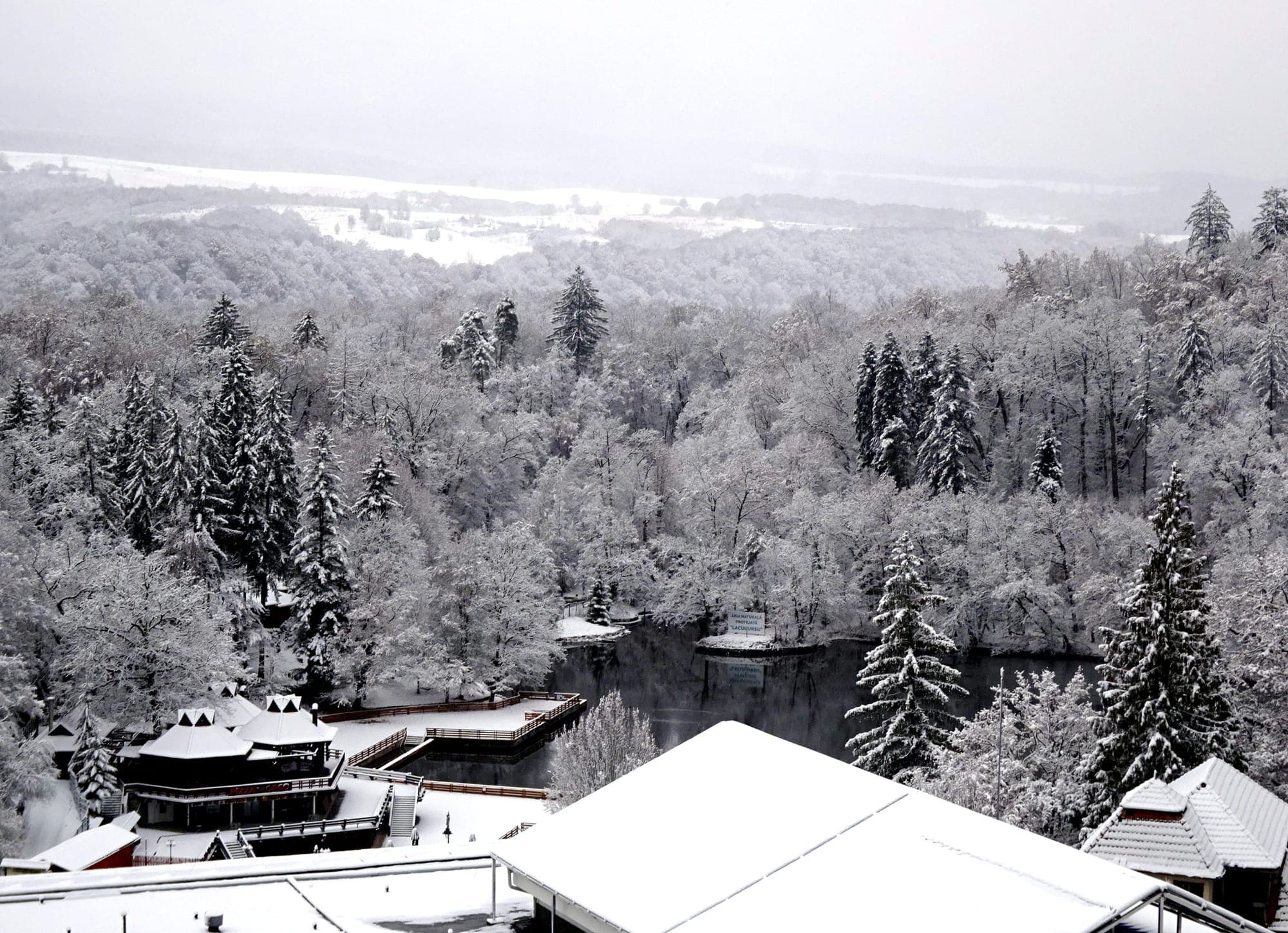
A spa resort at the foot of the Gurghiu Mountains, with heliothermal salt lakes, healing mud, paths through the salt-ground reserve and, in winter, the Aluniș ski slope with a chairlift.

The Gothic church of the Saxons on School Hill, with 15th-century frescoes, the only crypt in Transylvania and altars rescued from nearby villages, at the top of the covered wooden staircase of 1642.

A Late Baroque castle in Sângeorgiu de Pădure, rebuilt in 1807–1809 by Count László Rhédey; today a museum with guided visits about Countess Claudia Rhédey.