About Polovragi Cave
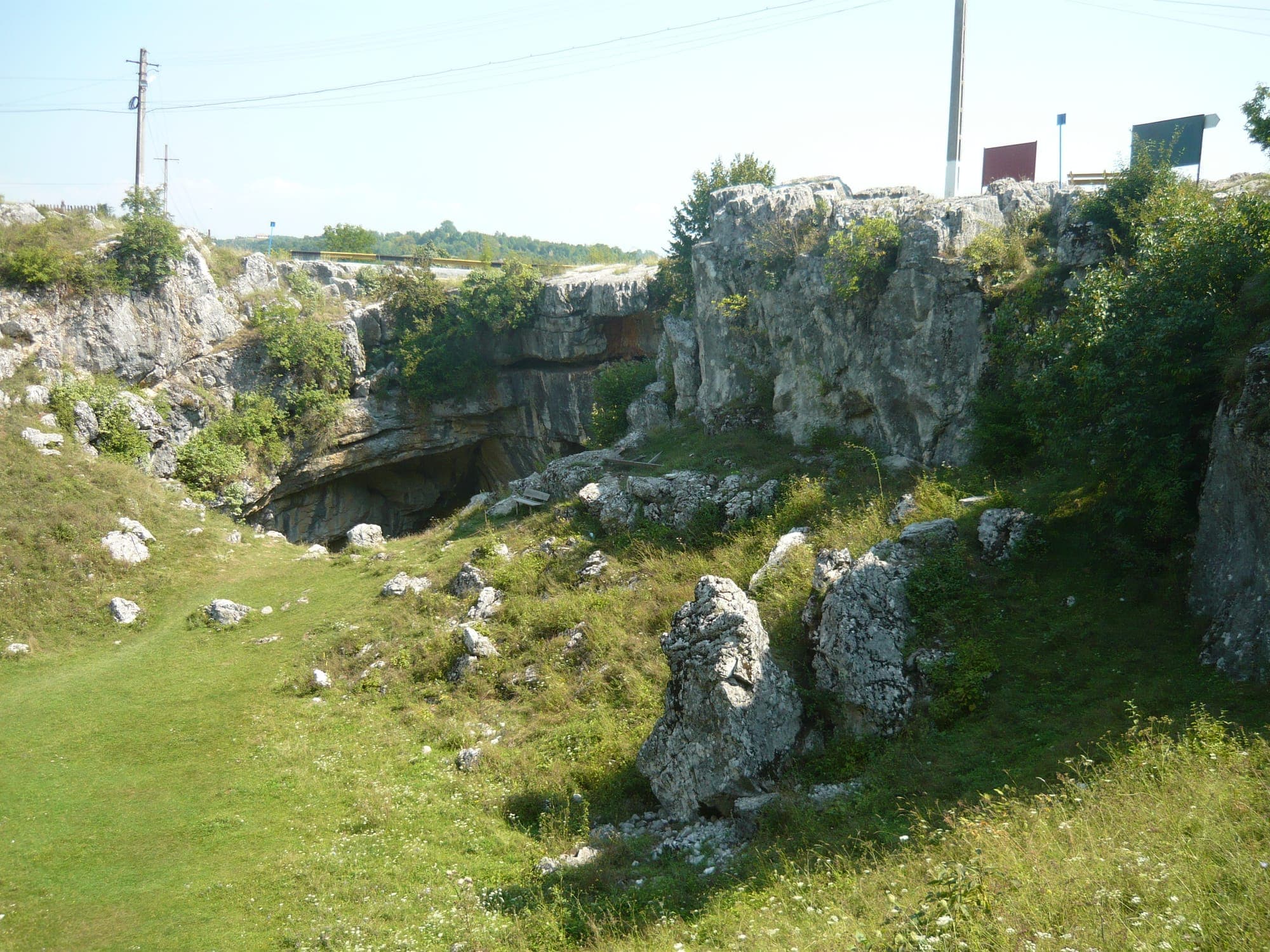
The cave opens in the left-hand wall of the Olteț Gorge, at about 670 m above sea level, where the river divides the Căpățâna Mountains from the Parâng, roughly a kilometre upstream of Polovragi Monastery. Cavers have mapped more than 10 km of passages, many of them active and flooded, explored by divers from the 1970s and 1980s onwards, but visitors only walk the first 800 m or so. The gallery was laid out and lit with electricity for visitors in 1984; since 2019 it has been run by Polovragi Town Hall, which took it over from the Gorj County Museum.
People have used the place since prehistory: excavations in 1965–1967 turned up traces from the Neolithic, the Eneolithic and the Dacian period. This is also where the legends that made it famous begin. Local tradition says that Zalmoxis, the god and teacher of the Getae and Dacians, lived in the cave, and that healers made remedies from a plant called "polovragă", which is said to have given the village its name. Alexandru Vlahuță recorded in his book "România pitorească" the story that the drops seeping from the roof are the tears of Zalmoxis. These are legends, not established facts, but the guides enjoy telling them.
The cave and the gorge together form the "Cheile Oltețului și Peștera Polovragi" nature reserve, a 150-hectare protected area.
What you can see
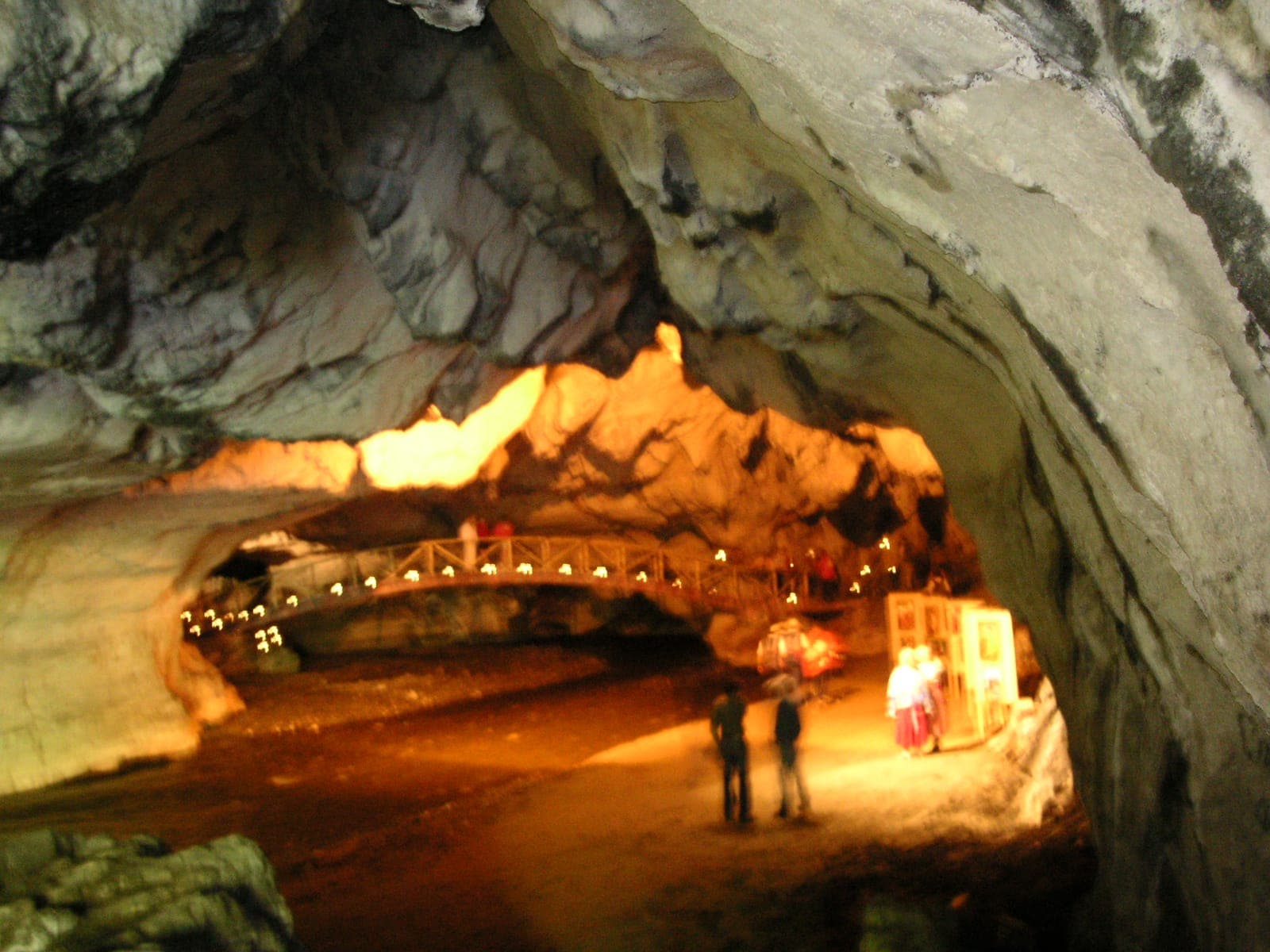
The entrance is wide and high, and you can walk the main gallery upright, without stooping. Along the first 400 m or so the guides point out the shapes tied to the legends: Zalmoxis's Chair, a throne-like stone, the Dacian Oven, and a lamp-soot drawing on the wall, attributed to a monk, showing Death with his scythe. Water running down the walls stains the rock differently from one stretch to the next, hence names such as the Bloodied Vault and the White Chamber.
Further in, in the Sector of the Ogives, between the Corridor of Pillars and the Suffocating Corridor, come stalactites, columns, domes, clusters of stalagmites and pools of water. The cave is also home to a colony of some 300 horseshoe bats, which spend the winter beneath the roof of the gallery.
Good to know
Inside it is 8–9 °C all year round, with humidity of around 90%. The floor is unpaved and wet in places, with puddles and mud: shoes with good grip matter more than a jacket.
- Zalmoxis's Chair, the throne-shaped stone that legend links to the god of the Getae and Dacians.
- The lamp-soot drawing on the wall, attributed to a monk, showing Death with his scythe.
- The Bloodied Vault and the White Chamber, stretches where water running down the walls has stained the rock in different colours.
- The stalactites, columns and domes of the Sector of the Ogives, towards the end of the developed route.
- The approach through the Olteț Gorge to the entrance, with sheer limestone walls above the river.
Good to know before you go
- Getting there
By car: the cave is at the northern end of Polovragi, where the village gives way to the Olteț Gorge. From Târgu Jiu it is ~55 km on the DN 67 (~1h10), from Râmnicu Vâlcea ~65 km on the DN 67 via Horezu (~1h30), from Horezu ~20 km (~30 minutes), from Novaci ~16 km (~25 minutes) and from Craiova ~120 km (~2h30). In Polovragi follow the road to the monastery; from there the road carries on along the Olteț, through the gorge, to near the entrance, the last kilometre on a passable gravel forest road.
Public transport: we could not confirm any scheduled service to the cave. The most reliable option without a car is to get to Horezu or Târgu Jiu and continue by taxi; from Polovragi Monastery to the cave it is ~1 km on foot through the gorge (15–20 minutes).
- Where to park
There are a few parking spaces along the gorge road, a few hundred metres before the cave entrance; they fill up quickly on summer weekends. Further down, next to Polovragi Monastery, the town hall has built a large car park with a barrier, from which you walk up through the gorge in 15–20 minutes. We could not find official parking charges.
- Fees & discounts
Official prices: 20 lei for adults and 10 lei for children and pupils up to 18. The website lists no other reductions; a 2026 travel guide mentions free entry for people with disabilities, not officially confirmed.
- Rules
Visits are guided, in groups, at set times; if you arrive between departures, you wait for the next group. Stay on the route, do not touch or break the formations and do not disturb the bats, which spend the winter beneath the roof of the gallery. It is 8–9 °C and very humid all year: wear shoes with grip, as the floor is unpaved, with puddles and mud, and bring a warm layer. The route is not suitable for pushchairs.
- Facilities
Ticket desk at the entrance · paid public toilet on the road through the Olteț Gorge · large car park next to Polovragi Monastery · guesthouses and restaurants in Polovragi and Horezu · the gallery has a natural, wet and uneven floor and is not accessible by wheelchair or pushchair
Reviews
Other attractions nearby
The closest attractions to Polovragi Cave, sorted by distance.
 Top 1003 km from Polovragi Cave
 Top 2025 km from Polovragi Cave
 37 km from Polovragi Cave