About Râpa Roșie
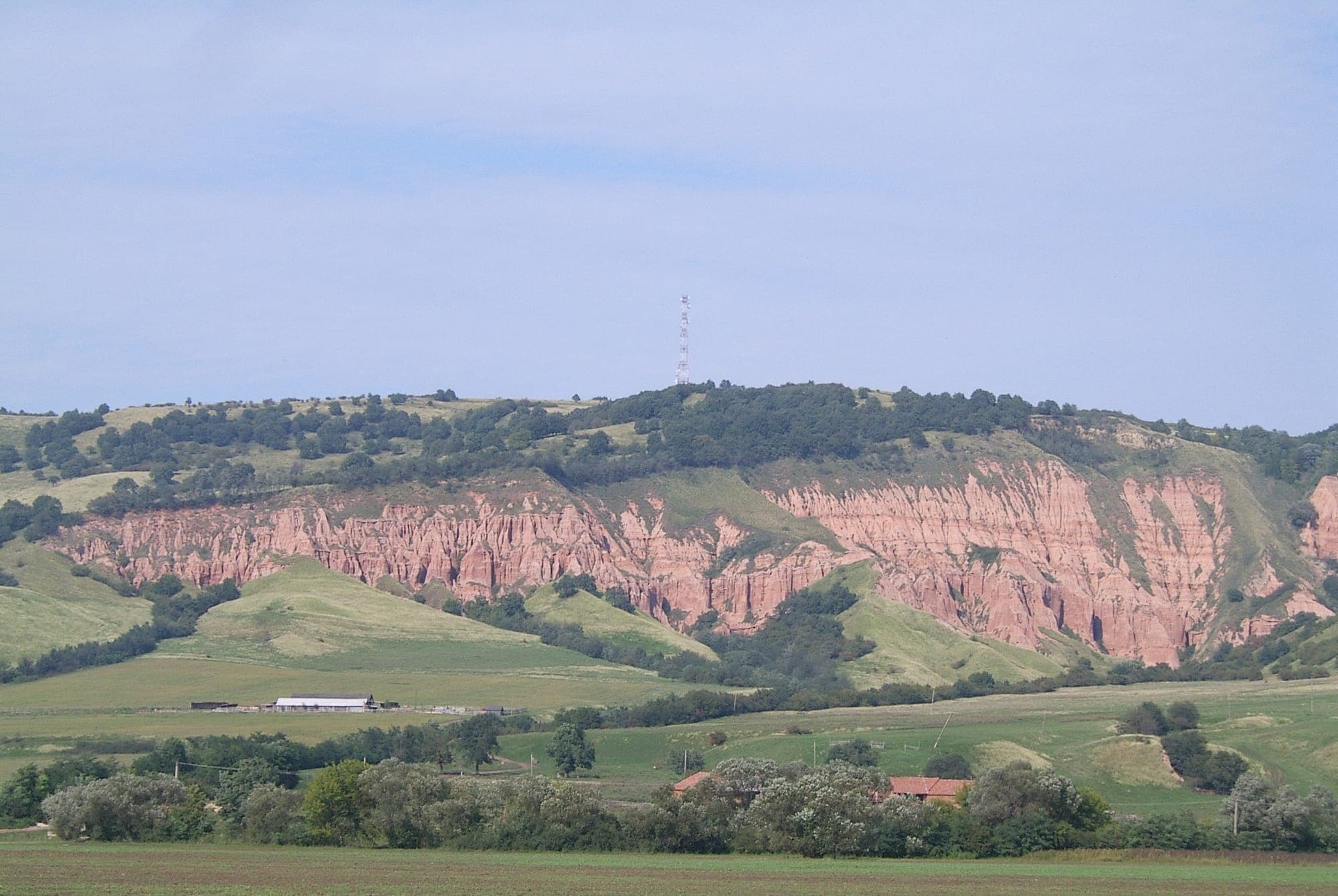
Râpa Roșie ("the Red Ravine") is a 10-hectare geological and botanical nature reserve north of Sebeș, on the right bank of the Secașul Mare river, in the south-western corner of the Secaș Plateau. You can see it from far away, from the Secaș valley: a reddish escarpment about 800 m long cut into the hillside, with woods and meadows above and below.
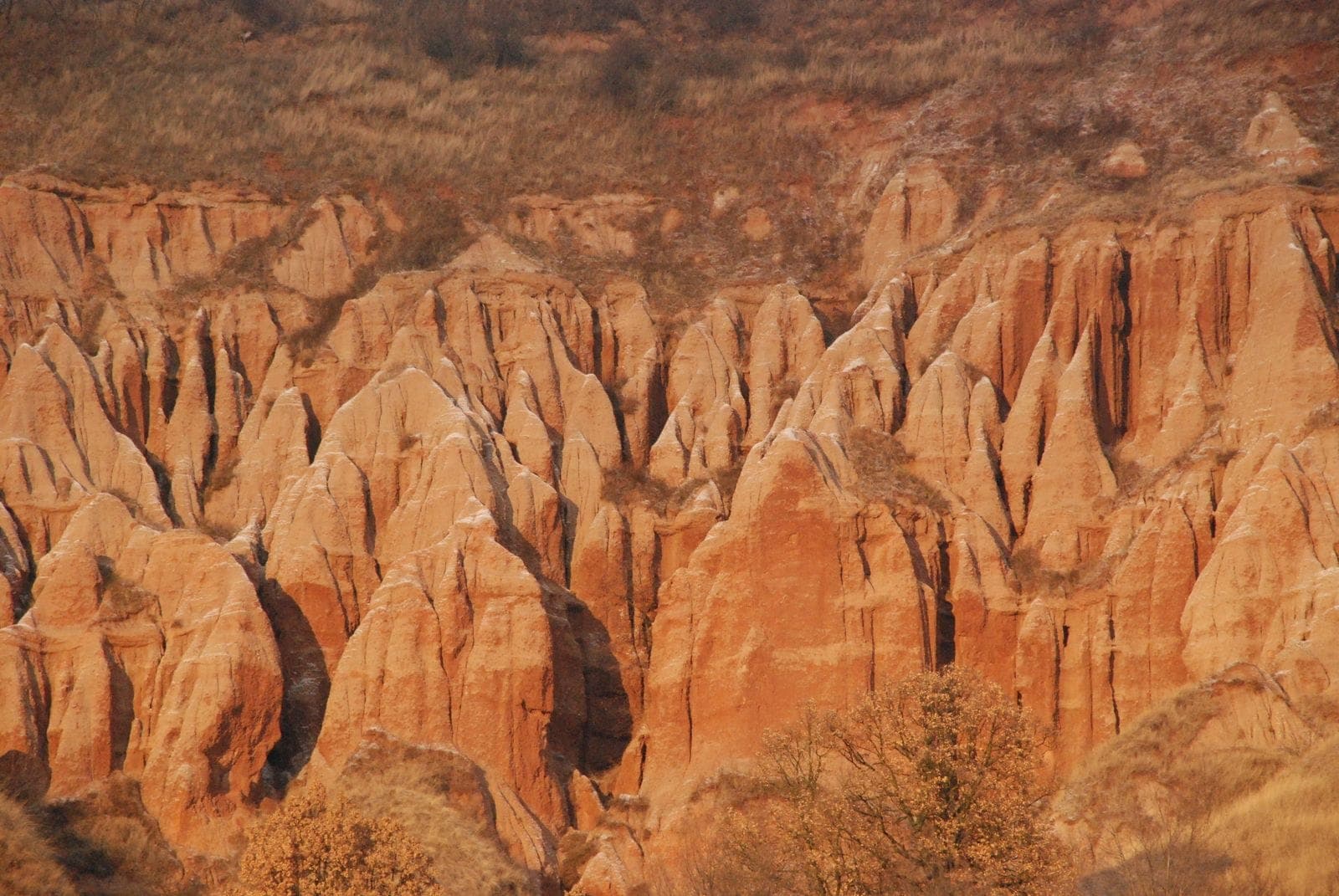
The wall was shaped by the erosion of Early Miocene sedimentary layers, around 20 million years old, made of red clays alternating with grey and red sandstones and fine gravel. The rocks are poorly cemented, so rainwater washes them away easily: the run-off has cut deep gullies, leaving columns, buttresses, towers and earth pyramids between them, some topped with a harder boulder. Geographers call this kind of landscape "badlands", after the region of South Dakota where it was first described. Its shape changes from year to year, after heavy rain.
The reserve is also protected for its plants: on the grassy ledges and the slopes around it grow warm-steppe species that are rare in Transylvania, among them an endemic pink and the downy oak. Râpa Roșie is part of the Podișul Secașelor Natura 2000 site.
What you can see
From the meadow at the foot of the ravine the whole wall is in front of you, in shades from pink to purplish red, scored vertically by the channels left by water. Closer up, on the unmarked paths between the gullies, you can see the capped earth pyramids, the columns of colourful layers and the gravel fans washed down by the torrents. Paths that skirt the ravine at the sides lead up to the crest, from where you look down on the wall and, in the distance, over the Sebeș valley and the mountains to the south.
Good to know
Next to the reserve is the "Râpa Roșie" military firing range. On firing days, announced on the Sebeș City Hall website, the authorities ask people to avoid the area. The last few kilometres are on a gravel road that any car can manage; after rain, the clay on the paths becomes very slippery.
- The whole wall seen from the meadow at its foot, with its vertical gullies and columns of red earth.
- The earth pyramids topped with a harder boulder that shields them from the rain.
- The afternoon and sunset light, when the clay glows red and orange.
- The climb to the crest, where you see the ravine from above and the Sebeș valley with the mountains beyond.
Good to know before you go
- Getting there
By car: Râpa Roșie is about 6 km from the centre of Sebeș, ~15 km from Alba Iulia, ~70 km from Sibiu (on the A1) and ~115 km from Cluj-Napoca. From Sebeș head for Lancrăm, then follow the Calea Dăii gravel road east for about 3 km to the meadow at the foot of the ravine. Any car can manage it.
Public transport: Sebeș has a railway station, on the Sibiu–Vințu de Jos line, and buses from Alba Iulia and Sibiu. From the station it is about 5 km to the ravine, so take a taxi or walk, the last stretch along the farm track.
- Where to park
There is no proper car park: cars are left on the meadow at the foot of the ravine, next to the information board, a few minutes' walk from the wall. A sign put up by the police advises against leaving valuables in sight in the car.
- Fees & discounts
Entry to the reserve is free; there is no ticket or visitor fee.
- Rules
Râpa Roșie is a nature reserve: do not climb the columns and walls, do not scratch the clay, do not pick plants and leave no litter. There are no waymarked trails; the paths around the ravine are steep and made of crumbly earth, so you need shoes with a good grip and clothes you don't mind getting dirty. After rain the clay is very slippery. Check primariasebes.ro for announced firing exercises at the nearby range.
- Facilities
information board at the foot · no toilets, water or shop · nearest services in Sebeș
Reviews
Other attractions nearby
The closest attractions to Râpa Roșie, sorted by distance.
 Top 2012 km from Râpa Roșie
 Top 10012 km from Râpa Roșie
 Top 10012 km from Râpa Roșie