Alba Carolina Fortress
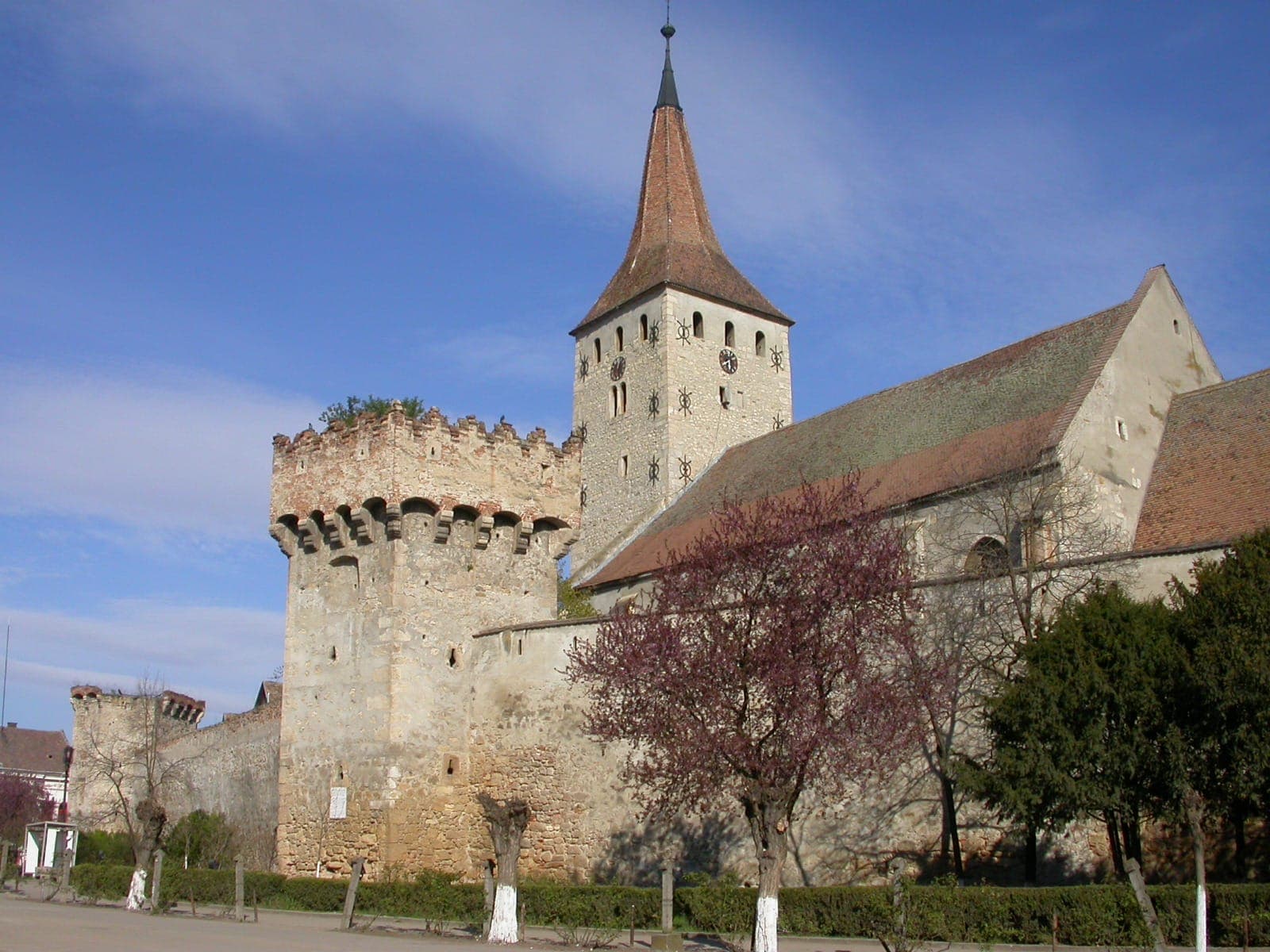
Romania's largest bastion fortress, a seven-pointed star built by the Habsburgs in 1715–1738 at Alba Iulia; baroque gates, cathedrals, the Union Hall and a changing of the guard, all with free access.
Alba county stretches from the valleys of the Mureș and the Târnava rivers into the heart of the Apuseni Mountains, with the Trascău and the Metaliferi Mountains in between. The county seat is Alba Iulia, the city of the Great Union of 1918 and of the bastioned fortress at its centre; Sebeș, Aiud and Blaj are small towns with a long history, and the Land of the Moți, along the Arieș, keeps the ridge-top scattered villages of the Apuseni highlanders. Anyone looking for things to see in Alba county finds fortresses, caves, waterfalls and mountain roads.
Alba Carolina Fortress, the star-shaped fortification built by the Habsburgs in the 18th century, is the natural starting point. Near Sebeș, Râpa Roșie is a wall of reddish rock furrowed by the rain, and Câlnic Fortress a Saxon peasant fortress on the UNESCO list. In the Apuseni, the Scărișoara Ice Cave shelters a block of ice thousands of years old, and the Transapuseana climbs from Aiud through the villages of the Trascău almost as far as Abrud.

45 results

Romania's largest bastion fortress, a seven-pointed star built by the Habsburgs in 1715–1738 at Alba Iulia; baroque gates, cathedrals, the Union Hall and a changing of the guard, all with free access.

The Orthodox cathedral inside Alba Carolina Fortress, built in 1921–1922 for the coronation of Ferdinand and Marie as king and queen of Greater Romania, with a 58 m bell tower and royal portraits in fresco.

A cave in the Apuseni Mountains with the Scărișoara Glacier (Ghețarul Scărișoara), one of the largest underground glaciers in the world: a block of ice over 10,000 years old, reached by stairs down a 60 m wide shaft.

A 13th-century count's residence, bought by the Saxon villagers in 1430 and turned into a peasant fortress: a Romanesque keep, two rings of walls and a chapel, in a valley near Sebeș.

An 800 m wall of red clay and sandstone on the edge of Sebeș, carved by rain into columns, towers and earth pyramids, a badlands landscape rare in Romania.

Romania's oldest and longest cathedral, Romanesque and Gothic, at the heart of the Alba Carolina Fortress; it holds the tomb of John Hunyadi and the first Renaissance chapel in Transylvania.

A modern spa complex in Ocna Mureș, opened in 2023, with heated salt-water and fresh-water pools, saunas and treatments. It is above ground only: the old salt mine cannot be visited.

The Saxons' Gothic church in the centre of Sebeș, with a tall 14th-century choir and the largest winged altarpiece of any Lutheran church in Romania.

County road DJ107I, 78 km through the Trascău Mountains between Aiud and Bucium, near Abrud: villages scattered along the ridges, thatched houses and views from over 1,100 m.

A defensive tower in Sebeș's town fortifications, built by the tailors' guild at the end of the 14th century and tied to the story of the student who survived the Ottoman siege of 1438.

A medieval citadel in central Aiud, with stone walls, guild towers and two places of worship within the enclosure. Bethlen Castle stands on the north side.

A mining museum where 157 steps lead down to 170 m of original Roman galleries of Alburnus Maior, part of the Roșia Montană UNESCO site, plus stamp mills and a Roman lapidarium.

A chain of travertine cascades on the Șipote stream, below the Bedeleu cliffs in the Trascău Mountains: the last one drops straight into the Arieș by the DN75, the upper ones are reached on a nature trail from Sălciua.

An eclectic manor on a hill near Aiud, with an octagonal tower and a Baroque gable, restored by Alba County Council and now a cultural centre, open to visitors during events.

A Romanesque church of the 13th century with a keep-like tower and an oval stone enclosure, preserving fragments of medieval frescoes among the oldest in Transylvania.