Alba Carolina Fortress
Alba Iulia, Alba County · Transylvania


About Alba Carolina Fortress
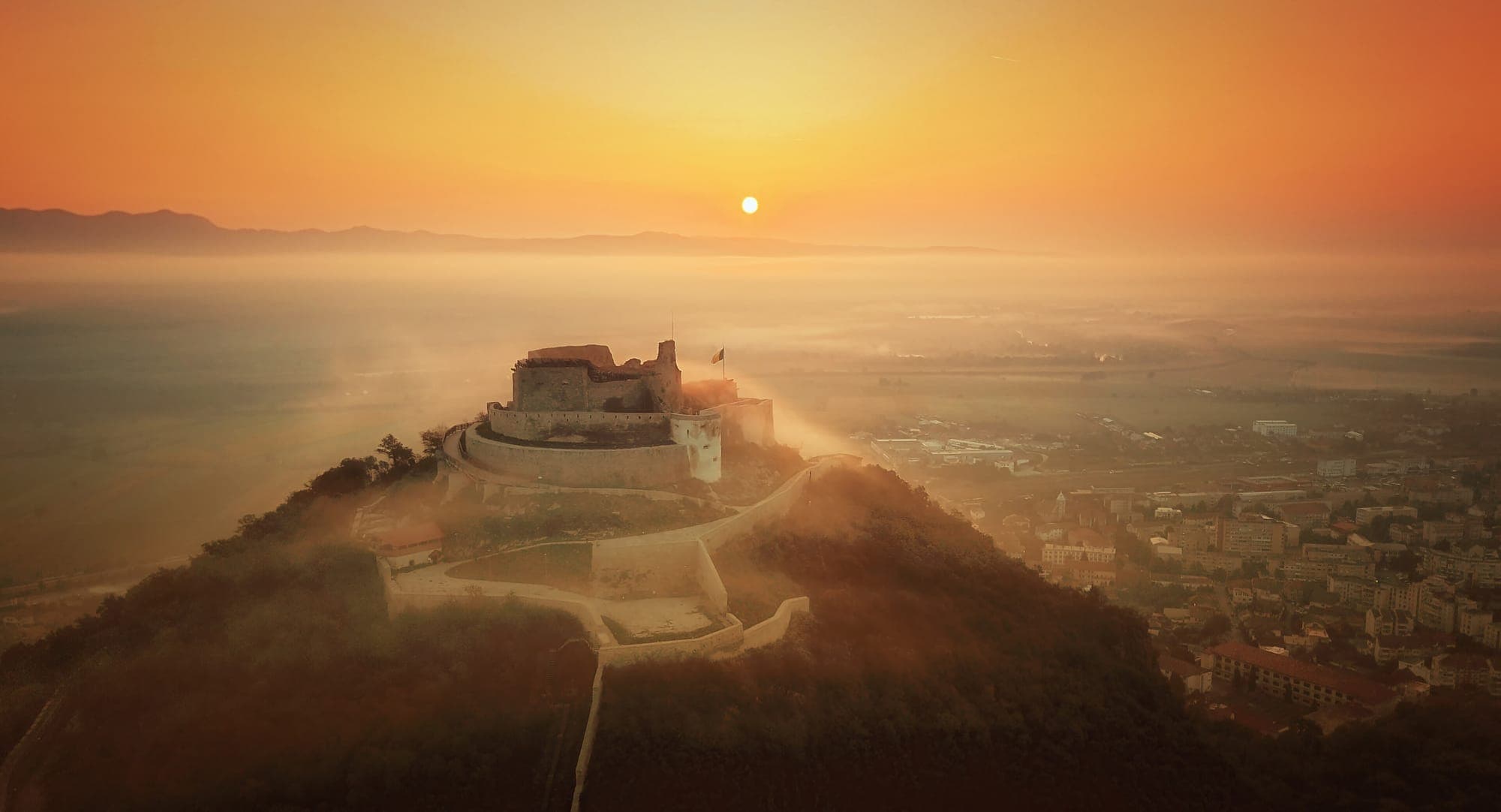
Alba Carolina is a seven-pointed star of brick spread over some 70 hectares above the town of Alba Iulia. The Habsburgs built it between 1715 and 1738, right after taking Transylvania, to the plans of the Italian architect Giovanni Morando Visconti and in the Vauban system: seven bastions with 12 m walls, ravelins and counterguards between them, dry moats and six monumental gates, three facing east and three west. Over 20,000 serfs were brought in to build it, at a cost of around a million gold florins. It is the largest fortification of its kind in the country and one of the best preserved in Europe.
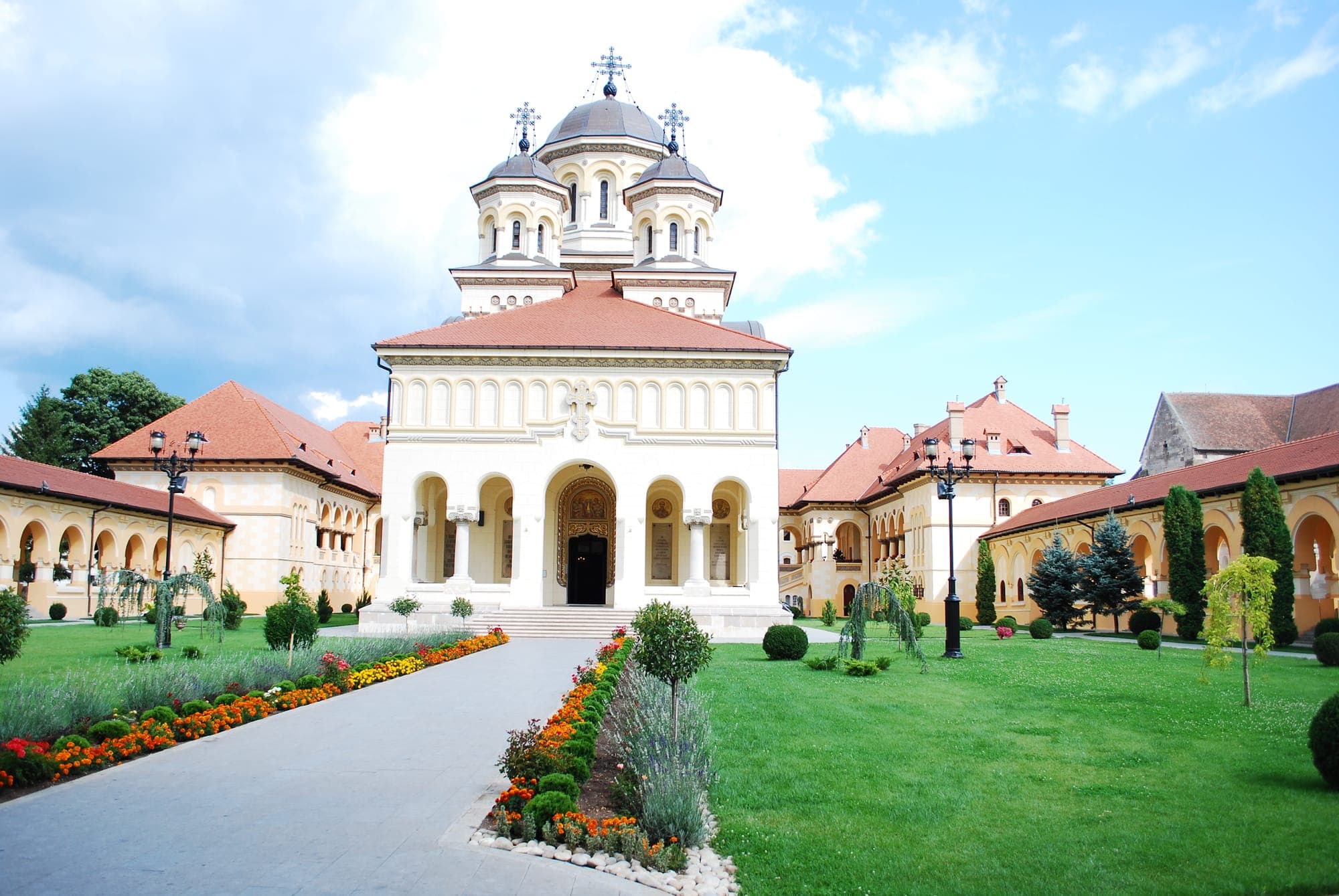
Two earlier fortresses stood on the same spot: the Roman camp of the Legio XIII Gemina, the core of the town of Apulum, and the medieval bishop's citadel, demolished to make way for the Habsburg star. Romanian history has been bound to these walls more than once: here, in 1785, Horea and Cloșca, leaders of the peasant uprising, were broken on the wheel; here, on 1 December 1918, the National Assembly voted the union of Transylvania with Romania; and here, in 1922, Ferdinand and Marie were crowned king and queen of Greater Romania, in a cathedral built for the occasion.
Until the 2000s the fortress was a run-down barracks. The 2009–2013 restoration, with EU funds, cleared the moats, rebuilt the gates and bridges and turned it into an urban park that you can enter freely, at any hour.
What you can see
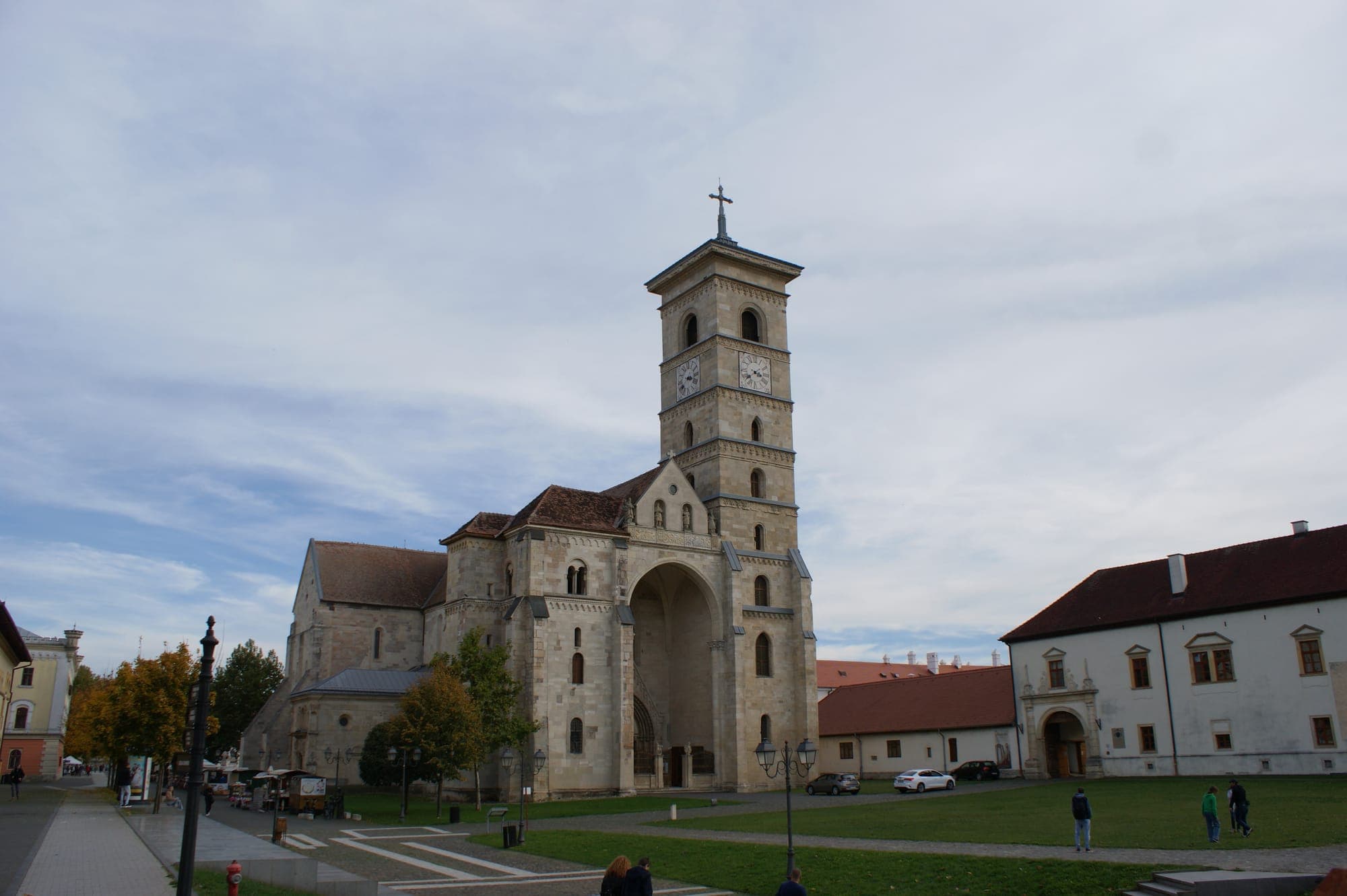
The classic way in is through Gate III, the most richly carved, with the equestrian statue of Emperor Charles VI on top and Horea's cell in its wall; you reach it over the wooden bridge from Gate IV, along the route of the changing of the guard. Inside are the Roman Catholic cathedral of St Michael, from the 13th century, the town's oldest monument, with the tomb of John Hunyadi, and the Orthodox Coronation Cathedral of 1922, with its 58 m bell tower. The Union Hall and the National Museum of the Union (in the Babylon building) tell the story of 1918; the recently restored Palace of the Princes of Transylvania was Michael the Brave's residence in 1600.
On the east side, the 22.5 m obelisk to Horea, Cloșca and Crișan dominates the esplanade at Gate III; on the west, the Three Fortifications Route goes down into the moats among the Roman, medieval and baroque walls. The paths through the moats, with bronze statues of 18th-century townsfolk, make a good walk in the evening too, when the walls are lit.
Good to know
The fortress is open all the time and free; you pay only for the museums and the moat route. The changing of the guard, in Habsburg uniforms of 1763, takes place from May to October, Fridays and Saturdays at 20:00 and Sundays at 12:00, at Gates III and IV; Saturday is the "grand guard", with horses and cannon salvos. The museums are closed on Mondays.
- Gate III, with the equestrian statue of Charles VI and Horea's cell in its wall, seen from the bridge from Gate IV.
- The Saturday-evening changing of the guard, with 22 soldiers, 4 horses and two cannon salvos, between Gates III and IV.
- The Roman Catholic cathedral of St Michael, with the tomb of John Hunyadi, and the Coronation Cathedral next door.
- The Union Hall, where the union was voted on 1 December 1918, and the National Museum of the Union in the Babylon building.
- A walk through the fortress moats, among the walls and bronze statues, in the evening, with the bastions lit up.
Good to know before you go
- Getting there
By car: Alba Iulia is on the A1/A10 motorways, ~95 km south of Cluj-Napoca (A10, ~1h10), ~70 km north of Sibiu (A1 to Sebeș, then DN1, ~1 hour), ~75 km east of Deva (A1, ~50 minutes) and ~350 km from Bucharest (~4h30). The fortress is right in the town centre; follow the signs for Cetate / Poarta a IV-a. Cars can drive into the fortress through Gate IV, but spaces are few.
Public transport: Alba Iulia railway station (connections from Cluj, Sibiu, Deva and Bucharest) is ~2 km from the fortress, a 25-minute walk along Strada Republicii or a few stops on the local buses; the bus station is next to the railway station. Frequent minibuses from Cluj, Sibiu and Deva.
- Where to park
Parking inside the fortress, on the streets near the Union Hall and the Princes' Palace, is paid, by SMS or app, free at weekends at the last check. Larger car parks, also paid, are at Gate IV (Strada Militari) and on Bulevardul Transilvaniei, below the walls; from there it is a five-minute walk up. Coaches park by the tourist information centre.
- Fees & discounts
Entry to the fortress is free. National Museum of the Union: adults 20 lei, pupils/students and pensioners 10 lei, children 5 lei; Union Hall 15/7/3 lei; Museikon 10/5/2.5 lei; combined ticket for all three 35/17/8 lei; guided tour of the museum and Union Hall 100 lei. Three Fortifications Route: adults 20 lei, children under 14 5 lei, under 5 free. Tower of the Roman Catholic cathedral: 8 lei adults, 4 lei pupils. The cathedrals are free to visit. The changing of the guard is free.
- Rules
The fortress is a public space with park rules: no cars on the moat paths, no climbing on the walls and bastions, no litter. In the cathedrals, modest dress and quiet during services; in the Coronation Cathedral no photography during the liturgy. At the changing of the guard, stay behind the cordon for the cannon salvos. Dogs on a lead. The museums do not allow flash; commercial photography needs separate approval.
- Facilities
Tourist information centre at Strada Militari 4, with guides and maps · public toilets in the fortress and at the museums · cafés, restaurants and terraces on Strada Mihai Viteazul and in the moats · bikes and scooters for hire · paved paths, pushchair- and wheelchair-accessible; the museums have steps · good mobile signal · hotels within the walls
Reviews
Other attractions nearby
The closest attractions to Alba Carolina Fortress, sorted by distance.
 Top 1000 km from Alba Carolina Fortress
 Top 1000 km from Alba Carolina Fortress
 12 km from Alba Carolina Fortress