Romania's karst is concentrated in the Apuseni Mountains, the Banat, the mountains of Oltenia and a few massifs of the Southern Carpathians. The caves in Romania developed for the public have lit routes, stairways and guides; the undeveloped ones are visited only with equipment and a guide. A few shelter underground glaciers, others cave bear bones, and some have had their ceilings collapse and turned into natural bridges or gorges. The temperature stays low all year round, so an extra layer is useful even in summer.
In Crișana, the Bears' Cave at Chișcău is probably the best-known show cave in the Apuseni, and Cetățile Ponorului is one of the largest karst complexes in the country. In Alba county, the Scărișoara Ice Cave holds an underground glacier that is among the largest in Europe. Women's Cave in Oltenia was the first cave in Romania to get electric lighting, Comarnic Cave is in the Banat, and God's Bridge at Ponoarele is a natural bridge with a road running over it.
Romania's most visited cave: 488 m of lit galleries beneath the village of Chișcău, full of stalactites and stalagmites, with the bones of some 140 cave bears left where they were found.
A small, easy-to-visit cave on the Rucăr–Bran corridor, in Piatra Craiului National Park: a dry gallery carved by the Dâmbovicioara stream, with about 250 m laid out and lit.
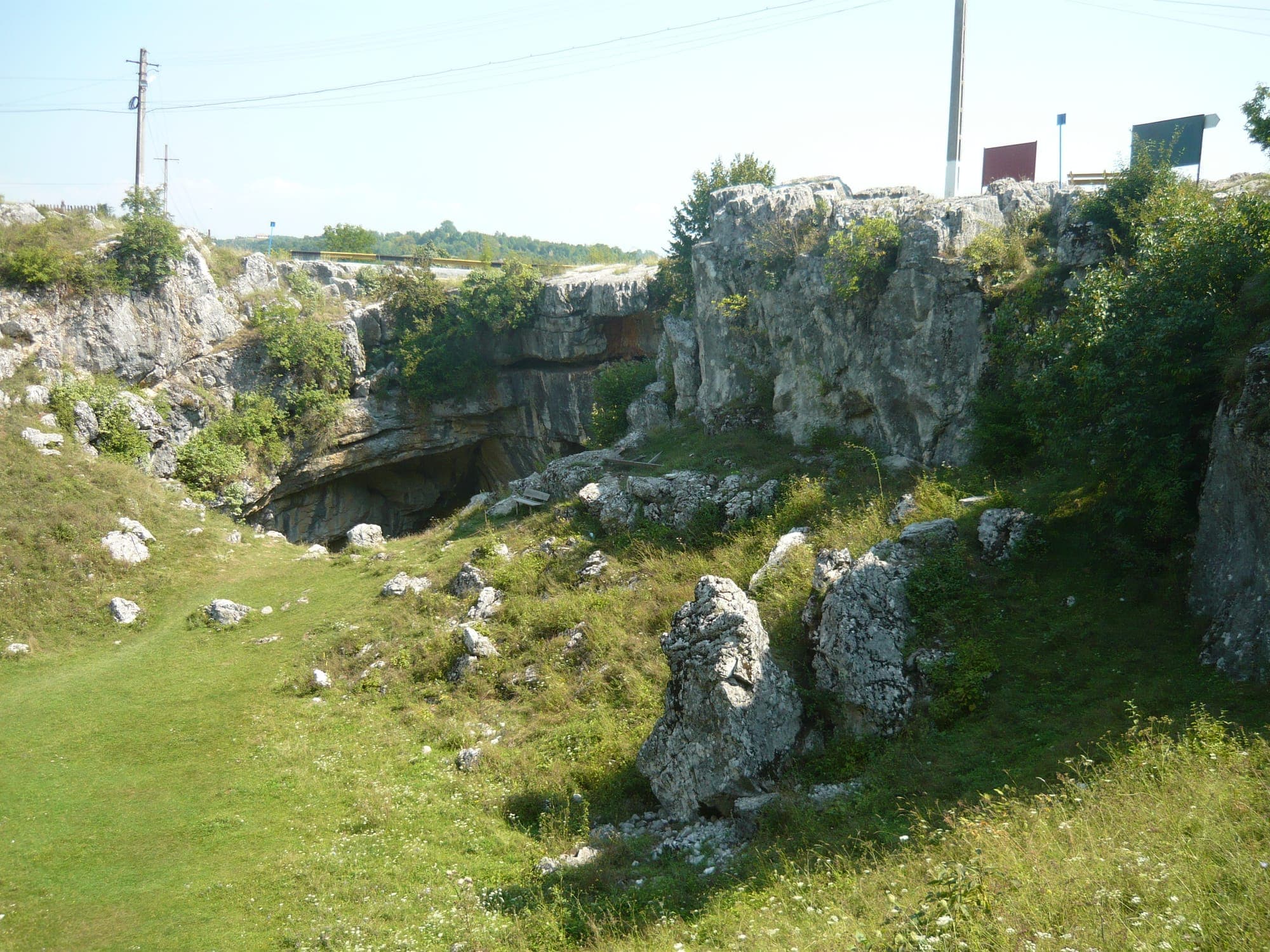
Romania's largest natural bridge and the only one in the world carrying a public road: a 30 m limestone arch left standing after a cave roof collapsed, in the village of Ponoarele on the Mehedinți Plateau.
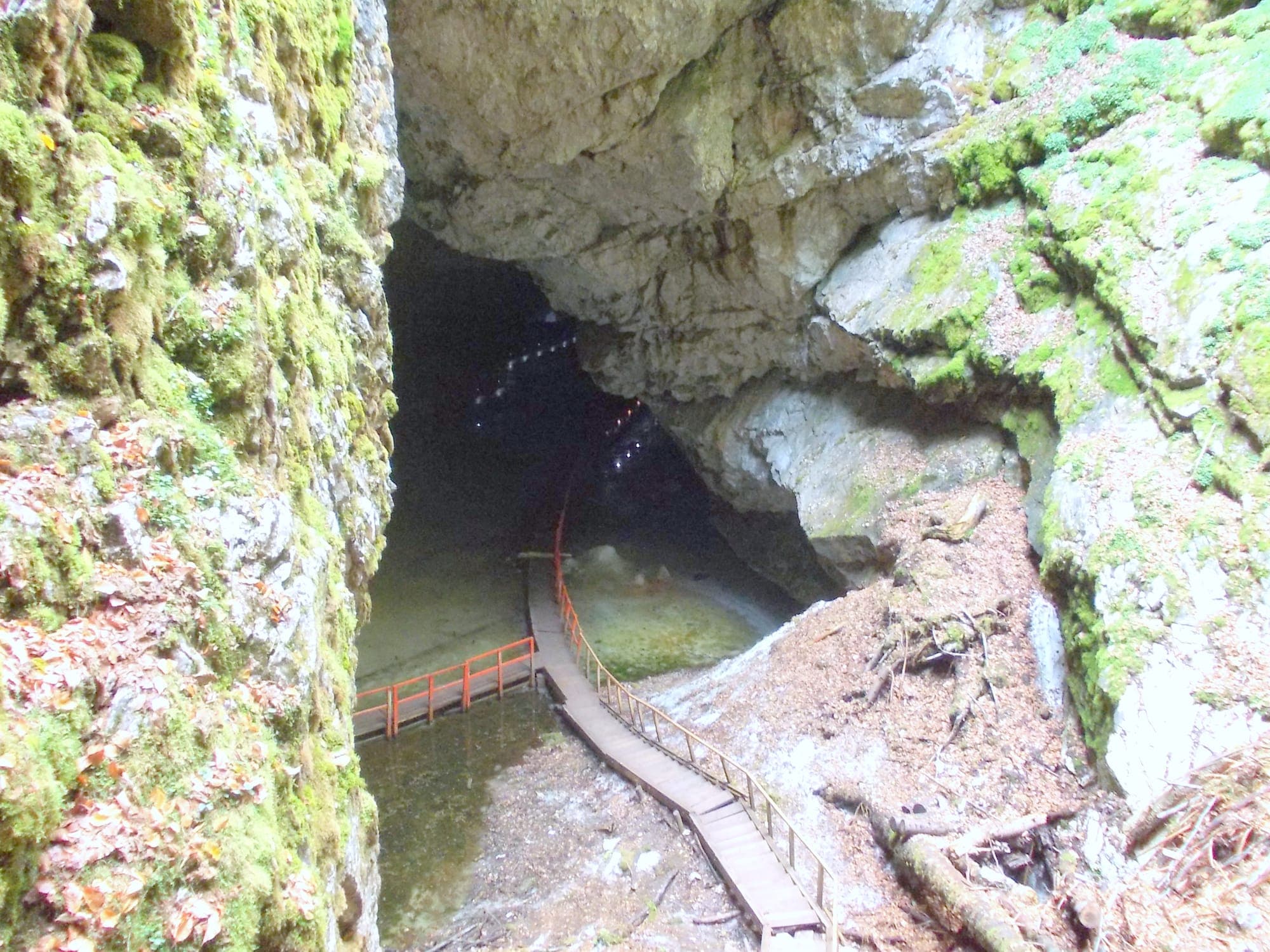
A cave in the Apuseni Mountains that holds one of the largest underground glaciers in the world: a block of ice over 10,000 years old, reached by stairs down a shaft 60 m across.
A four-level cave in the Galbenul Gorge at the foot of the Parâng Mountains, with 860 m of lit galleries, cave bear bones and some of the oldest modern human remains in Europe.
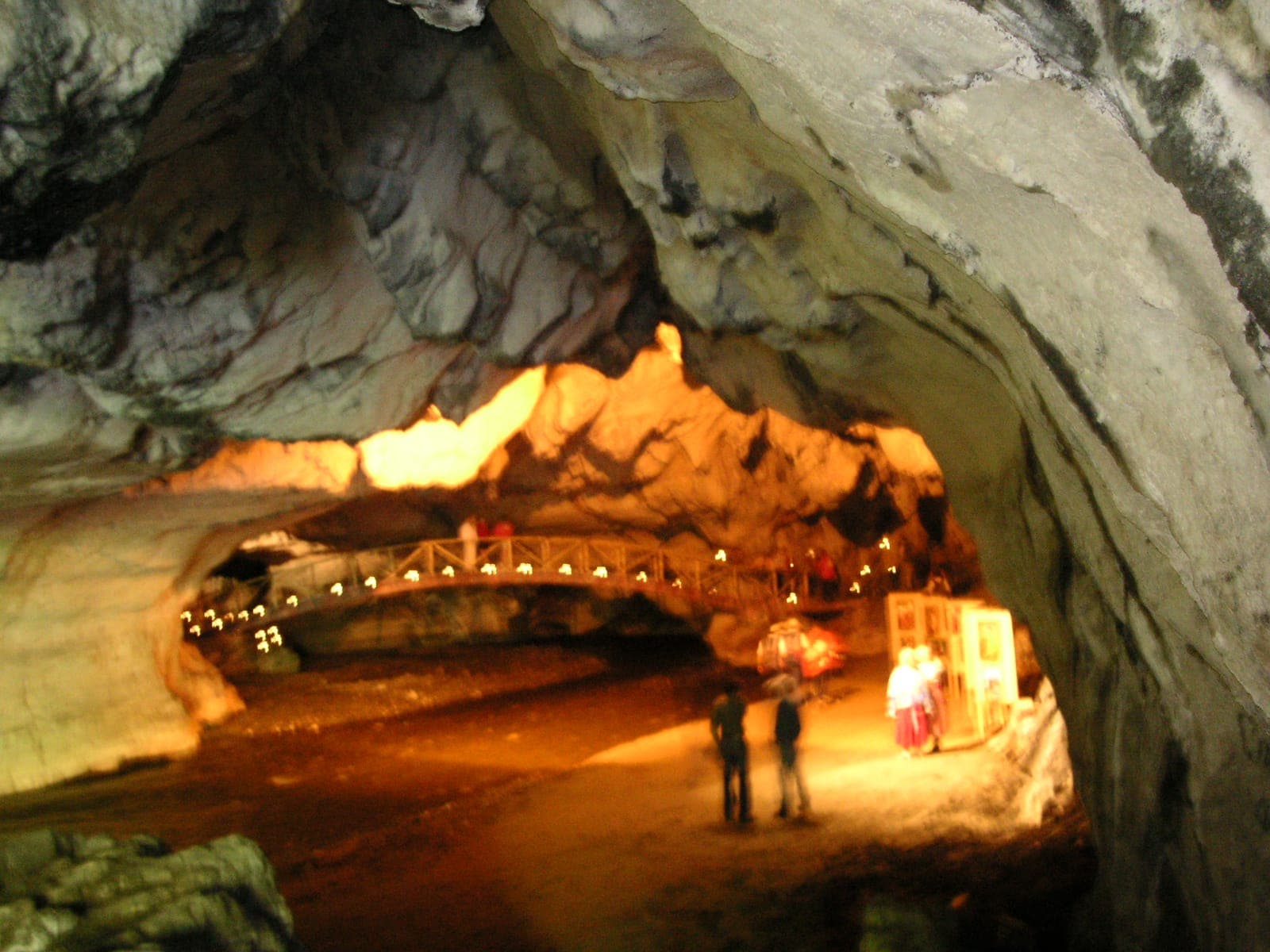
A cave crossed by a mountain stream north of Petroșani, with a 20 m-wide portal and a gallery of about 466 m walked end to end on footbridges, beneath the Dacian fortress of Bănița.
A karst complex on the Padiș Plateau: three huge sinkholes with walls over 200 m high and a portal over 70 m tall where the Cetăților stream vanishes into the mountain. Seen from a marked hiking loop, not a show cave.
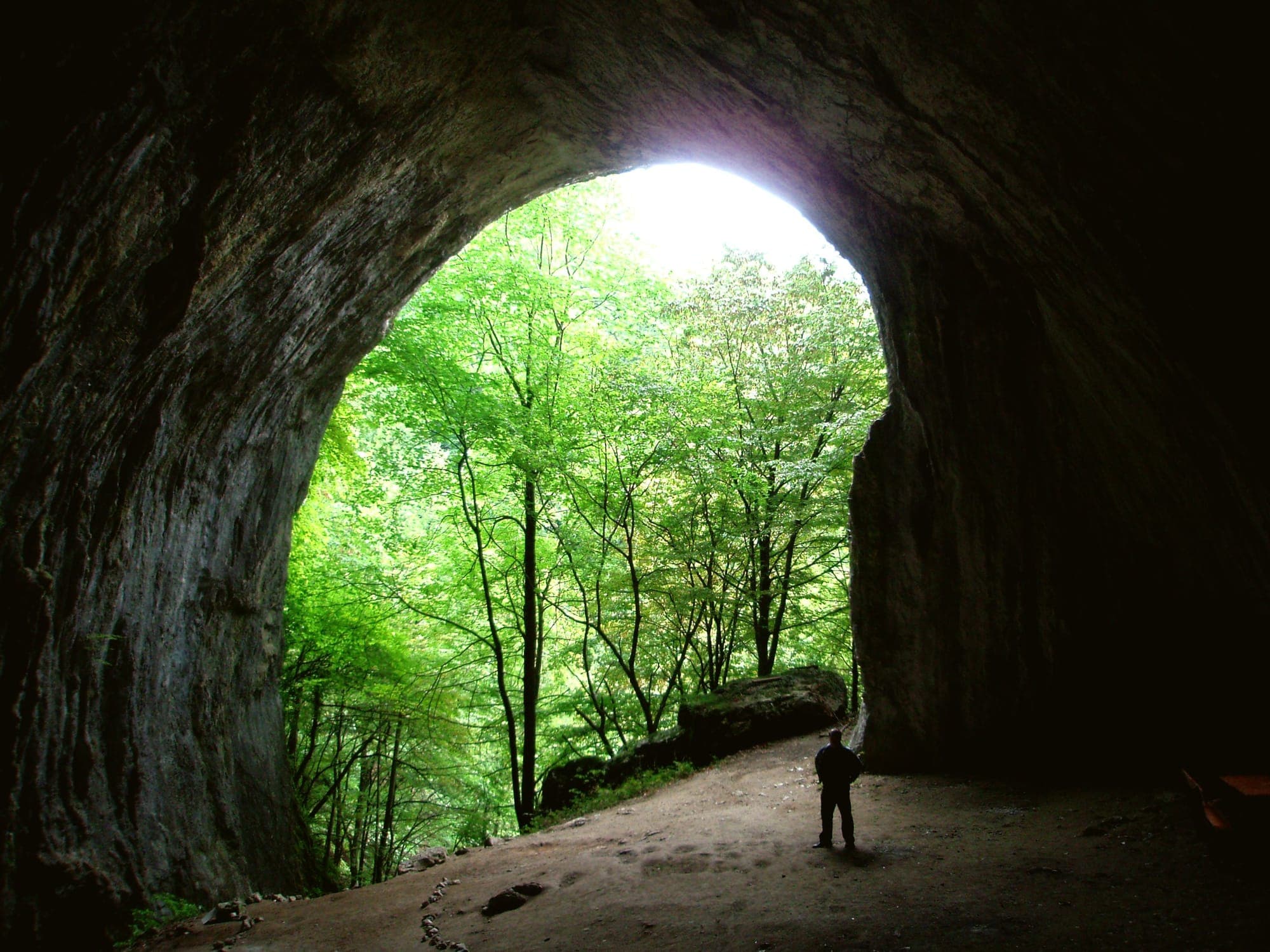
An undeveloped cave in the Bihor Mountains near Casa de Piatră: a huge portal, tens of metres high, through which the Gârdișoara stream vanishes underground.
A wild, unlit cave in the Anina Mountains with more than 6 km of passages on three levels, 1,750 m of which you explore with a helmet and head torch, led by the national park's rangers.
An ice cave in the forests of the Galbena Valley near Padiș, reached on foot along a marked trail. Around midday, light pours in through a hole in the roof and falls on the ice.
An active cave in the Trascău Mountains, with a portal almost 40 m high in the limestone wall and an underground river of lakes and waterfalls, visited only on guided tours in a wetsuit.
A cave cut into the wall of the Ialomița Gorge, in the heart of the Bucegi Mountains at 1,660 m, with a monastery built against its mouth and 480 m of lit galleries leading to the Bears' Hall and the Altar.
A cave more than 10 km long, carved by the Olteț river into the limestone of the Olteț Gorge, with 800 m of gallery open to visitors and legends about Zalmoxis, a kilometre from Polovragi Monastery.
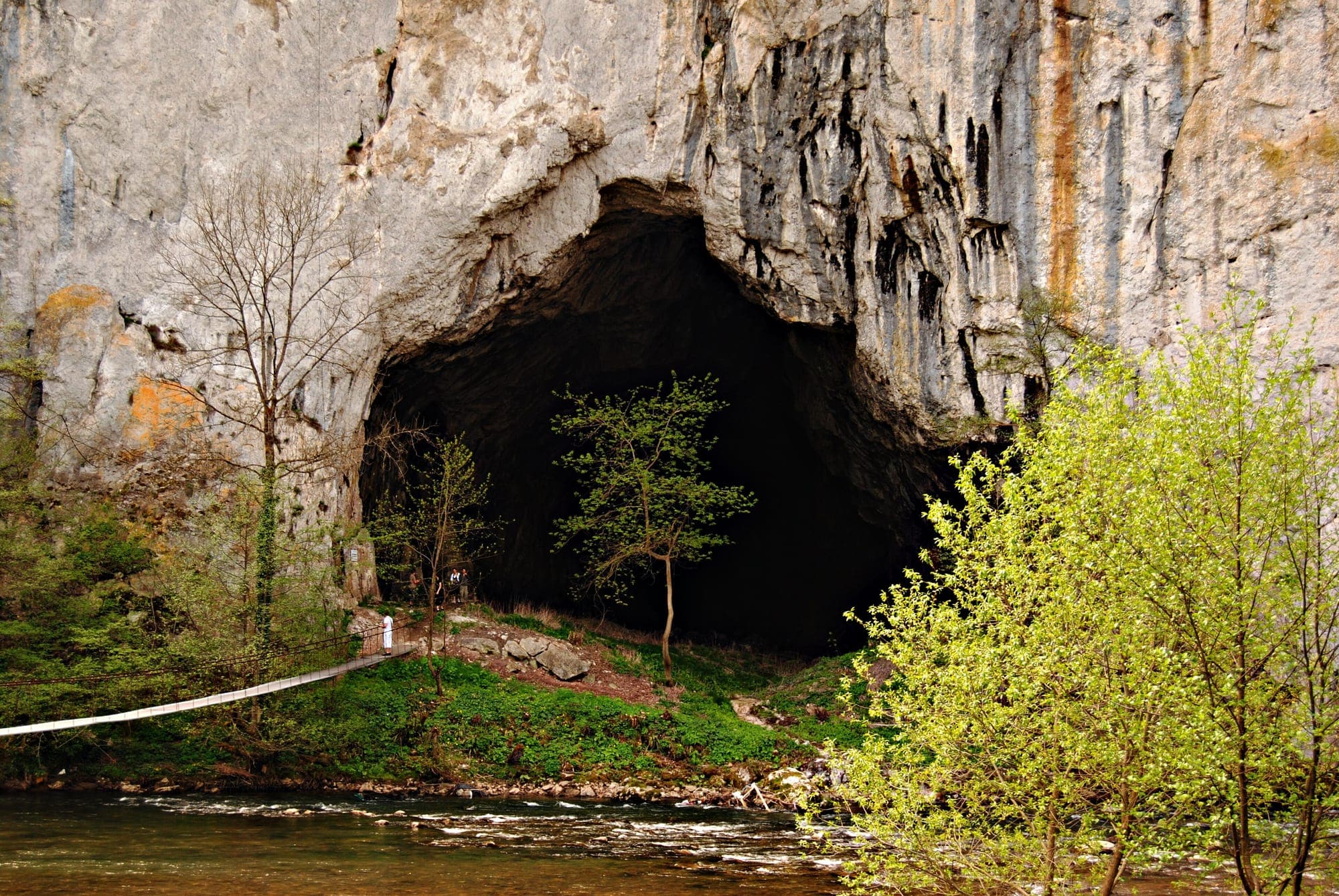
A cave with an entrance more than 30 m high facing the Crișul Repede, reached over a suspension bridge and inhabited by people as far back as the Neolithic.
 Top 100