Băile Herculane
Băile Herculane, CS · 175 km from Timișoara
Romania's oldest spa resort, recorded as early as AD 153, in the Cerna valley: hot sulphur springs, a Habsburg old town around the Hercules statue and free thermal tubs on the riverbank.
Banat is the south-western corner of Romania, between the Mureș, the Danube and the mountains, made up of Timiș and Caraș-Severin counties. The plain in the west, with its ruler-straight villages and gable-fronted houses, was settled in the 18th century under the Habsburgs, and the mix of Romanians, Germans, Hungarians, Serbs and other peoples still shows in the architecture and the cooking. To the east, the Banat Mountains – Semenic, Almăj, Cerna – are forested and cut by gorges, caves and waterfalls. Timișoara, European Capital of Culture in 2023, is the region's big city, with baroque squares and Secession buildings; Reșița grew out of its ironworks, while Lugoj and Caransebeș are smaller towns. What you can visit in Banat is, beyond Timișoara, above all nature.
Băile Herculane, a spa resort whose thermal springs were already used by the Romans, is the starting point for the Cerna Valley Road, while Bigăr Waterfall, Beușnița Waterfall and Lake Ochiul Beiului all lie in the same national park, Cheile Nerei–Beușnița. The Transsemenic climbs onto the Semenic plateau. All of these are in Caraș-Severin County; for the city, there is Timiș.
51 results
Romania's oldest spa resort, recorded as early as AD 153, in the Cerna valley: hot sulphur springs, a Habsburg old town around the Hercules statue and free thermal tubs on the riverbank.

A moss-clad tufa waterfall whose water fans out in dozens of threads over green steps, in the beech forest of the Cheile Nerei–Beușnița National Park, an hour's walk beyond Ochiul Beiului Lake.

The moss-covered tufa waterfall in the Miniș gorge, exactly on the 45th parallel and once famous worldwide; it partly collapsed in 2021 and is regenerating naturally, a few steps from the DN57B road.
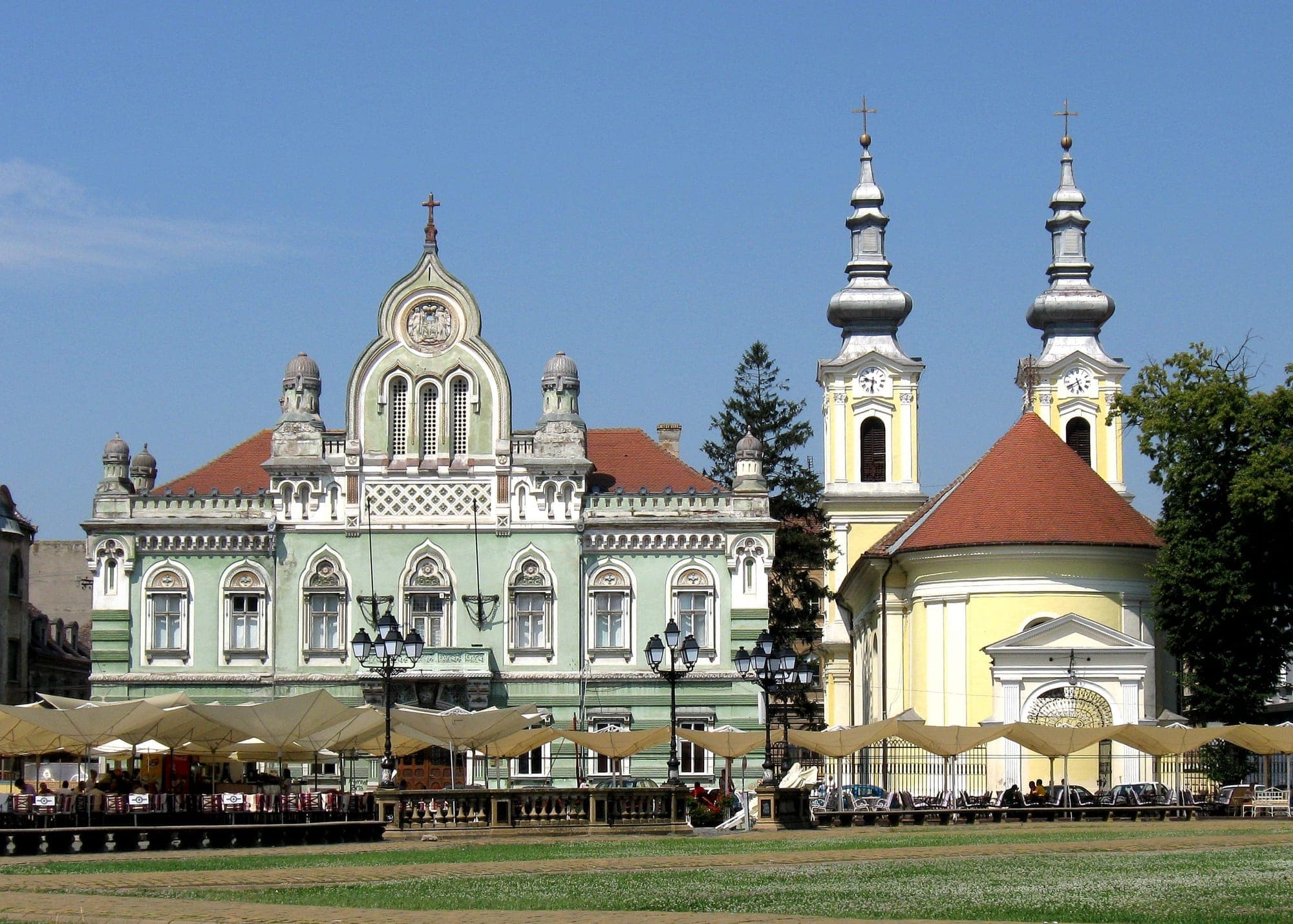
The Baroque church of the Serbian Orthodox Bishopric on Union Square, built between 1744 and 1748, with two clock towers and a carved and gilded wooden iconostasis.

A national park of over 61,000 ha in the Cerna Valley above Băile Herculane: limestone cliffs with Banat black pine, gorges and ancient beech forests on the UNESCO list since 2017.

The Orthodox cathedral of the Banat, built between 1936 and 1946 in the Neo-Moldavian style, with a main tower of over 80 m, glazed-tile roofs and a museum of old church art in the basement.

County road DJ582 crosses the Semenic Mountains for 58 km, from Reșița through Văliug and the Prislop Pass to Slatina-Timiș, past mountain lakes, pastures and the villages of Gărâna and Brebu Nou.

An open-air ethnographic museum on ~17 hectares at the edge of the Green Forest: houses and outbuildings from Banat villages, a wooden church, a school and an “Alley of Ethnicities”, all gathered into one village.

The DN67D links Baia de Aramă to Băile Herculane in about 65 km: it climbs to the Arșasca saddle at ~900 m and drops down the Cerna Valley, between limestone walls, through Domogled–Valea Cernei National Park.

The oldest building in Timișoara, a royal residence in the Middle Ages and the historic home of the Banat Museum; closed for restoration and visible from the outside only.

A 36,000 ha national park in the Banat, with the 19 km Caraș Gorge, the Semenic plateau, over 800 caves and the virgin beech forest of Izvoarele Nerei, a UNESCO site.

Timișoara's oldest square, about 150 by 110 metres, laid out in the Baroque style around the Roman Catholic Cathedral, the Serbian Cathedral and the Plague Column, among colourful houses from the 18th to the 20th centuries.

The dendrological park beside Timișoara's former fortress, laid out in 1986–1990 on a 1966 plan: over 8 hectares with rare trees, a Japanese garden, a rose collection and a stretch of the fortress wall.
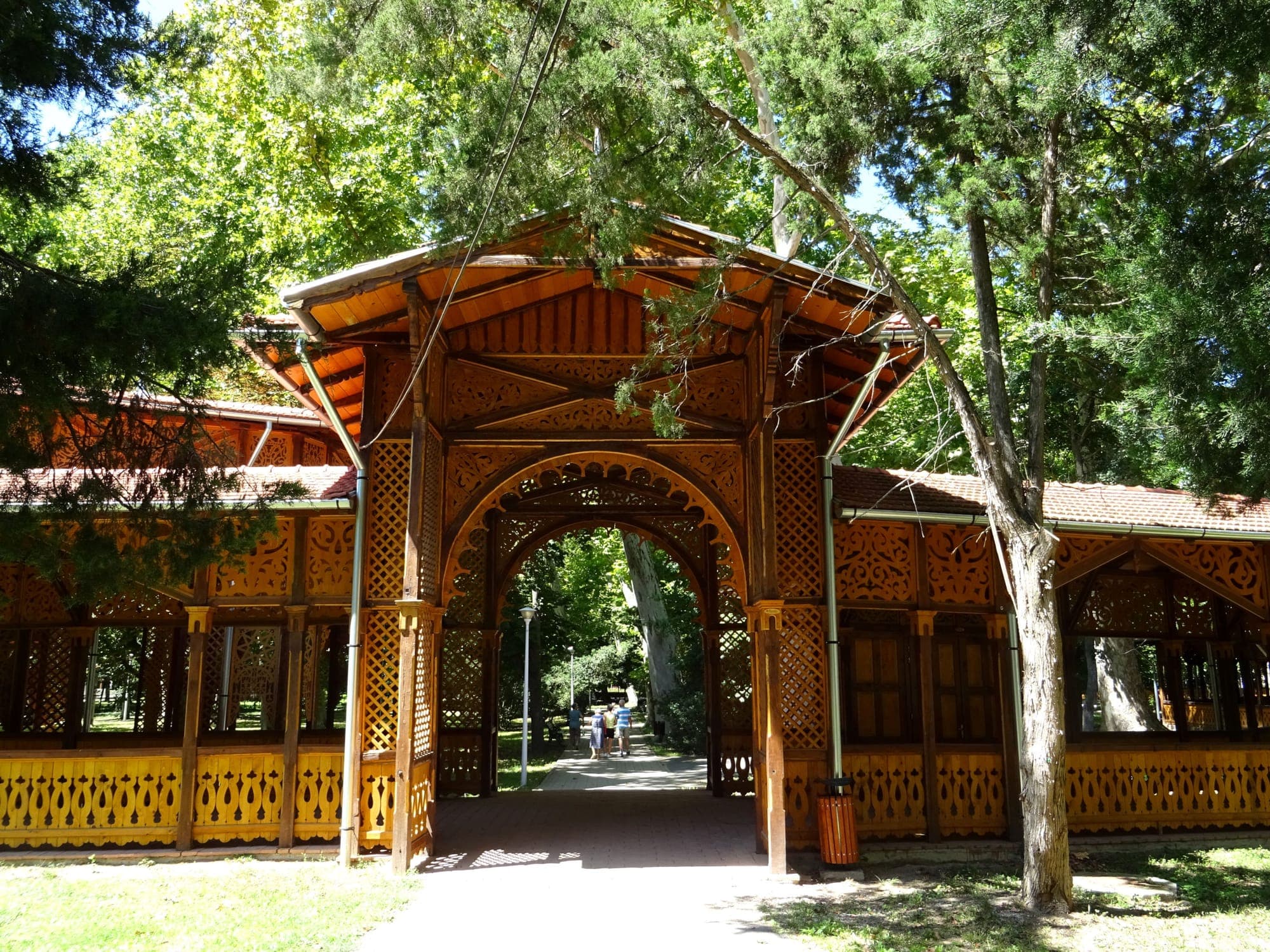
A spa resort in the Banat with carbonated mineral springs, a listed historic park of over 20 ha and a wooden colonnade about 500 m long.
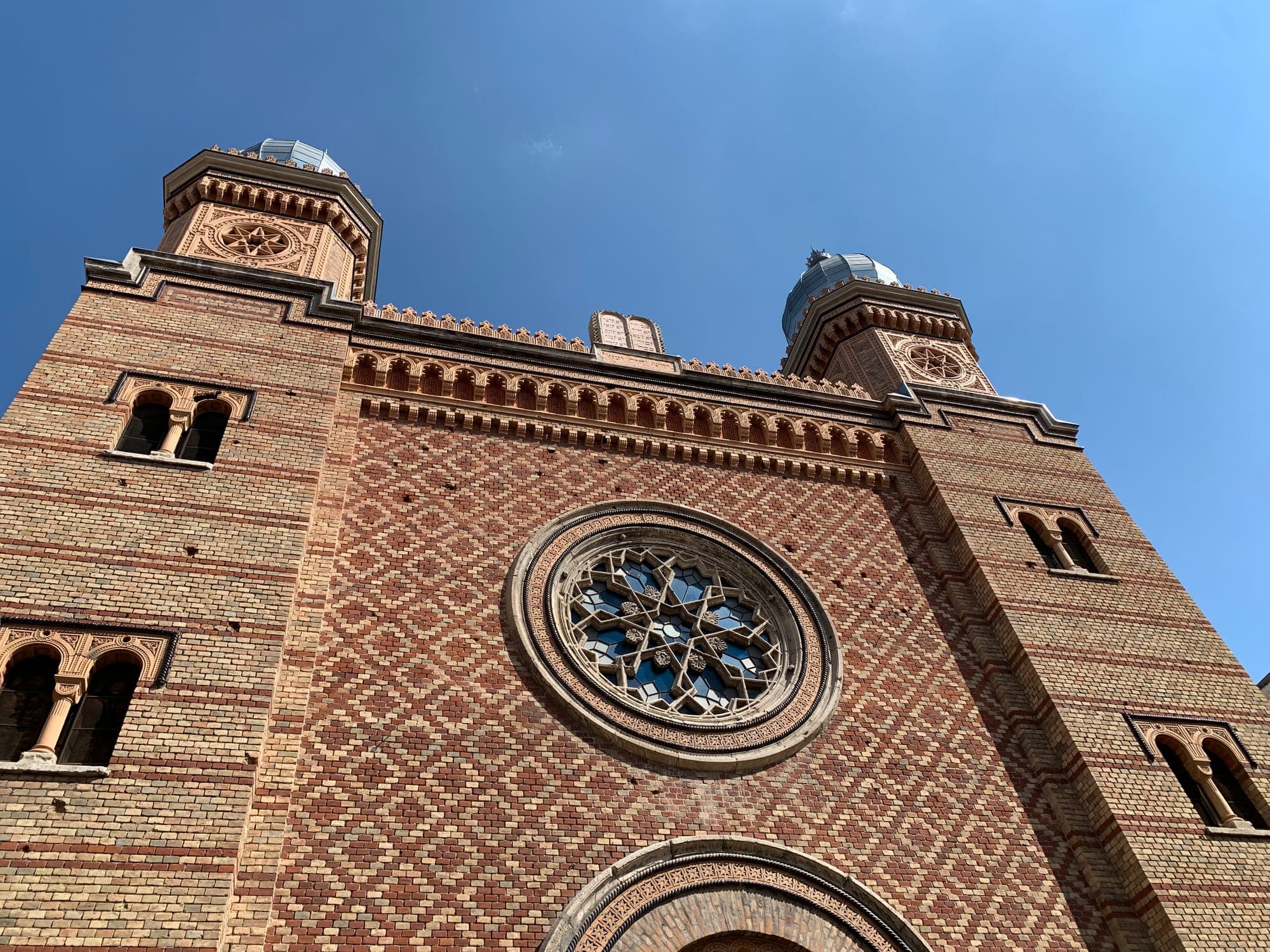
An eclectic synagogue with Moorish touches, built in 1863–1865 to plans by the Viennese architect Carl Schumann, with two domed towers and a two-colour brick façade; reopened in 2022.