Sucidava Fortress
Corabia, Olt County · Oltenia
About Sucidava Fortress
At a glance: Fortresses and fortifications in Corabia, Olt County. Ticket: Free. The visit takes ½ – 1 hours. Information verified on 10 October 2026.
Before the Roman conquest, Sucidava was a fortified centre of the Suci, a Getic tribe living on the Danube where the Olt flows in. After the Dacian wars the Romans built a fort here, around which a civilian settlement grew and became a town in the 3rd century. The first stone fortification dates from the reign of Emperor Aurelian (270–275), and Constantine the Great rebuilt it and linked it to the Bulgarian bank with a bridge across the Danube, inaugurated in 328: almost 2.4 km long, running from Sucidava towards Oescus, today Gigen in Bulgaria. The bridge did not last long, only until towards the end of the 4th century.
After the Huns devastated the town around the middle of the 5th century, the fortress was rebuilt under Emperor Justinian, in the first half of the 6th century. The Avars and Slavs ended Roman-Byzantine life here around the year 600, but the place stayed inhabited: the village of Celei grew up over the ruins and is now a district of Corabia, and in the Middle Ages the eastern walls were restored as a stronghold against the Ottomans.
What you can see
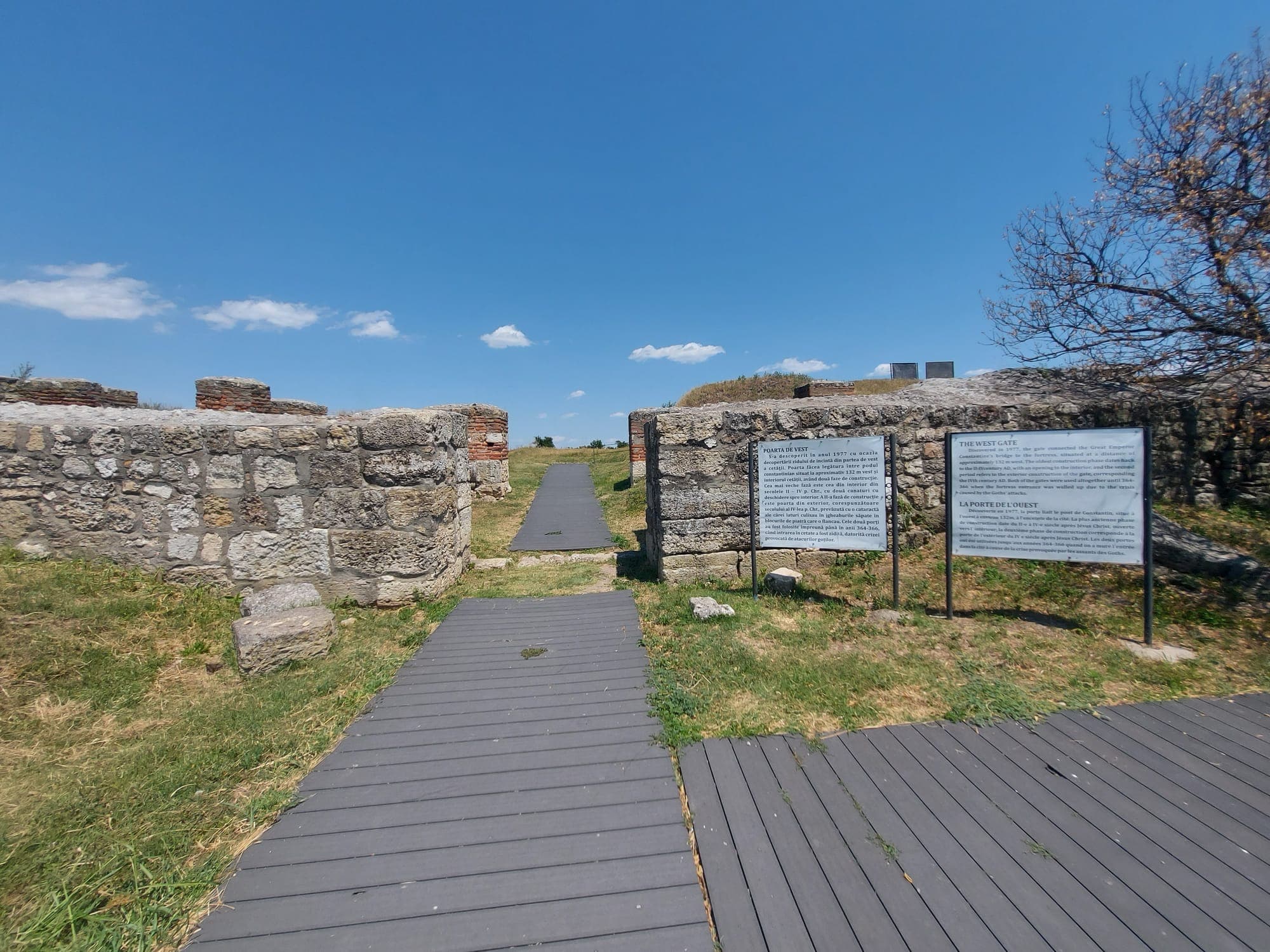
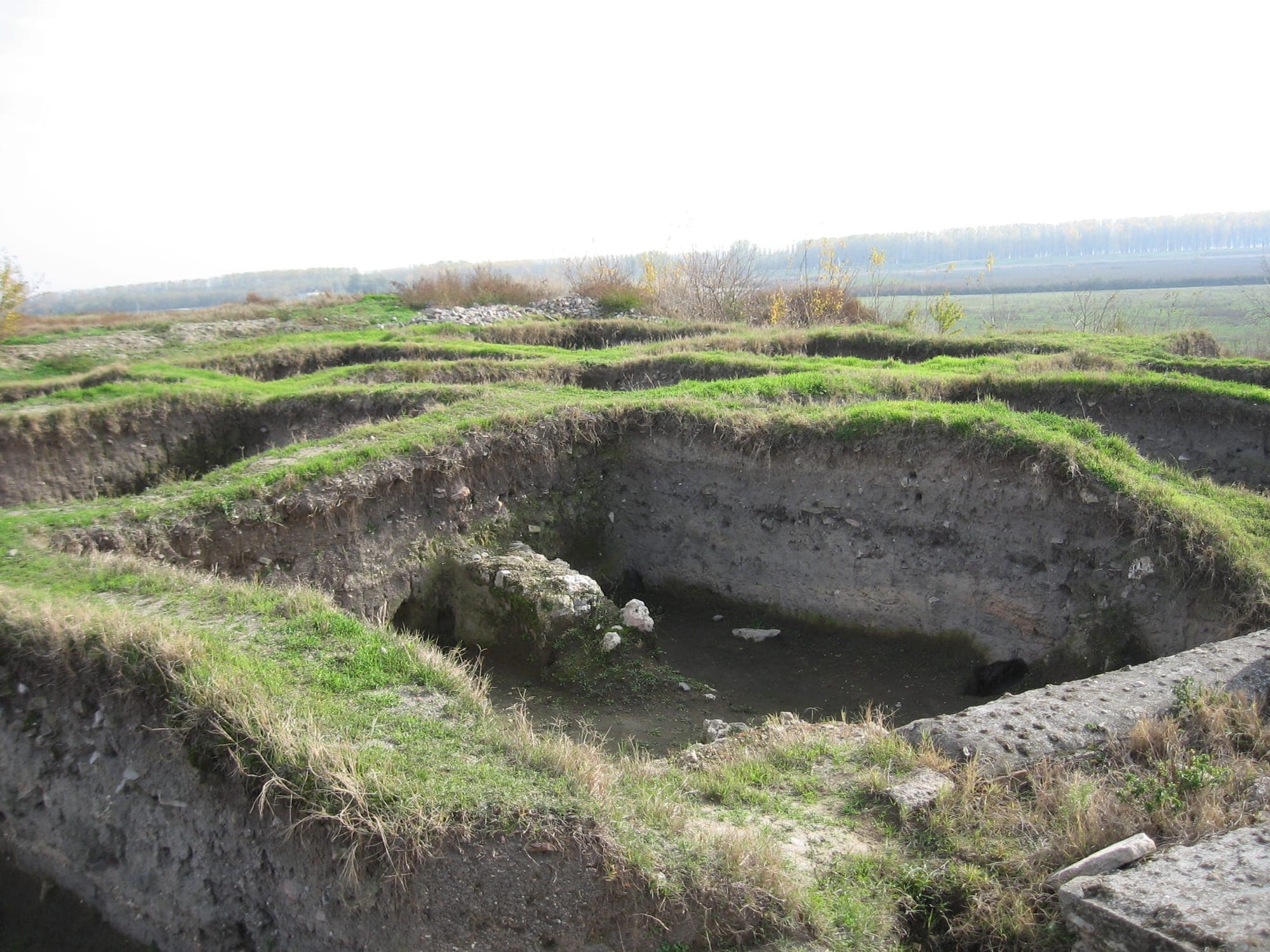
On the high terrace above the Danube you can see the defensive walls of the late Roman town, with eight excavated towers, and the west gate, the only gate of the fortress, where its building phases can be read. Laid-out paths lead to the building with a hypocaust, its floor raised on brick pillars through which warm air circulated, to the early Christian basilica of the 5th–6th centuries and to traces of much older habitation, from the Neolithic.
The best-known feature is the 6th-century secret well: an inclined corridor of about 26 m, with a brick vault, runs down beneath the south wall to a basin of spring water, tapped at the foot of the fortress, outside the walls. The site museum at the entrance displays finds from every period of the site, from Neolithic pottery to the Christian objects of the Roman town.
Good to know
The fortress is in the Celei district, a few kilometres from the town centre, and signs lead to it from the town. The sources disagree about opening hours (see the schedule below), and the official website was not responding when we checked: phone the museum before you go.
- The 6th-century secret well, an inclined corridor of about 26 m that runs beneath the south wall to the water of a spring.
- The west gate, the only gate of the fortress, with traces of its Roman and Byzantine phases.
- The hypocaust building with its floor on brick pillars, a well-preserved Roman heating system.
- The early Christian basilica of the 5th–6th centuries, the most important Christian church between the Carpathians and the Danube of its time.
- The northern pier of Constantine the Great's Bridge, almost 2.4 km long, one of the longest bridges of Antiquity.
Good to know before you go
- Getting there
By car: Corabia is ~97 km from Craiova, on the E70 to Caracal and then the DN54, and ~170 km from Bucharest, via Alexandria and Turnu Măgurele. The fortress is in the Celei district, ~5 km from the town centre; signs from the town lead you through a few streets to a small modern complex with the site museum, where the route begins.
Public transport: we found no confirmed public transport route to the fortress. The surest option without a car is a taxi from Corabia.
- Where to park
There is a small car park at the entrance, in front of the complex; we found no fee or hours for it.
- Fees & discounts
Entry to the fortress has been free in visits and reports of recent years (including at the event on 31 May–1 June 2026), but we found no published official tariff; some older sources mention a ticket of 1–2 lei. Check with the museum.
- Rules
An open-air archaeological site: stay on the paths and do not climb on the walls. The corridor of the secret well is narrow and goes underground; the visit is usually made with museum staff.
- Facilities
Site museum · guiding · laid-out paths · toilets · access for people with disabilities · Wi-Fi
Frequently asked questions about Sucidava Fortress
- How much is a ticket to Sucidava Fortress?
- Admission to Sucidava Fortress is free (per recent reports). Entry to the fortress has been free in visits and reports of recent years (including at the event on 31 May–1 June 2026), but we found no published official tariff; some older sources mention a ticket of 1–2 lei. Check with the museum.
- How long does a visit to Sucidava Fortress take?
- A visit to Sucidava Fortress takes about ½ – 1 hours (the fortress, the well and the museum).
- Can you visit Sucidava Fortress with kids?
- Yes, Sucidava Fortress is suitable for children (laid-out paths, guiding on request).
- How do I get to Sucidava Fortress?
- Sucidava Fortress is located at Sucidava Street, Celei district, Corabia, Olt County. By car: Corabia is ~97 km from Craiova, on the E70 to Caracal and then the DN54, and ~170 km from Bucharest, via Alexandria and Turnu Măgurele. The fortress is in the Celei district, ~5 km from the town centre; signs from the town lead you through a few streets to a small modern complex with the site museum, where the route begins. Public transport: we found no confirmed public transport route to the fortress. The surest option without a car is a taxi from Corabia.
- When is the best time to visit Sucidava Fortress?
- The best season for Sucidava Fortress: April – October (open-air site).
Reviews
Other attractions nearby
The closest attractions to Sucidava Fortress, sorted by distance.
 43 km from Sucidava Fortress
 80 km from Sucidava Fortress
 95 km from Sucidava Fortress