Most of the parks and gardens of Romania are legacies of the 19th century and the first decades of the 20th: public gardens drawn by landscape architects brought from France and Austria, the spa parks of the resorts, the rose gardens and botanical gardens of the university towns, but also the dendrological parks around castles and manor houses, planted by noble families with species brought from other continents. Many went through decades of neglect and are being restored one by one; most can be visited freely, and the estate parks are included in the castle ticket.
The Rose Park in Timișoara, on the bank of the Bega, is the best-known rose garden in the country. At the gates of Bucharest, Mogoșoaia Palace has its Italian garden and the English park laid out by Martha Bibescu, while on the Mureș valley the historic park of the Royal Castle of Săvârșin is visited with a guide. The dendrological parks of Károlyi Castle in Carei and Sturdza Castle of Miclăușeni have trees more than two centuries old, and at Cantacuzino Castle in Bușteni you stroll among fountains with the Bucegi Mountains behind.
The Neo-Romanian summer residence of the 'Nabob' Gheorghe Grigore Cantacuzino, with a ballroom lined with coats of arms, a terrace facing the Bucegi Mountains and the Nevermore Academy exterior from Wednesday.
Castles and palacesMuseums and memorial housesParks and gardens
Eclectic castle with towers and a moat, rebuilt in 1894–1896 by the Károlyi family in the middle of a three-century-old dendrological park; inside, period interiors, wax figures and African trophies.
Castles and palacesMuseums and memorial housesParks and gardens
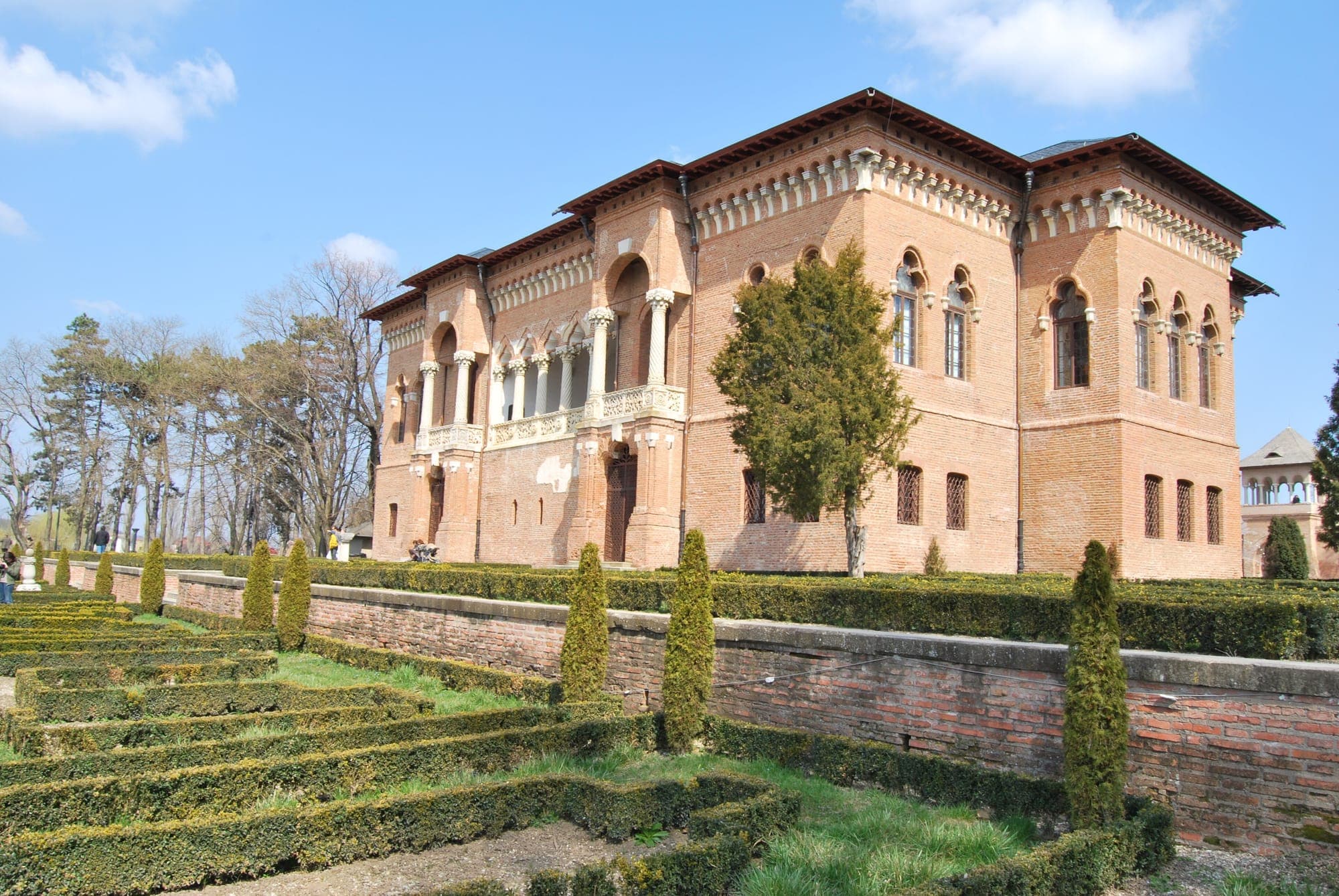
The Brâncovenesc palace built by Constantin Brâncoveanu in 1702, with its carved stone loggia, the old kitchen, a church from 1688 and a large lakeside park, 15 km from the centre of Bucharest.
Castles and palacesMuseums and memorial housesParks and gardens
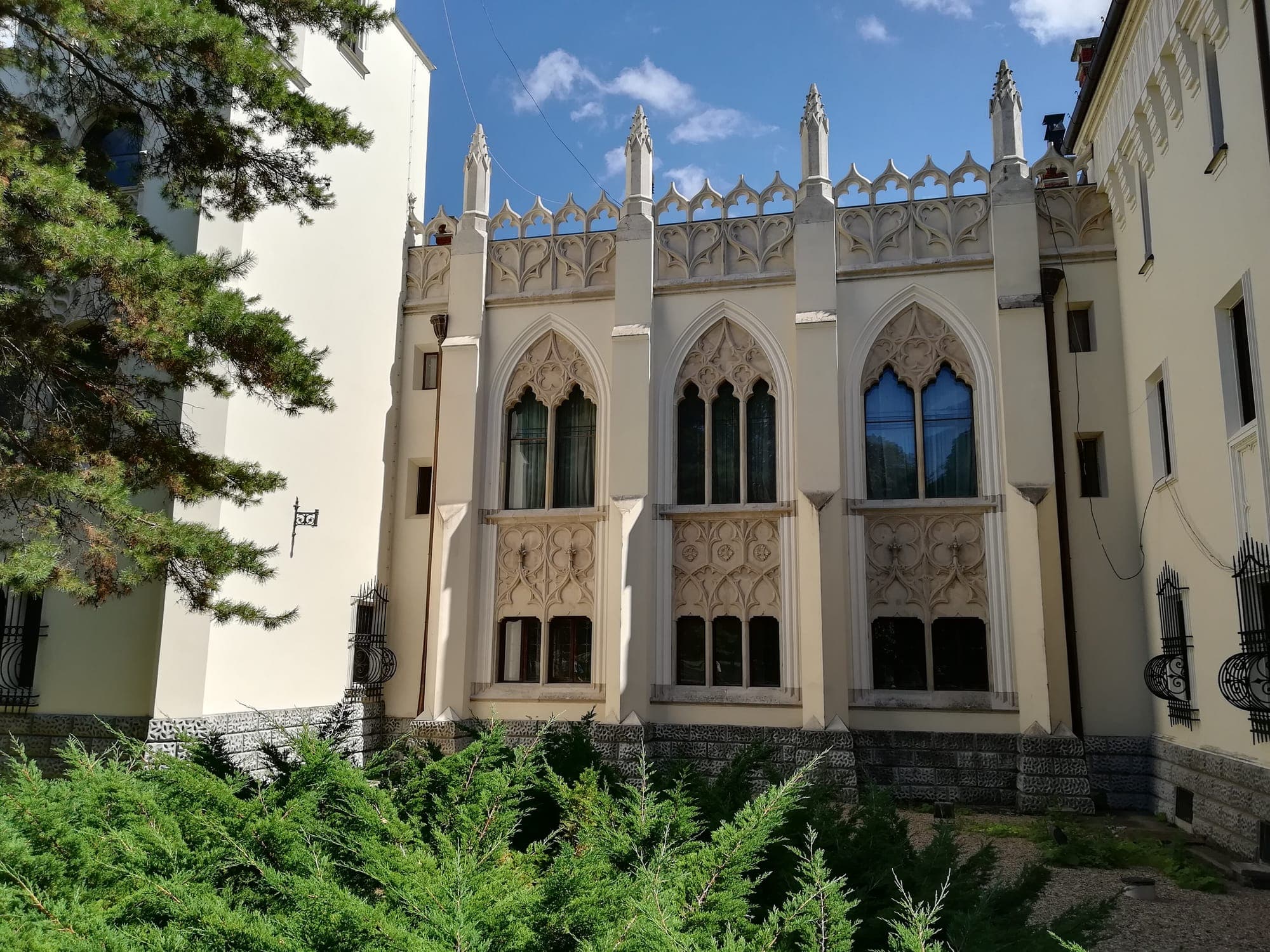
A Neo-Gothic palace built by George and Maria Sturdza between 1880 and 1904, its façades covered in coats of arms and stone tracery, set in an old park with ponds; reopened in 2026 after a major restoration.
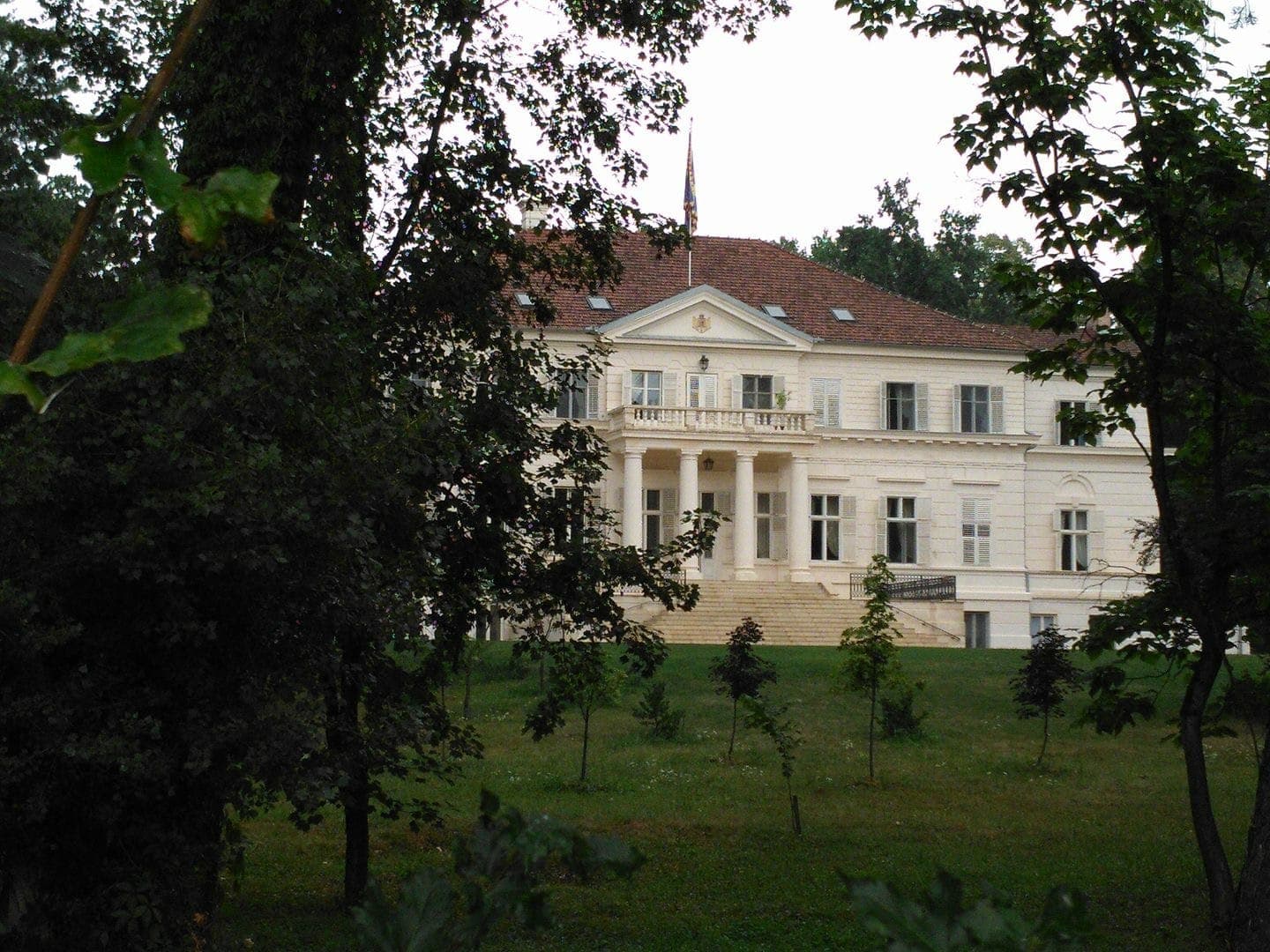
The Royal Family's Neoclassical residence in the Mureș valley, with a historic park open for guided tours and the Royal Village, where King Michael's garage is now a car museum; open at weekends, May–October.
Bucharest's oldest public park, laid out from 1847 in the landscape style around a lake, with shady avenues, the Writers' Rotunda and romantic stone corners, right in the city centre.
A forest of about 300 ha on the western edge of Cluj, known for its twisted tree trunks, the Round Clearing and the "paranormal" legends that made it famous worldwide.
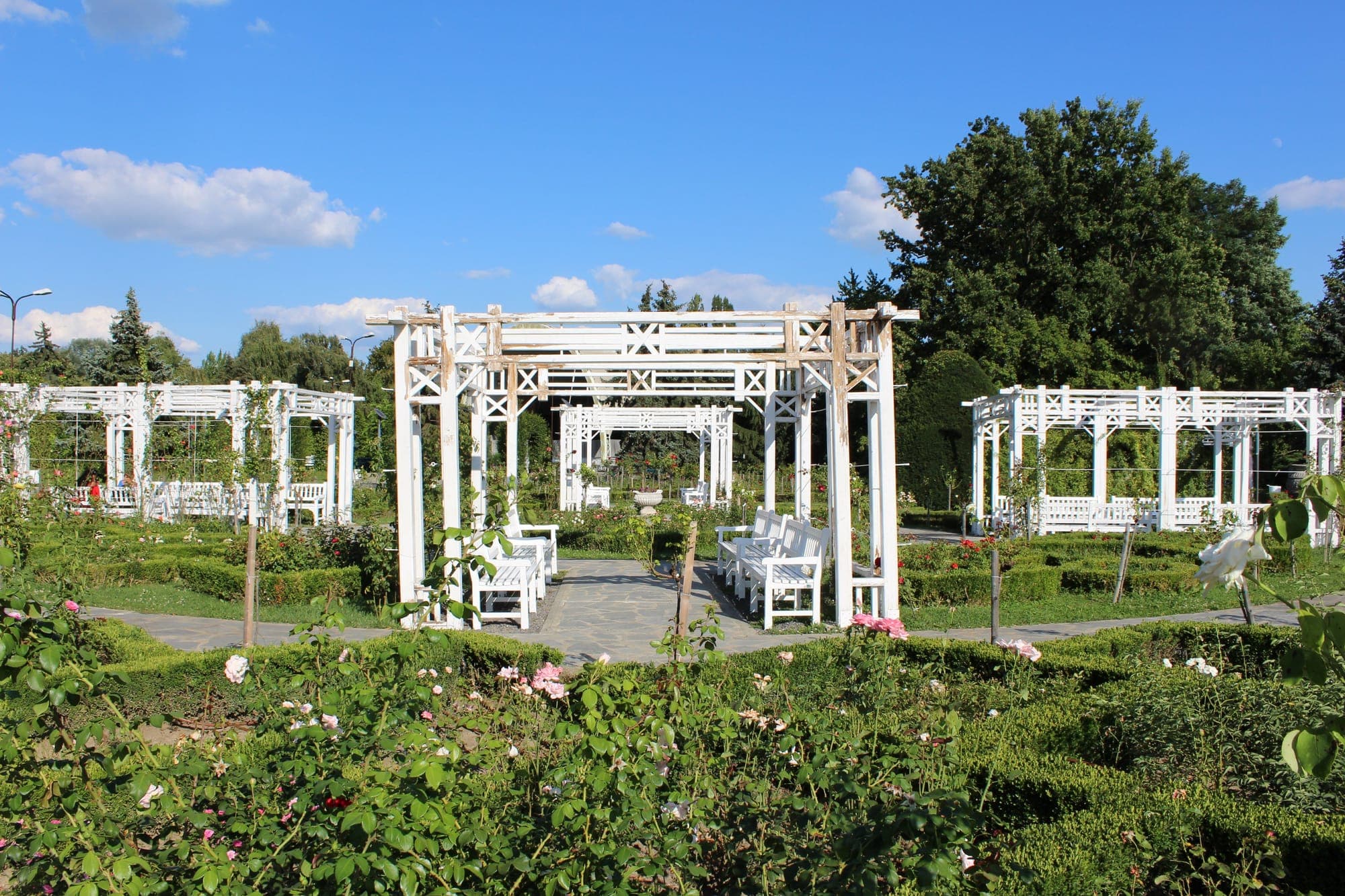
Timișoara's historic rose garden, laid out in 1929–1934: rose beds edged with clipped hedges, white wooden pergolas and an open-air summer theatre, in a park of nearly four hectares.
A botanical garden of almost 13 hectares in the middle of Craiova, with lakes, a collection of more than 3,000 taxa, walking paths and a new tropical greenhouse under construction.
The first botanical garden in Romania, run by “Alexandru Ioan Cuza” University: almost 90 hectares on Copou Hill, with a rose garden, a greenhouse complex, a lake and annual chrysanthemum shows.
The University of Bucharest's botanical garden, in Cotroceni: more than 18 hectares with a rose garden, an Italian garden, a lake with an island, greenhouses with palms and orchids, and a botanical museum.
A 21.5-hectare dendrological park around the Csernovics Castle, with one of the richest collections of trees and shrubs in the country, an alpine garden, stone sculptures and small museums in the old hunting lodge.
The botanical garden of Babeș-Bolyai University, on almost 14 hectares in the south of Cluj: a Japanese garden with a tea house on a lake, greenhouses more than 60 years old, a water tower and a botanical museum.
 Top 100