Căpâlna Dacian Fortress
Căpâlna, Alba County · Transylvania

About Căpâlna Dacian Fortress
At a glance: Fortresses and fortifications in Căpâlna, Alba County. Opening hours: daily open 24 hours. Ticket: Free. The visit takes 1½ – 2 hours. Information verified on 7 October 2026.
The Dacian fortress of Căpâlna sits on top of Dealul Cetății, the "Fortress Hill", at about 650 m above sea level on the left bank of the Sebeș river, where it guarded the valley road towards the mountains to the south. It was built around the middle of the 1st century BC and remained in use until the Roman conquest: after the first war with Trajan (AD 101–102) its walls were partly dismantled, and in AD 106 the fortress was destroyed and abandoned.
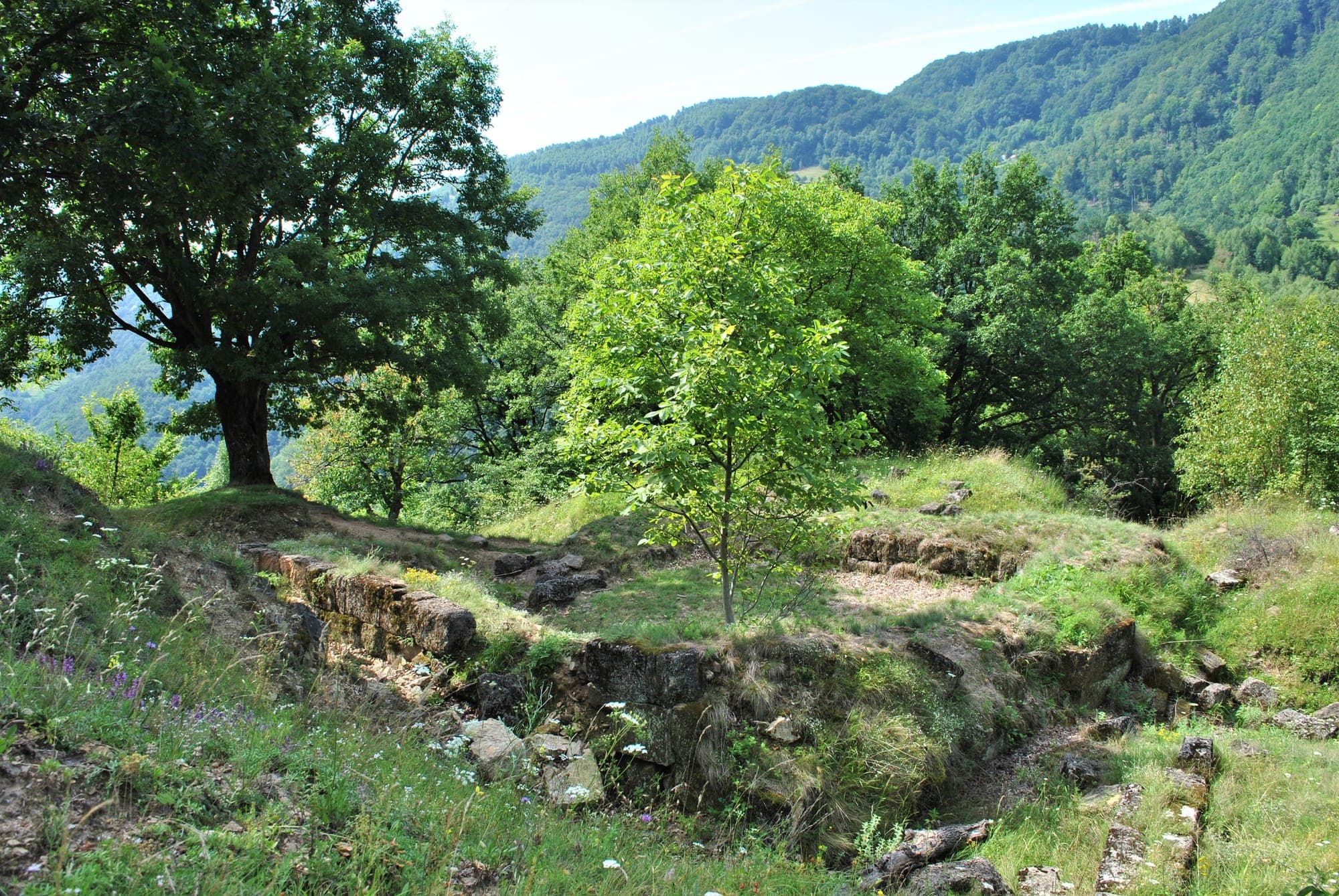
The enclosure is roughly oval, with a perimeter of about 270–280 m, and was closed by a wall in the murus dacicus technique, made of dressed limestone blocks, 1.5–2.5 m thick. Next to the main gate stood a square tower house, about 9.5 m a side, probably the residence of a Dacian nobleman. Excavations, begun in 1939 and resumed up to the 1980s, uncovered iron tools and weapons, pottery, jewellery and Roman silver coins, and a gold necklace with 27 pendants and two earrings, taken from the fortress by treasure hunters and later recovered, are kept at the National Museum of the Union in Alba Iulia.
Since 1999 Căpâlna has been part of the "Dacian Fortresses of the Orăștie Mountains", inscribed on the UNESCO World Heritage List together with Sarmizegetusa Regia, Costești-Cetățuie, Costești-Blidaru, Luncani-Piatra Roșie and Bănița; it is the only one of the six in Alba County.
What you can see
On the summit plateau you can see sections of the enclosure wall, with courses of large limestone blocks laid without mortar, and the foundations of the tower house by the gate. Paths run through the grass and among oak trees between the ruins, and from the edge of the plateau there is a wide view over the wooded hills of the Sebeș valley. There is an information panel at the entrance to the site.
Good to know
The site has no visitor facilities: there is no ticket office, no warden and no amenities, and the climb from the main road is on foot, about 2 km along a dirt track and a sloping path. Alba County Council has taken over the fortress in order to restore it, but work had not started at the time of the latest information we found.
- The sections of wall in the murus dacicus technique, made of large dressed limestone blocks laid without mortar.
- The foundations of the square tower house by the main gate, about 9.5 m a side.
- The view from the edge of the plateau over the wooded hills of the Sebeș valley.
- The gold necklace with 27 pendants found at the fortress, kept at the National Museum of the Union in Alba Iulia — worth combining with your visit.
Good to know before you go
- Getting there
By car: from Sebeș take the DN67C (the Transalpina) south up the Sebeș valley, through Săsciori, to the village of Căpâlna, ~20 km away. At the end of the village, towards Șugag, a sign points the way to the fortress. From the main road it is ~2 km on foot, first along a dirt track, then on a path through the forest, with a climb of ~280 m; the dirt track is only partly passable, and only for 4x4 vehicles. Sebeș is ~15 km from Alba Iulia and ~55 km from Sibiu on the A1 motorway.
Public transport: we found no confirmed timetable to Căpâlna. The nearest railway station is Sebeș, from where you continue by car or taxi.
- Where to park
We found no information about a car park at the foot of the hill; the restoration project includes one, together with an information centre.
- Fees & discounts
Admission is free, no ticket needed.
- Rules
A historic monument and UNESCO site: do not climb on the walls, move stones or dig (searching for objects with metal detectors is a criminal offence). Wear hiking shoes and bring water and tick protection; the path is slippery after rain.
- Facilities
No facilities at the site (no toilets, water or shops) · information panel at the entrance to the site · guesthouses in the village of Căpâlna, on the DN67C
Frequently asked questions about Căpâlna Dacian Fortress
- How much is a ticket to Căpâlna Dacian Fortress?
- Admission to Căpâlna Dacian Fortress is free. Admission is free, no ticket needed.
- What are the opening hours of Căpâlna Dacian Fortress?
- Opening hours at Căpâlna Dacian Fortress: daily open 24 hours. Open-air archaeological site with no opening hours and no ticket office. Go up in daylight: the path runs through the forest and is not lit.
- How long does a visit to Căpâlna Dacian Fortress take?
- A visit to Căpâlna Dacian Fortress takes about 1½ – 2 hours (including the ~2 km climb).
- Can you visit Căpâlna Dacian Fortress with kids?
- Yes, Căpâlna Dacian Fortress is suitable for children (uphill path, no pushchairs).
- How do I get to Căpâlna Dacian Fortress?
- Căpâlna Dacian Fortress is located at Dealul Cetății, ~2 km on foot from the DN67C, from the end of the village towards Șugag, Căpâlna, Alba County. By car: from Sebeș take the DN67C (the Transalpina) south up the Sebeș valley, through Săsciori, to the village of Căpâlna, ~20 km away. At the end of the village, towards Șugag, a sign points the way to the fortress. From the main road it is ~2 km on foot, first along a dirt track, then on a path through the forest, with a climb of ~280 m; the dirt track is only partly passable, and only for 4x4 vehicles. Sebeș is ~15 km from Alba Iulia and ~55 km from Sibiu on the A1 motorway. Public transport: we found no confirmed timetable to Căpâlna. The nearest railway station is Sebeș, from where you continue by car or taxi.
- When is the best time to visit Căpâlna Dacian Fortress?
- The best season for Căpâlna Dacian Fortress: April – October (path is hard going after rain).
Reviews
Other attractions nearby
The closest attractions to Căpâlna Dacian Fortress, sorted by distance.
 Top 10011 km from Căpâlna Dacian Fortress
 24 km from Căpâlna Dacian Fortress
 Top 2036 km from Căpâlna Dacian Fortress
