
Cetățuia Monastery
About Cetățuia Monastery
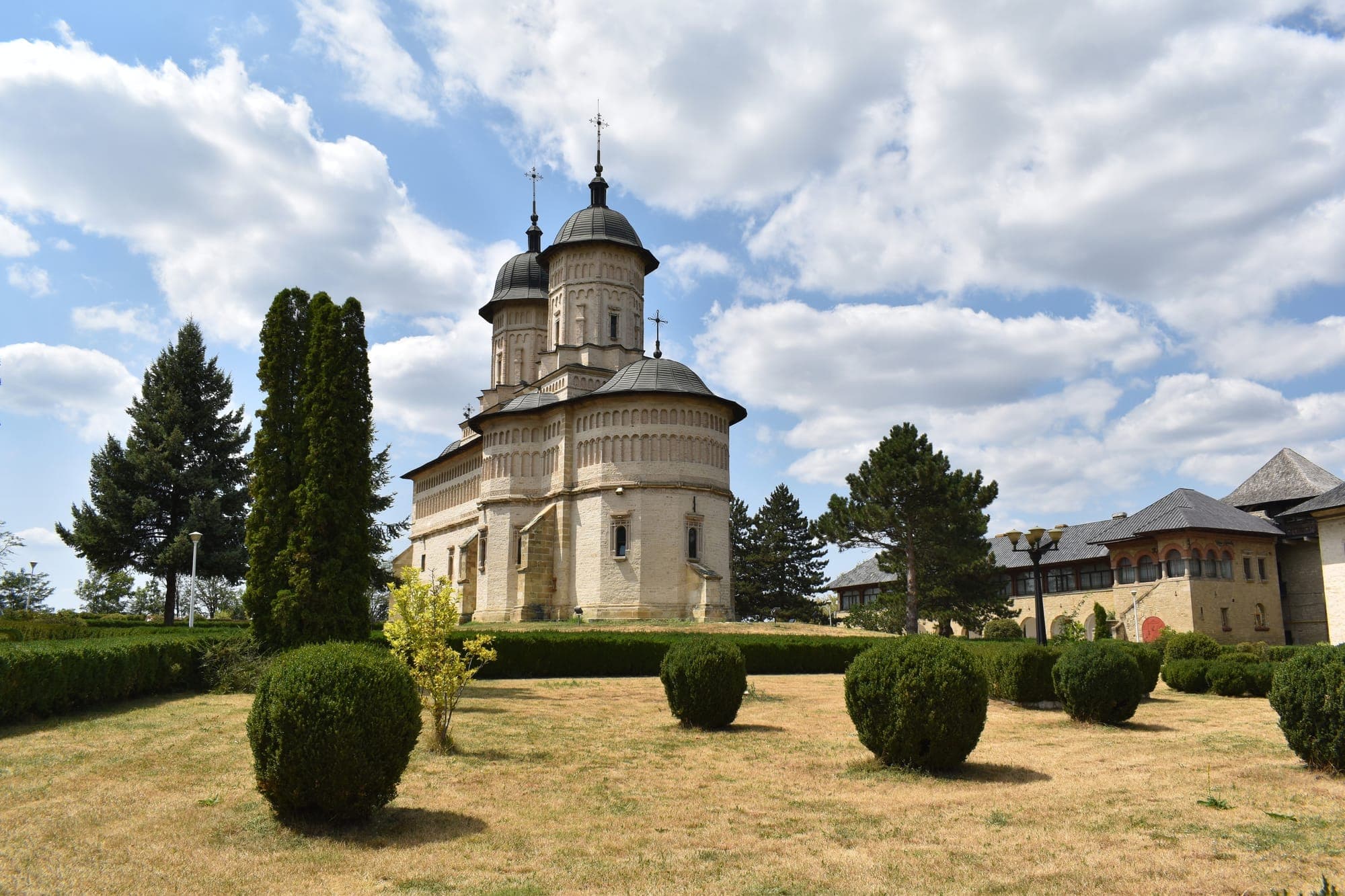
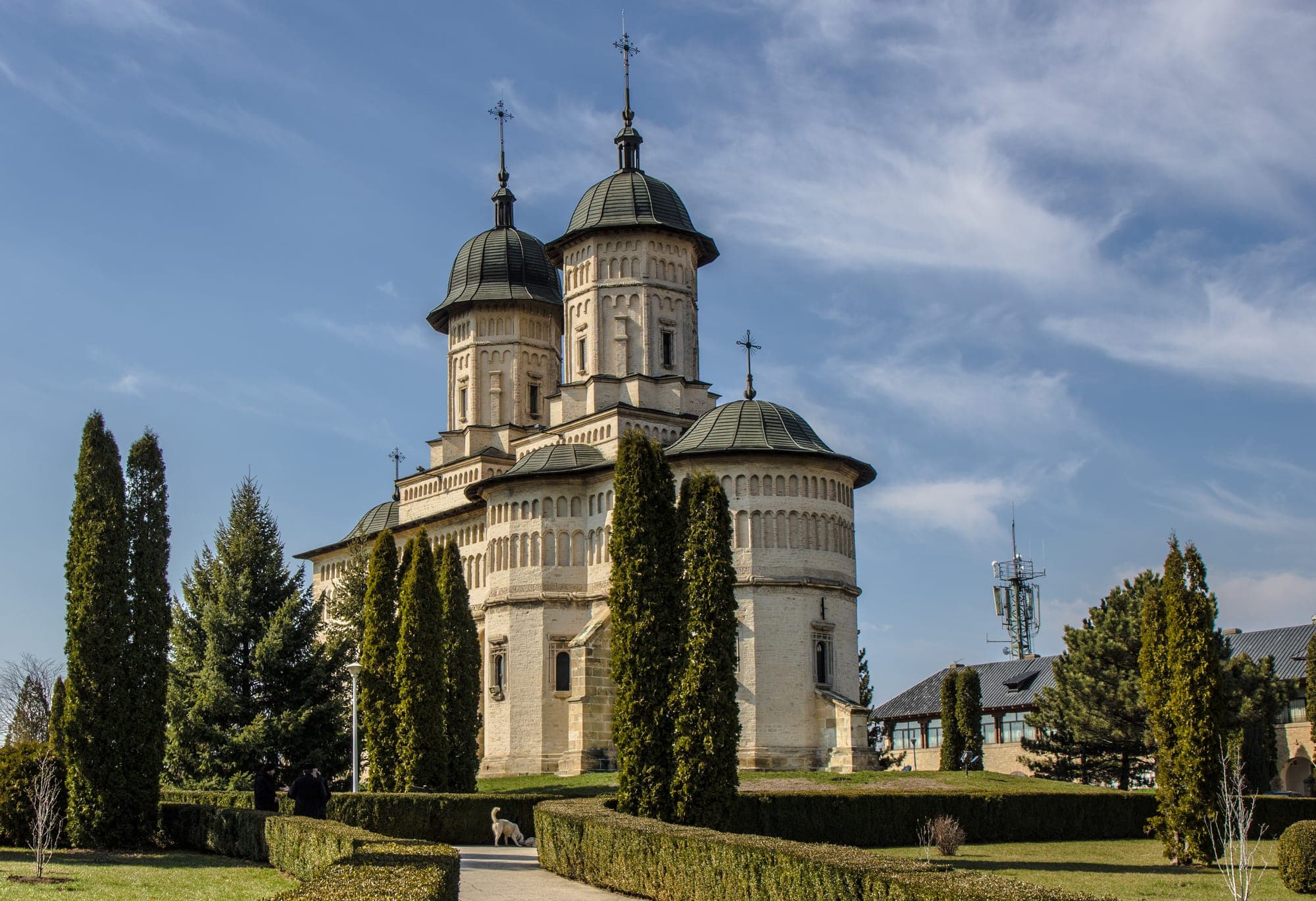
Cetățuia Monastery stands on a hill in the south of Iași, with a view over the city. Prince Gheorghe Duca began it in the autumn of 1668 and conceived it as a fortified monastery in which the prince and the boyars could take shelter in case of invasion. The walls and the bell tower were finished by 10 June 1670, and the church, dedicated to the Holy Apostles Peter and Paul, was consecrated in 1672.
The church is a simplified copy of the Three Hierarchs Church: a trefoil plan, two octagonal towers, a twisted stone belt running around it and rows of blind niches under the eaves. The fresco decoration dates from 1673 and was painted by craftsmen from Ioannina. In the narthex the votive portrait of the founder's family has survived, and in a niche in the south wall lies the tomb of Gheorghe Duca, brought here in 1693 by his son Constantin; his daughter Maria was buried in the same niche in 1672. In 1682 a printing press was set up here, printing Greek books for the Orthodox East.
A ruin by the end of the 19th century, the monastery was restored in 1910–1911 and again in 1930 by the Historic Monuments Commission, then chaired by Nicolae Iorga. The works of 1964–1971 rebuilt the bell tower, the walls and the bastions. Today it is a monastery of monks.
What you can see
The grounds around the church, with lawns and clipped thuja, from which you see the stone facades and towers. The enclosure wall, almost 1.4 m thick and about 7 m high, with bastions, and the bell tower at the south entrance, with the coat of arms of Moldavia and the inscription of 1670. Within the enclosure stand the abbot's building, with the Gothic Hall on the upper floor, the Princely House, which holds the monastery museum, and the princely kitchen, the old kitchen of the court, with its lantern vault. The hill also offers a view over the city.
Good to know
The monastery is active, with daily services. The restoration of the mural painting in the altar and nave is under way, in a project planned to run until the end of 2027; ask at the gate about visiting the church interior.
Information verified on 28 October 2026.
- The church with its octagonal towers and twisted stone belt, a simplified copy of the Three Hierarchs.
- The tomb of Gheorghe Duca, in a niche in the narthex, and the votive portrait of his family.
- The bell tower at the entrance, with the coat of arms of Moldavia on the inscription of 1670.
- The enclosure wall with bastions, which surrounds the monastery like a fortress.
- The princely kitchen, the old kitchen of the court, with its lantern vault.
Good to know before you go
- Getting there
By car: the monastery is on Strada Cetățuia, on a hill in the south of Iași; from the Palace of Culture area it is ~5 km, about 10 minutes through the city streets.
Public transport: Cetățuia hill lies outside the historic centre; from the centre you can get there by taxi or by car.
- Rules
Modest dress: shoulders and knees covered, hats off in the church. Quiet in the grounds and in the church, especially during services.
- Facilities
The monastery museum, in the Princely House
Frequently asked questions about Cetățuia Monastery
How long does a visit to Cetățuia Monastery take?
A visit to Cetățuia Monastery takes about 45 min (grounds, church and enclosure).
Can you visit Cetățuia Monastery with kids?
Yes, Cetățuia Monastery is suitable for children (wide courtyard, with lawns).
How do I get to Cetățuia Monastery?
Cetățuia Monastery is located at Strada Cetățuia 1, Iași, Iași County. More under “Getting there”
When is the best time to visit Cetățuia Monastery?
The best season for Cetățuia Monastery: All year round (a clear day, for the view).
Reviews
Other attractions nearby
The closest attractions to Cetățuia Monastery, sorted by distance.
 3 km from Cetățuia Monastery
 Top 1004 km from Cetățuia Monastery
 4 km from Cetățuia Monastery

