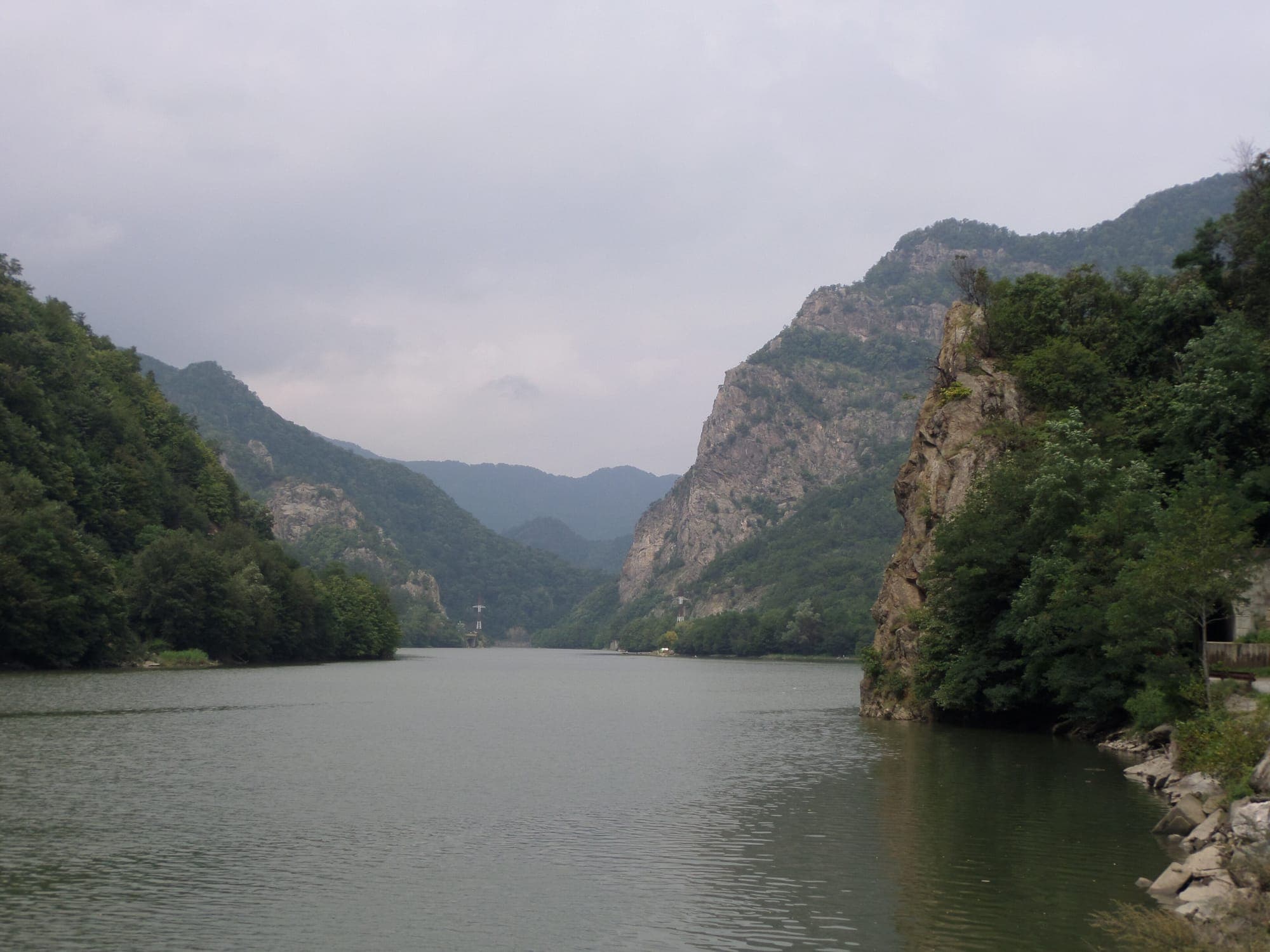
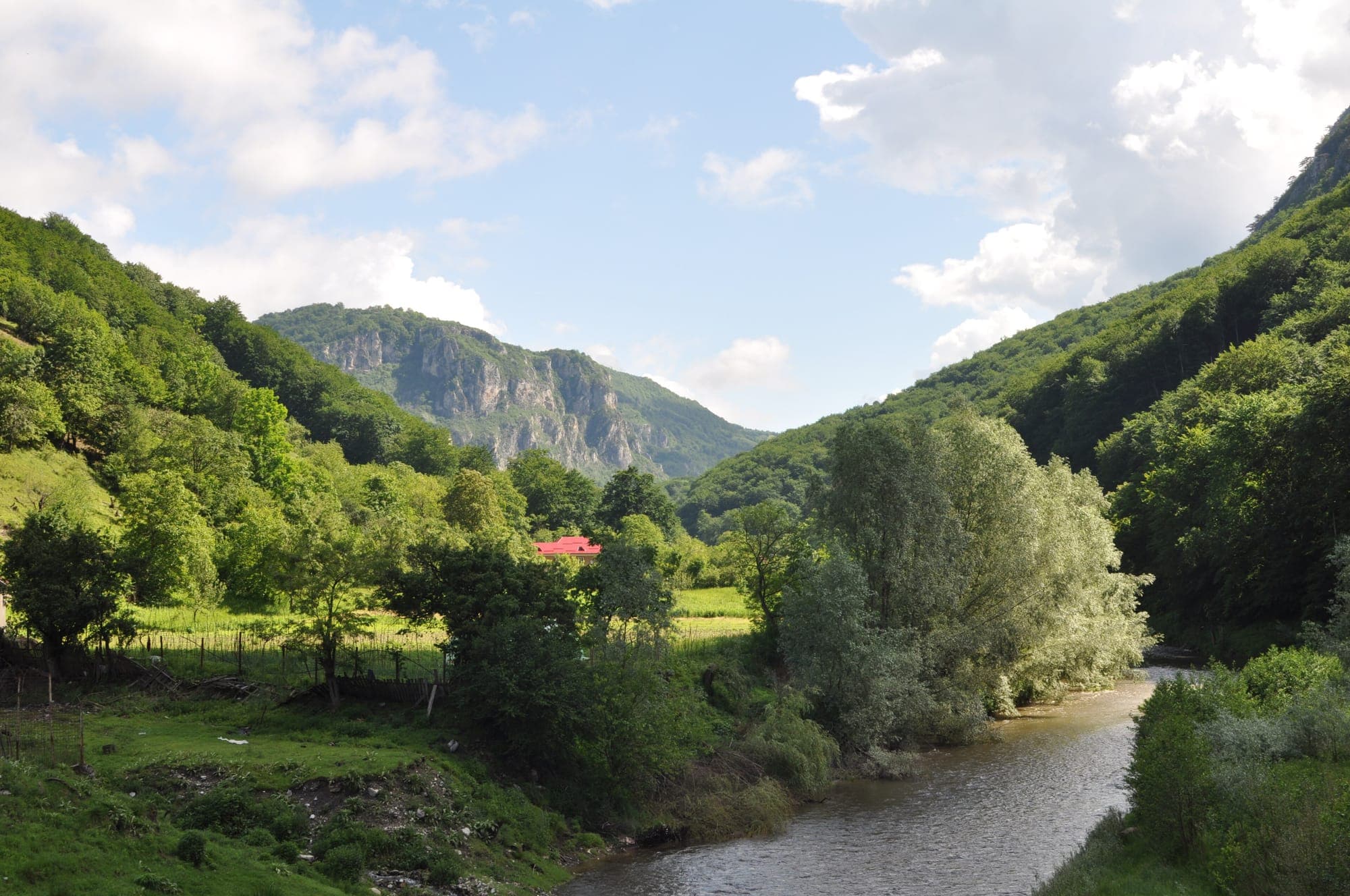
About Jiu Gorge
At a glance: Scenic roads in Gorj County. Opening hours: daily open 24 hours. Ticket: Free. Information verified on 29 September 2026.
Between Livezeni, on the edge of Petroșani, and Bumbești-Jiu, at the gateway to Oltenia, the Jiu has cut its way through the Southern Carpathians over 33 km, with the Vâlcan Mountains to the west and the Parâng Mountains to the east. The steep slopes, covered mostly in beech and sessile oak forest, drop straight into the river, and the valley floor has room for little more than the water, the DN66 (E79) road and the railway. Since 2005 almost the whole gorge has been a national park, covering 11,127 ha.
The pass, known in the past as the Surduc Pass, was for a long time only a footpath. The carriage road was begun in the 1870s, for the coal of the Jiu Valley, and inaugurated in 1894 at Polatiște, on the old border between Romania and Austria-Hungary, today the boundary between Gorj and Hunedoara counties. In the autumn of 1916 heavy fighting took place here, and the Bumbești – Livezeni railway, built on and off for decades, was only finished in 1948, with 39 tunnels and 35 bridges and viaducts.
What you can see
From the south, after Bumbești-Jiu, the valley quickly narrows between wooded walls, with the Jiu tumbling over boulders below the road. Halfway along, right by the road, stands Lainici Monastery, with its painted old church and the large new church built after 1990. Nearby you can see the Lainici Sphinx, a rock with the profile of a sphinx, and the marble cross raised in memory of General Ion Dragalina, who was wounded here in 1916. Further up are the Murga waterfall, with a small car park by the road, the former border post at Polatiște and, to the north, the exit towards Livezeni and Petroșani.
Good to know
The road is narrow and winding, with few places to stop, and stones often fall from the slopes, especially after rain; the protective nets are cleared regularly. In autumn 2026 there are maintenance works, with alternating one-way traffic and short stops.
- Lainici Monastery, right by the DN66, with its painted old church and the new two-level church.
- The Lainici Sphinx, the sphinx-profiled rock north of the monastery, reached by a themed trail of about 2 hours.
- General Ion Dragalina's marble cross, raised in 1927 on the left bank of the Jiu, where he was wounded in 1916.
- The Murga waterfall, with a car park and picnic table by the road, after Pietrele Albe, heading towards Bumbești-Jiu.
- The viaducts and tunnels of the Bumbești – Livezeni railway, visible from the road on the opposite bank of the Jiu.
Good to know before you go
- Getting there
By car: on the DN66 (E79), from the south from Târgu Jiu via Bumbești-Jiu, or from the north from Petroșani via Livezeni. Lainici Monastery, roughly halfway through the gorge, is ~32 km from Târgu Jiu and ~25 km from Petroșani. The stretch of road between Bumbești-Jiu and Petroșani is about 32 km long.
Public transport: the Târgu Jiu – Petroșani railway (Bumbești – Livezeni) runs through the gorge, through tunnels and over viaducts, on the bank opposite the road; from the train you can see the gorge without the stress of driving. The line was temporarily closed in 2026 and reopened on 14 September 2026, so check the timetable first.
- Where to park
Do not stop on the carriageway: the DN66 is narrow, with blind bends and rock walls from which stones can fall. Stop only in the designated places: at Lainici Monastery, at the car park with a picnic table by the Murga waterfall, at the Lainici camping area, or in Bumbești-Jiu and Petroșani.
- Fees & discounts
The road is public and free, with no toll; the road vignette (rovinieta) is compulsory, as on every national road. For visiting the national park (trails, camping), the administration charges a fee: 10 lei per person for 7 days (1–4 people), 3 lei per person for groups of more than 5, and 50 lei for a tent or other shelter when camping, for 7 days. Tickets are sold at the Visitor Centre in Bumbești-Jiu, by the rangers or online. A tour with a park guide costs 33 lei per person per day (groups of 5–20), and bike hire 55 lei per day.
- Rules
Keep to the speed limits and the solid lines: the road has many tight bends and overtaking is dangerous. In work zones traffic runs one way at a time, controlled by lights or flaggers. Do not stop under the rocky slopes, especially after rain. In the park do not feed the bears, leave litter, pick plants or catch animals; hiking is allowed only on the marked themed trails. You can check road conditions with the CNAIR dispatch centre (021 9360).
- Facilities
The park's Visitor Centre in Bumbești-Jiu (Strada Zorilor 6), with a 3D model of the park and bike hire · camping area at Lainici, with fire pits and picnic tables · petrol stations, restaurants, shops and accommodation in Bumbești-Jiu and Petroșani · no public toilets on the road
Frequently asked questions about Jiu Gorge
- How much is a ticket to Jiu Gorge?
- Admission to Jiu Gorge is free (public road, no toll). The road is public and free, with no toll; the road vignette (rovinieta) is compulsory, as on every national road. For visiting the national park (trails, camping), the administration charges a fee: 10 lei per person for 7 days (1–4 people), 3 lei per person for groups of more than 5, and 50 lei for a tent or other shelter when camping, for 7 days. Tickets are sold at the Visitor Centre in Bumbești-Jiu, by the rangers or online. A tour with a park guide costs 33 lei per person per day (groups of 5–20), and bike hire 55 lei per day.
- What are the opening hours of Jiu Gorge?
- Opening hours at Jiu Gorge: daily open 24 hours. The road is open at all times, all year round. Since 21 July 2026 the Târgu Jiu national roads section has been clearing and repairing the protective nets on the slopes between Bumbești-Jiu and Polatiște: in the work zones traffic runs one way at a time, directed by flaggers, with stops of 10–15 minutes; no end date has been announced. At the end of September 2026 cracks in the road surface are also being sealed. After heavy rain or rockfalls traffic may be stopped temporarily. Check the announcements of CNAIR, the national road authority, before setting off.
- Can you visit Jiu Gorge with kids?
- Yes, Jiu Gorge is suitable for children (winding road, few stops).
- How do I get to Jiu Gorge?
- Jiu Gorge is located at DN66 (E79), between Bumbești-Jiu (Gorj county) and Livezeni (Hunedoara county); at Lainici Monastery, Gorj County. By car: on the DN66 (E79), from the south from Târgu Jiu via Bumbești-Jiu, or from the north from Petroșani via Livezeni. Lainici Monastery, roughly halfway through the gorge, is ~32 km from Târgu Jiu and ~25 km from Petroșani. The stretch of road between Bumbești-Jiu and Petroșani is about 32 km long. Public transport: the Târgu Jiu – Petroșani railway (Bumbești – Livezeni) runs through the gorge, through tunnels and over viaducts, on the bank opposite the road; from the train you can see the gorge without the stress of driving. The line was temporarily closed in 2026 and reopened on 14 September 2026, so check the timetable first.
- When is the best time to visit Jiu Gorge?
- The best season for Jiu Gorge: All year round (watch for stones after rain).
Reviews
Other attractions nearby
The closest attractions to Jiu Gorge, sorted by distance.
 28 km from Jiu Gorge
 Top 2029 km from Jiu Gorge