Văcărești Nature Park (the Văcărești Delta)
București · Muntenia

About Văcărești Nature Park (the Văcărești Delta)
At a glance: National parks and reserves in București. Opening hours: daily 07:00 – 21:00. Ticket: Free. The visit takes 1½ – 2 hours. Information verified on 24 September 2026.
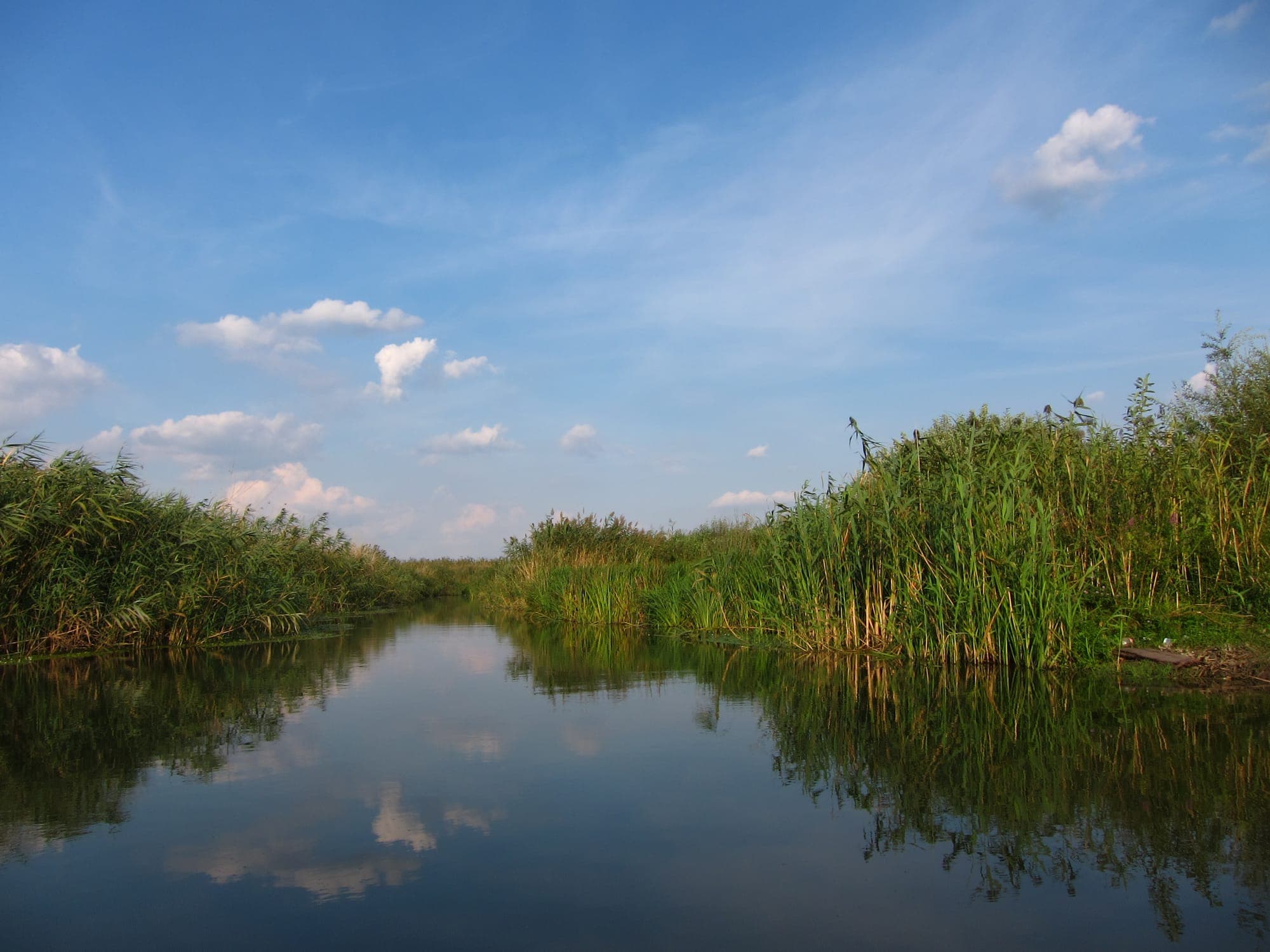
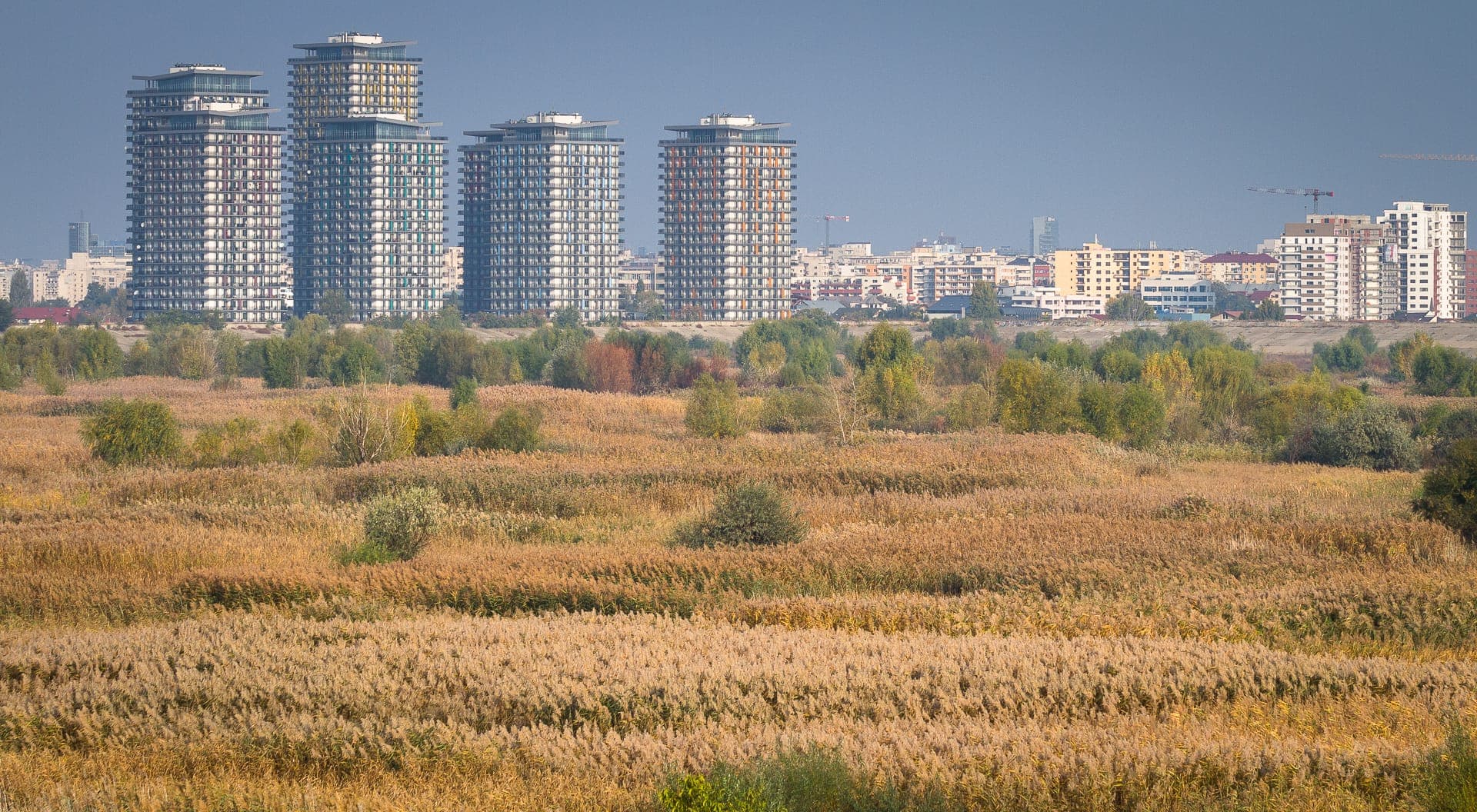
In southern Bucharest, between Splaiul Unirii, Calea Văcărești, Șoseaua Olteniței and Șoseaua Vitan-Bârzești, a concrete dyke encloses a place the city forgot for 25 years: the former Lake Văcărești. Inside, across 183 hectares, reed beds, willows, ponds and meadows have grown up, where egrets, pygmy cormorants and swans nest and where otters, hedgehogs and foxes come out to feed at dusk. Locals called it "the delta among the blocks of flats", and since May 2016 it has officially been Văcărești Nature Park, Romania's first urban nature park and the first protected area in the capital.
The story begins with a demolition. On this hill, between 1716 and 1722, Nicolae Mavrocordat founded Văcărești Monastery, regarded as the largest monastic ensemble in south-eastern Europe and one of the high points of the Brâncovenesc style; later used as a prison, it was razed to the ground in December 1986. In 1988 Nicolae Ceaușescu decreed the building of a reservoir to protect the city from floods: the dyke and the concrete embankments were built, but the water brought from the Argeș would not stay in the basin, and after 1989 the site was abandoned. The springs beneath the hill and the rain did the rest. In 2012 a National Geographic Romania feature showed what had grown up behind the dyke, and a campaign by an environmental association led, four years later, to the park being declared.
Today the area is run by the Văcărești Nature Park Administration, a service of Bucharest City Hall, and it is the best place in the city for birdwatching: over 180 species, from pygmy cormorants and herons to long-eared owls and Savi's warblers, plus frogs, harmless grass snakes and terrapins. It is not a landscaped park with alleys and benches at every corner, but a piece of nature left alone, with dirt paths, two wooden observation pavilions and panels about what lives in the reeds.
What you can see
The simplest route is the circuit of the dyke, the Belvedere Trail, a loop of about 5.3 km along the concrete crest, with a panorama of the whole park on one side and the city on the other: the Asmita Gardens towers, the chimneys of the CET Sud power plant and, on clear days, the outline of the Old Town. From the dyke you drop into the interior on the Among the Ponds Trail, a route of roughly 2.5 km through reeds and willows, with stops at the two observation pavilions and the themed panels on water birds, herpetofauna, mammals and the otter's den.
In spring and autumn, during migration, the inner lakes fill with ducks, coots, herons and egrets; in winter, fieldfares and buntings winter in the reed beds, and at dusk pygmy cormorants arrive in flocks to roost. With a little luck, early in the morning, you will see foxes on the embankment or otter tracks on the edge of the ponds. Those who want more can join the free guided walks run periodically by the administration, with the park's biologists.
Good to know
The park closes in the evening (the gates are locked at the time posted at the entrances, currently 21:00), has no lighting, toilets or kiosks, and the inner paths turn muddy after rain. In summer bring water, a hat and tick repellent. Bicycles are allowed only on the dyke and the main route; e-scooters are not.
- The panorama of the park from the dyke, with the reeds and ponds in front and the Asmita Gardens towers behind.
- The two wooden pavilions on the Among the Ponds Trail, from which you can watch herons, egrets and pygmy cormorants on the inner lakes.
- The concrete embankments of the unfinished lake, overrun by vegetation, best at sunset from the Splaiul Unirii side.
- The flocks of pygmy cormorants arriving in the evening to roost in the reed beds, in autumn and winter.
- The panel and the site of the otter's den, on the inner trail, a sign that the water here is clean.
Good to know before you go
- Getting there
By car: the main entrance is at the north-west corner of the dyke, next to the Asmita Gardens complex, on Splaiul Unirii, ~4 km from Piața Unirii along the Dâmbovița embankment (10–15 min without traffic). The second entrance, from the south, is on Strada Săvinești, near Șoseaua Olteniței; the third is at the junction of Splaiul Unirii and Șoseaua Vitan-Bârzești.
Public transport: metro to Timpuri Noi (M1), then ~20 minutes on foot along Splaiul Unirii; or bus to the Pasaj Mihai Bravu (lines 97, 312) or Piscul Răchitei stops on Splaiul Unirii, 300–400 m from the entrance. For the Săvinești entrance: metro to Piața Sudului (M2) and ~15 minutes on foot, or bus to the Lunca Bârzești stop. Check the lines in the STB app before setting out.
- Where to park
The park has no car park of its own. Visitors leave the car on the street, on Splaiul Unirii and the streets around Asmita Gardens, next to the main entrance, or at the nearby shops; on fine weekends the spaces by the entrance fill up in the morning. The administration's guided walks meet at the Asmita car park.
- Fees & discounts
Entry is free, every day. The administration runs periodic free guided walks with the park's biologists (usually on Saturday mornings, meeting at the Asmita car park), announced on its website and Facebook page; schools can book visits under the "Green Week" programme at [email protected]. The Bucharest Nature Park Association also offers a self-guided tour in its app.
- Rules
You are in a protected area with its own regulations: keep to the marked paths, do not pick plants, do not feed or disturb the animals. Bicycles are allowed only on the dyke and the main route between the entrances; e-scooters and any motor vehicle are banned. Dogs on a lead only (aggressive ones muzzled), and clean up after them. Forbidden: smoking (except in the three marked areas at the entrances), fires and barbecues, fireworks and sky lanterns, fishing, swimming, tents and camping. Drones below 100 m only with written approval from the administration. Fines for individuals range from 3,000 to 6,000 lei.
- Facilities
Information panels and a map at the entrance · two wooden observation pavilions · no toilets, no water, no kiosk or café (bring supplies) · no lighting · CCTV · the crest of the dyke is flat and wide but gravelled; the inner paths are dirt, hard going with a pushchair or wheelchair · good mobile signal · shops and cafés at Asmita Gardens and on Splaiul Unirii
Frequently asked questions about Văcărești Nature Park (the Văcărești Delta)
- How much is a ticket to Văcărești Nature Park (the Văcărești Delta)?
- Admission to Văcărești Nature Park (the Văcărești Delta) is free (free guided walks, periodically). Entry is free, every day. The administration runs periodic free guided walks with the park's biologists (usually on Saturday mornings, meeting at the Asmita car park), announced on its website and Facebook page; schools can book visits under the "Green Week" programme at [email protected]. The Bucharest Nature Park Association also offers a self-guided tour in its app.
- What are the opening hours of Văcărești Nature Park (the Văcărești Delta)?
- Opening hours at Văcărești Nature Park (the Văcărești Delta): daily 07:00 – 21:00. Access is allowed daily between 7:00 and 21:00; after closing time the gates are locked and there is no lighting. The regulations provide for seasonal hours, posted at the entrances, so in winter closing may be earlier. Administration office: Monday to Friday 8:00–16:00.
- How long does a visit to Văcărești Nature Park (the Văcărești Delta) take?
- A visit to Văcărești Nature Park (the Văcărești Delta) takes about 1½ – 2 hours (the dyke; ~3 h with the interior).
- Can you visit Văcărești Nature Park (the Văcărești Delta) with kids?
- Yes, Văcărești Nature Park (the Văcărești Delta) is suitable for children (dirt paths, hard with a pushchair).
- How do I get to Văcărești Nature Park (the Văcărești Delta)?
- Văcărești Nature Park (the Văcărești Delta) is located at Splaiul Unirii, at the corner of the dyke by Asmita Gardens (main entrance); other entrances on Strada Săvinești and at Splaiul Unirii – Șoseaua Vitan-Bârzești, București. By car: the main entrance is at the north-west corner of the dyke, next to the Asmita Gardens complex, on Splaiul Unirii, ~4 km from Piața Unirii along the Dâmbovița embankment (10–15 min without traffic). The second entrance, from the south, is on Strada Săvinești, near Șoseaua Olteniței; the third is at the junction of Splaiul Unirii and Șoseaua Vitan-Bârzești. Public transport: metro to Timpuri Noi (M1), then ~20 minutes on foot along Splaiul Unirii; or bus to the Pasaj Mihai Bravu (lines 97, 312) or Piscul Răchitei stops on Splaiul Unirii, 300–400 m from the entrance. For the Săvinești entrance: metro to Piața Sudului (M2) and ~15 minutes on foot, or bus to the Lunca Bârzești stop. Check the lines in the STB app before setting out.
- When is the best time to visit Văcărești Nature Park (the Văcărești Delta)?
- The best season for Văcărești Nature Park (the Văcărești Delta): All year round (Apr–May, Sept–Oct: migration).
Reviews
Other attractions nearby
The closest attractions to Văcărești Nature Park (the Văcărești Delta), sorted by distance.
 4 km from Văcărești Nature Park (the Văcărești Delta)
 5 km from Văcărești Nature Park (the Văcărești Delta)
 Top 205 km from Văcărești Nature Park (the Văcărești Delta)