

Cristian Fortified Church
Cristian, BV
A Saxon church fortress in the Burzenland, near Brașov: a 19th-century Neoclassical church ringed by a double medieval wall with eight surviving defensive towers.
ChurchesFortresses and fortifications
146 results
A Saxon church fortress in the Burzenland, near Brașov: a 19th-century Neoclassical church ringed by a double medieval wall with eight surviving defensive towers.

An Oltenian fortified tower-house from 1812–1827, with a massive ground floor and a decorated veranda, built by the Măldărescu family and bought in 1910 by I.G. Duca; now part of the Măldărești Museum Complex near Horezu.

The ruins of a Roman and Byzantine fortress near Garvăn, on a hillock in the Danube floodplain, its curtain wall and towers still standing, facing Galați across the river.

A Romanesque basilica of the 13th century, strengthened in 1494 with an 8-metre enclosure wall, in the easternmost Saxon village on the Royal Land; its west portal is among the finest stone carving in Transylvania.
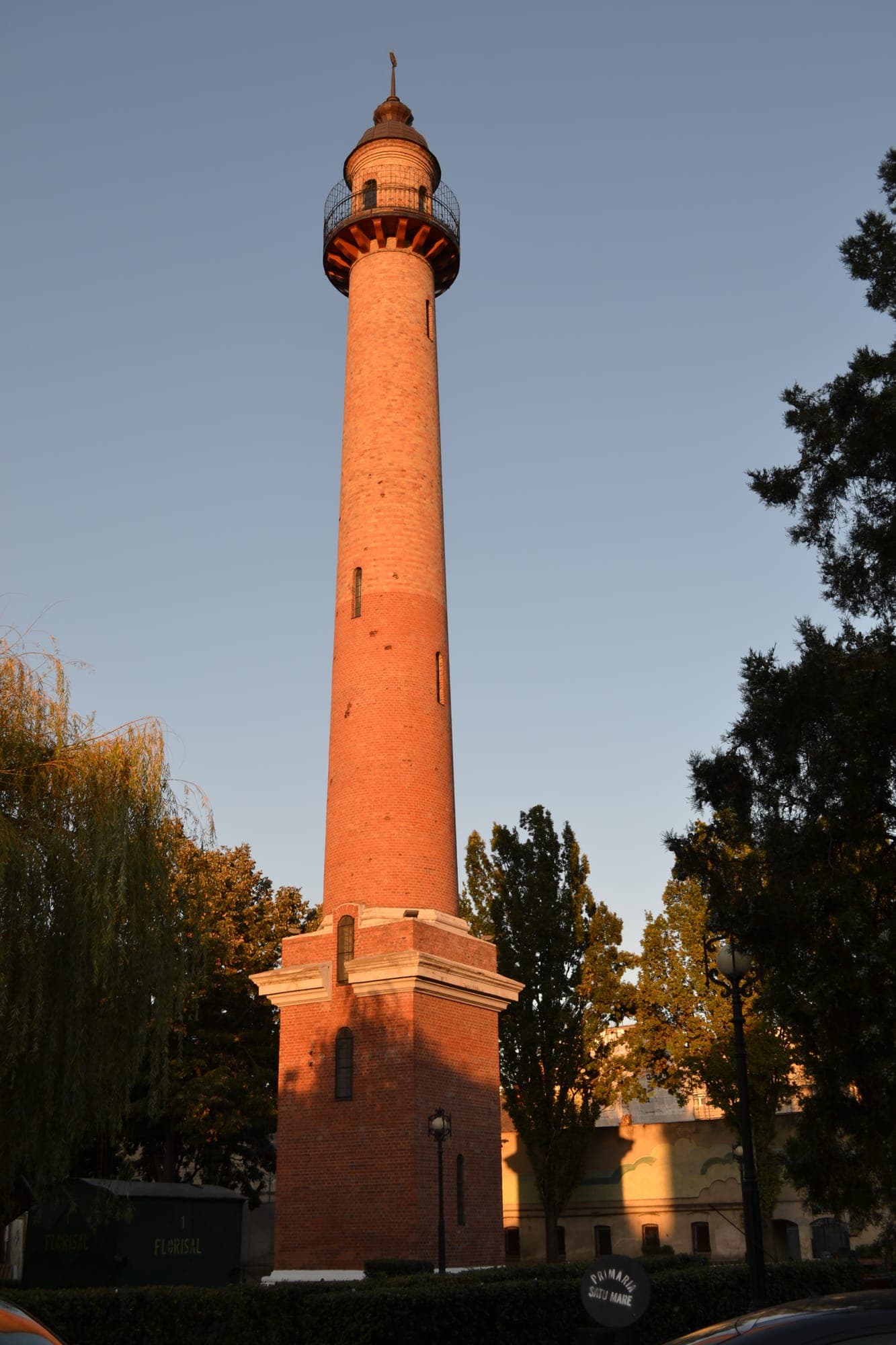
A red-brick fire tower, 47 m tall, built in 1904 on the initiative of Bishop Gyula Meszlényi; the balcony at the top looks out over the whole centre of Satu Mare.

A 13th-century Romanesque basilica surrounded by a defensive wall, with frescoes of 1522 and Gothic net vaults; the building is included in a restoration project.

A 15th-century Gothic church, extended in 1819 and ringed by a wall with loopholes; its slender tower is an example of the Ciuc type, and 15th-century frescoes survive inside.

The oldest kula of the Măldărești museum complex, a boyar tower from the 16th century completed in the 18th, with arcaded porches and an upper floor laid out as an Oltenian minor boyar's court.

A 13th-century Romanesque basilica enclosed by 12 m walls with seven towers, with the tallest bell tower in the Burzenland and a chapel of 15th-century Gothic frescoes.

The Jidova or Jidava fort, at the entrance to Câmpulung, the only stone fort on the Limes Transalutanus, with walls, rebuilt towers, a hypocaust and a site museum; part of the UNESCO site of the Roman frontier in Dacia.

A ruined peasant fortress with a stone curtain wall and towers on a hill at the edge of Jimbor village, on the road from Rupea towards the Székely Land; it bears a restoration inscription dated 1692.
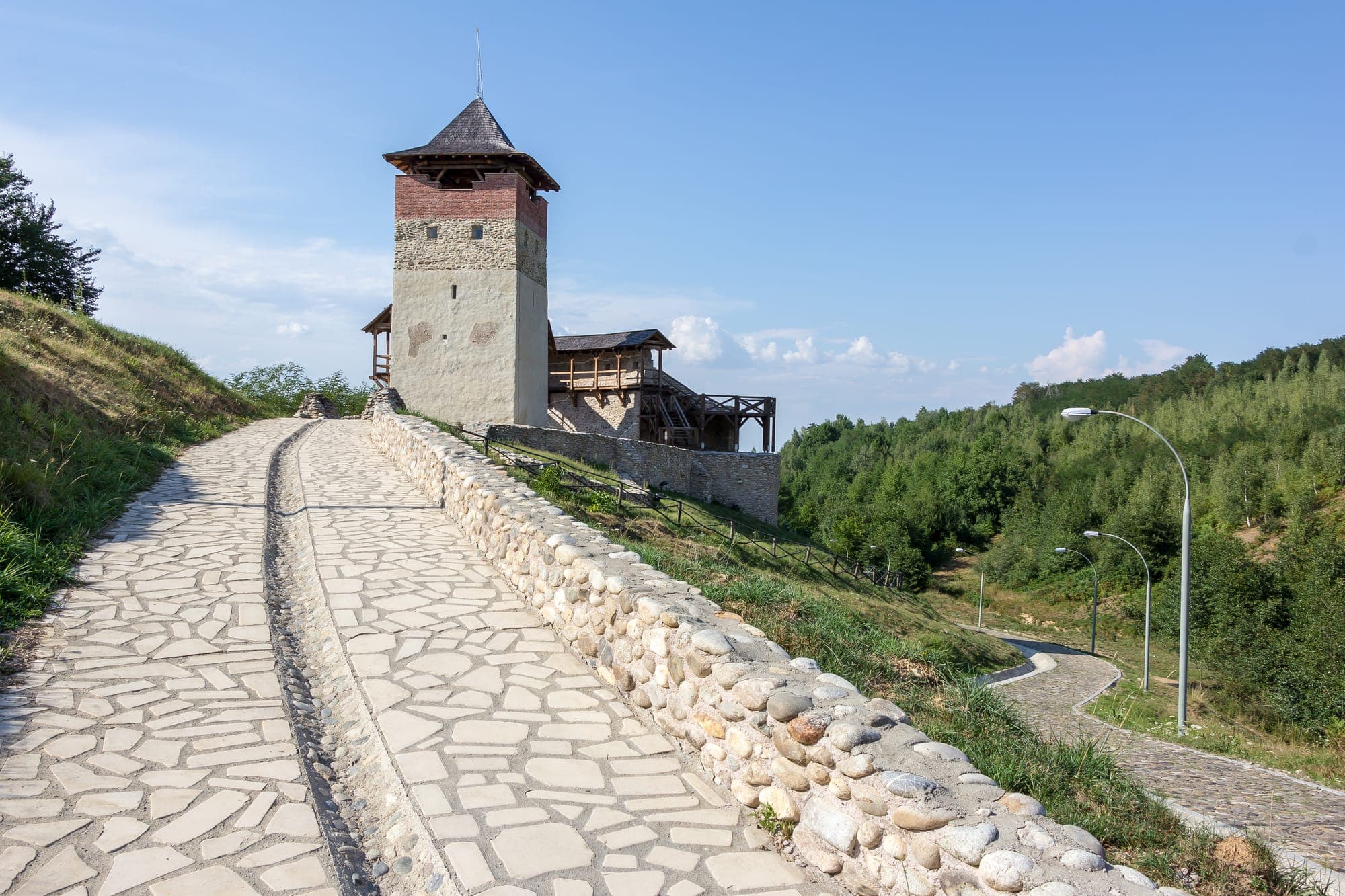
A 14th-century noble stronghold with a keep and a ring of stone walls, built by the knezes of Sălaș at the foot of the Retezat and restored after 2012.

A Gothic church of the 14th–16th centuries, protected by a fortified wall with loopholes and a gate tower, in the centre of a village in Lower Ciuc. One of the largest medieval churches in the area.
A Roman fort in the Teleajen Valley, built during the Dacian Wars, with stone walls and a building with hypocaust heating; currently being developed as an archaeological park.
A late Roman fort on the first terrace of the Danube, north of Hinova village, with low stone walls and seven towers; the largest prehistoric gold hoard in Romania was found here.



