Celic-Dere Monastery
About Celic-Dere Monastery
Celic-Dere Monastery lies in a valley in the Tulcea hills, in the commune of Frecăței, and takes its name from the Celic stream, which means “steel stream” in Turkish. It was founded in the first half of the 19th century by Archimandrite Athanasie Lisavenco, who had returned from Mount Athos; sources differ on the exact year (1835 or around 1840). It later became a convent, as it is today, and belongs to the Diocese of Tulcea.
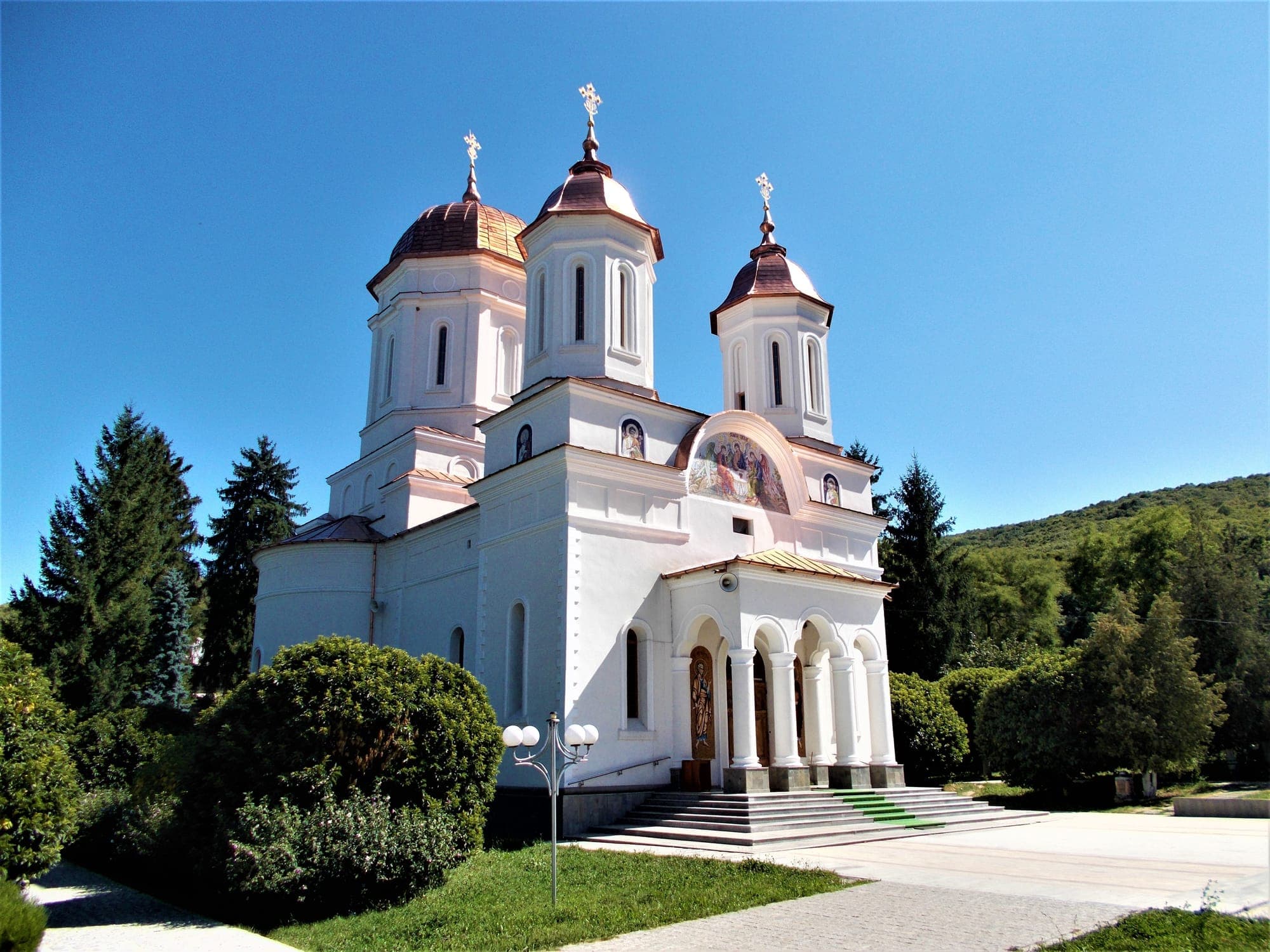
The main church, dedicated to the Dormition of the Mother of God, is a listed historic monument. Bishop Partenie Clinceni laid the foundation stone in 1901, work continued with interruptions in the early 20th century, and the church was painted in fresco, in the Neo-Byzantine style, by Gheorghe Eftimiu in 1926–1932 and consecrated in 1932. The iconostasis, carved in pear wood and gilded, is the work of Anghel Dima of Bucharest.
The monastery keeps icons regarded as miracle-working, among them the icon of the Saviour “that cleans itself” and an icon of the Mother of God, and it is a place of pilgrimage in northern Dobruja.
What you can see
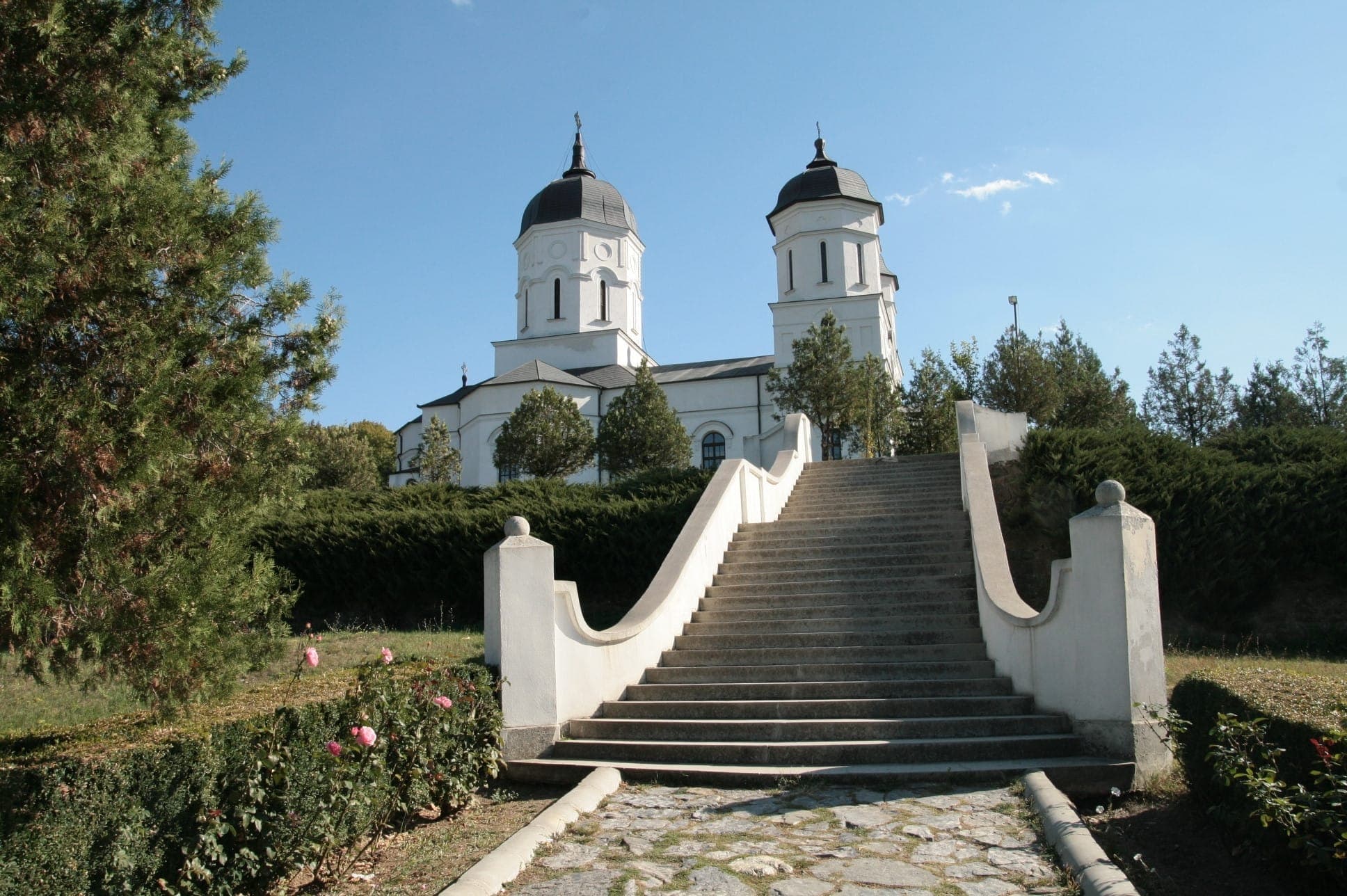
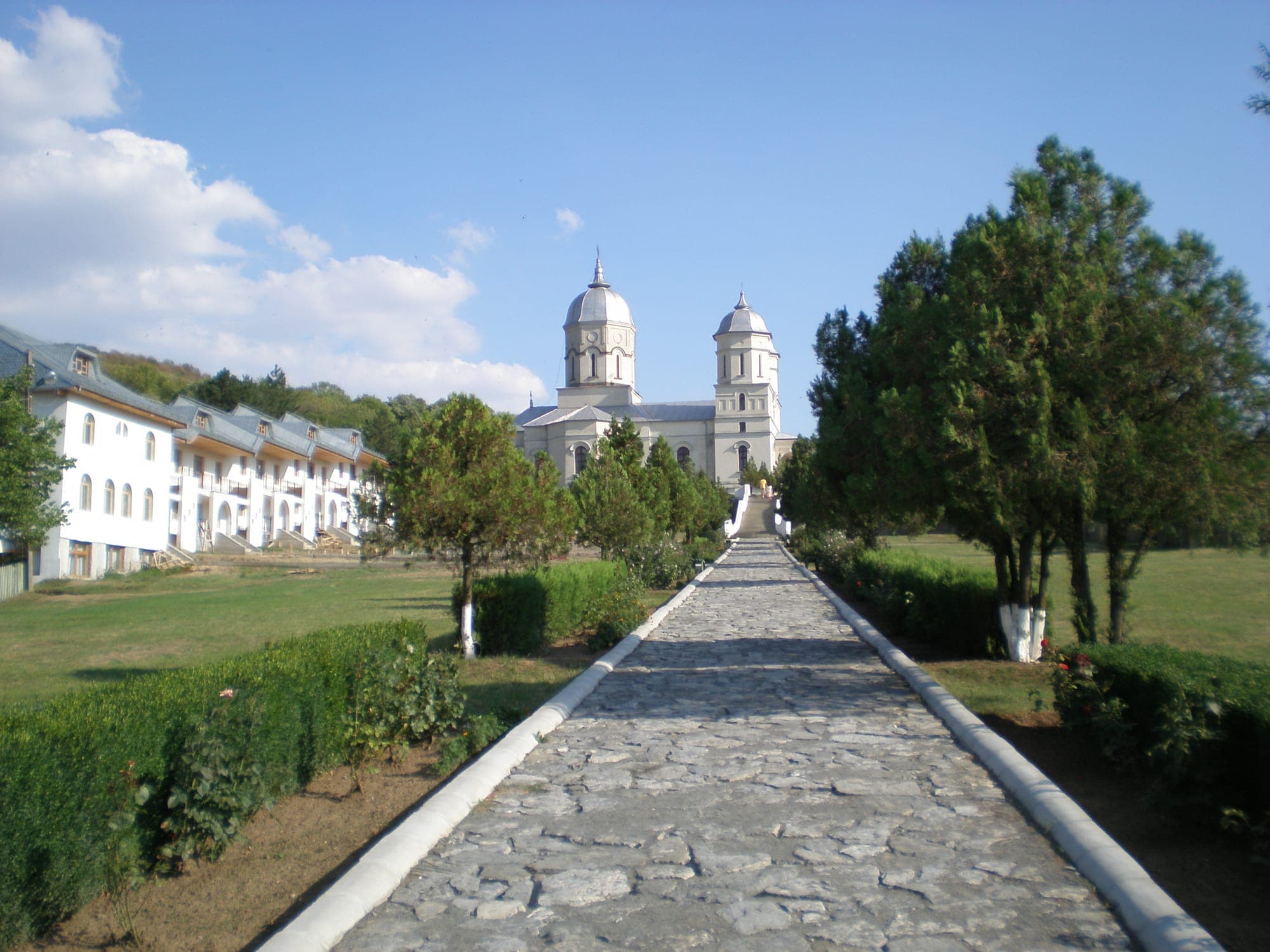
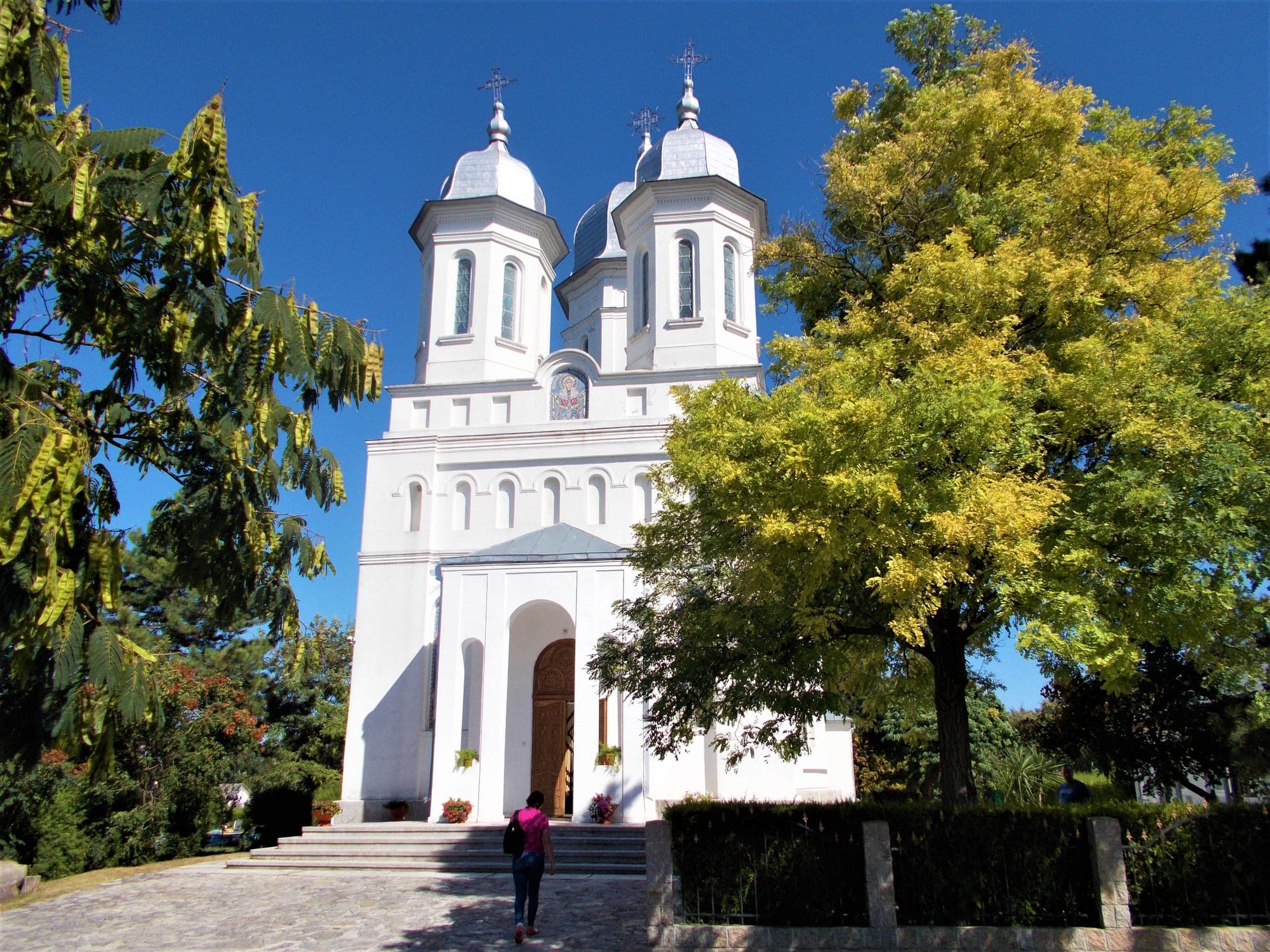
The white church, with a large octagonal tower and two smaller towers above the closed porch, stands on a terrace enclosed on three sides by a stone wall. It is reached by a monumental staircase with white balustrades, from a path paved with stone. Around it are the white buildings of the cells, with arcades and balconies, and rose gardens. The complex also includes a wooden windmill, brought here in 1953 and listed as a historic monument in 1977.
Good to know
It is a working convent: enter in modest dress and keep quiet. The feast day, the Dormition of the Mother of God, is celebrated on 15 August.
Information verified on 28 October 2026.
- The white church with octagonal towers, raised on a stone terrace and seen from afar along the entrance path.
- The monumental staircase with white balustrades leading up to the church.
- The gilded pear-wood iconostasis carved by Anghel Dima.
- The rose gardens and the stone-paved paths between the cells.
- The wooden windmill, a historic monument, part of the monastery complex.
Good to know before you go
- Getting there
By car: the monastery is in the valley of the Celic-Dere stream, on the DJ229F, which you reach from the Tulcea–Constanța road (DN22). From Tulcea it is ~26 km (~30 minutes), and from Constanța ~133 km (~2 hours). It can be combined with the Saon and Cocoș monasteries in the same area.
Public transport: local buses on the Tulcea–Cataloi–Telița route stop in front of the monastery; check the timetable in advance.
- Rules
Modest dress: shoulders and knees covered, women with their heads covered in the church. Keep quiet within the walls and switch phones off during services. Photos in the church only with the nuns' permission.
- Facilities
the monastery's museum collection · stone-paved paths with benches in the precinct
Frequently asked questions about Celic-Dere Monastery
How long does a visit to Celic-Dere Monastery take?
A visit to Celic-Dere Monastery takes about 45 min (church, paths and gardens).
Can you visit Celic-Dere Monastery with kids?
Yes, Celic-Dere Monastery is suitable for children (modest dress and quiet).
How do I get to Celic-Dere Monastery?
Celic-Dere Monastery is located at DJ229F, in the valley of the Celic-Dere stream, ~26 km from Tulcea, Frecăței, Tulcea County. More under “Getting there”
When is the best time to visit Celic-Dere Monastery?
The best season for Celic-Dere Monastery: All year round (all year).
Reviews
Other attractions nearby
The closest attractions to Celic-Dere Monastery, sorted by distance.
 14 km from Celic-Dere Monastery
 21 km from Celic-Dere Monastery
 23 km from Celic-Dere Monastery