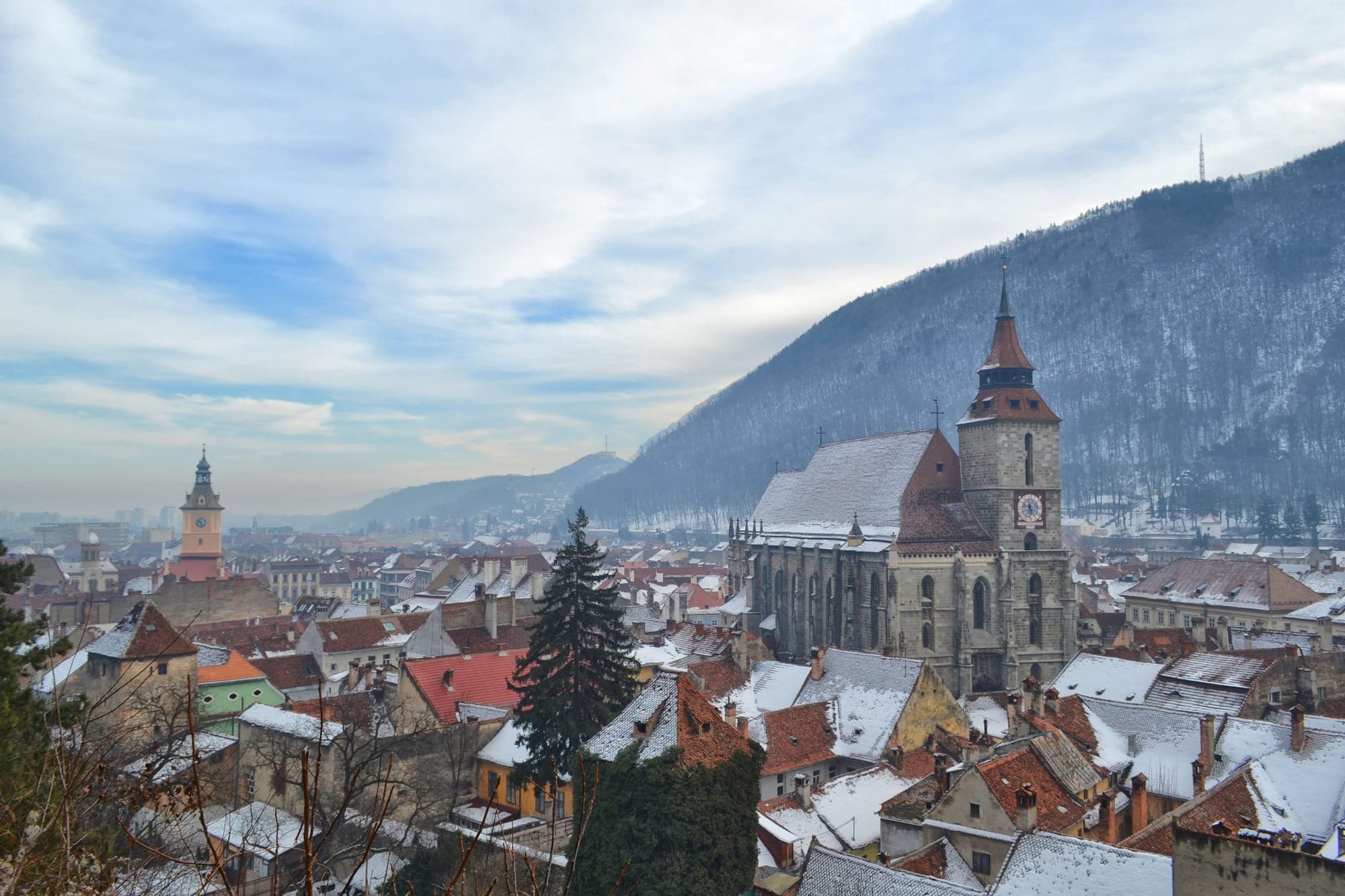
Romania's largest Gothic church, built by the Saxons of Brașov between 1383 and 1477; inside are the 1839 Buchholz organ and a rare collection of Anatolian carpets.
Monasteries and churchesMonuments and historic sites
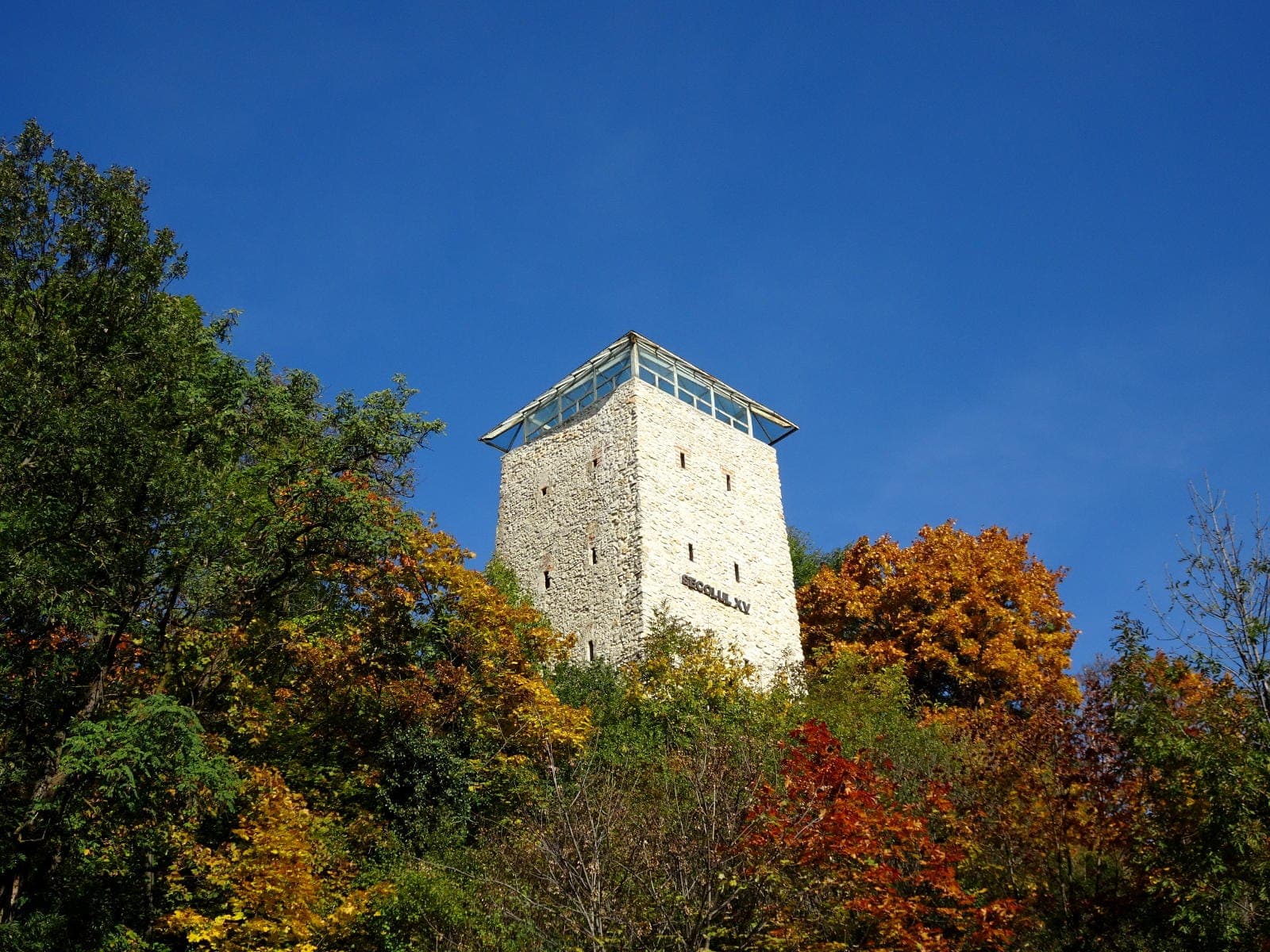
A square 15th-century watchtower perched on a rock outside Brașov's western walls, with a glass pyramid roof and a platform looking out over the old town and the Black Church.
Fortresses and fortificationsMonuments and historic sites
The main square of old Brașov, lined with merchants' houses and dominated by the Council House, the old town hall with its watchtower, now the County History Museum, with Tâmpa as a backdrop.
Monuments and historic sitesMuseums and memorial houses
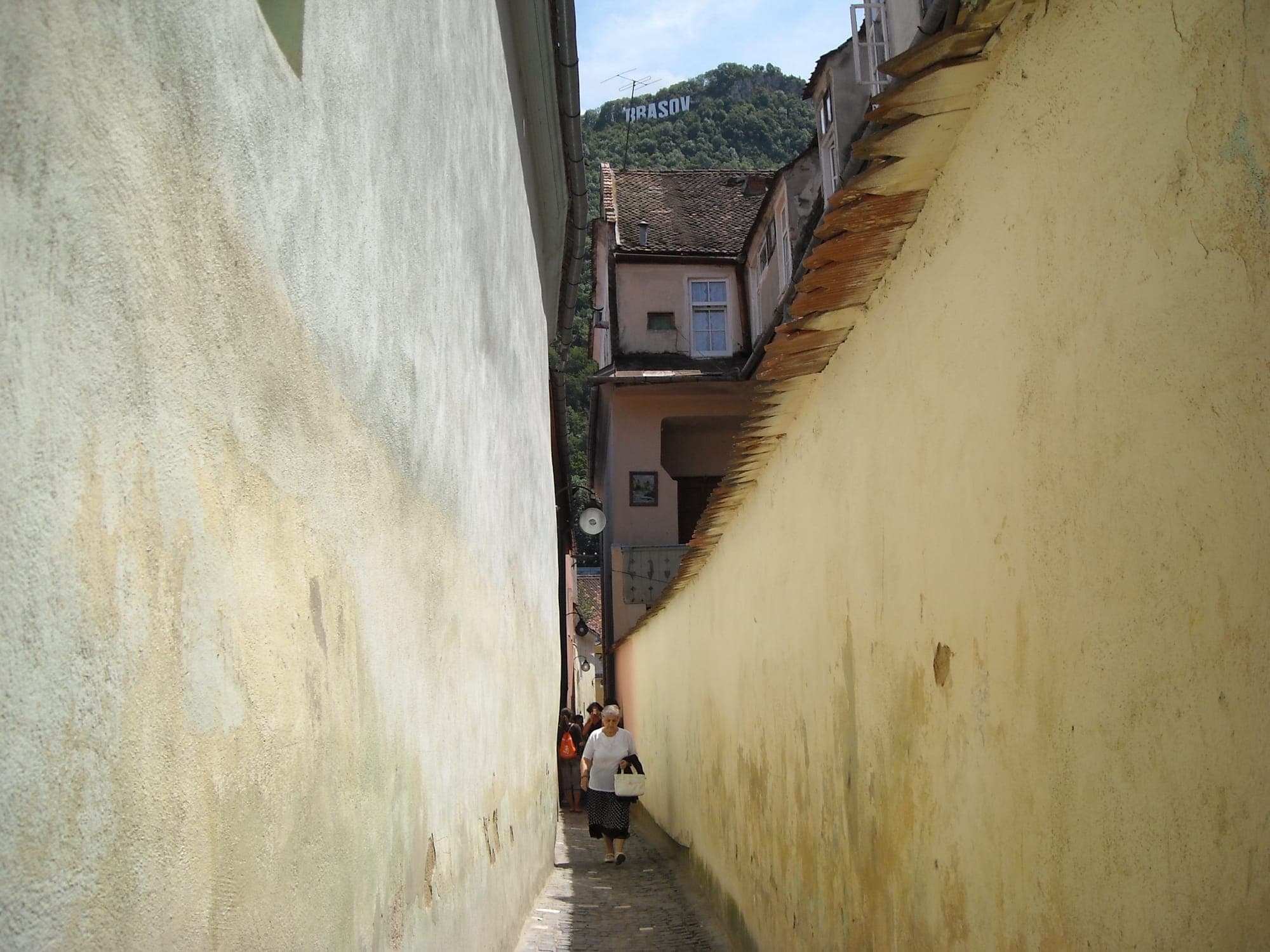
A passage 1.1–1.35 m wide in Brașov's old town, recorded in the 17th century and counted among the narrowest streets in Europe; closed for repairs since November 2025.
Orthodox monastery founded by Constantin Brâncoveanu below the Făgăraș Mountains: the church rebuilt in 1926–1946 on its old foundations, an icon museum and a new Brâncovenesc-style precinct.
Monasteries and churchesMonuments and historic sites
A bastioned fortress on Citadel Hill, north of the old town, built to stop enemies firing on Brașov from the heights; the interior is closed for works, but the walls and the view can be enjoyed from the paths on the hill.
Fortresses and fortificationsMonuments and historic sites
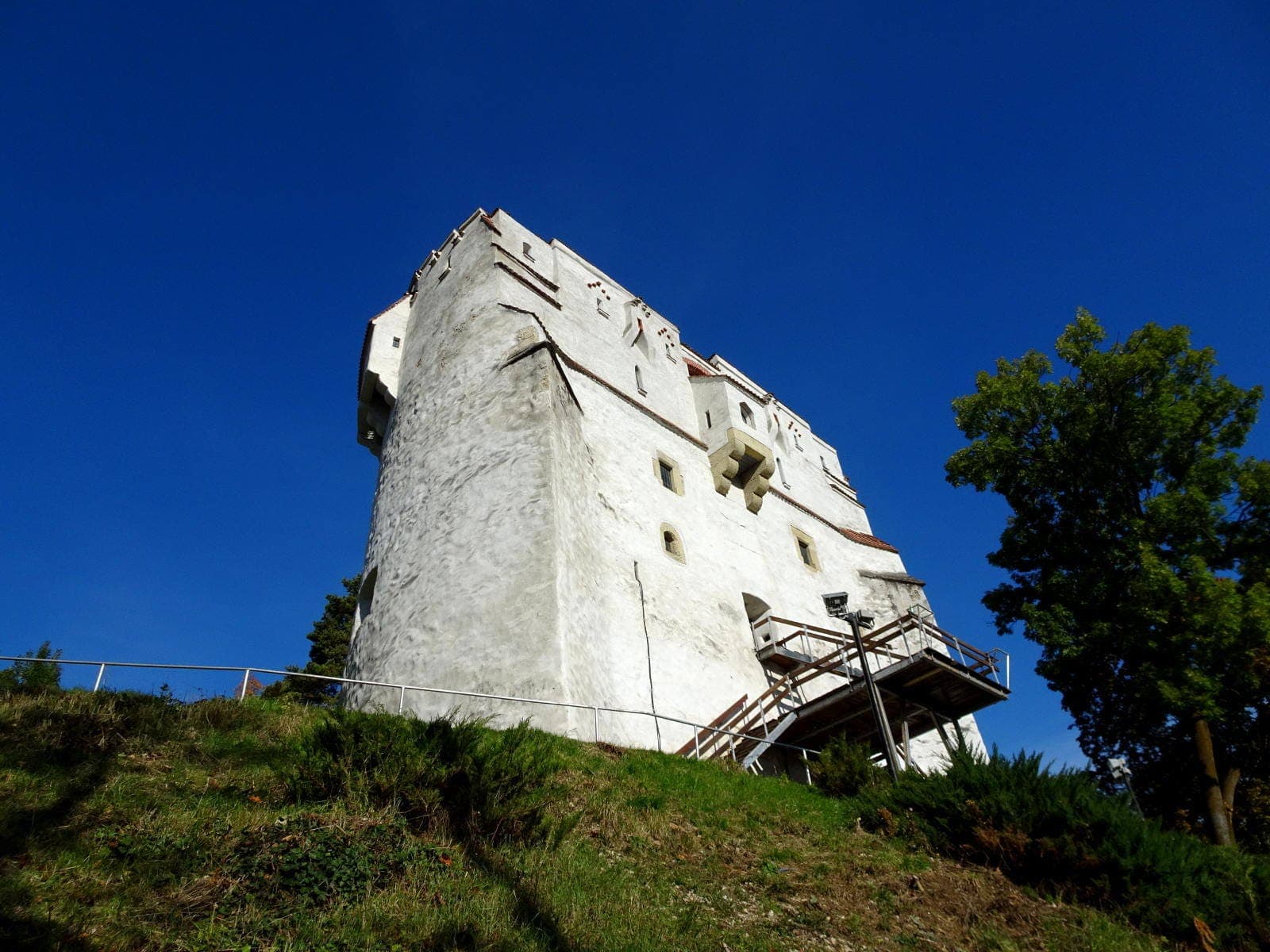
The only surviving medieval gate of Brașov's walled town, a white tower of 1559 with four corner turrets and the town's coat of arms; next to it, the neoclassical Șchei Gate of 1827–1828.
Fortresses and fortificationsMonuments and historic sites
The old school in the courtyard of St Nicholas' Church in Șcheii Brașovului, now a museum: a classroom with wooden benches, a replica of Coresi's printing press and Romanian books five centuries old.
Museums and memorial housesMonuments and historic sites
The Orthodox church of the Romanians of Șcheii Brașovului, built from 1495 on the site of a wooden one, with Gothic-Baroque towers, painted façades and Nicolae Titulescu's grave in the churchyard.
Monasteries and churchesMonuments and historic sites