

The building on Piața Universității, opened in 1973 and rehabilitated in 2014, with a foyer with a spiral staircase and a main hall of 940 seats; seen at performances and on the guided tours backstage.
Monuments and historic sites
2 – 2½ hours25 lei
275 results
The building on Piața Universității, opened in 1973 and rehabilitated in 2014, with a foyer with a spiral staircase and a main hall of 940 seats; seen at performances and on the guided tours backstage.

A department of the National Museum of Transylvanian History, in Hintz House on Union Square, in the oldest pharmacy in Cluj: the dispensary with 18th-century decoration, the laboratory and old medical equipment.

A Dacian fortress on top of a rocky hill above Luncani, with an ancient paved road of stone steps and tower ruins hidden in the forest; a UNESCO site, far from the crowds.

A 16th-century monastery on a hill in central Bucharest, with the brick church of the Holy Trinity modelled on Curtea de Argeș, a bell tower and the relics of Saint Nectarios.

A Roman fort from AD 138 on the left bank of the Olt at Bivolari, next to Cozia Monastery, with a reconstructed praetorian gate and a component of the UNESCO site "Frontiers of the Roman Empire – Dacia".

A red-brick basilica in the Romanesque style with Gothic touches, built between 1875 and 1883 to plans by Friedrich von Schmidt; the cathedral of the Roman Catholic Archdiocese of Bucharest.

The oldest church in Făgăraș, built in 1697–1698 on the orders of Constantin Brâncoveanu, with an open porch, carved stone window frames, 18th-century frescoes and an original iconostasis.
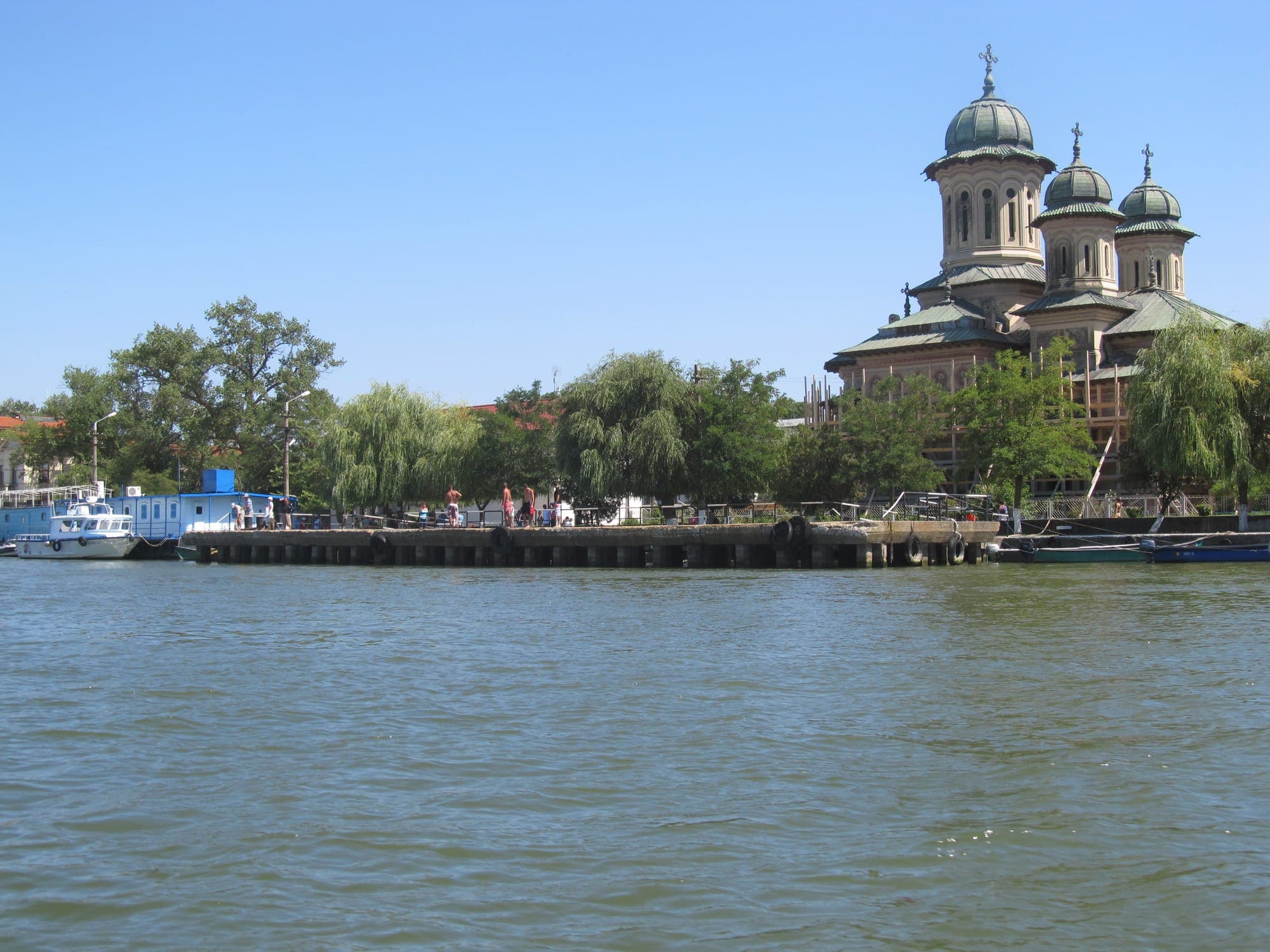
Romania's easternmost town, at the mouth of the Sulina arm, with no road to the rest of the country: a port with an international past, the Old Lighthouse, the European Commission of the Danube palace and the maritime cemetery.

A 15th-century defensive tower of Cluj's old citadel, rebuilt in 1627–1629 under Gabriel Bethlen; today an urban culture centre with exhibitions, a conference hall and a café.

The best-preserved stretch of Sibiu's third ring of fortifications: a wall with a covered walkway and three guild towers, the Carpenters', Potters' and Arquebusiers' Towers; two can be visited.
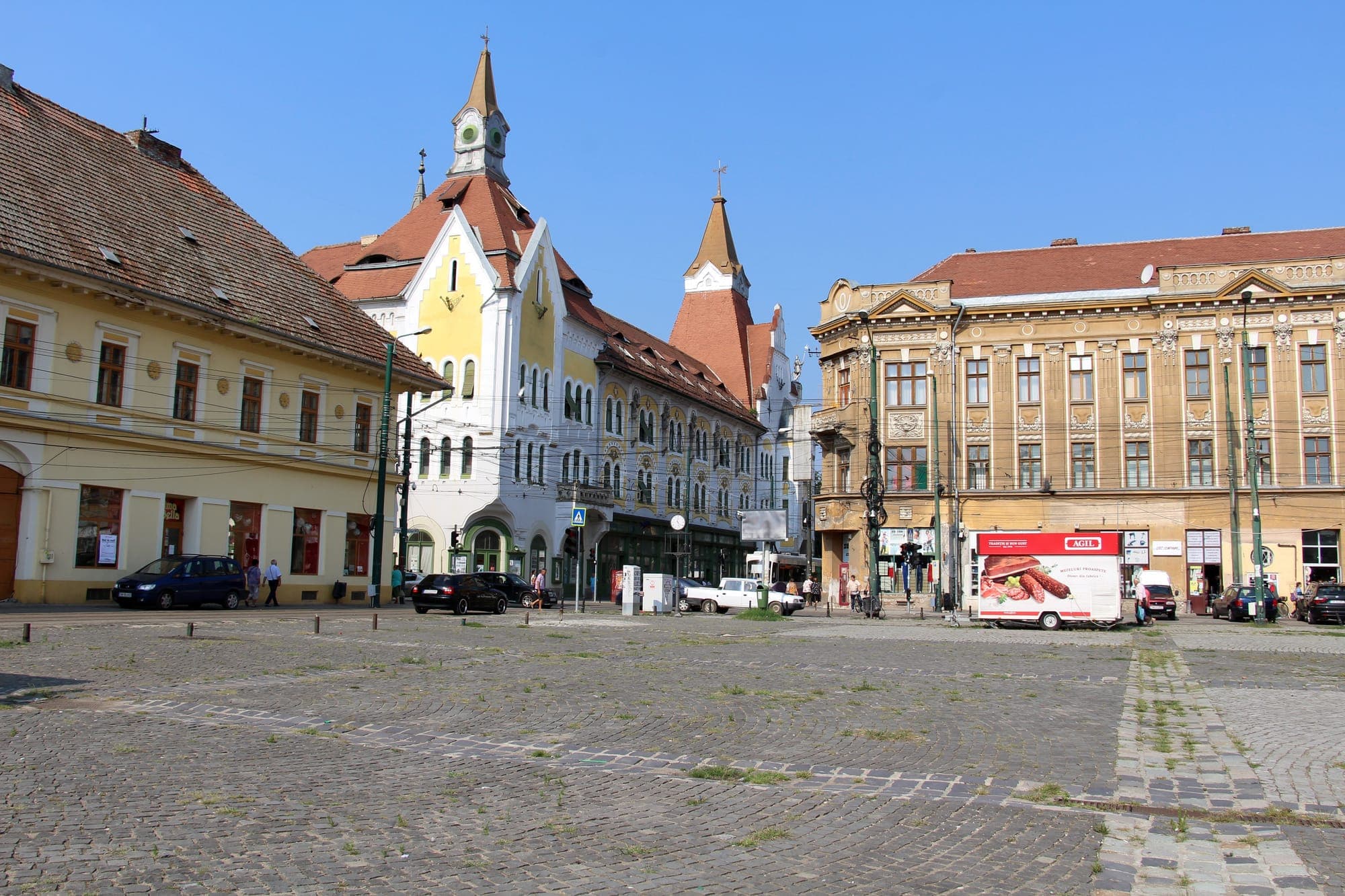
The central square of Fabric, Timișoara's historic district, laid out in the 1740s as a smaller replica of Union Square, with a Baroque Serbian church, an obelisk from 1774 and palaces from around 1900.

An Orthodox church on Calea Victoriei, between Lipscani and Stavropoleos, rebuilt from 1850 on the site of a place of worship more than three centuries old, with paintings by Gheorghe Tattarescu and the relics of Saint Cyprian.

The ruins of a 13th-century medieval fortress on a wooded hill near Almașu in Sălaj; only a tower about 20 m high survives.

The Roman fort at Brețcu, which guarded the entrance from the Oituz Pass into Roman Dacia, with the earth banks of its enclosure still clearly visible in the fields; part of the UNESCO site of the Dacian limes.

The 27 m interwar monument at the end of Șoseaua Kiseleff, built in memory of the Great Union, with 292 steps up to a terrace overlooking northern Bucharest.



