A national park of over 61,000 ha in the Cerna Valley above Băile Herculane: limestone cliffs with Banat black pine, gorges and ancient beech forests on the UNESCO list since 2017.
National parks and reservesMountains and trailsUNESCO
A karst plateau at around 1,200 m in the heart of Apuseni Natural Park, with meadows, sinkholes and spruce forest. Marked trails lead from Cabana Padiș to Cetățile Ponorului, the Galbena Gorge and Groapa de la Barsa.
The village of white houses in the Trascău Mountains, winner of a Europa Nostra award in 1999, at the foot of the Piatra Secuiului limestone massif (1,129 m), behind which the sun rises twice in summer.
The highest range in the Eastern Carpathians, with Pietrosul Rodnei Peak (2,303 m), glacial cirques and Iezer Lake; a national park and biosphere reserve, most often climbed from Borșa.
A glacial lake at 2,230 m on the southern side of the Făgăraș Mountains, just below the ridge; about an hour's walk from Bâlea Lake, over the Capra saddle.
The wooded 960 m mountain that rises straight out of central Brașov: the “BRAȘOV” letters, views over the old town, a nature reserve, marked trails and a cable car from its foot.
A waterfall of about 80 m on the Bohodei stream, below the peak of the same name, regarded as the tallest in the Apuseni Mountains; reached on a demanding loop from Pietroasa with chain-equipped rock sections.
The highest peak in the Eastern Carpathians (2,303 m), above Borșa in the Rodna Mountains. It is climbed in 4–4.5 hours on the blue-stripe trail, past the weather station and Lake Iezer, shaped like a map of Romania.
A group of limestone crags at the end of the Șchei district of Brașov, on the Valea cu Apă valley, with a picnic area, small cascades and a forest road towards Poiana Brașov.
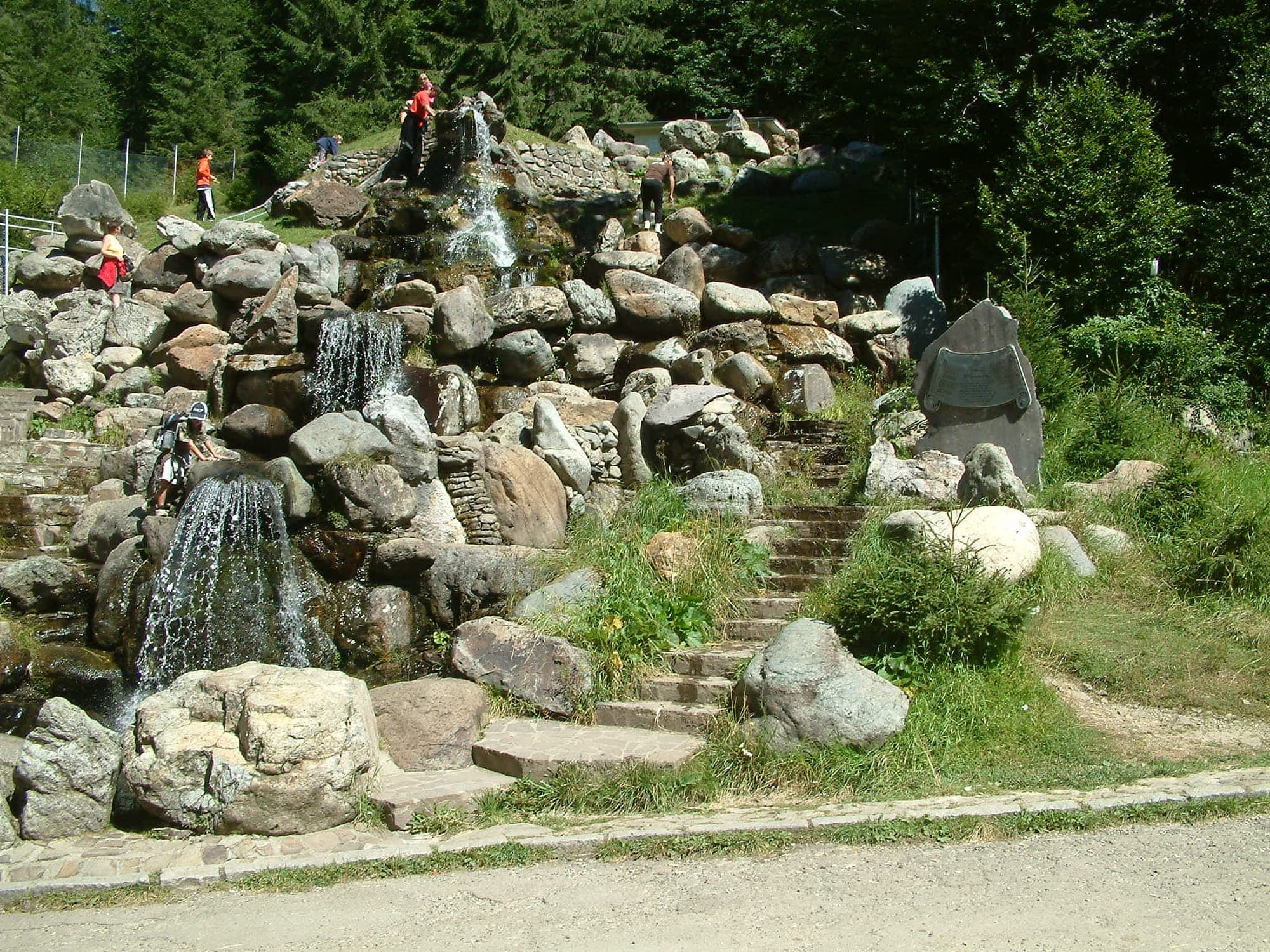
A mountain resort at ~1,100 m in a spruce-ringed clearing in the Apuseni: the Izvorul Minunilor spring, marked trails to the Iad Valley waterfalls and to Bihor Peak, and plenty of snow in winter.
Ski slopesMountains and trailsResorts and thermal baths
A 25 m, two-tier waterfall on the Rupturi stream, in the forests below Toaca peak in Ceahlău National Park; reached on foot from the Durău resort in about two hours.
WaterfallsNational parks and reservesMountains and trails
Romania's oldest mountains, Hercynian granite worn down to 467 m, with rocky ridges, steppe and Balkan woodland, land tortoises and hundreds of migrating birds of prey.
A 20–25 m, two-tier waterfall hidden in a narrow valley of giant boulders and spruce on the western slope of the Vlădeasa massif; reached on foot from Stâna de Vale along a marked trail of about 8 km.
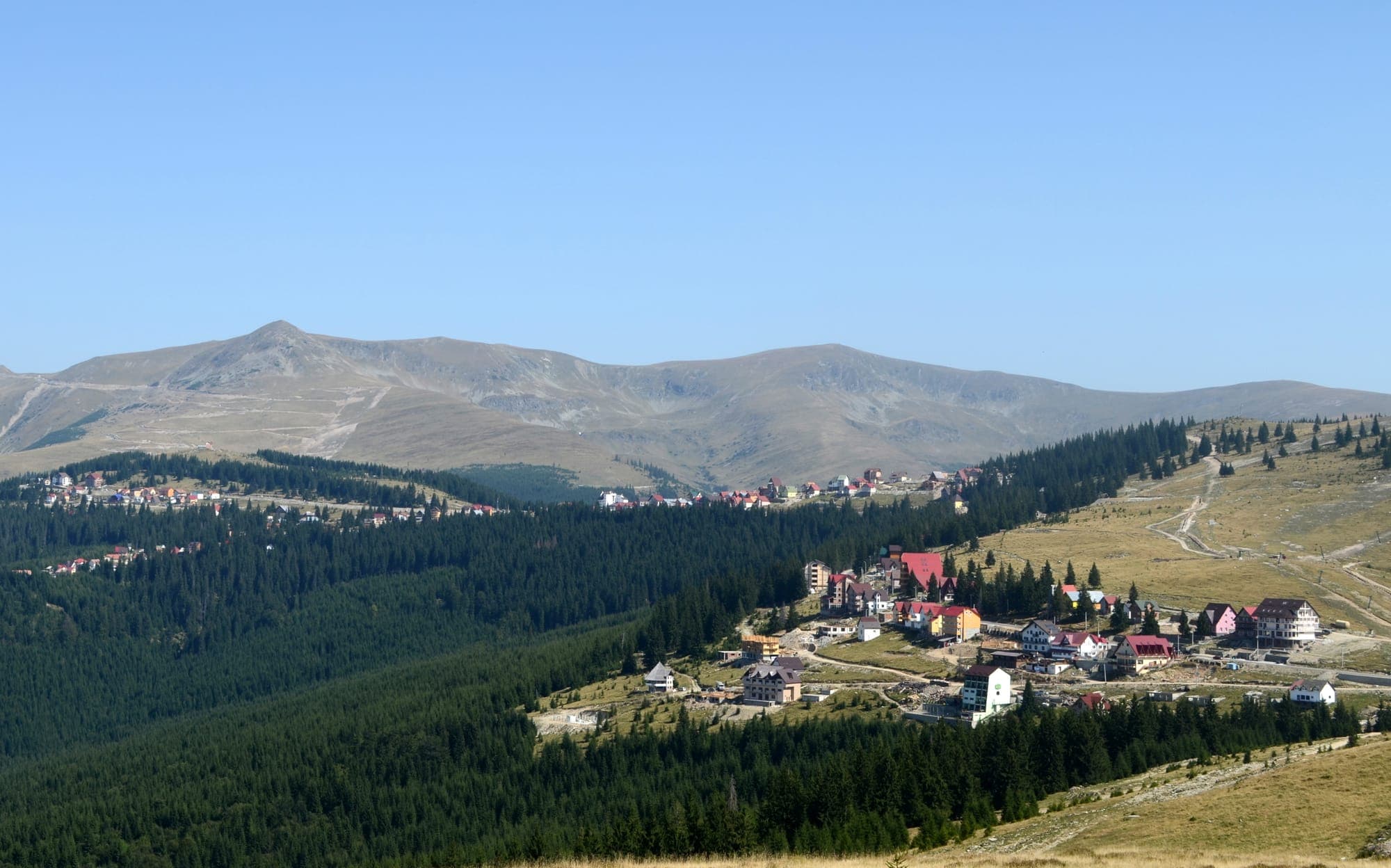
A mountain resort at 1,600 m, at the foot of Păpușa Peak in the Parâng Mountains, on the Transalpina: a ski area with chairlifts and drag lifts, alpine pasture scenery and a starting point for the Parâng ridge.
Ski slopesMountains and trailsResorts and thermal baths
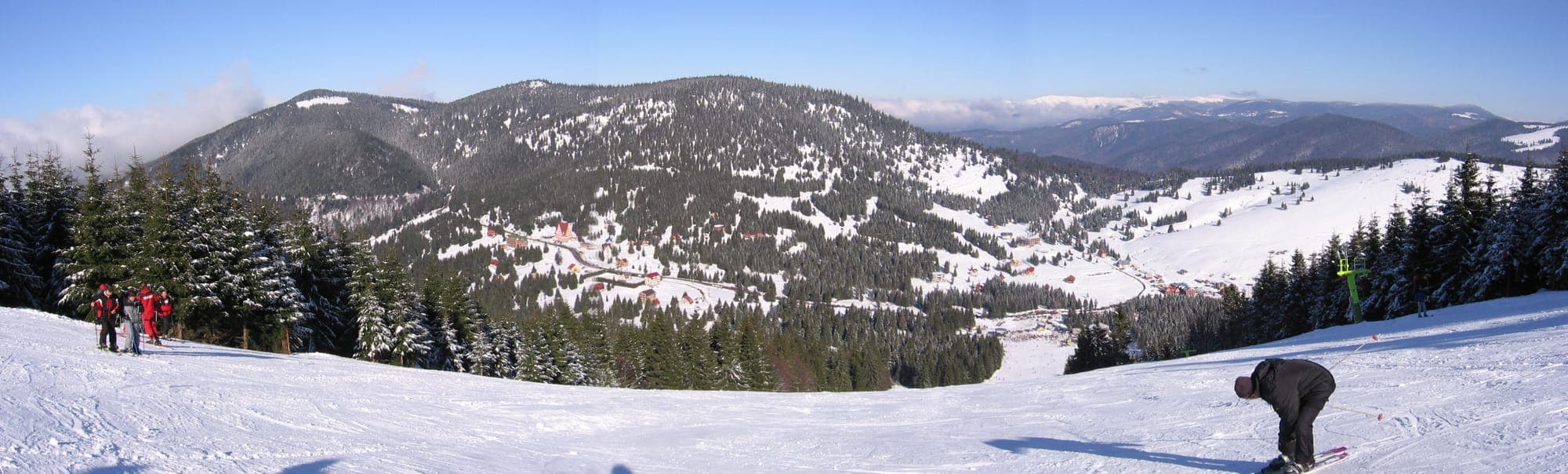
A tourist resort in the Apuseni Mountains, at the source of the Arieș: the Vârtop I and Vârtop II slopes, with drag lifts and floodlit skiing, below the Vârtop Pass, plus trails to Piatra Grăitoare and Bihor Peak.
Ski slopesMountains and trailsResorts and thermal baths