
Pasărea Monastery
About Pasărea Monastery
Pasărea Monastery is a convent in the village of Pasărea, on the edge of the forest and the lakes along the Pasărea stream, about 19 km east of the centre of Bucharest. It was founded in 1813 by Archimandrite Timotei, abbot of Cernica Monastery, who built a wooden church and a few cells here for a small community of nuns. It takes its name from the stream and the surrounding forest, although local legend tells of a bird that guided the abbot to the spot where the altar was to stand.
Today's ensemble owes most to St Calinic of Cernica. In 1834 he built the cemetery church of the Dormition of the Mother of God, and after the earthquake of 1838 ruined the main church, he rebuilt the present one, the Holy Trinity, from its foundations, completing it in 1847. His mother, the schema nun Filofteia, spent the last years of her life here. In 2026 she and the schema nun Elisabeta (1970–2014), a member of the community, were proclaimed saints. The ensemble is a listed historic monument.
What you can see
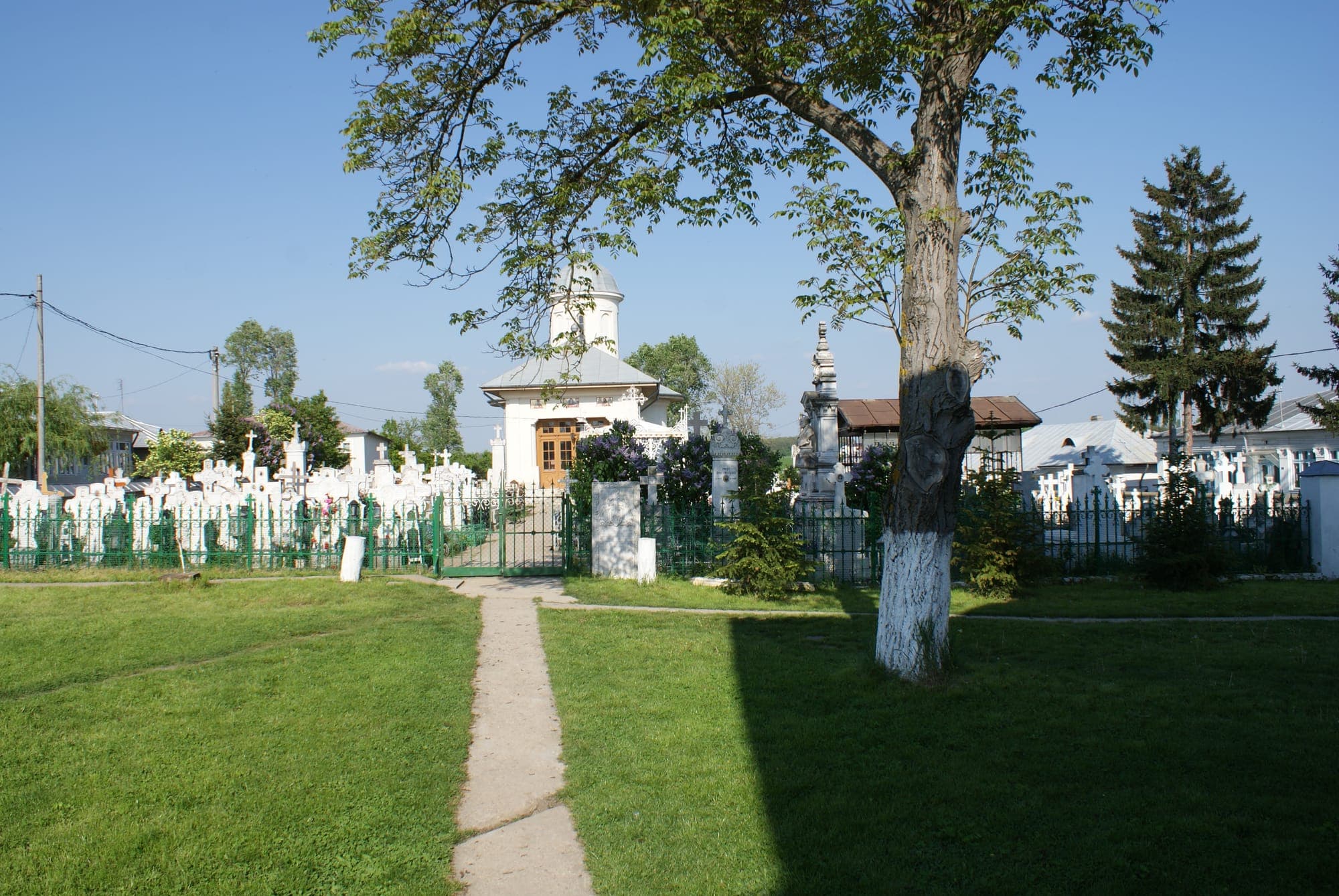
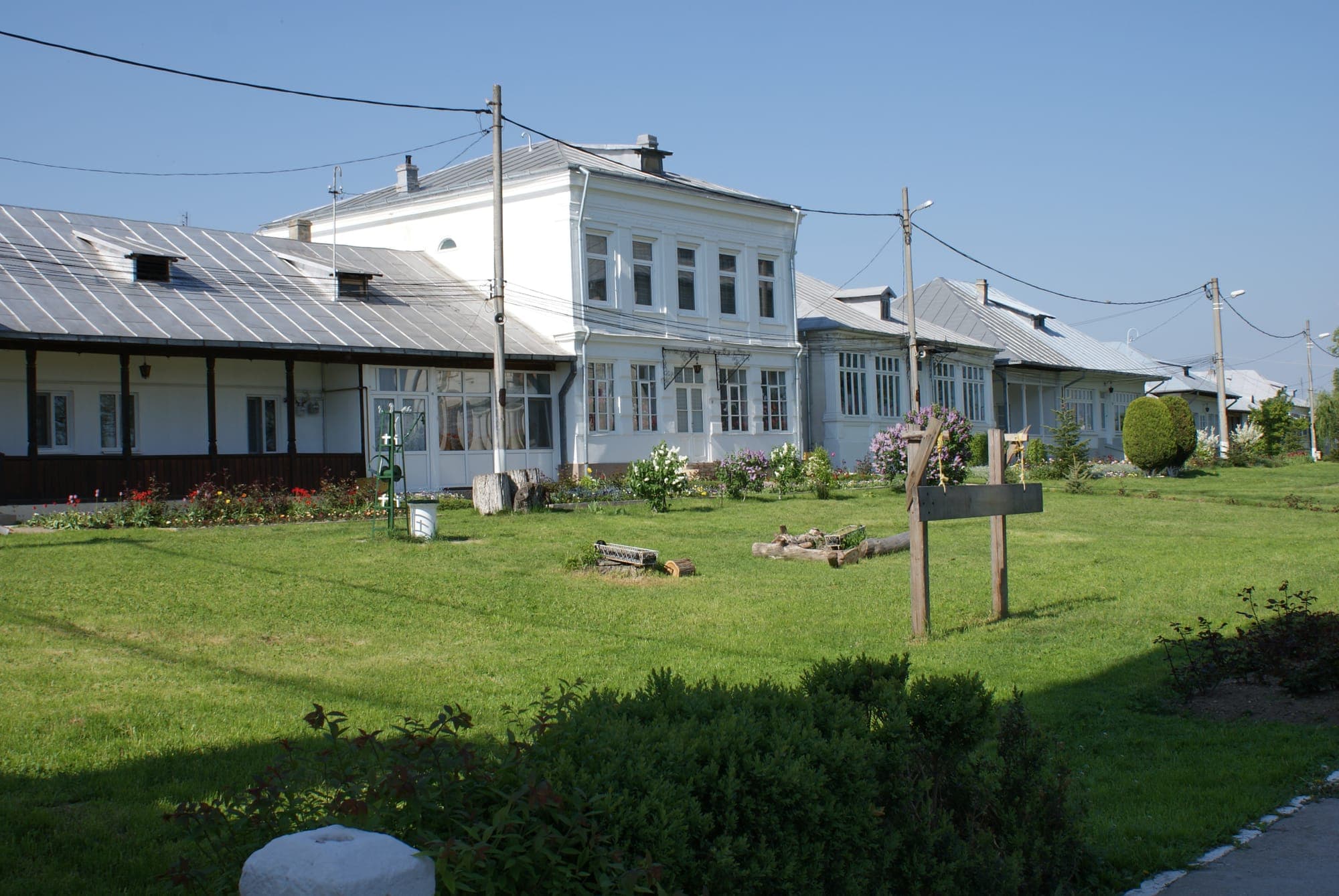
The great church, on a trefoil plan with three towers, stands in the middle of the grounds; its original fresco was cleaned of soot between 1980 and 1982. On its axis, linked to it by a path, rises the bell tower, about 25 m high. The nuns' cells are not built against the wall but are white houses with wooden verandas and flower gardens, lined up on both sides of the paths. The former refectory houses the museum collection: icons on wood and on glass, liturgical objects, manuscripts of church music and sculptures by Gheorghe D. Anghel. In the cemetery, around the small church painted by Nicolae Polcovnicul, lie the sculptor Anghel, who made the Eminescu statue in front of the Romanian Athenaeum, and the composer Ion Popescu-Pasărea.
Good to know
It is a working convent. The relics of St Elisabeta of Pasărea are kept at the monastery; her feast day is 5 June.
Information verified on 2 November 2026.
- The Holy Trinity church, with three towers and its mid-19th-century fresco.
- The bell tower, about 25 m high, with four small turrets around the main tower.
- The small Dormition church of 1834, in the middle of the cemetery.
- The white nuns' houses, with wooden verandas and flower gardens.
- The graves of the sculptor Gheorghe D. Anghel and the composer Ion Popescu-Pasărea.
Good to know before you go
- Getting there
By car: the monastery is ~19 km from the centre of Bucharest (~30 minutes without traffic): take the DN3 (Șoseaua Pantelimon) east through the town of Pantelimon, then the DJ301B north through the forest, and Strada Mănăstirii to the gate.
- Where to park
Parking spaces are next to the monastery's west gate, at the edge of the grounds.
- Rules
Modest dress: shoulders and knees covered, women with their heads covered in church. Keep quiet within the grounds and in the cemetery, and switch phones off during services. Photos inside the churches only with the nuns' permission.
- Facilities
museum collection in the former refectory · level paths
Frequently asked questions about Pasărea Monastery
How long does a visit to Pasărea Monastery take?
A visit to Pasărea Monastery takes about ½ – 1 hours (churches, grounds and cemetery).
Can you visit Pasărea Monastery with kids?
Yes, Pasărea Monastery is suitable for children (spacious grounds, quiet).
How do I get to Pasărea Monastery?
Pasărea Monastery is located at Strada Mănăstirii, Pasărea village, Brănești, Ilfov County. More under “Getting there”
When is the best time to visit Pasărea Monastery?
The best season for Pasărea Monastery: April – October (spring, grounds in bloom).
Reviews
Other attractions nearby
The closest attractions to Pasărea Monastery, sorted by distance.
 8 km from Pasărea Monastery
 17 km from Pasărea Monastery
 18 km from Pasărea Monastery

