Polovragi Monastery
About Polovragi Monastery
Polovragi Monastery is a convent dedicated to the Dormition of the Mother of God, on the edge of the village of Polovragi, at the foot of Piatra Polovragilor and close to the entrance to the Oltețului Gorge. According to recent research, it was founded around 1505 by the brothers Radu Comisul and Pătru Spătarul, sons of the boyar Danciu Zamona, who are mentioned in a charter of 1480.
The present church was built in the 1640s by the logothete Danciu Pârâianu, with the help of Prince Matei Basarab; he later dedicated it to the Holy Sepulchre in Jerusalem. In 1693 Constantin Brâncoveanu bought the monastery back from Patriarch Dositheos of Jerusalem and attached it to Hurezi Monastery. Brâncoveanu added the porch, raised the bell tower and the precinct wall and rebuilt the cells, so he is regarded as the third founder. The church underwent extensive restoration between 2004 and 2012 and was reconsecrated on the feast day, 15 August 2012.
What to see
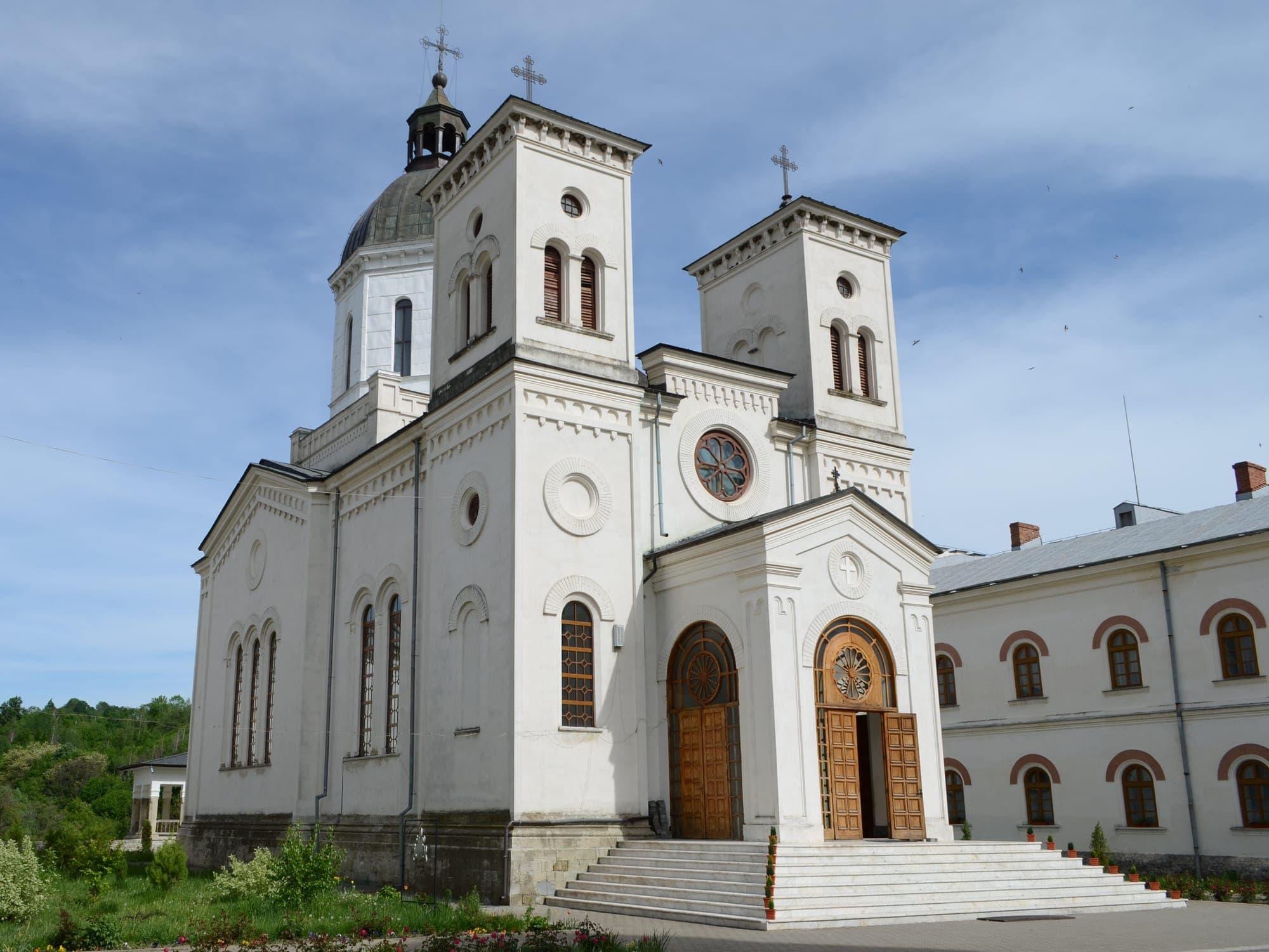
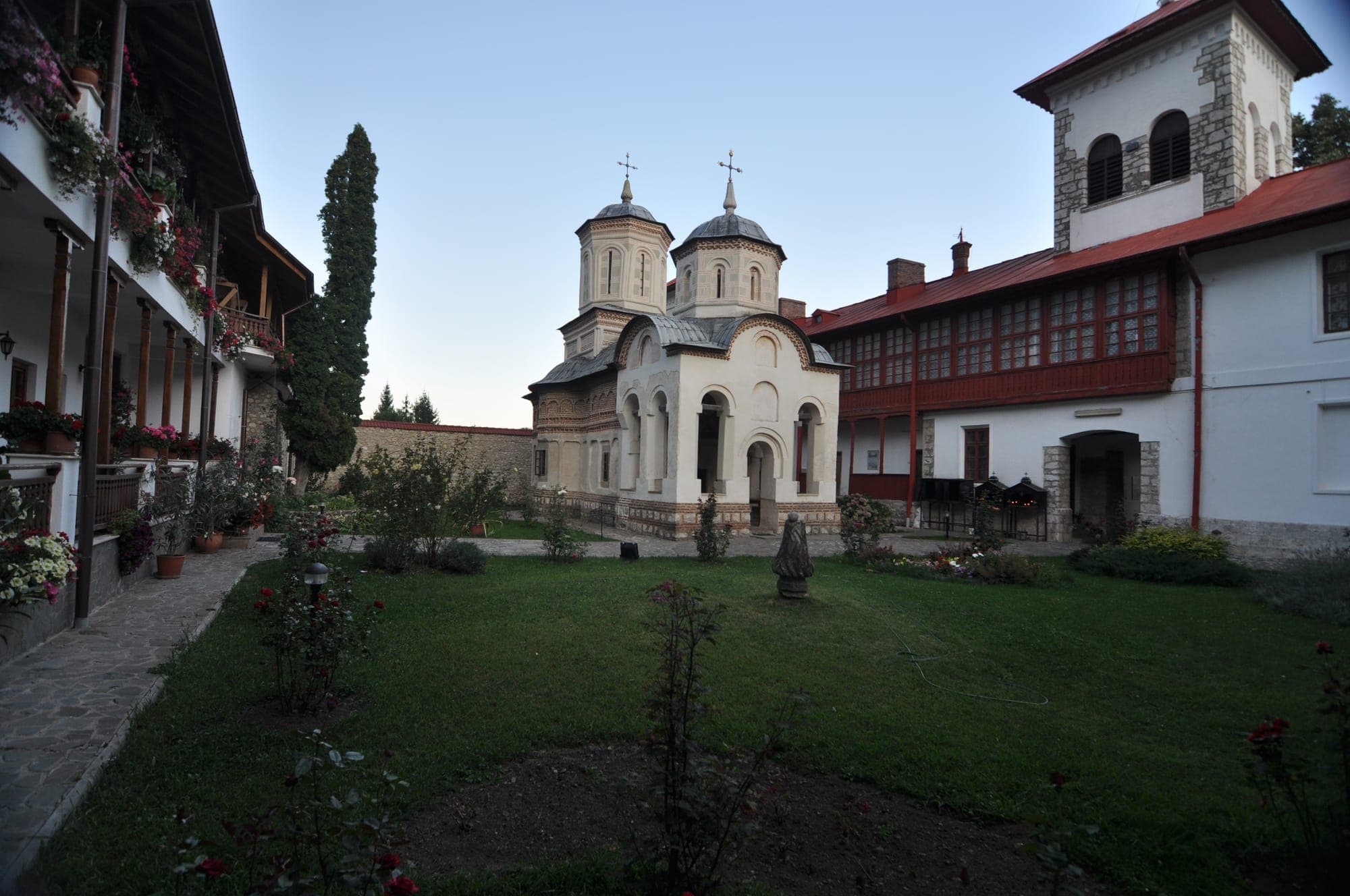
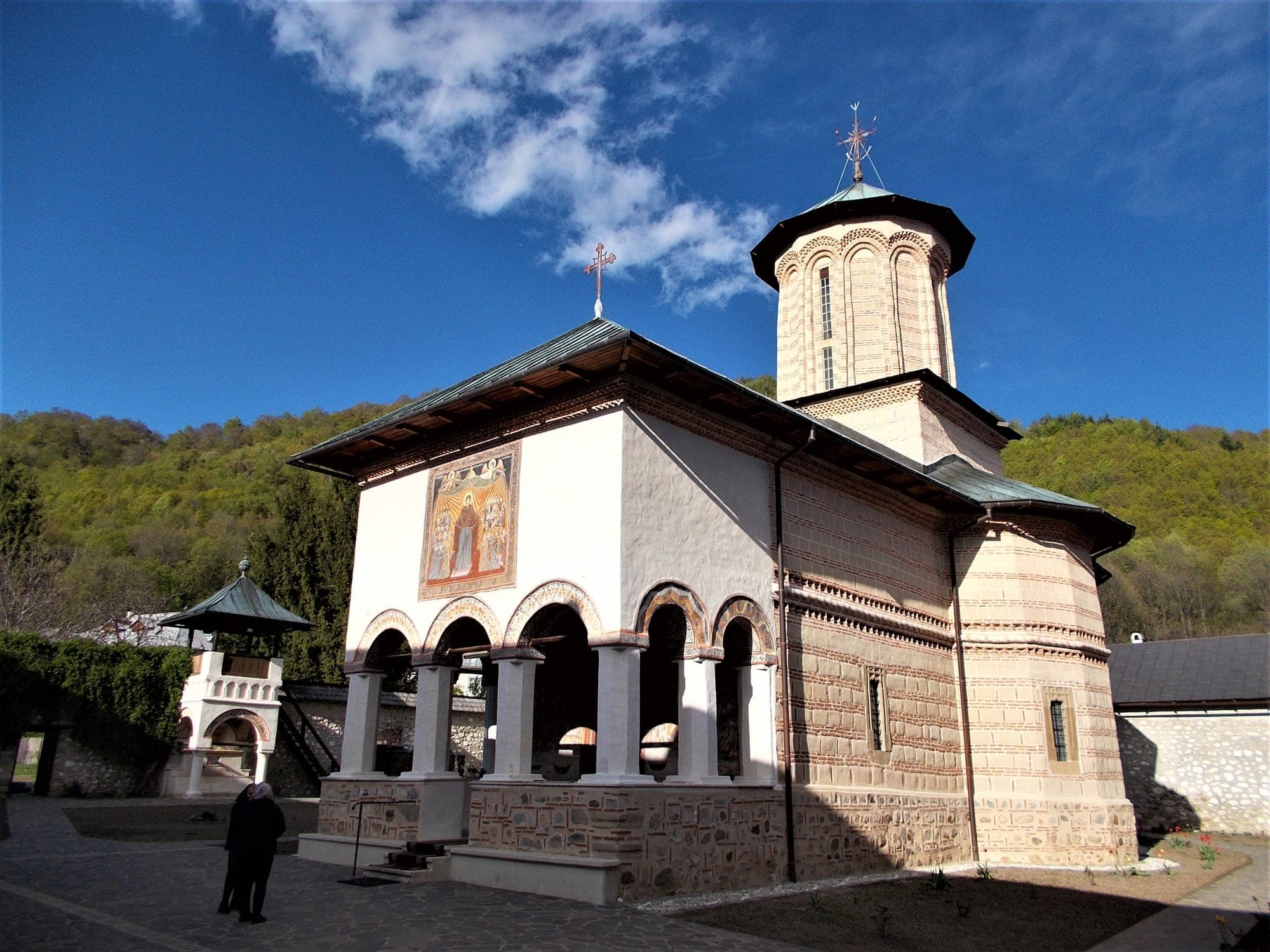
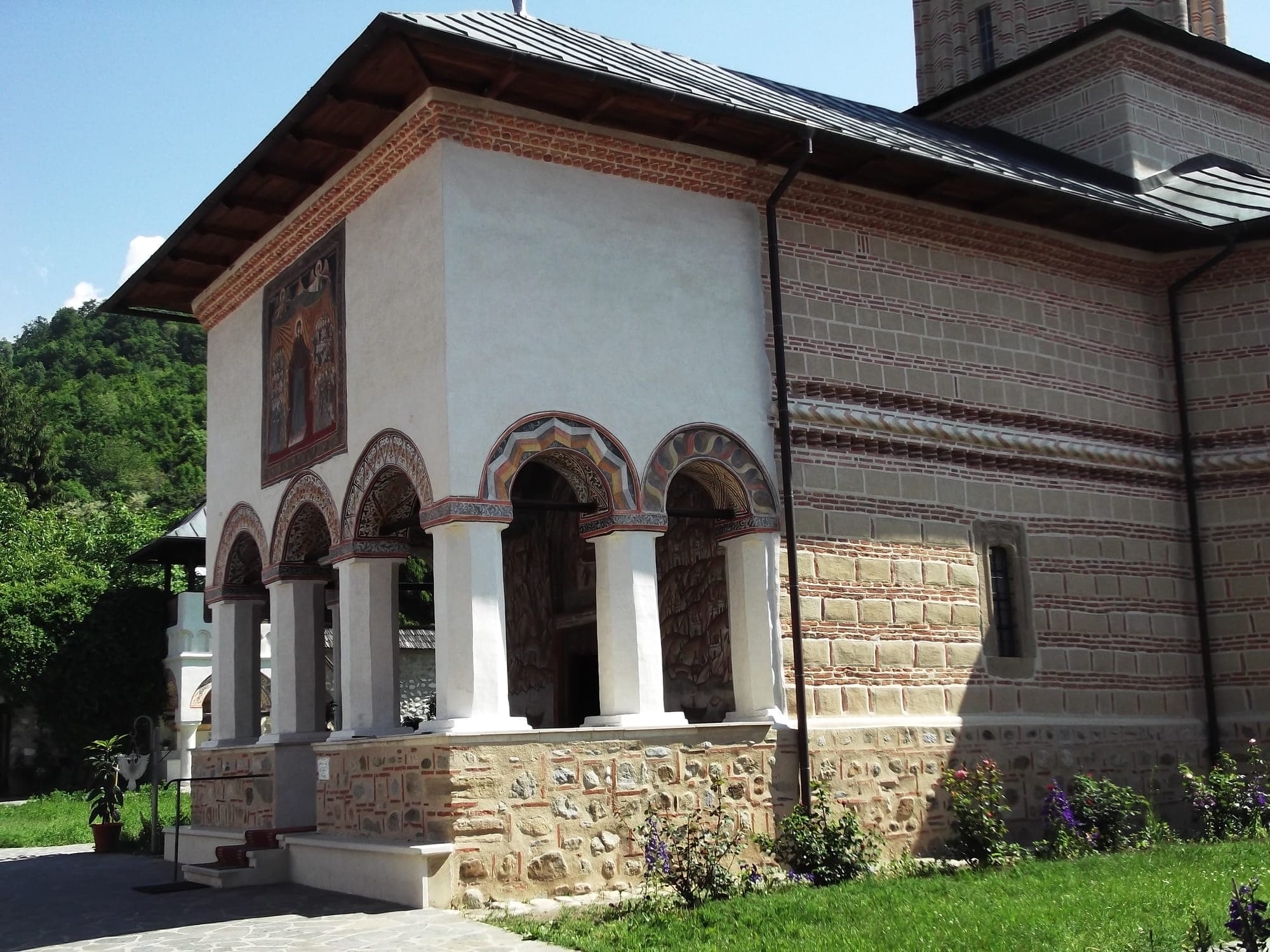
You enter through a massive carved wooden gate, inscribed with the words “Bine este cuvântat cel ce vine întru numele Domnului” (“Blessed is he who comes in the name of the Lord”), and inside the precinct white cells with wooden balconies enclose the paved courtyard on its east, south and west sides. The church, Byzantine in style, with a trefoil plan and a polygonal tower with wide niches, has an open porch in the Brâncoveanu style resting on eight stone columns, and its wall carries a mural painting. Inside is the iconostasis of carved lime wood, with interlaced floral motifs. A gate in the north wall leads to a second enclosure, where the small St Nicholas infirmary church stands, built in 1732 by the abbot Lavrentie.
Good to know
The Oltețului Gorge and Polovragi Cave, which is visited separately, begin about a kilometre from the monastery. The summer feast, on 15 August, begins with a vigil on the evening of the 14th and draws many pilgrims.
Information verified on 29 October 2026.
- The church of the 1640s, with an open Brâncoveanu-style porch on eight stone columns and a mural painting.
- The iconostasis of carved lime wood, with interlaced floral motifs.
- The massive carved wooden gate at the entrance, inscribed “Bine este cuvântat cel ce vine întru numele Domnului”.
- The bell tower above the precinct gate, from the time of Brâncoveanu.
- The white cells with wooden balconies around the paved courtyard.
Good to know before you go
- Getting there
By car: from Târgu Jiu it is ~53 km (~1 hour): take the DN67 towards Râmnicu Vâlcea, then the county roads towards Polovragi and on to the monastery, at the edge of the village. From Râmnicu Vâlcea it is ~66 km (~1½ hours), from Craiova ~118 km (~2½ hours) and from Novaci ~14 km (~20 min). Polovragi Cave is ~1 km further on, in the gorge.
Public transport: Polovragi has no railway station; trains reach Târgu Jiu (~53 km) or Râmnicu Vâlcea (~66 km), from where you continue by car or taxi.
- Rules
Modest dress: shoulders and knees covered, women with their heads covered in the church. Keep quiet within the walls and switch phones off during services. Photos in the church only with the nuns' permission.
- Facilities
guesthouses in the village of Polovragi
Frequently asked questions about Polovragi Monastery
How long does a visit to Polovragi Monastery take?
A visit to Polovragi Monastery takes about 45 min (courtyard, church and gate).
Can you visit Polovragi Monastery with kids?
Yes, Polovragi Monastery is suitable for children (quiet place, modest dress).
How do I get to Polovragi Monastery?
Polovragi Monastery is located at Drumul Mănăstirii, on the edge of the village of Polovragi, towards the Oltețului Gorge, Polovragi, Gorj County. More under “Getting there”
When is the best time to visit Polovragi Monastery?
The best season for Polovragi Monastery: May – October (summer, by the gorge).
Reviews
Other attractions nearby
The closest attractions to Polovragi Monastery, sorted by distance.
 1 km from Polovragi Monastery
 Top 1004 km from Polovragi Monastery
 8 km from Polovragi Monastery