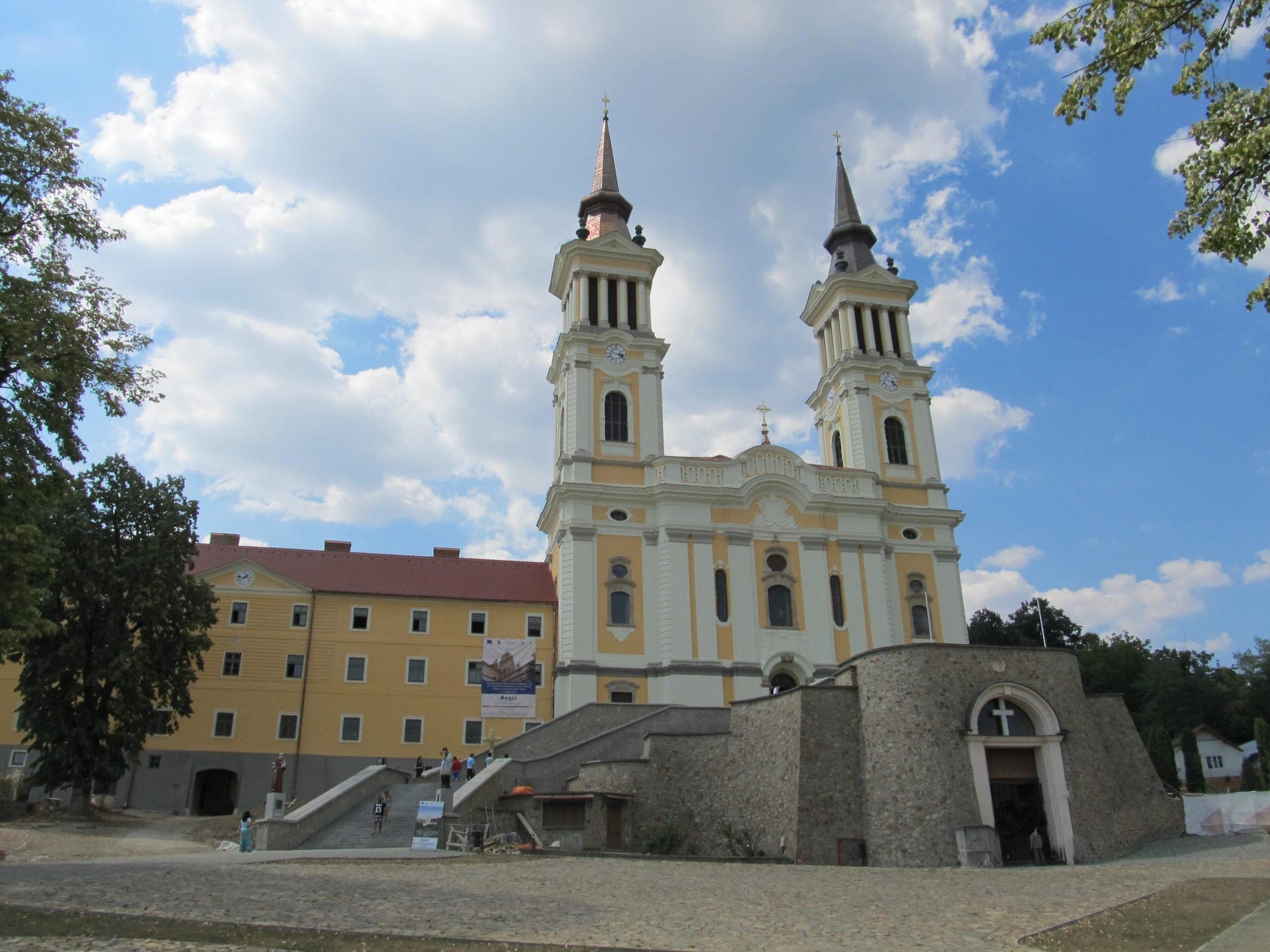
Maria Radna Monastery
The largest Baroque pilgrimage church in western Romania, its 67-metre towers rising above the Mureș, with a miracle-working icon and corridors covered in votive paintings.

The largest Baroque pilgrimage church in western Romania, its 67-metre towers rising above the Mureș, with a miracle-working icon and corridors covered in votive paintings.

A Secession building from 1907–1908 on Piața Unirii in Oradea, with a glass-roofed passage and a stained-glass window of a black eagle, from which it takes its name.

The Orthodox church of the Dormition of the Mother of God in Piața Unirii, built in 1784–1790 and known for the globe in its tower that shows the phases of the Moon, in a mechanism of 1793.

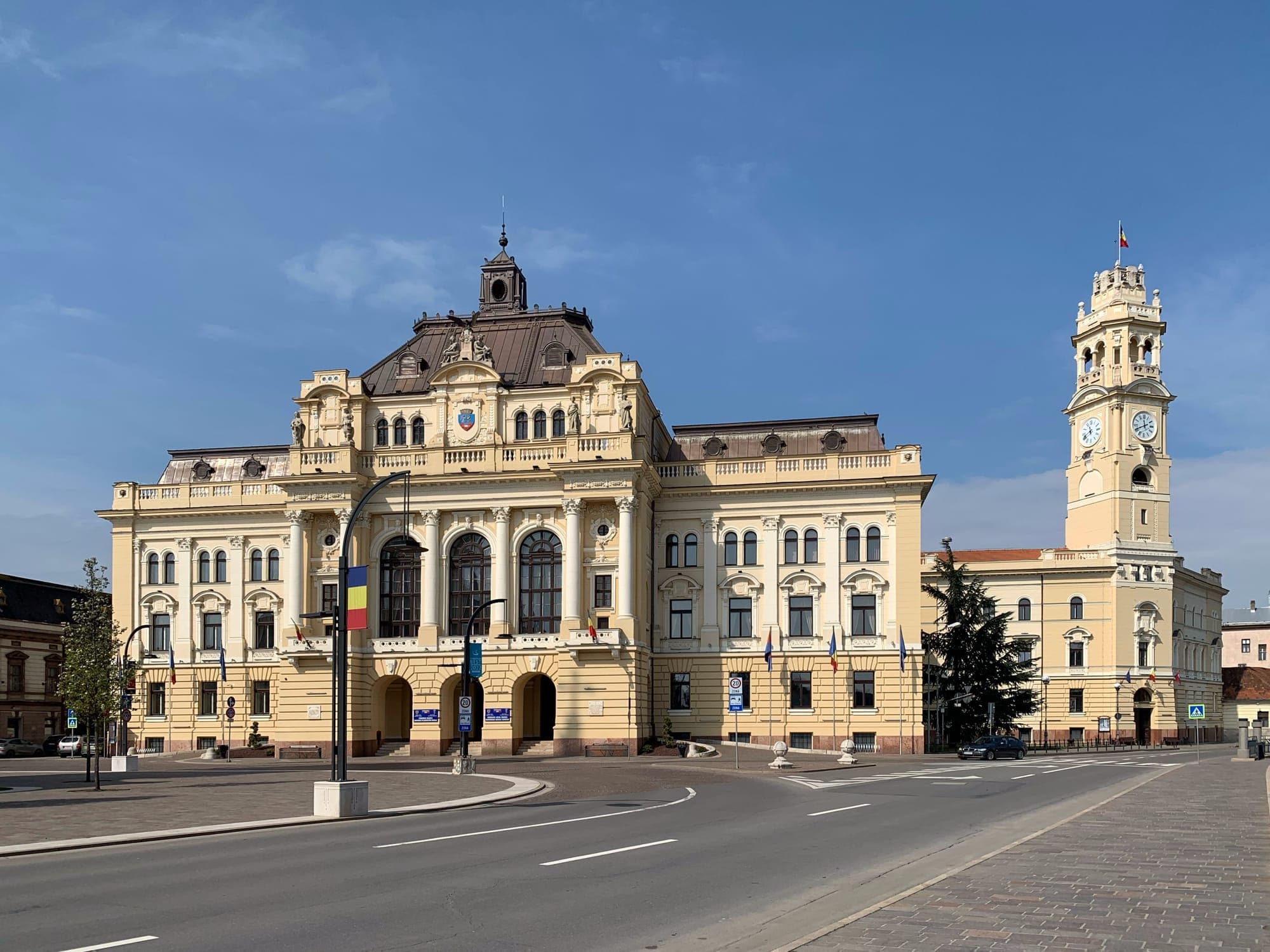
An eclectic palace of 1902–1903 on Piața Unirii, home to the city hall, with a tower of almost 50 m: its clock plays Iancu's March, and the top gives a view over the rooftops of the centre.

The Oradea State Theatre building, designed by the Viennese firm Fellner & Helmer and opened in 1900: an Ionic portico on Piața Ferdinand and an auditorium with boxes and a balcony, still in use every week.

The Cathedral of the Assumption, built between 1752 and 1780: the largest Baroque church in Romania, with an organ given by Maria Theresa and an interior of marble, frescoes and gilding.

A synagogue of 1877–1878 on the bank of the Crișul Repede, with a broad dome and a Moorish-style painted interior; restored and reopened in 2015, it is now a cultural venue.

The ruins of a 13th-century stone fortress on Dealul Cetății above Șiria, with walls, towers and a wide view over the Arad Plain.