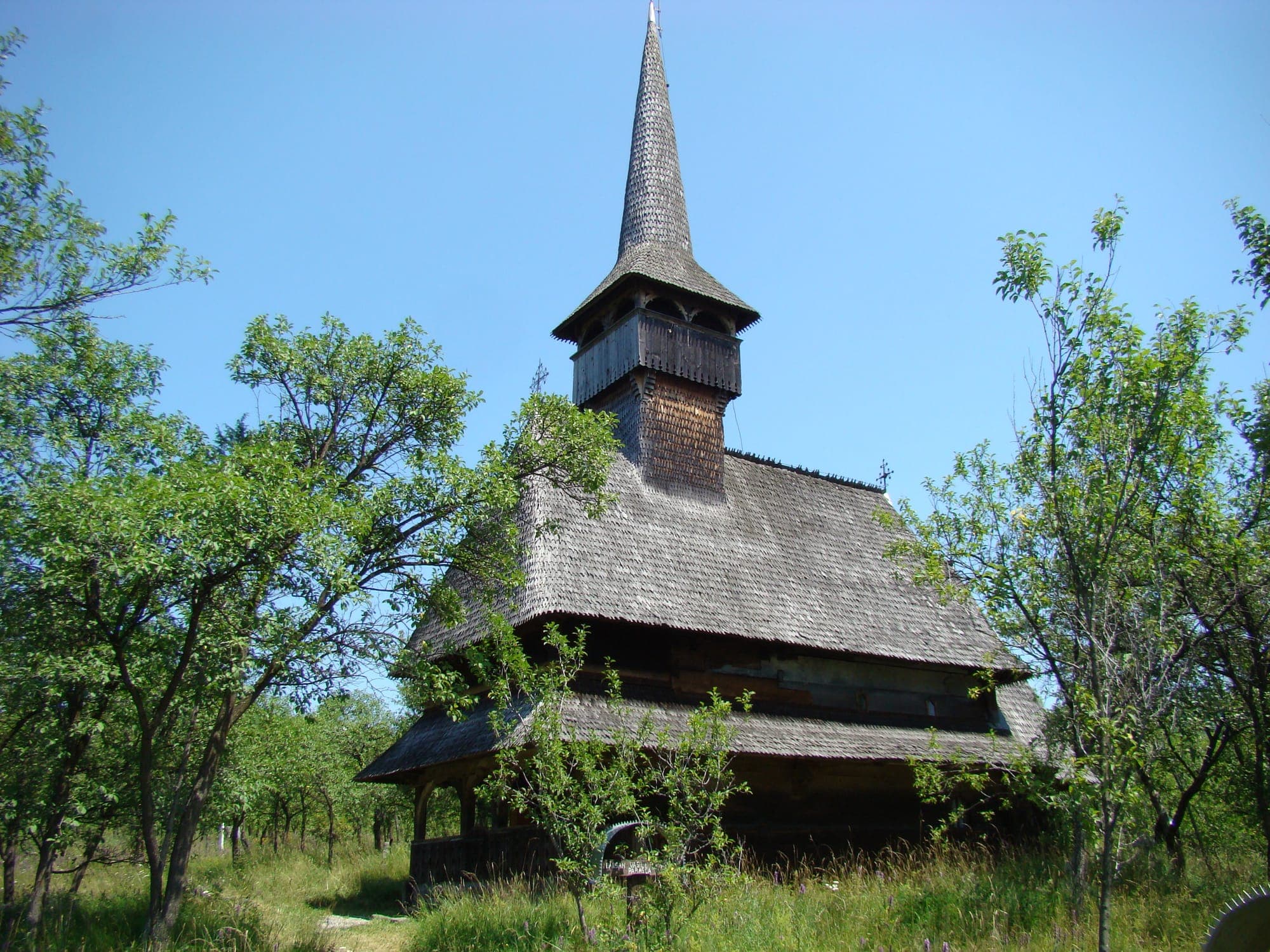
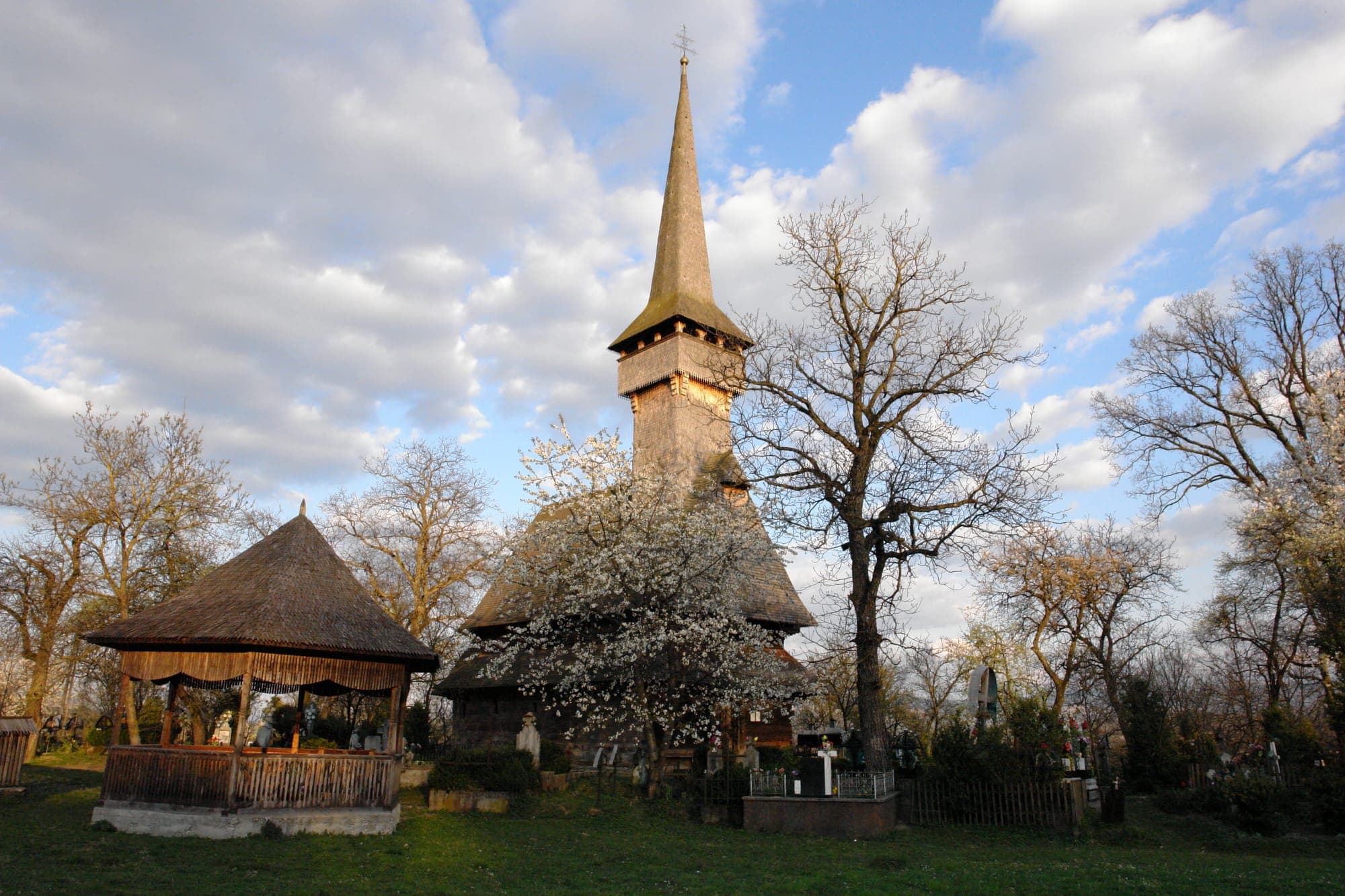
Bârsana's old wooden church, dating from 1711, stands on Jbâr Hill in an orchard full of crosses; inside is Toader Hodor's Baroque painting of 1806. A UNESCO site.
Monasteries and churchesMonuments and historic sitesUNESCO
The 1643 Church of Saint Nicholas in the Cosău Valley, with a slender tower framed by four small turrets, paintings by Alexandru Ponehalschi and the chain mail attributed to the outlaw Pintea the Brave. A UNESCO site.
Monasteries and churchesUNESCO
A wooden church from 1770 dedicated to Saint Paraskeva, painted in 1780 by Radu Munteanu with a crowded Last Judgement; one of the eight Maramureș churches on the UNESCO World Heritage List.
Monasteries and churchesUNESCO
The Church of the Nativity of the Virgin on Ieud's rocky hillside, built in 1611–1621, painted inside by Alexandru Ponehalschi and the place where the Ieud Codex was found. A UNESCO site.
Monasteries and churchesUNESCO
The Church of the Holy Archangels in Rogoz, built in 1663 and part of the Maramureș UNESCO site, has an asymmetric roof over the 'table of the ancestors', horse-head eaves brackets and paintings from 1785.
Monasteries and churchesUNESCO
An oak church built by the village's 49 families at the end of the 18th century, with a slender tower of almost 47 m and a trefoil vault unique among wooden churches, part of a UNESCO World Heritage site.
Monasteries and churchesUNESCO
An early 17th-century wooden church in the village cemetery, with the best-known depiction of Hell in Maramureș: devils, torments and village sins, painted in 1793–1794.
Monasteries and churchesUNESCO
The oak-built Greek Catholic church of Șurdești village, with a 54-metre tower and a total height of 72 metres, one of the tallest old timber buildings in Europe and a UNESCO World Heritage monument.
Monasteries and churchesUNESCO