The Carpathians cross the country in a wide arc and divide the mountains of Romania into three groups: the Eastern Carpathians, with Rodna, Ceahlău and Călimani; the Southern Carpathians, the highest, with Făgăraș, Bucegi, Piatra Craiului, Parâng and Retezat; and the Western Carpathians, with the lower, gentler Apuseni. All the peaks above 2,500 m are in the Southern Carpathians. Trails are marked in the traditional system of stripe, cross, triangle and dot on a white background, and the mountain huts and shelters make multi-day treks possible. The summer season runs roughly from June to October; in winter the ridges call for equipment and experience.
The Bucegi are the most accessible: Babele and the Bucegi Sphinx are reached by cable car from Bușteni, and the Heroes' Cross on Caraiman Peak is a walk away from there. In Brașov, Mount Tâmpa is an urban mountain with the city at its feet. The Transfăgărășan takes the car up to 2,042 m, into the heart of the Făgăraș, and Capra Lake is an easy first hike from there.
Romania's highest road: the DN67C climbs from Novaci over the Parâng Mountains to 2,145 m at the Urdele Pass and drops past Lake Oașa to Sebeș, 148 km above the clouds.
The DN7C crosses the Făgăraș Mountains for 151 km, from the Vidraru dam up to the glacial Bâlea Lake at 2,042 m, then winds down in hairpin bends into Transylvania.
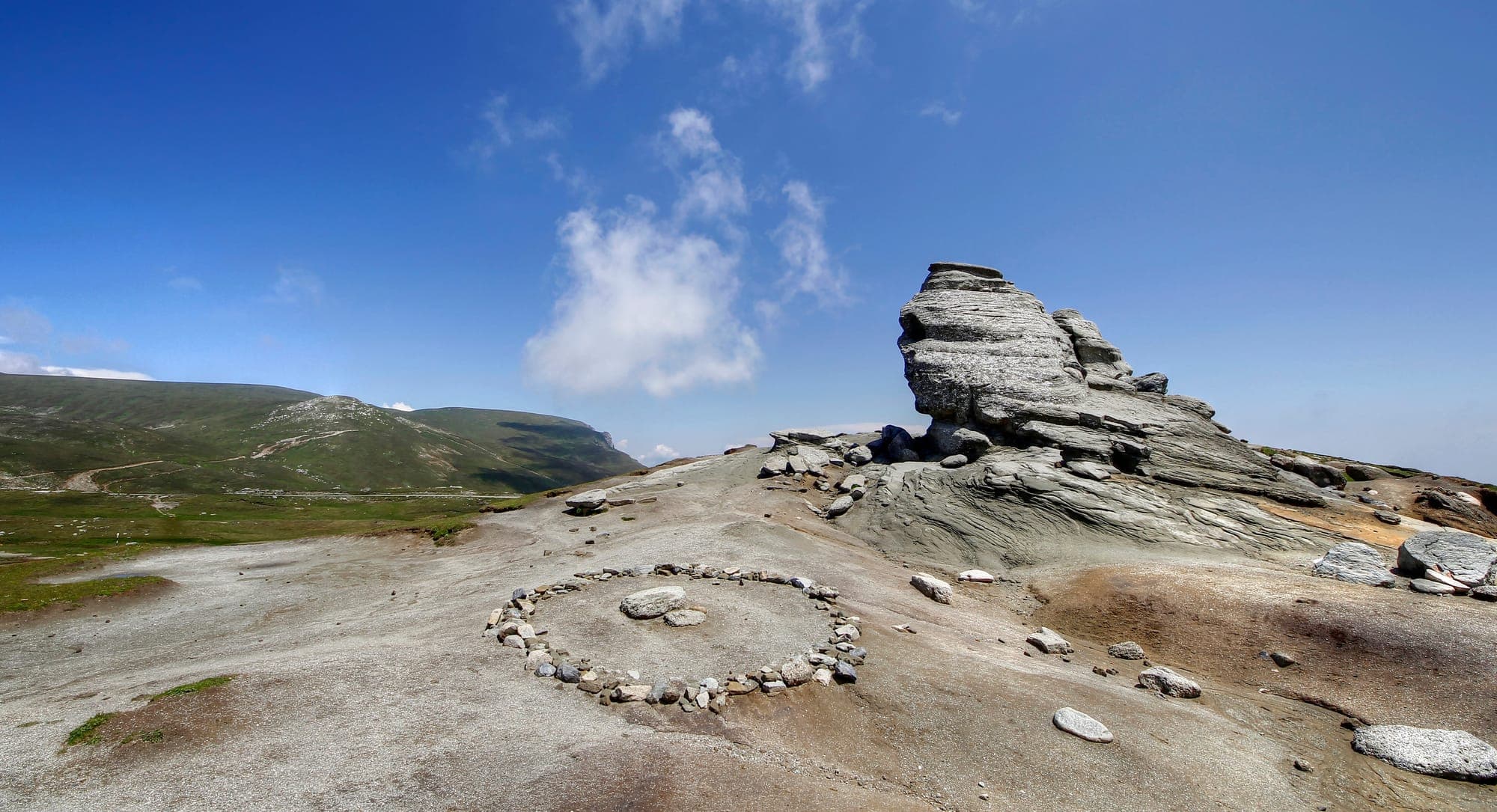
The stone mushrooms of the Bucegi plateau, at ~2,200 m: conglomerate rocks worn by wind, frost and rain, a few minutes from the Bușteni cable car and the Sphinx.
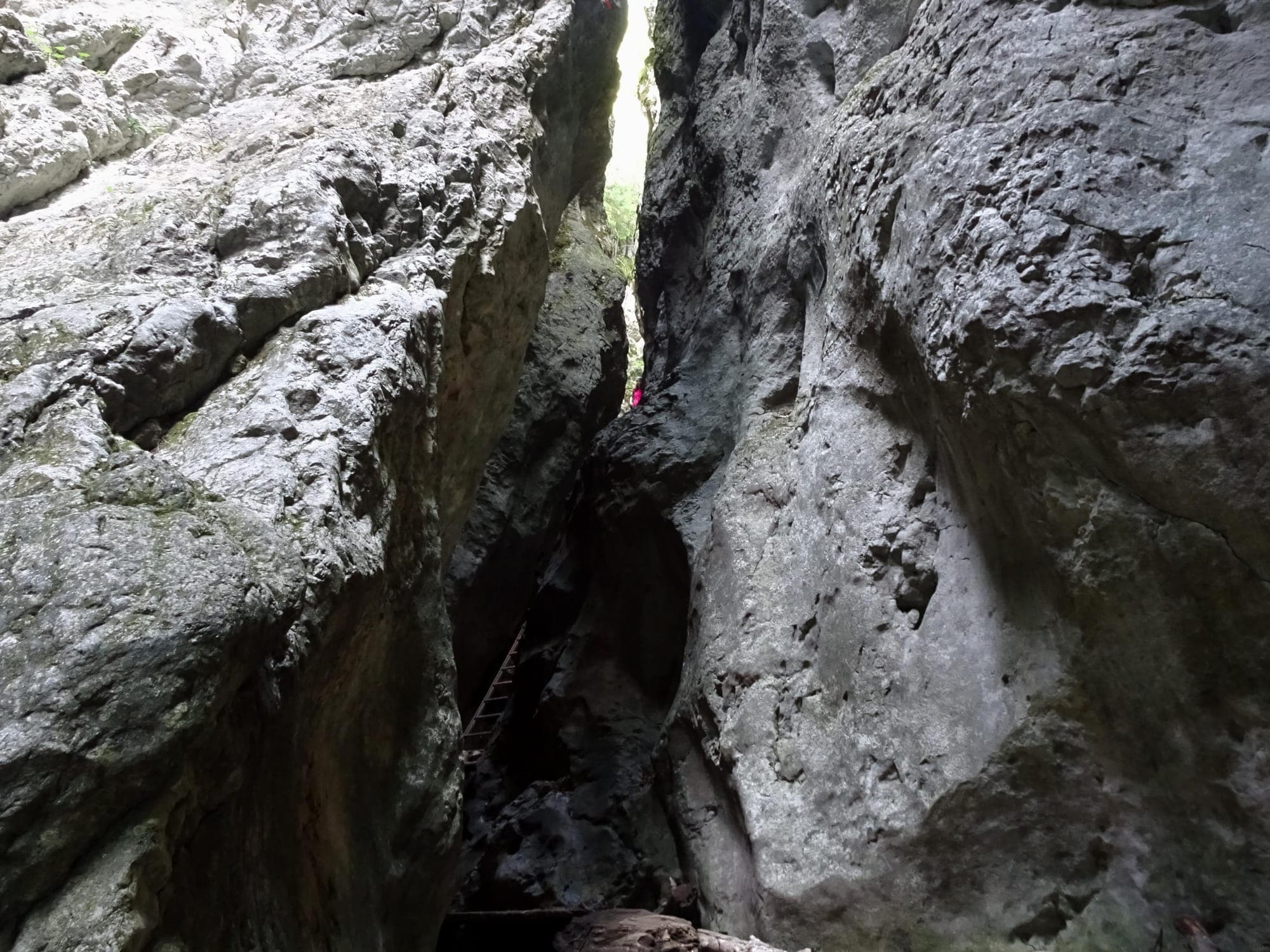
A narrow limestone gorge in the Piatra Mare Mountains near Brașov, with seven rock steps climbed on metal ladders and walkways; at the top you can ride a zip line back down.
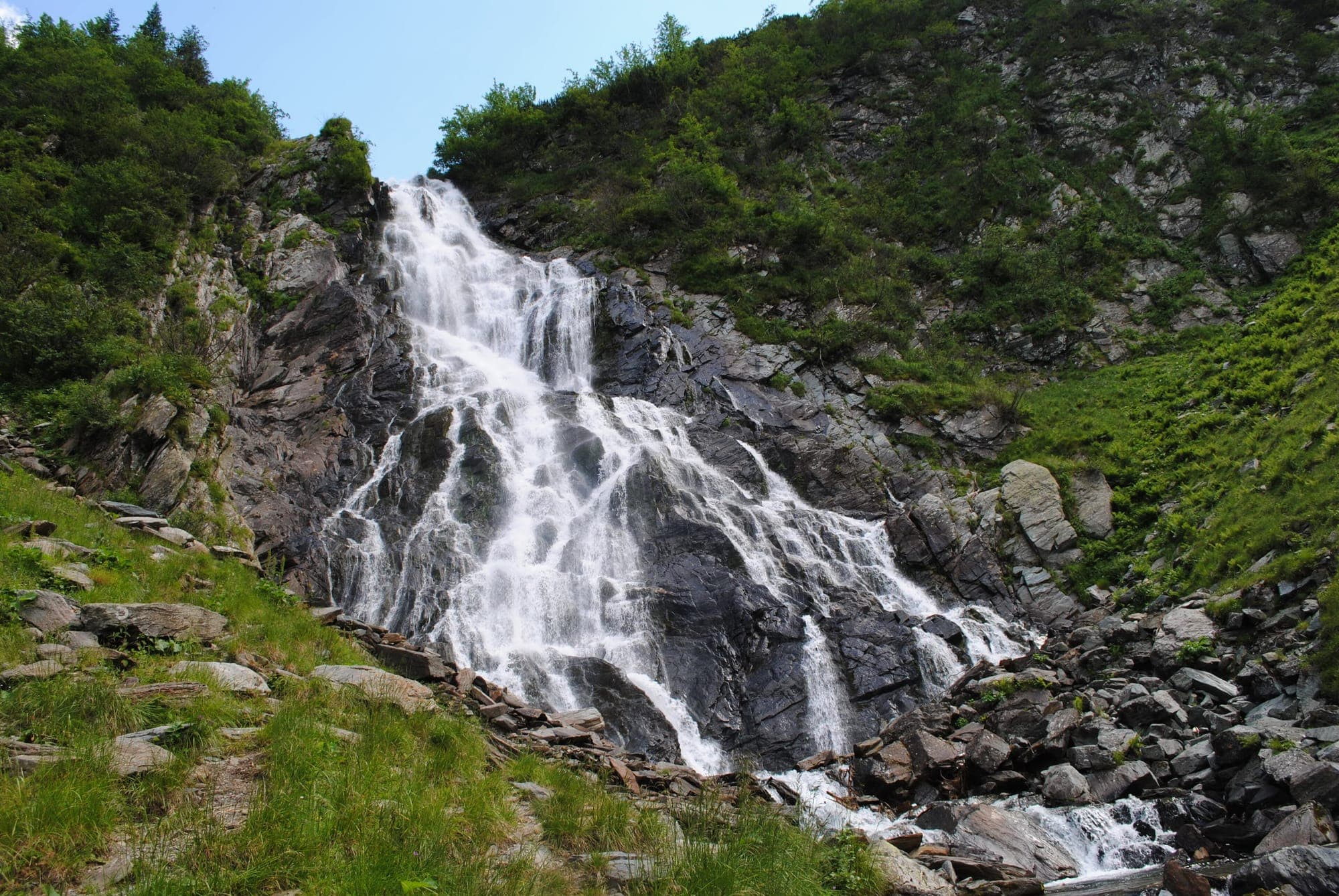
Romania's biggest tiered waterfall, dropping about 60 m over the lower step of the Bâlea cirque in the Făgăraș Mountains; an hour's walk up from the Bâlea Cascadă chalet on the Transfăgărășan.
A 39 m steel cross raised in the 1920s on the edge of the Caraiman escarpment, at 2,291 m, in memory of the heroes of the First World War; it can be seen from all over Bușteni.
An 8 m conglomerate rock shaped by wind, frost and rain that, from certain angles, looks like a human head; it stands on the Bucegi plateau at 2,216 m, next to Babele.
A 25 m, two-tier waterfall on the Rupturi stream, in the forests below Toaca peak in Ceahlău National Park; reached on foot from the Durău resort in about two hours.
WaterfallsNational parks and reservesMountains and trails
A waterfall of about 80 m on the Bohodei stream, below the peak of the same name, regarded as the tallest in the Apuseni Mountains; reached on a demanding loop from Pietroasa with chain-equipped rock sections.
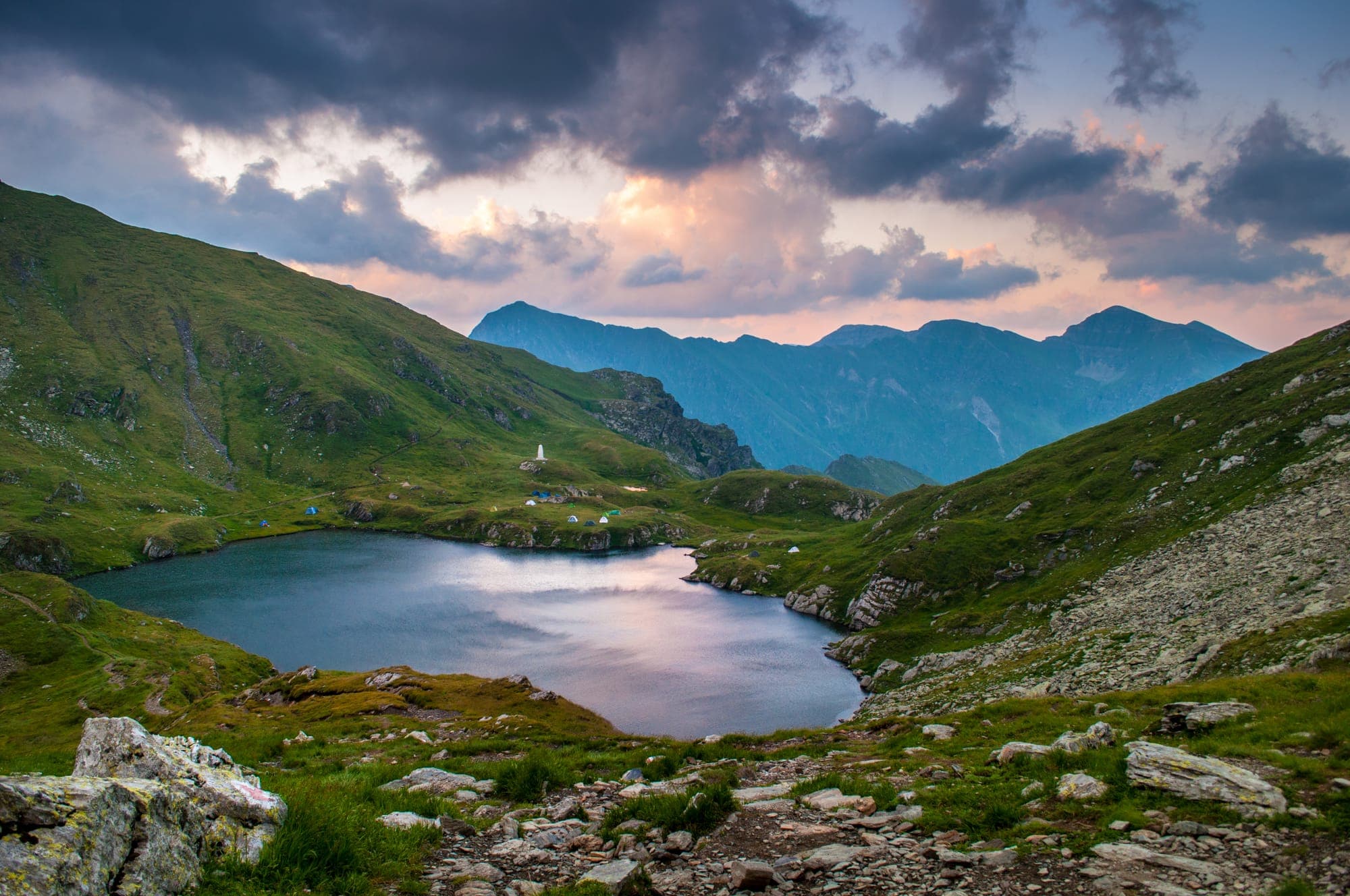
A glacial lake at 2,230 m on the southern side of the Făgăraș Mountains, just below the ridge; about an hour's walk from Bâlea Lake, over the Capra saddle.
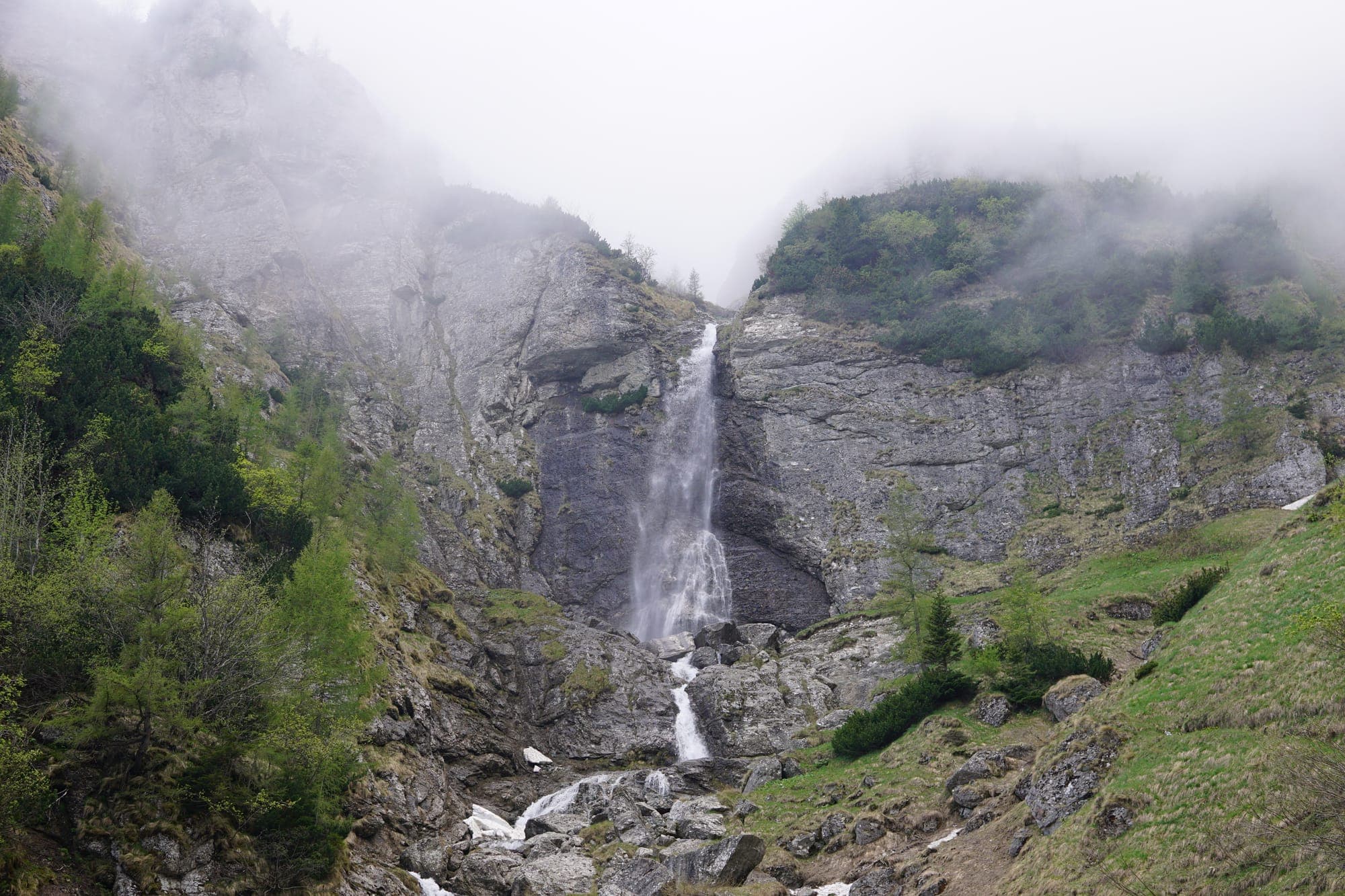
A waterfall on the rock step at the head of the Jepi valley, below the Caraiman chalet in the Bucegi; it only flows in full in late spring and early summer, hence its nickname of the ‘ghost waterfall’.
A 20–25 m, two-tier waterfall hidden in a narrow valley of giant boulders and spruce on the western slope of the Vlădeasa massif; reached on foot from Stâna de Vale along a marked trail of about 8 km.
The wooded 960 m mountain that rises straight out of central Brașov: the “BRAȘOV” letters, views over the old town, a nature reserve, marked trails and a cable car from its foot.
Romania's best-known ski resort, above 1,000 m beneath Postăvaru: 12 slopes, cable cars almost to the summit and, in summer, forest trails and views over Brașov.
A chain of five waterfalls in a narrow limestone gorge in the Piatra Mare Mountains, above Timișu de Sus; reached in about an hour's climb on the blue-stripe trail.
 Top 20