The former metropolitan cathedral of Moldavia, built in 1514–1522 in the centre of Suceava and home to the relics of St John the New; its church of St George is a UNESCO site.
Monasteries and churchesMonuments and historic sitesUNESCO
The Lutheran church in the centre of Mediaș, late Gothic and enclosed in a fortress with walls and towers; its leaning tower, with a five-pointed spire, is the town's emblem.
Monasteries and churchesFortresses and fortifications
A small stone church in the Hațeg Country, built largely from Roman blocks brought from Ulpia Traiana Sarmizegetusa, with a tower over the nave, stone lions on the roof and paintings from 1443.
Monasteries and churchesMonuments and historic sites
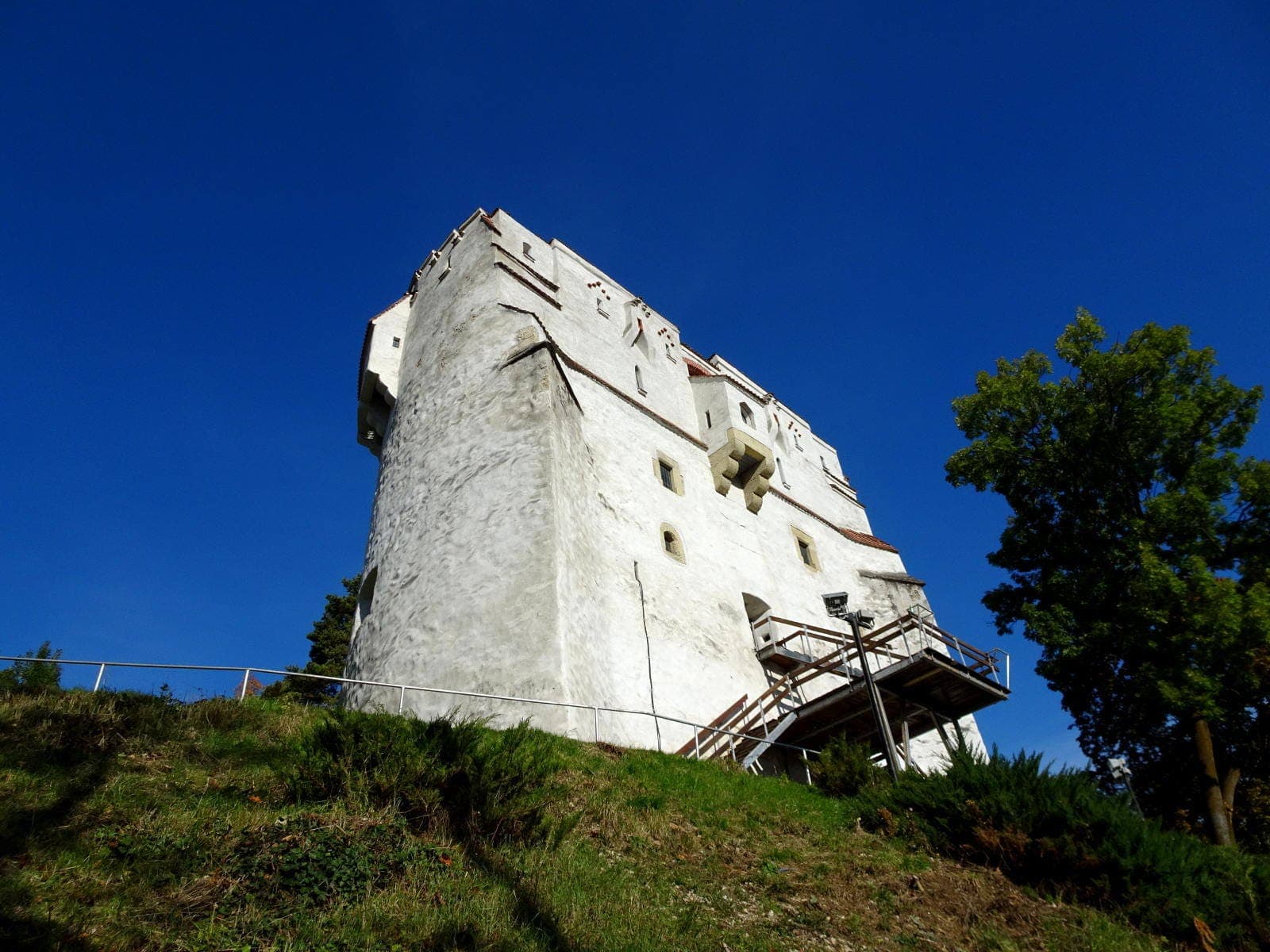
The Orthodox church of the Romanians of Șcheii Brașovului, built from 1495 on the site of a wooden one, with Gothic-Baroque towers, painted façades and Nicolae Titulescu's grave in the churchyard.
Monasteries and churchesMonuments and historic sites
Constantin Brâncuși's round stone table with 12 hourglass seats, in the park on the banks of the Jiu: the western end of the Heroes' Way ensemble, a UNESCO World Heritage Site.
The DJ713 climbs from the DN71 near Sinaia over 16 km of tarmac to 1,925 m at Piatra Arsă: the only road that takes you by car onto the Bucegi plateau.
The public aquarium in central Tulcea, with fish from the Danube and the Black Sea, coral reef tanks and a tunnel among sturgeon, plus an exhibition on the Delta's wildlife.
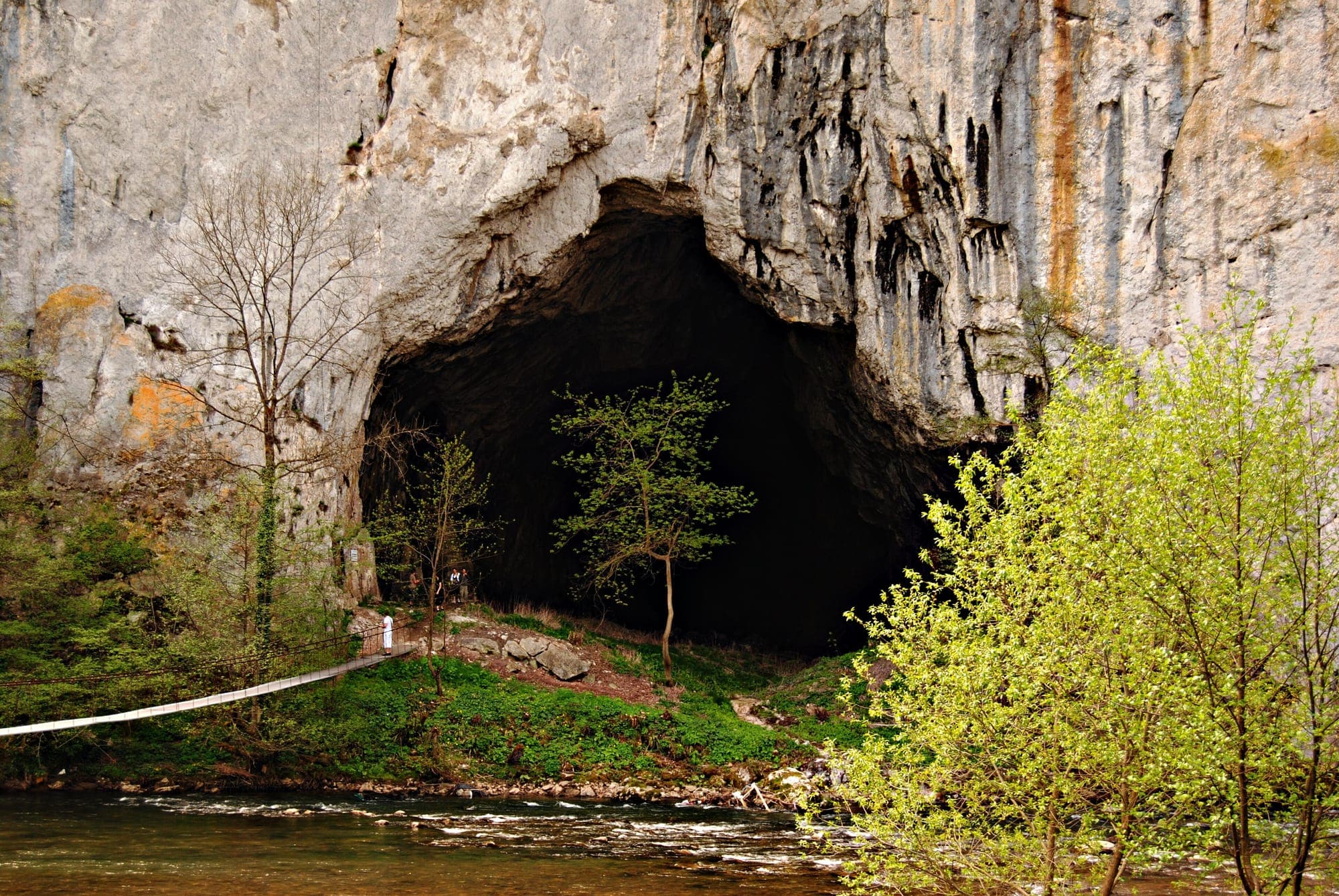
A cave with an entrance more than 30 m high facing the Crișul Repede, reached over a suspension bridge and inhabited by people as far back as the Neolithic.
A 70–80 m chain of waterfalls, with a 25 m main drop, plunging into a huge sinkhole in the Trascău Mountains and vanishing underground; seen from a wooden balcony a short walk from the road.
A two-tier waterfall of about 50 m in the Cerna Mountains, with Romania's longest free drop (~40 m), above Lake Prisaca; reached by a steep 1.5 km path from the Cerna valley road, 13 km from Băile Herculane.
An undeveloped cave in the Bihor Mountains, with ice at the entrance and white formations, where a Neanderthal footprint at least 62,000 years old was found in 1974.
Vaslui County's museum, in a neoclassical palace that was once a prefecture: archaeology, history, art, local figures, plus an astronomical observatory and planetarium.
A small white church on the hill above the village, grown from a 12th-century Romanesque chapel and ringed by walls, towers and grain galleries, in a Saxon village that has survived almost intact.
Monasteries and churchesFortresses and fortificationsUNESCO
An oak church built by the village's 49 families at the end of the 18th century, with a slender tower of almost 47 m and a trefoil vault unique among wooden churches, part of a UNESCO World Heritage site.