St John the New Monastery
Suceava, Suceava County · Bukovina


About St John the New Monastery
At a glance: Monasteries and churches in Suceava, Suceava County. Information verified on 7 October 2026.
St John the New Monastery stands in the centre of Suceava, a few hundred metres from the Princely Citadel, and has been the city's religious heart for five centuries. Its church, dedicated to St George, was begun in 1514 by Bogdan III, son of Stephen the Great, as the new cathedral of the Metropolis of Moldavia, after the old cathedral at Mirăuți had burned down. The prince died when the walls had reached the windows, and his son Ștefăniță finished it in 1522, as the Slavonic inscription above the entrance records.
Between 1522 and 1677 it was the seat of the metropolitans of Moldavia, and since 1991 it has once again been the cathedral of the archbishops of Suceava and Rădăuți. Since 1589 it has kept the relics of St John the New, the merchant martyred at Cetatea Albă, brought to Suceava by Alexander the Good and regarded as the protector of Moldavia. The relics were taken to Poland in 1686 together with Metropolitan Dosoftei and only returned in 1783. For its exterior frescoes, the church has been on the UNESCO World Heritage List since 1993, as one of the components of the "Churches of Moldavia", alongside Voroneț, Humor, Moldovița and Arbore.
What you can see
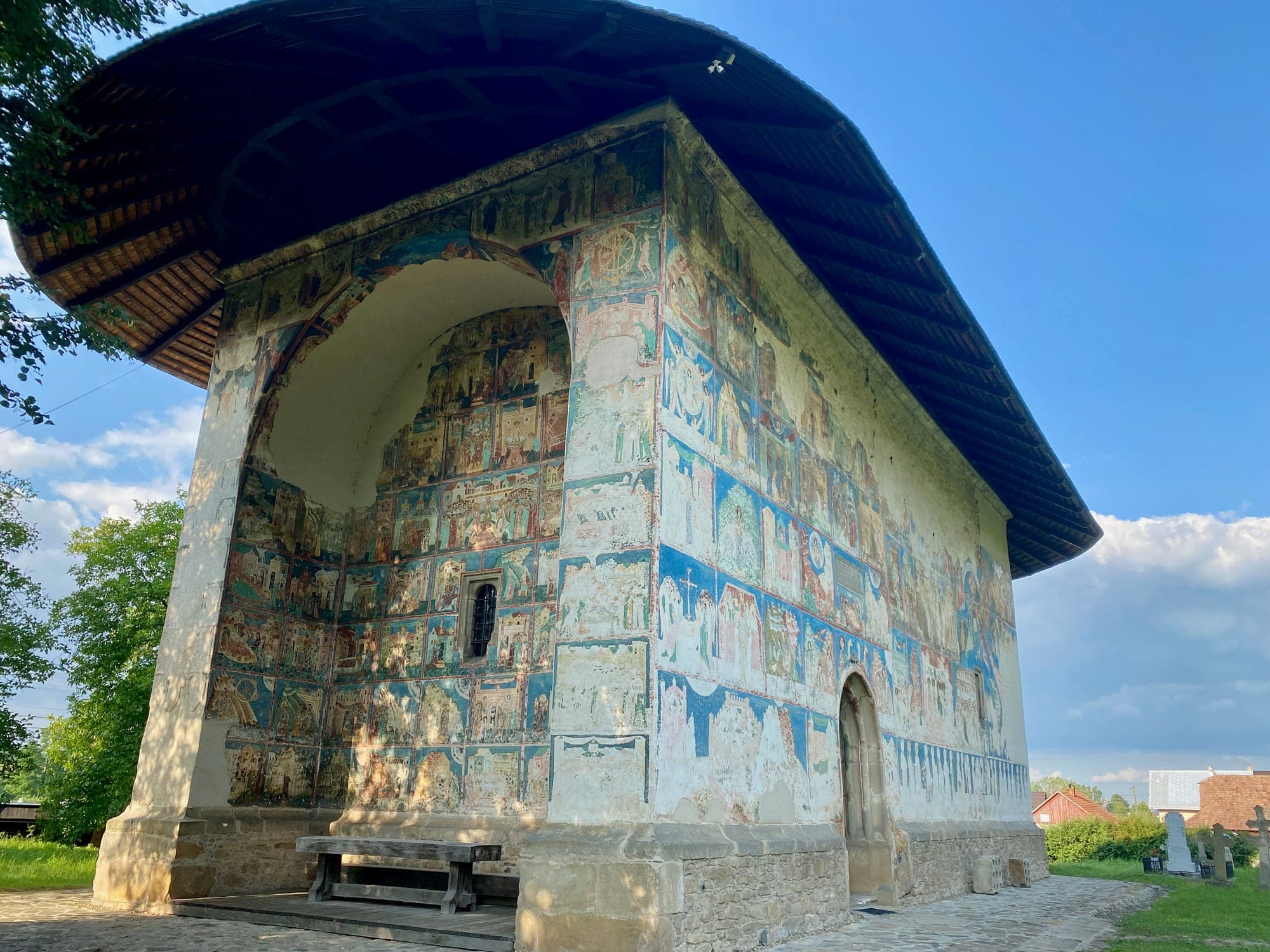
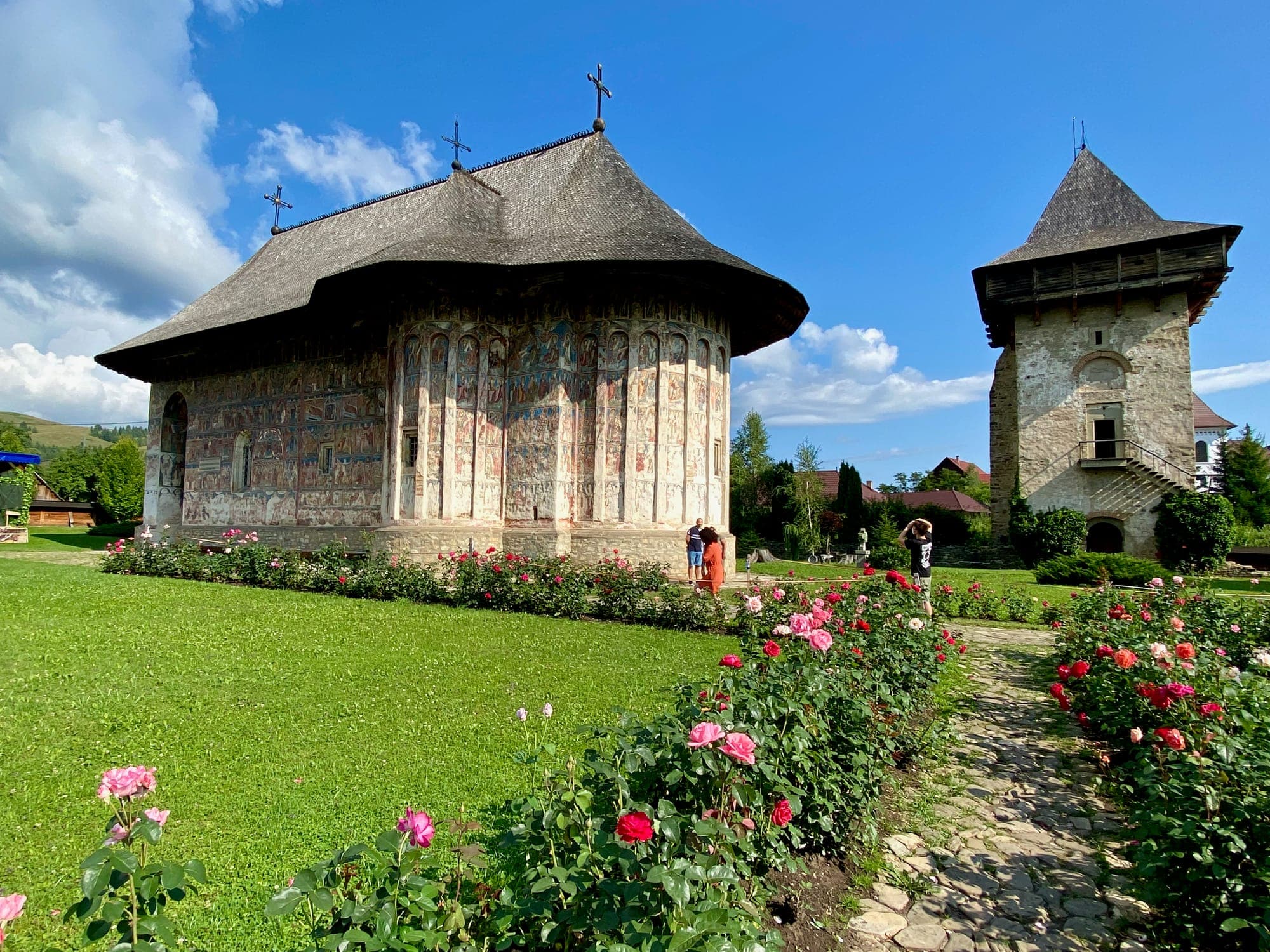
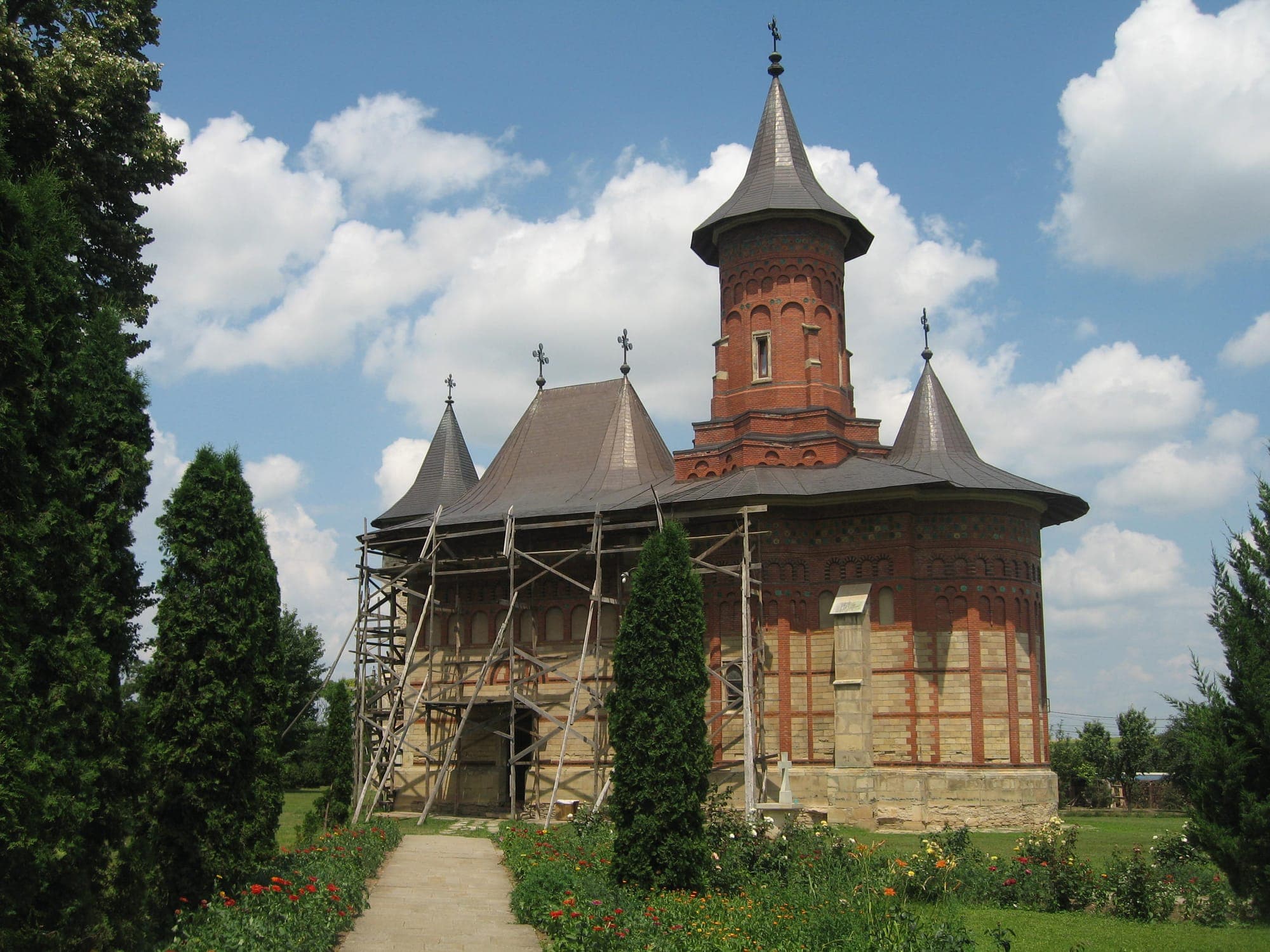
The church has a trefoil plan, a slender octagonal tower and a tall roof of glazed tiles in coloured diamonds, laid by the Austrian architect Karl Romstorfer during the 1898–1910 restoration. The exterior painting, from the reign of Petru Rareș (1534), survives mainly on the south facade, sheltered from the wind: the Akathist of the Mother of God, the Siege of Constantinople, the Tree of Jesse flanked by ancient philosophers, among them Plato and Aristotle, and the parable of the Prodigal Son. Inside, beneath the Pantocrator in the tower, are scenes of the Passion and the military saints, and next to the place of the reliquary you can still see the faces of Bogdan III and his sons from the votive painting.
In the grounds are the bell tower raised by Petru Șchiopul in 1589, now 34 m high, built also as the gateway to the grounds, and the sacristy chapel (clisiarnița) founded by Metropolitan Anastasie Crimca in 1626–1629, whose west wall was painted in 1895 with scenes from the martyrdom of St John. Tombstones with Slavonic inscriptions are set into the enclosure wall.
Good to know
Since 2022 the whole complex has been under restoration, funded through the National Investment Company: the church, the abbot's house, the monks' cells, the chapel, the sacristy chapel and the enclosure wall. Since July 2026 the reliquary has been moved into the sacristy chapel, and services are held on a stage set up next to the bell tower; parts of the grounds and buildings may be a building site. On 24 June, the feast of Suceava, tens of thousands of pilgrims come.
- The reliquary of St John the New, now in the sacristy chapel painted with scenes from his martyrdom.
- The Tree of Jesse on the south facade, flanked by ancient philosophers, among them Plato and Aristotle.
- The roof of glazed tiles in coloured diamonds on the church and the bell tower.
- What remains of the votive painting, with Bogdan III and his sons, next to the place of the reliquary.
- Petru Șchiopul's bell tower of 1589, raised by a storey and a spire during the Austrian restoration.
Good to know before you go
- Getting there
By car: the monastery is in the centre of Suceava, ~700 m from Piața 22 Decembrie and ~1 km from the Princely Citadel, which is easy to combine in the same day. From Iași it is ~145 km on the E58 and DN28 (~2 hours), from Botoșani ~40 km, from Gura Humorului ~36 km on the DN17 (E58). Ștefan cel Mare Airport is ~12 km away.
Public transport: from Suceava (Burdujeni) railway station or the bus station, take a city bus or a taxi to the centre, then walk ~10 minutes to the monastery.
- Fees & discounts
The archdiocese does not publish entry or photography fees for the monastery; ask at the church shop, especially if you want to take photos inside the church.
- Rules
A working monastery and cathedral: modest dress with shoulders and knees covered, quiet within the grounds and phones switched off during services. While the restoration lasts, keep away from the marked building-site areas.
Frequently asked questions about St John the New Monastery
- Can you visit St John the New Monastery with kids?
- Yes, St John the New Monastery is suitable for children (modest dress and quiet).
- How do I get to St John the New Monastery?
- St John the New Monastery is located at Strada Ion Vodă Viteazul 2, Suceava, Suceava County. By car: the monastery is in the centre of Suceava, ~700 m from Piața 22 Decembrie and ~1 km from the Princely Citadel, which is easy to combine in the same day. From Iași it is ~145 km on the E58 and DN28 (~2 hours), from Botoșani ~40 km, from Gura Humorului ~36 km on the DN17 (E58). Ștefan cel Mare Airport is ~12 km away. Public transport: from Suceava (Burdujeni) railway station or the bus station, take a city bus or a taxi to the centre, then walk ~10 minutes to the monastery.
- When is the best time to visit St John the New Monastery?
- The best season for St John the New Monastery: All year round (feast on 24 June, crowded).
Reviews
Other attractions nearby
The closest attractions to St John the New Monastery, sorted by distance.
 Top 1001 km from St John the New Monastery
 14 km from St John the New Monastery
 34 km from St John the New Monastery