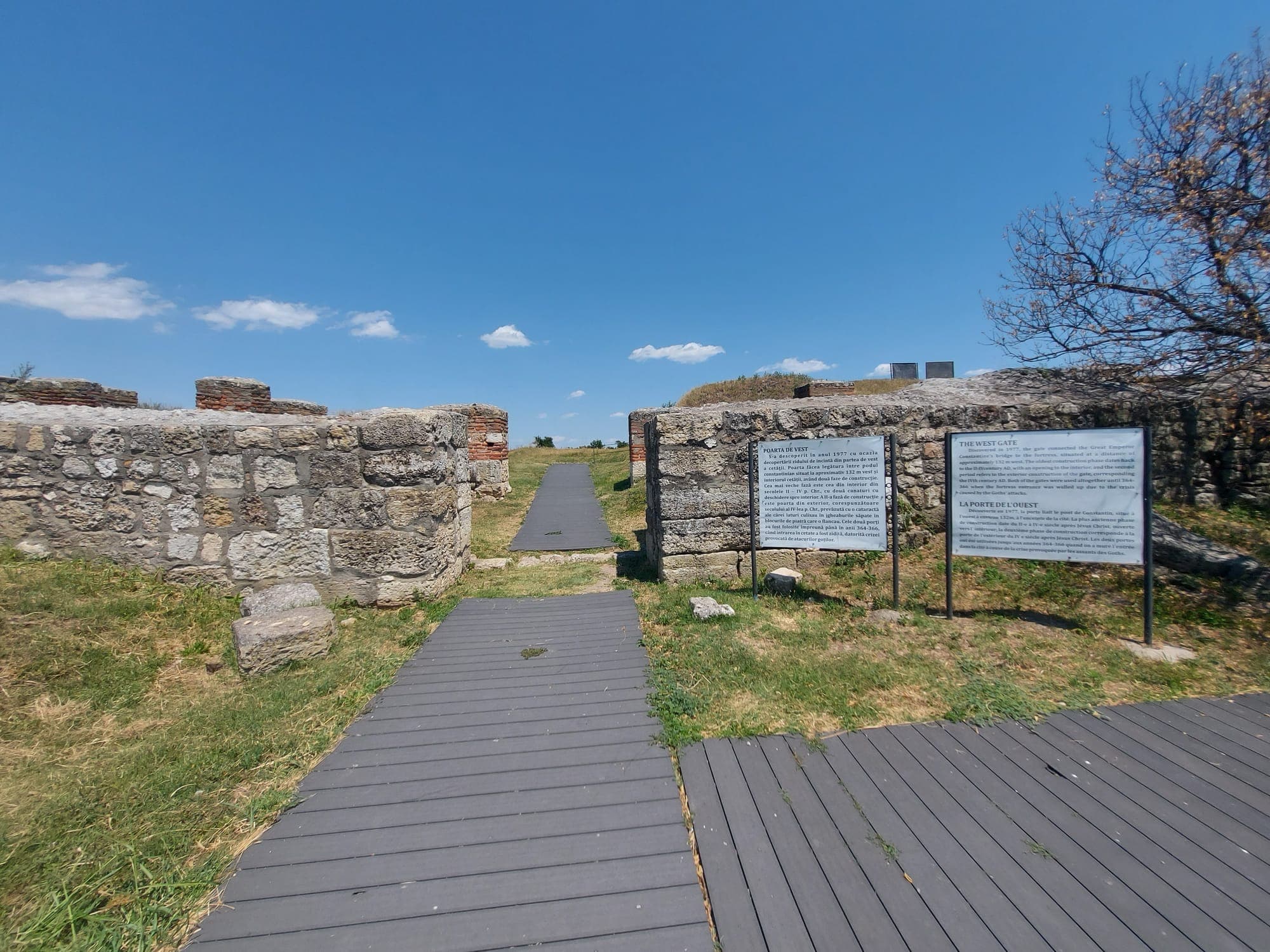
The Daco-Roman and Roman-Byzantine fortress in Corabia, with its excavated walls and towers, a 6th-century basilica, the "secret well" and the northern pier of Constantine the Great's bridge over the Danube.
Fortresses and fortificationsMonuments and historic sites
The zoo on the Cornești Plateau, open since 1964 and now spread over 42 hectares of forest, with elephants, giraffes, gibbons, tigers, lions and bears, the largest in Romania by area.
Constantin Brâncuși's round stone table with 12 hourglass seats, in the park on the banks of the Jiu: the western end of the Heroes' Way ensemble, a UNESCO World Heritage Site.
The central square of old Brăila, from which the streets of the historic centre fan out, with the blue Public Clock of 1909, the Holy Archangels church, a former mosque, and the statue of Trajan.
County road DJ107I, 78 km through the Trascău Mountains between Aiud and Bucium, near Abrud: villages scattered along the ridges, thatched houses and views from over 1,100 m.
The DJ713 climbs from the DN71 near Sinaia over 16 km of tarmac to 1,925 m at Piatra Arsă: the only road that takes you by car onto the Bucegi plateau.
The public aquarium in central Tulcea, with fish from the Danube and the Black Sea, coral reef tanks and a tunnel among sturgeon, plus an exhibition on the Delta's wildlife.
An undeveloped cave in the Bihor Mountains, with ice at the entrance and white formations, where a Neanderthal footprint at least 62,000 years old was found in 1974.
A botanical garden of almost 24 hectares in the former park of the Wesselényi castle: a Japanese garden with lakes and pavilions, greenhouses with palms and cacti, aquariums and thousands of tulips in spring.
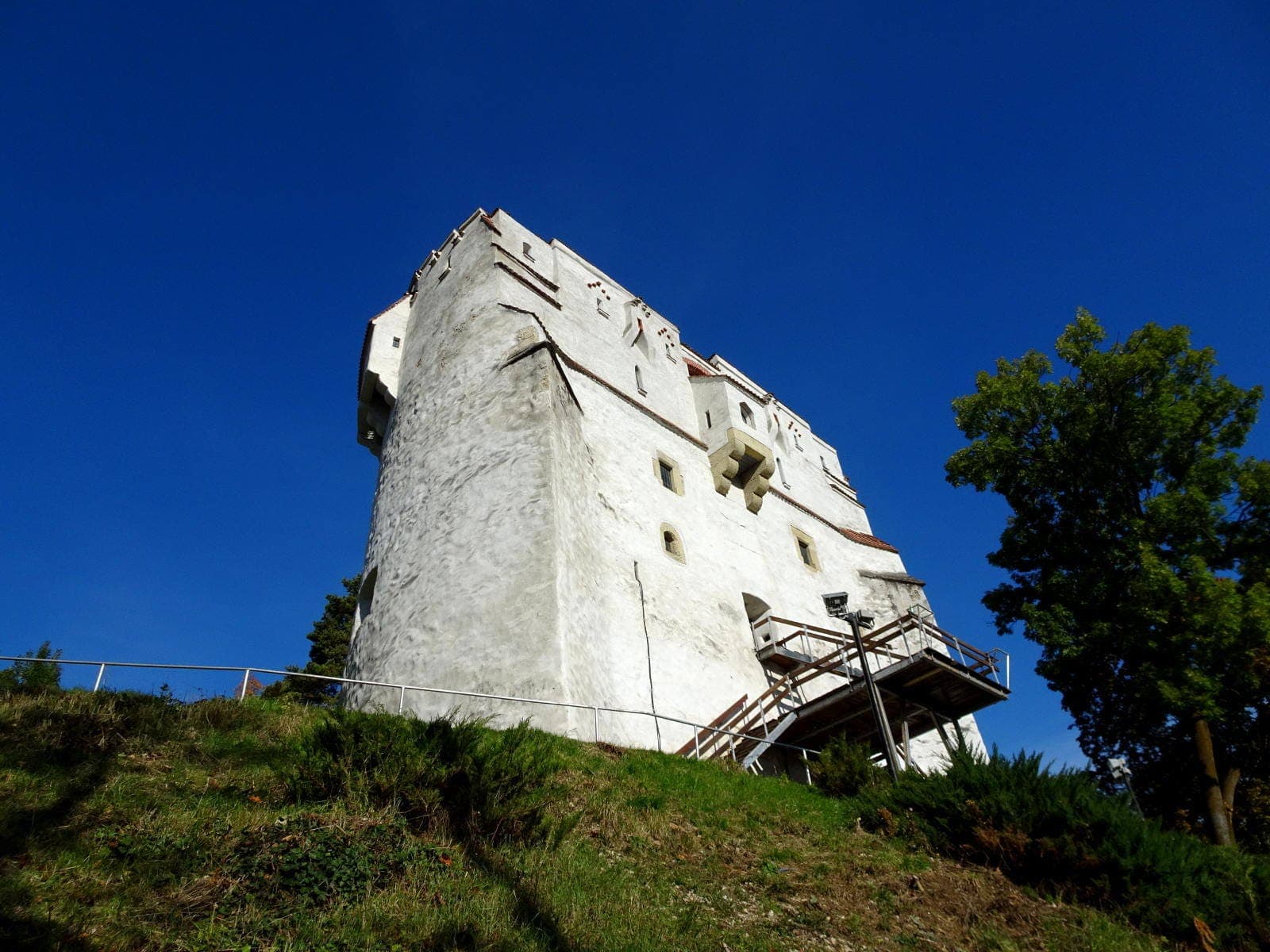
A small white church on the hill above the village, grown from a 12th-century Romanesque chapel and ringed by walls, towers and grain galleries, in a Saxon village that has survived almost intact.
Monasteries and churchesFortresses and fortificationsUNESCO
A 21.5-hectare dendrological park around the Csernovics Castle, with one of the richest collections of trees and shrubs in the country, an alpine garden, stone sculptures and small museums in the old hunting lodge.
The cathedral of the Archdiocese of Lower Danube, built between 1906 and 1917 to plans by Petre Antonescu: the largest religious building in Galați, Neo-Byzantine, with a main tower 42.5 m high.
The stone mushrooms of the Bucegi plateau, at ~2,200 m: conglomerate rocks worn by wind, frost and rain, a few minutes from the Bușteni cable car and the Sphinx.
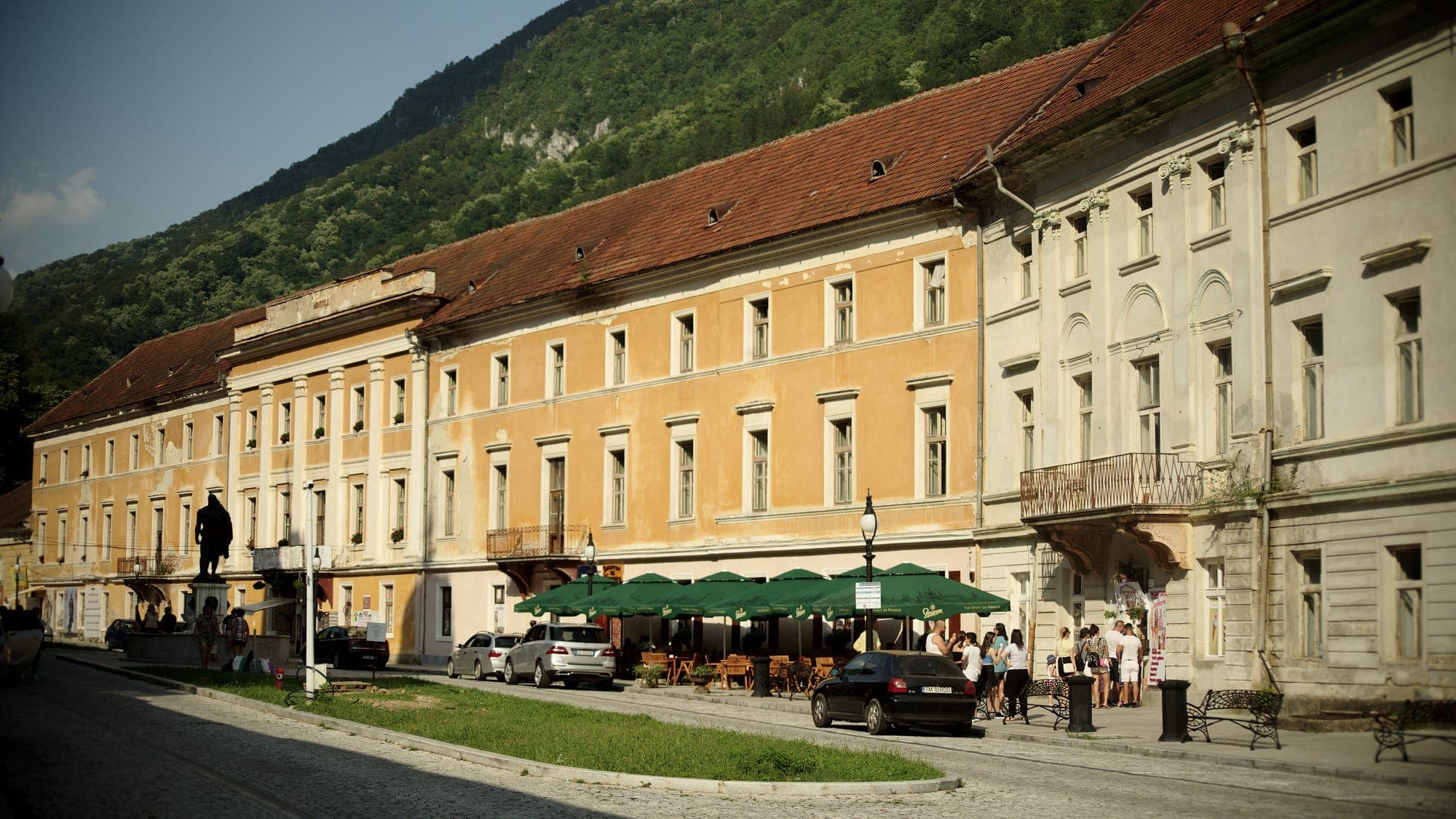
Romania's oldest spa resort, recorded as early as AD 153, in the Cerna valley: hot sulphur springs, a Habsburg old town around the Hercules statue and free thermal tubs on the riverbank.