Căldărușani Monastery
About Căldărușani Monastery
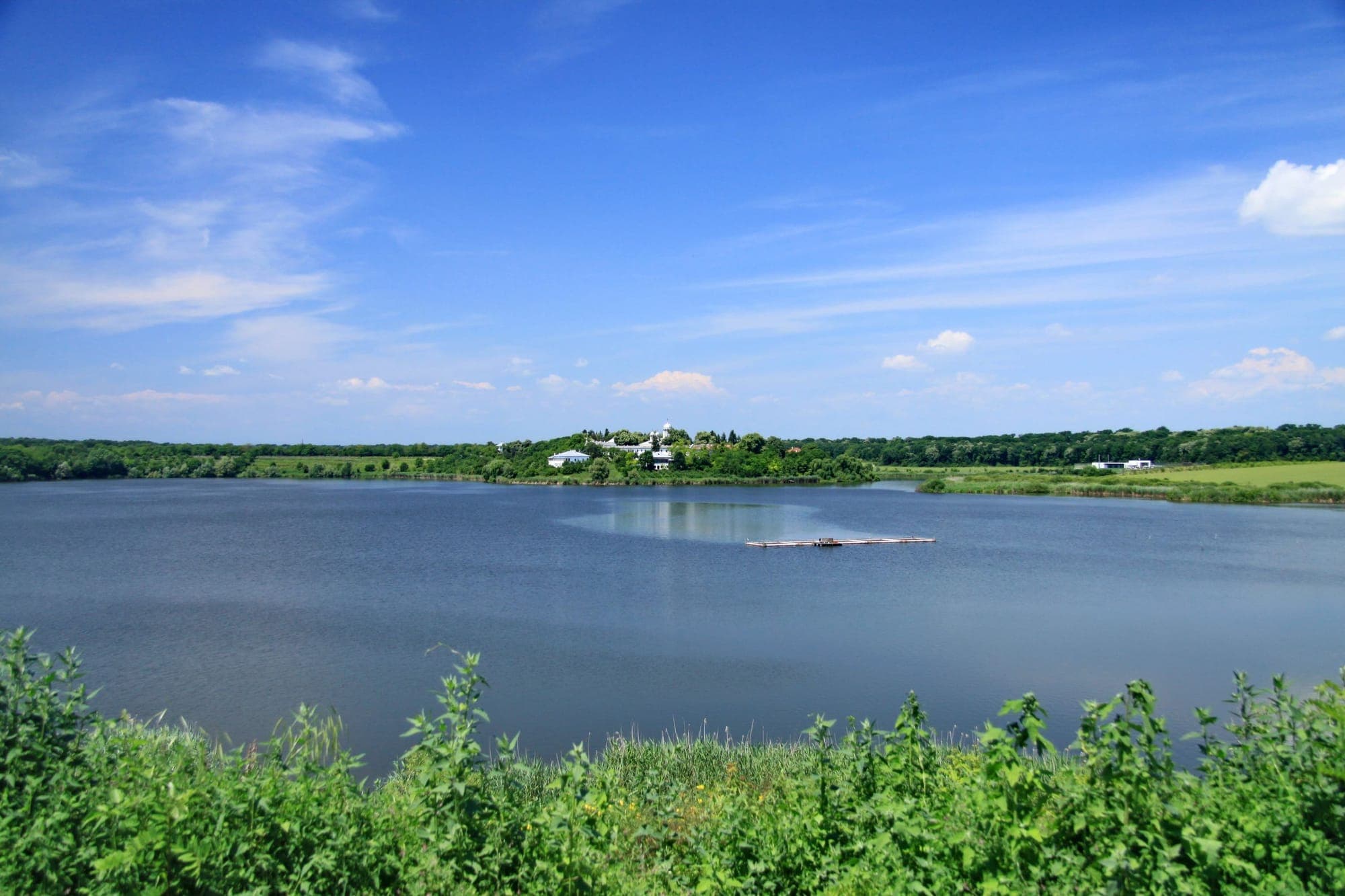
Căldărușani Monastery is an Orthodox monastery for monks in the commune of Gruiu, set on a peninsula that juts out into Lake Căldărușani, on the edge of what remains of the Vlăsia Forest, about 30 km north of Bucharest. Prince Matei Basarab built it in 1637–1638 on the site of a small hermitage, as a fortress, with walls and a bell tower. Its name comes from the shape of the land, which resembles a small cauldron (căldărușă).
At the end of the 18th century, under Abbot St Gheorghe of Cernica, the monastery became a centre of copyists, translators and icon painters; the young Nicolae Grigorescu learnt painting here in 1854–1855. From 1956 to 1970 the Greek Catholic bishop Iuliu Hossu lived at Căldărușani under forced residence, until his death. The ensemble is a listed historic monument, and its two churches were restored with European funds, with the works handed over in December 2023.
What you can see
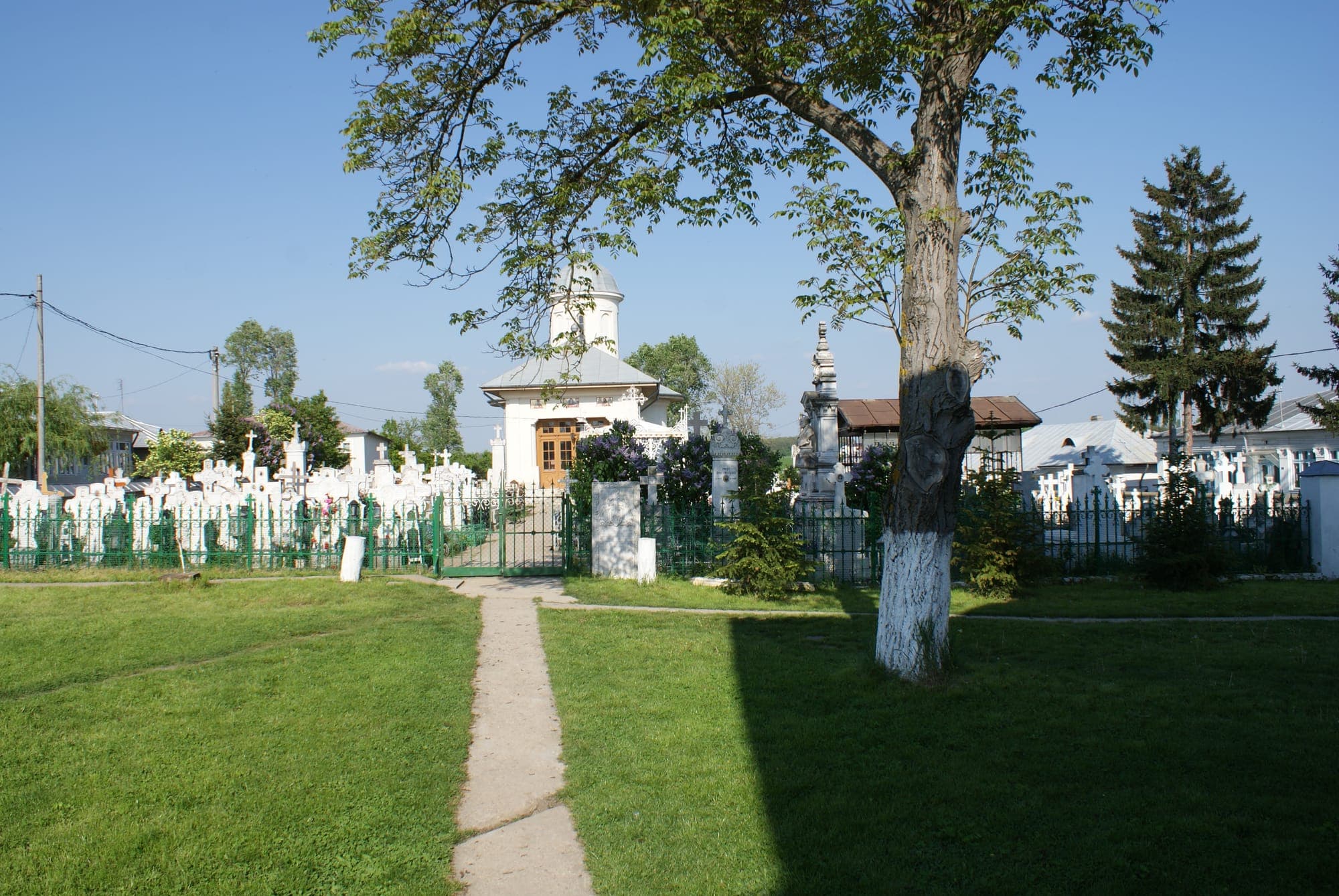
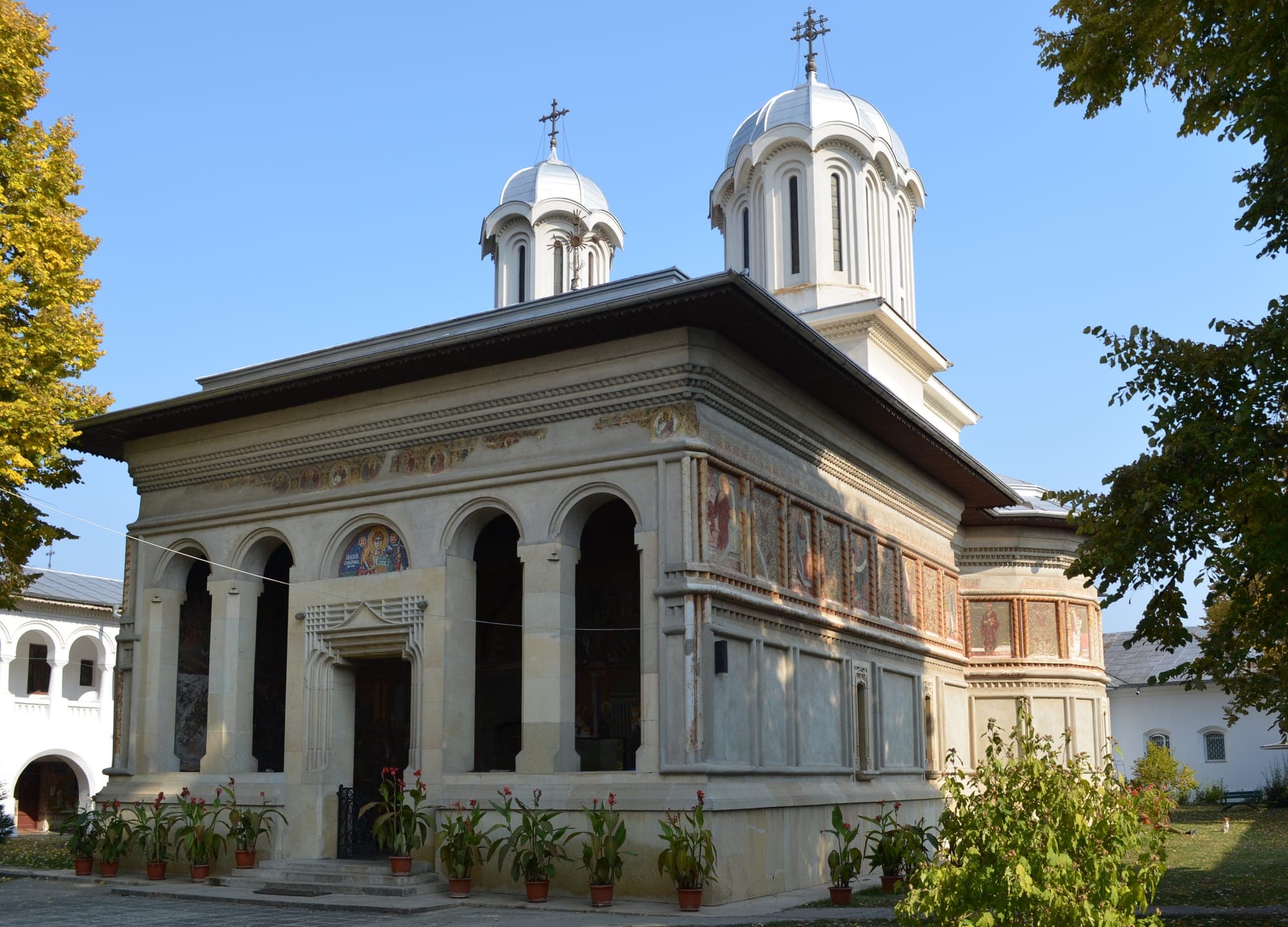
The great church of St Demetrius the Myrrh-streamer has a trefoil plan and three towers and is one of the largest churches of Matei Basarab's time. Its façades carry exterior paintings from the early 20th century, and inside, of the original paintings, the votive portraits of Matei Basarab and Princess Elina survive. The church holds the wonder-working icon of the Mother of God and the gilded silver reliquary with the relics of St Gregory the Teacher, Metropolitan of Wallachia, who is buried in the porch. The enclosure keeps the fortress wall and the bell tower from the founder's time. North of the walls, in the cemetery, stands the chapel of St John the Evangelist, from the early 19th century, with saints painted on its façades. The monastery has three museum collections: books, vestments and icons in the former refectory, the treasury in the old throne room, and the picture gallery in the house of Metropolitan Ghenadie Petrescu.
Good to know
It is a working monastery for monks.


- The church of St Demetrius, with its trefoil plan, three towers and early 20th-century exterior paintings.
- The votive portraits of Matei Basarab and Princess Elina, the only surviving part of the church's original paintings.
- The gilded silver reliquary of St Gregory the Teacher and the wonder-working icon of the Mother of God.
- The cemetery chapel of St John the Evangelist, with saints painted on its façades.
- The white monastery buildings seen across the water of Lake Căldărușani.
Good to know before you go
- Getting there
By car: the monastery is ~34 km from the centre of Bucharest (~35 minutes without traffic): take the A3 motorway towards Ploiești to the exit for Balotești and Moara Vlăsiei, then the DJ101 east through Moara Vlăsiei and the DJ101C north to the monastery road.
- Where to park
The car park is next to the west side of the enclosure, a few steps from the entrance.
- Rules
Modest dress: shoulders and knees covered, women with their heads covered in church. Keep quiet within the grounds and in the cemetery, and switch phones off during services. Photos inside the churches only with the monks' permission.
- Facilities
collection of books, vestments and icons in the former refectory · treasury in the old throne room · picture gallery
Frequently asked questions about Căldărușani Monastery
How long does a visit to Căldărușani Monastery take?
A visit to Căldărușani Monastery takes about ½ – 1 hours (churches, grounds and cemetery).
Can you visit Căldărușani Monastery with kids?
Yes, Căldărușani Monastery is suitable for children (spacious grounds, quiet).
How do I get to Căldărușani Monastery?
Căldărușani Monastery is located at Șoseaua Mănăstirea Căldărușani 119, Gruiu, Ilfov County. More under “Getting there”
When is the best time to visit Căldărușani Monastery?
The best season for Căldărușani Monastery: April – October (spring and autumn).
Reviews
Other attractions nearby
The closest attractions to Căldărușani Monastery, sorted by distance.