The Royal Family's Neoclassical residence in the Mureș valley, with a historic park open for guided tours and the Royal Village, where King Michael's garage is now a car museum; open at weekends, May–October.
Castles and palacesParks and gardens
A Neoclassical palace on Calea Victoriei, built around 1835 to plans by Michel Sanjouand, with a façade decorated with caryatids; since 2025 it has housed the luxury store TOFF Galleries.
Castles and palacesMonuments and historic sites
A 19th-century manor in Câmpia Turzii, restored with PNRR funds and opened to the public in 2026 as a cultural tourism centre, with exhibitions and the Metallurgy House in the basement.
Castles and palacesMuseums and memorial houses
A Baroque manor of 1770 in the village of Boarta, with an arcaded porch and a scrolled pediment; a listed monument in ruins, privately owned and still unrestored.
Castles and palaces
The “Calendar Castle” (365 windows, 4 towers, 52 rooms), built in 1908–1912 for Baron István Ugron; today it stands empty and is not set up for visits, so it is seen from outside.
Castles and palaces
A residence with the air of a medieval castle and Secession touches, built in 1903–1906 for the Urmánczy family, with a water tower and a stone plinth; restored and open to visit by appointment.
Castles and palacesMonuments and historic sites
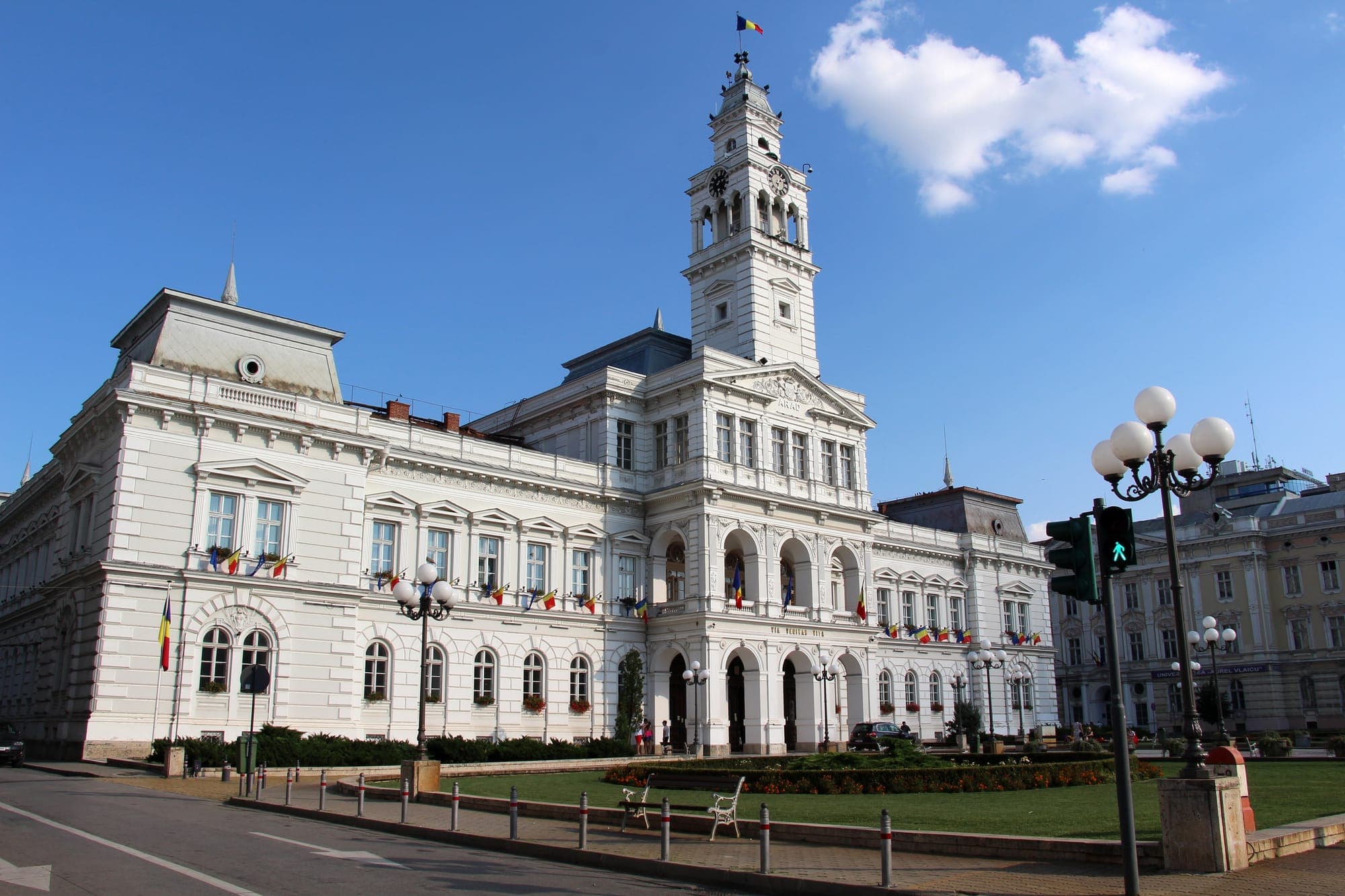
A neo-Renaissance palace of 1872–1877 on Bulevardul Revoluției, home to Arad City Hall, with a 54 m clock tower that has become the image of the city.
Castles and palacesMonuments and historic sites
The residence of Count Pál Bethlen, rebuilt around 1900 on the site of the family's old fortress, with two hexagonal towers; a former town hall, now unused and not set up for visitors.
Castles and palacesMonuments and historic sites
A Secession building from 1907–1908 on Piața Unirii in Oradea, with a glass-roofed passage and a stained-glass window of a black eagle, from which it takes its name.
Monuments and historic sitesCastles and palaces
The former Pannonia Hotel, built in 1901–1902 in Liberty Square to plans by Zoltán Bálint and Lajos Jámbor, is one of the finest Secession buildings in Satu Mare. It can only be seen from outside: it is under restoration.
Monuments and historic sitesCastles and palaces
The Secession villa of the industrialist Imre Darvas, designed by the Vágó brothers in 1909–1912, now houses Romania's first Art Nouveau museum, with period interiors and a garden.
Museums and memorial housesCastles and palaces
A neoclassical summer residence built in 1822 for Prince Grigore IV Ghica on the shore of Lake Tei; today it hosts private events, and its façade can be glimpsed from the street.
Castles and palaces
A Classicist manor in Cristuru Secuiesc, begun in 1728, where Petőfi Sándor spent the night before the Battle of Albești; restored and reopened in May 2026, with the poet's pear tree in the yard.
Castles and palacesMonuments and historic sites
Renaissance residence of the Keresztúri and Kornis families, now a ruin near Dej: the 1720 gate tower, a neoclassical wing with a colonnade and the plinths of the two unicorns.
Castles and palacesMonuments and historic sites
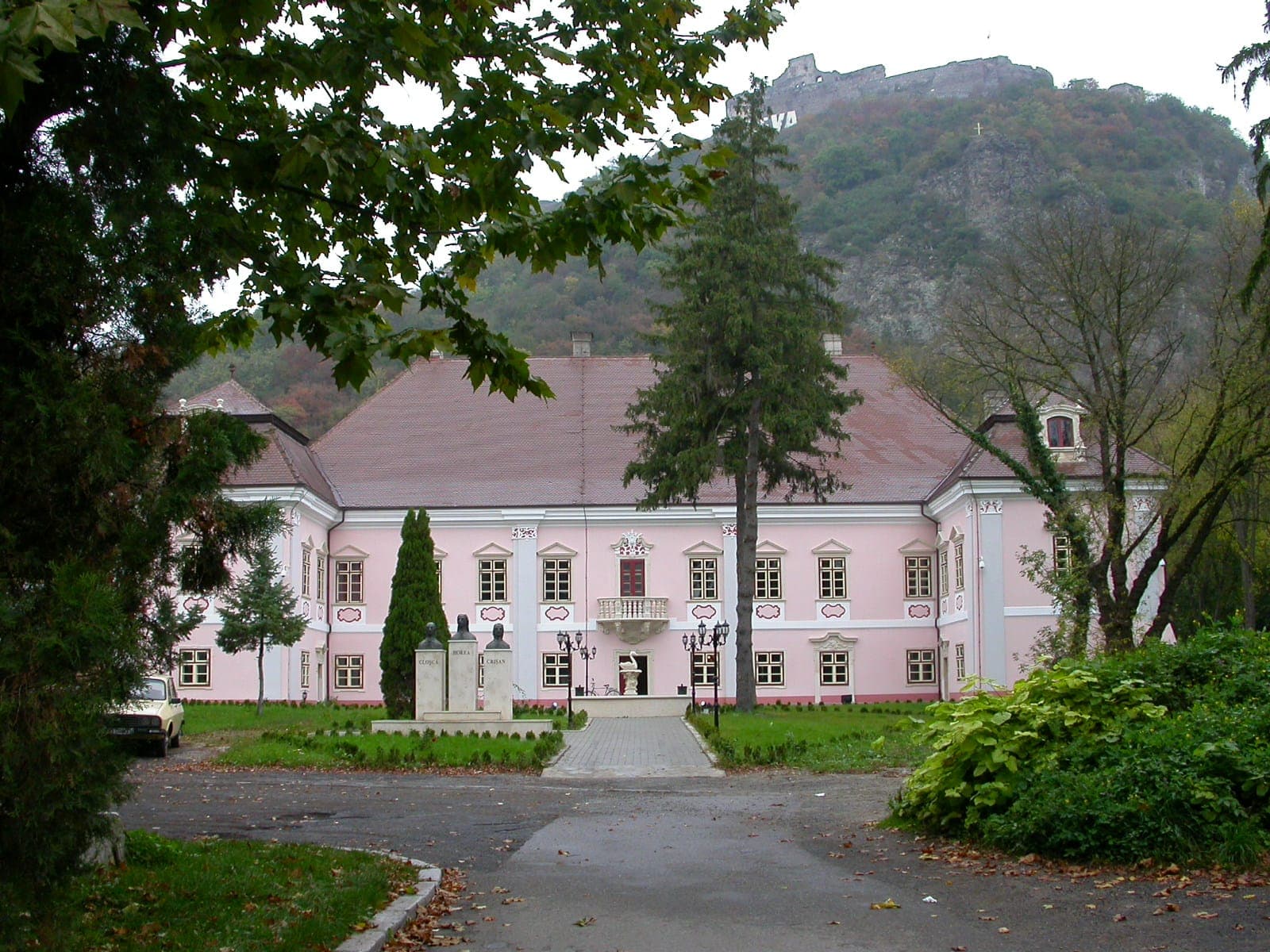
A Baroque palace at the foot of Citadel Hill in Deva, also known as Bethlen Castle, now home to the Museum of Dacian and Roman Civilisation, with a lapidarium in its courtyard.
Castles and palacesMuseums and memorial houses