

Unguru Mare Cave
Șuncuiuș, BH
A cave with an entrance more than 30 m high facing the Crișul Repede, reached over a suspension bridge and inhabited by people as far back as the Neolithic.
Caves
30 min20 lei
47 results
A cave with an entrance more than 30 m high facing the Crișul Repede, reached over a suspension bridge and inhabited by people as far back as the Neolithic.
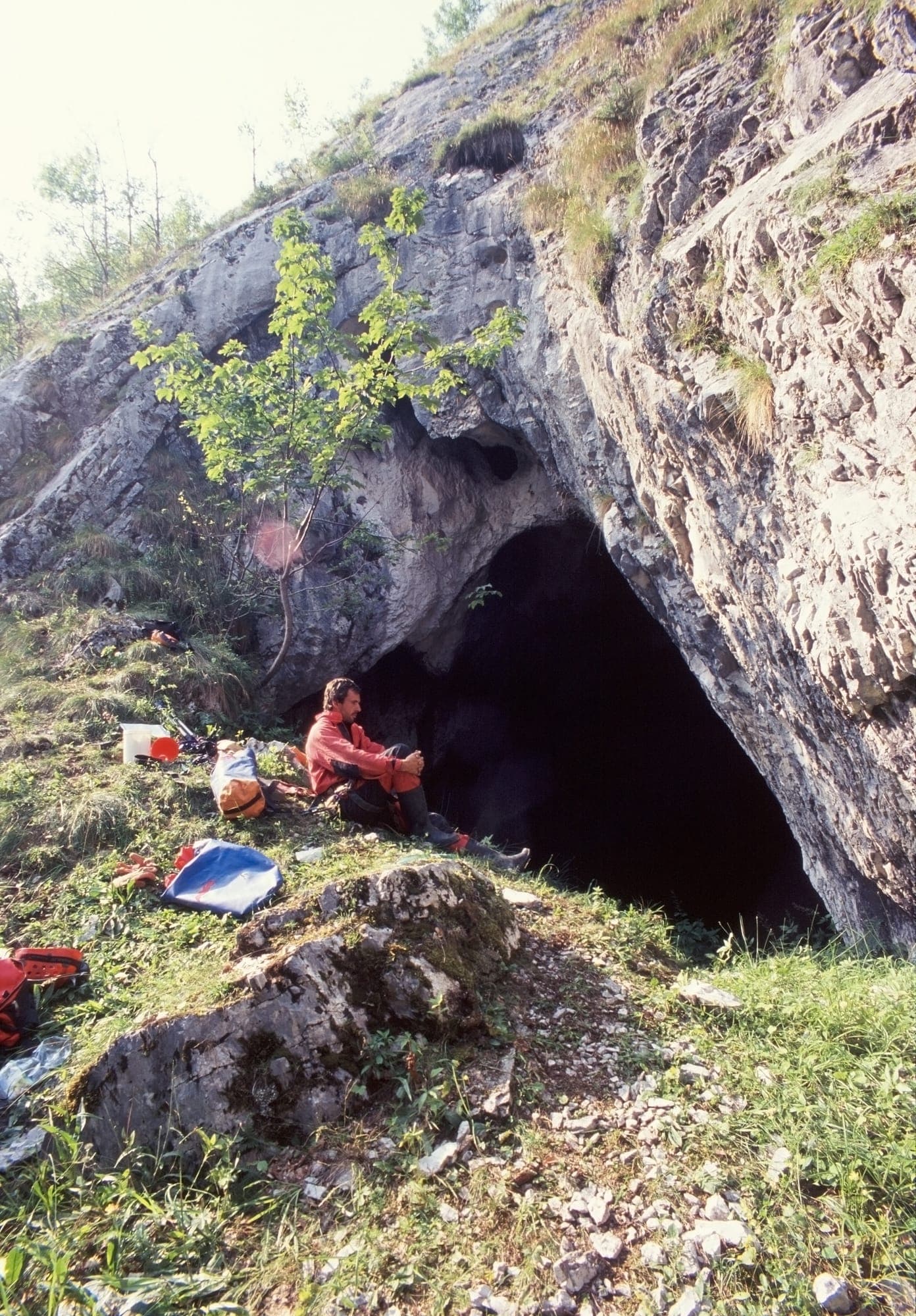
A speleological reserve in the Retezat Mountains, above the Scorota Valley, with a 6 × 8 m portal, a 50 m entrance hall, a chimney and a deep shaft; a vertical cave, closed to tourist visits.
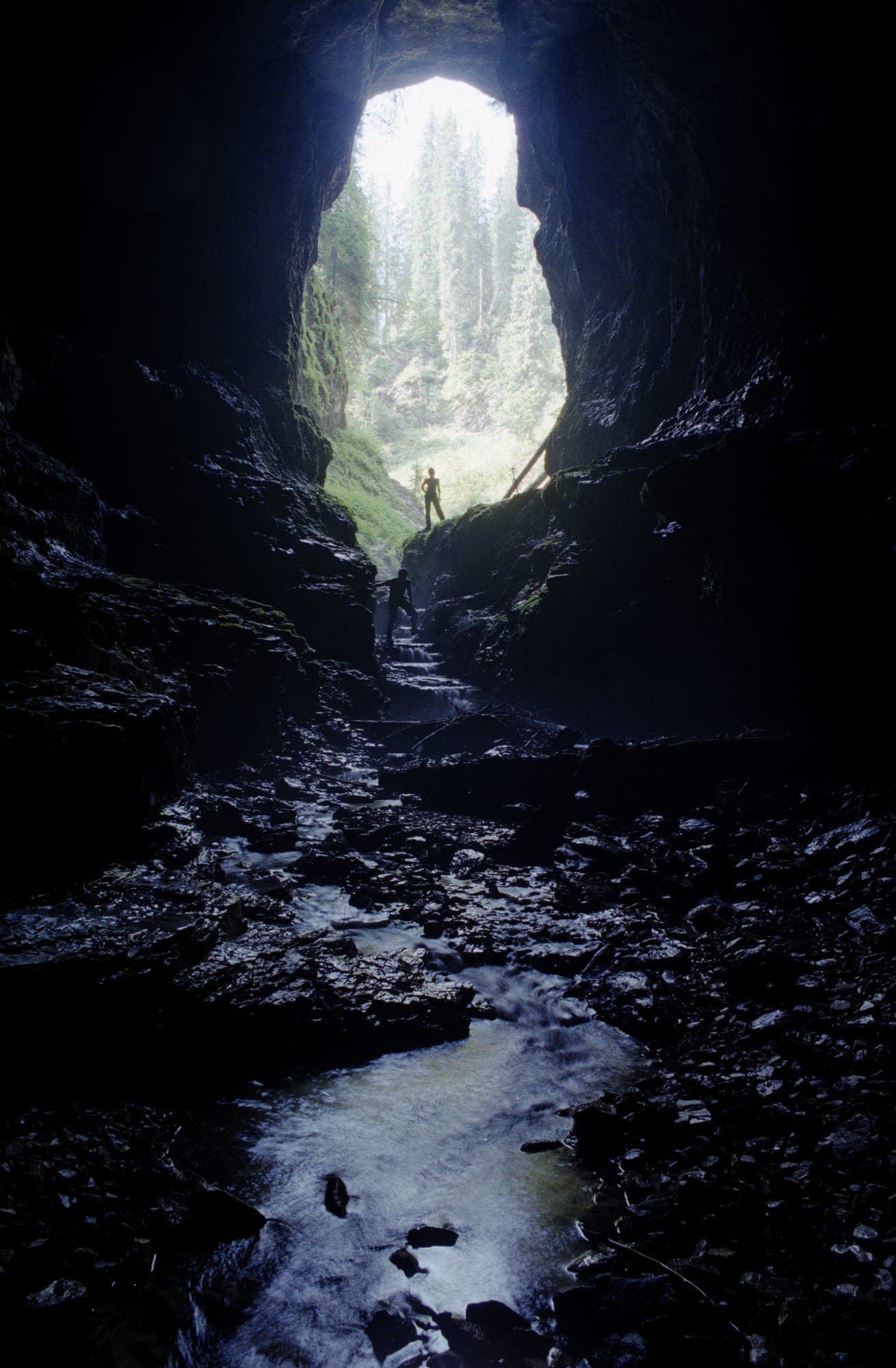
A tunnel cave on the Padiș Plateau, with a portal of about 15 m and 260 m of underground route where the Rădeasa stream runs past boulders, roof openings and a narrow canyon. It is crossed on foot, through the water.

A wild, unlit cave in the Anina Mountains with more than 6 km of passages on three levels, 1,750 m of which you explore with a helmet and head torch, led by the national park's rangers.
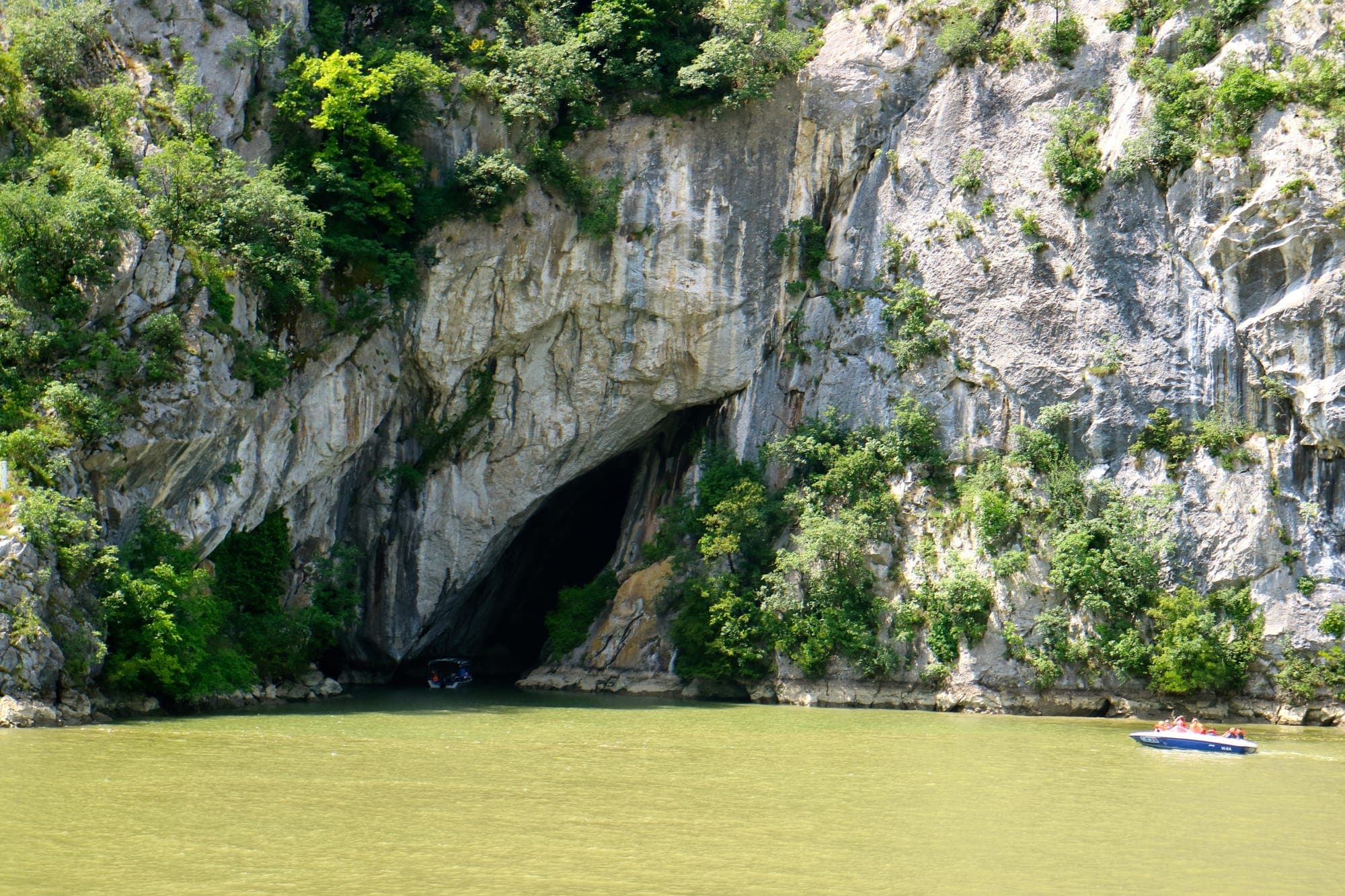
The largest cave in the Danube Gorge, with more than 1.6 km of passages running through Ciucaru Mare; entered from the Ponicova Gorge, off the DN 57, or from the Danube by boat.
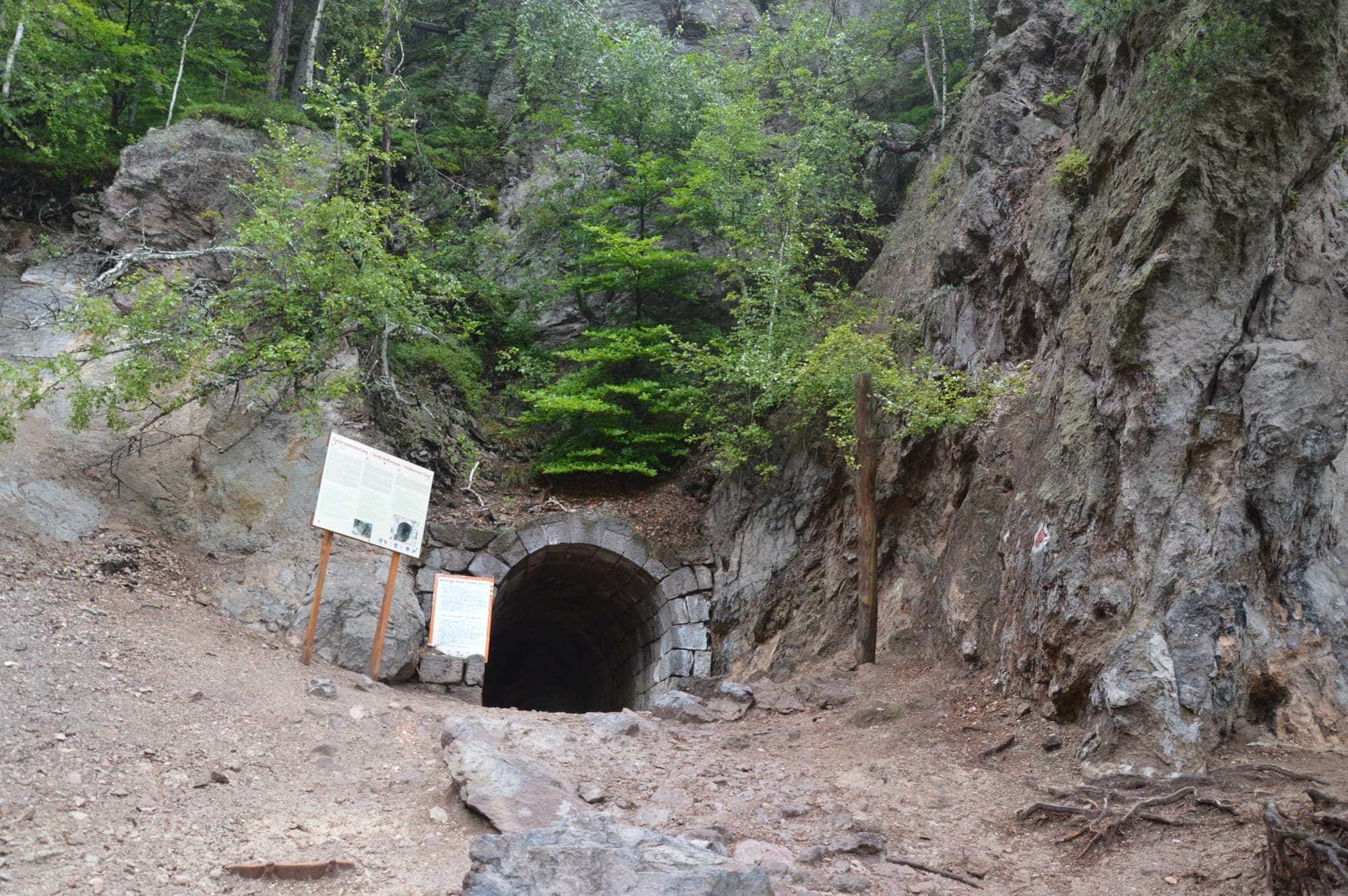
The former gallery of a sulphur mine on Mount Puturosu, 14 m long, with post-volcanic gas rising from it: the walls are coated in yellow sulphur and the vault has been lined with stone since 1892.

A small cave in the woods near Ion Corvin, fitted out as a church, where tradition says the Apostle Andrew lived; a monastery has grown up around it and draws pilgrims on 30 November.
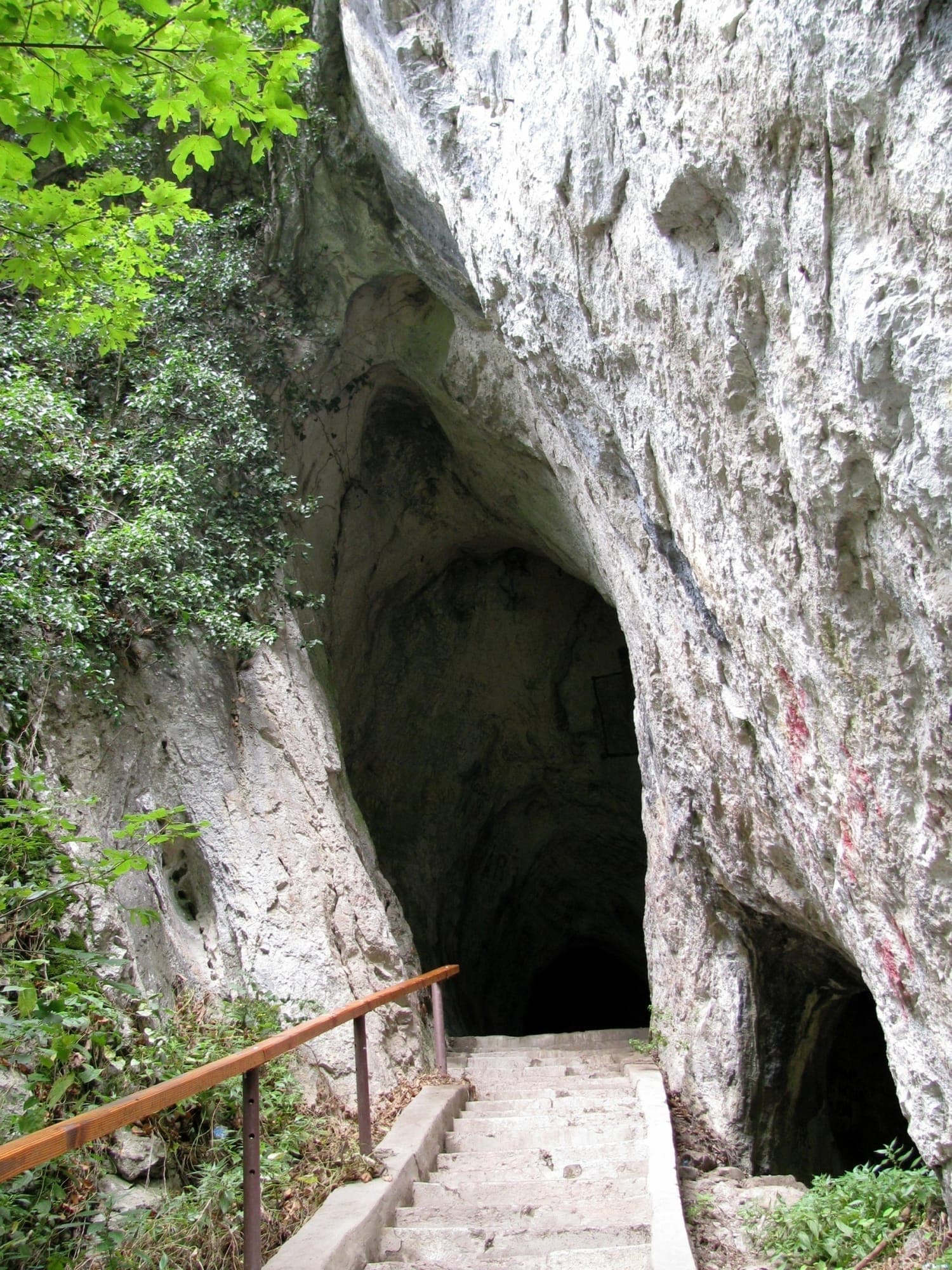
A 143 m rock shelter, five minutes up a concrete staircase behind the Hotel Roman; its walls carry visitors' signatures from the 19th century, and excavations have uncovered traces of habitation from the Palaeolithic to the Roman period.
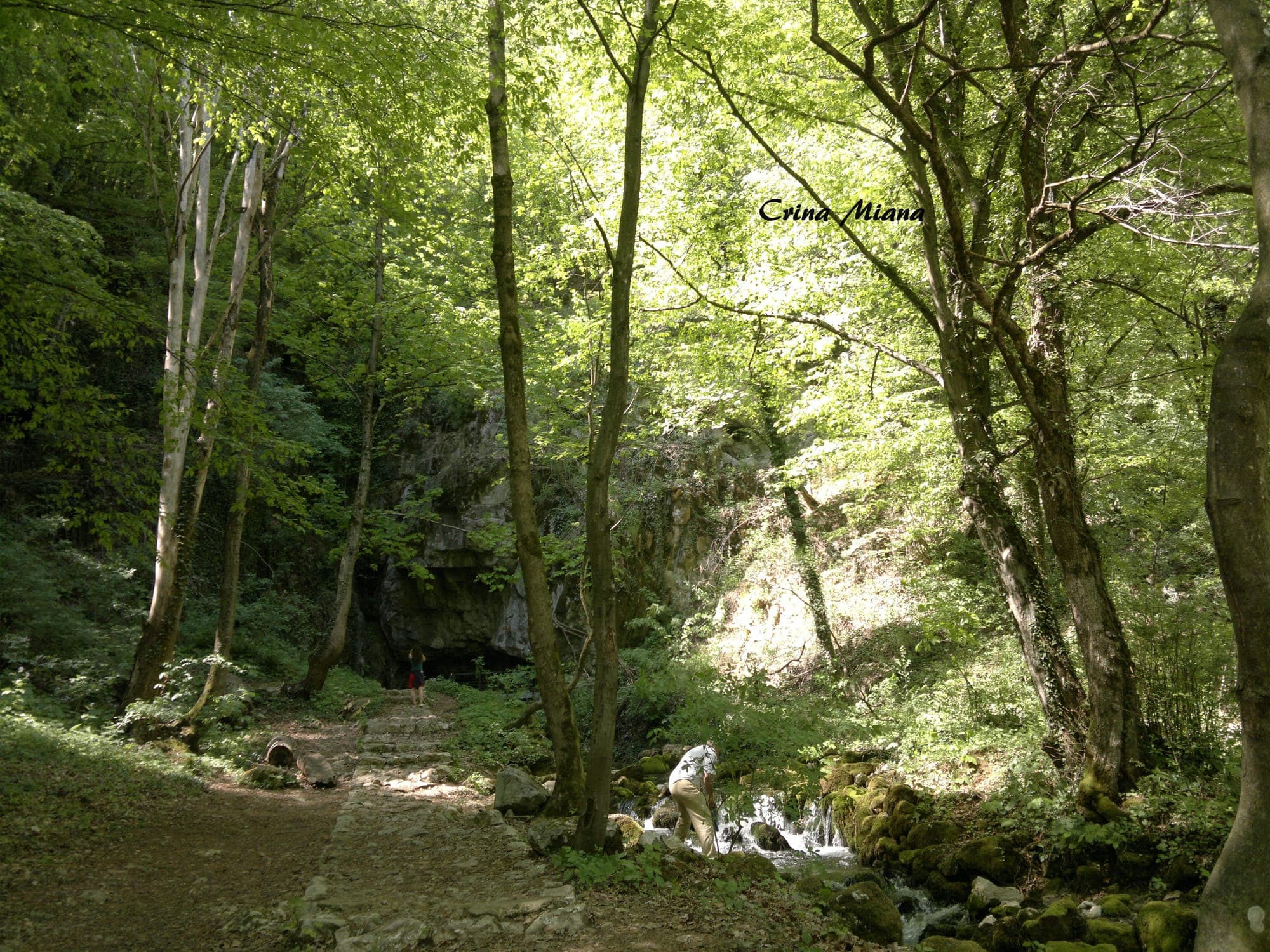
A show cave in the Crișul Repede Gorge, with a stream that leaves it as a small waterfall at the entrance, stalactites, bat colonies and a 680 m guided route.

An undeveloped cave in the Bihor Mountains, with ice at the entrance and white formations, where a Neanderthal footprint at least 62,000 years old was found in 1974.
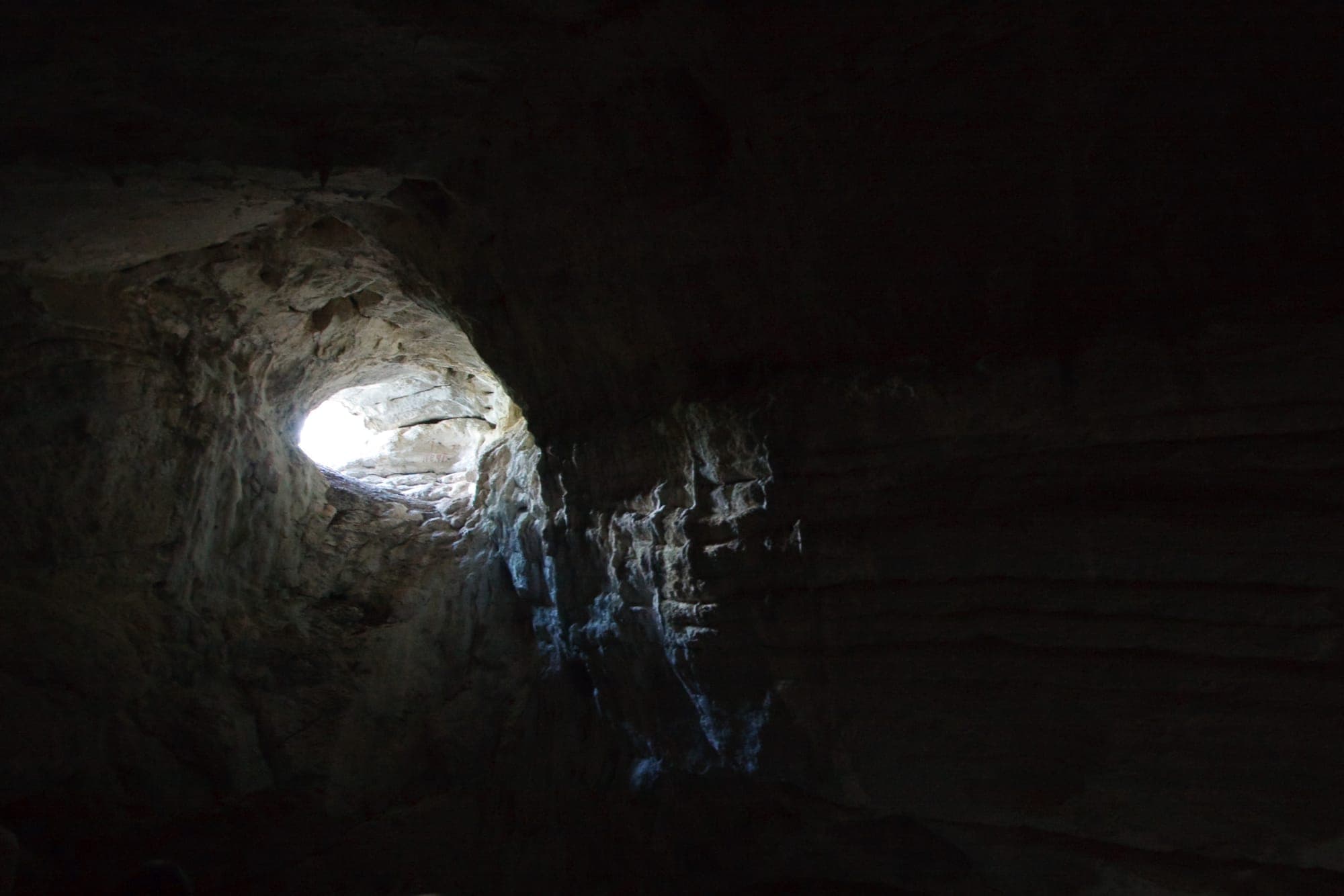
A broad grotto just above the Danube in the Great Cauldrons, with fortification walls from the Romans to the Austrians; reached only by boat, from Dubova or Eșelnița.
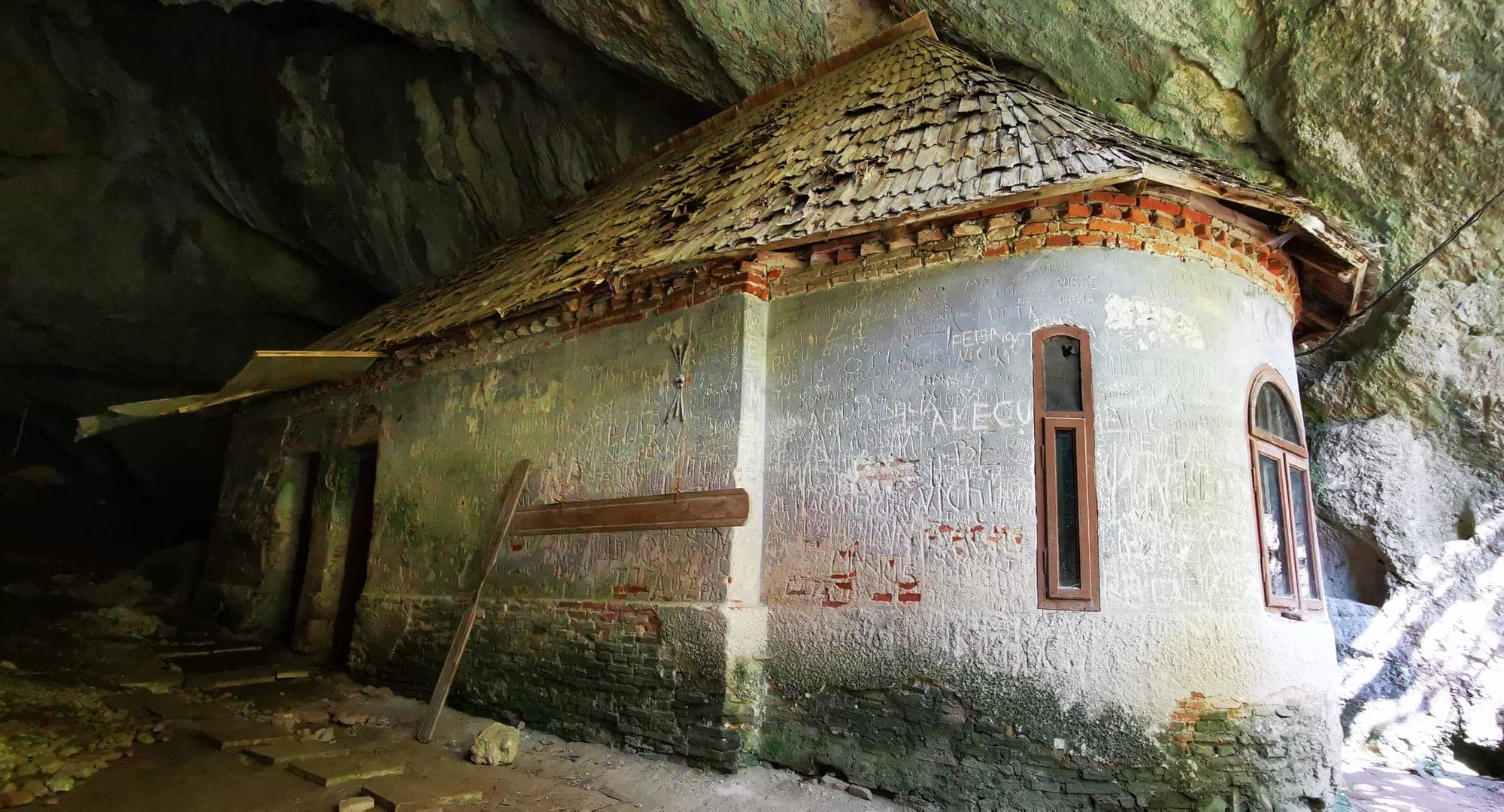
The cave of St Gregory Decapolites, in the Bistrița Gorges near Bistrița Monastery, with two churches built inside: Ovidenia (15th c.) and the Holy Archangels (1633); it shelters bats.
A karst reserve in the Șureanu Mountains: a 6.7 km underground traverse along the Ponorici stream and the fossil cave where the roughly 33,000-year-old “Cioclovina 1” skull was found; access for authorised cavers only.
A cave with white and reddish calcite formations above the village of Cloșani, an underground laboratory of the Emil Racoviță Institute of Speleology since 1959; closed to the public, entry only with the institute's approval.
A cave in the Sighiștel Valley, in the Bihor Mountains, with charcoal cave drawings some 32,000–36,000 years old, considered the oldest in Central Europe; closed to the public.



