
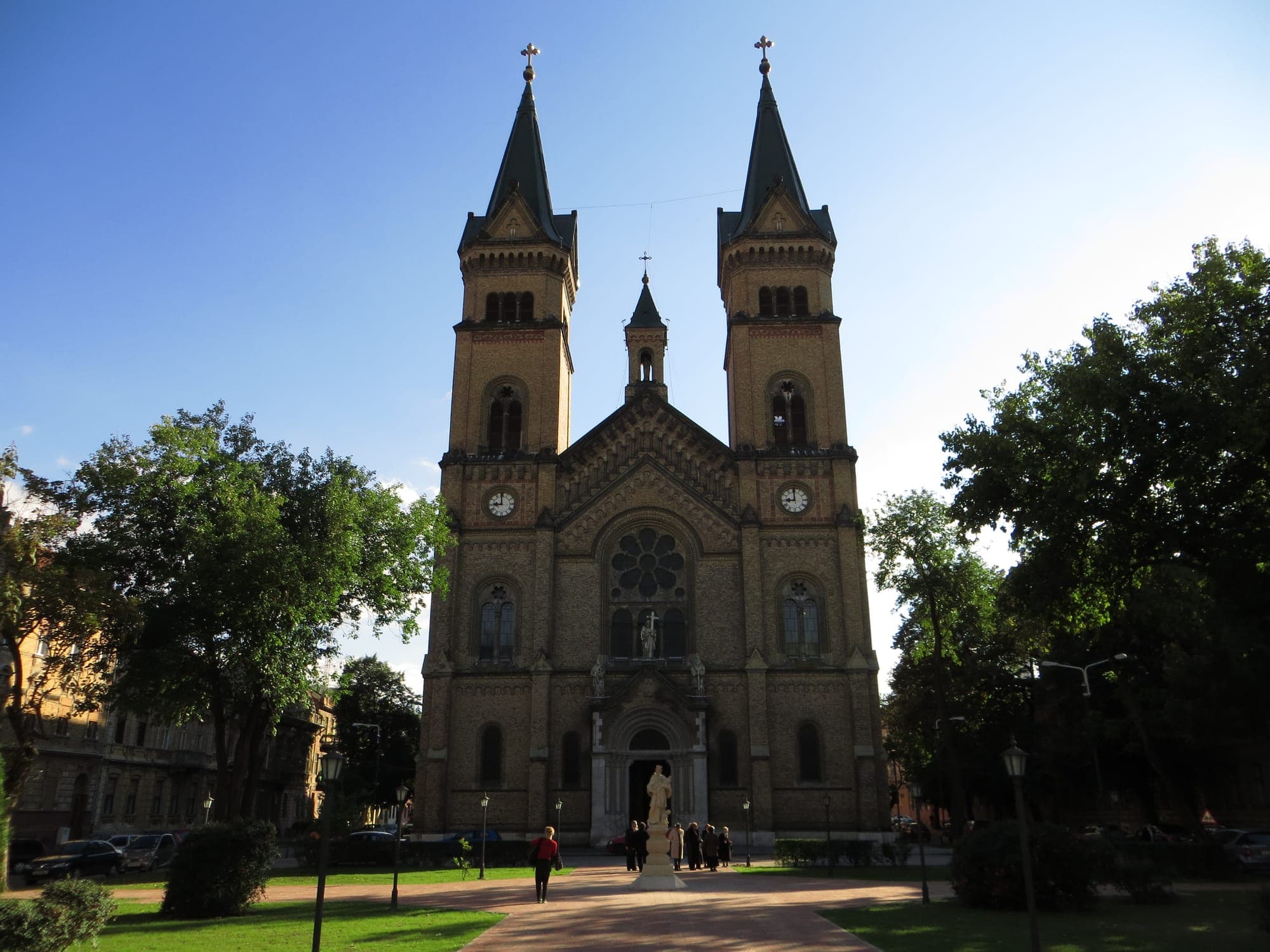
Millennium Roman Catholic Church
Timișoara, TM
The largest Roman Catholic church in Timișoara, built between 1896 and 1901 in the Neo-Romanesque style, in exposed brick, with two 65.7 m towers on Piața Romanilor in Fabric.
Churches
20 min
142 results
The largest Roman Catholic church in Timișoara, built between 1896 and 1901 in the Neo-Romanesque style, in exposed brick, with two 65.7 m towers on Piața Romanilor in Fabric.

The Gothic church of the former Dominican monastery, beside the Clock Tower, now the Saxons' Lutheran church, with a Baroque altar, a Rieger organ and dozens of old Oriental carpets.

A medieval church with a Romanesque nave and a Gothic sanctuary, enclosed by a wall with a gate tower on the terrace above the Olt. It keeps fragments of medieval frescoes.

The Gothic hall church begun in 1486 for the Franciscans, with a 17th-century star vault, the 1646 pulpit, the 1913 Angster organ and the Apafi tombs.

A Gothic basilica from the second half of the 14th century, with a gate tower and enclosure walls, known for the Green Man and the other faces carved in stone inside.

The Baroque cathedral of the Catholic bishopric of Timișoara, built between 1736 and 1774 on Union Square; restored with EU funds and reopened in April 2023, with the bishops' crypt under the altar.

A church built in 1852–1858 on Calea Șerban Vodă, near Metropolitan Hill, with two towers on the façade and a central dome, paintings by Gheorghe Tattarescu, stained glass made in Vienna and a fragment of the relics of Saint Spyridon.
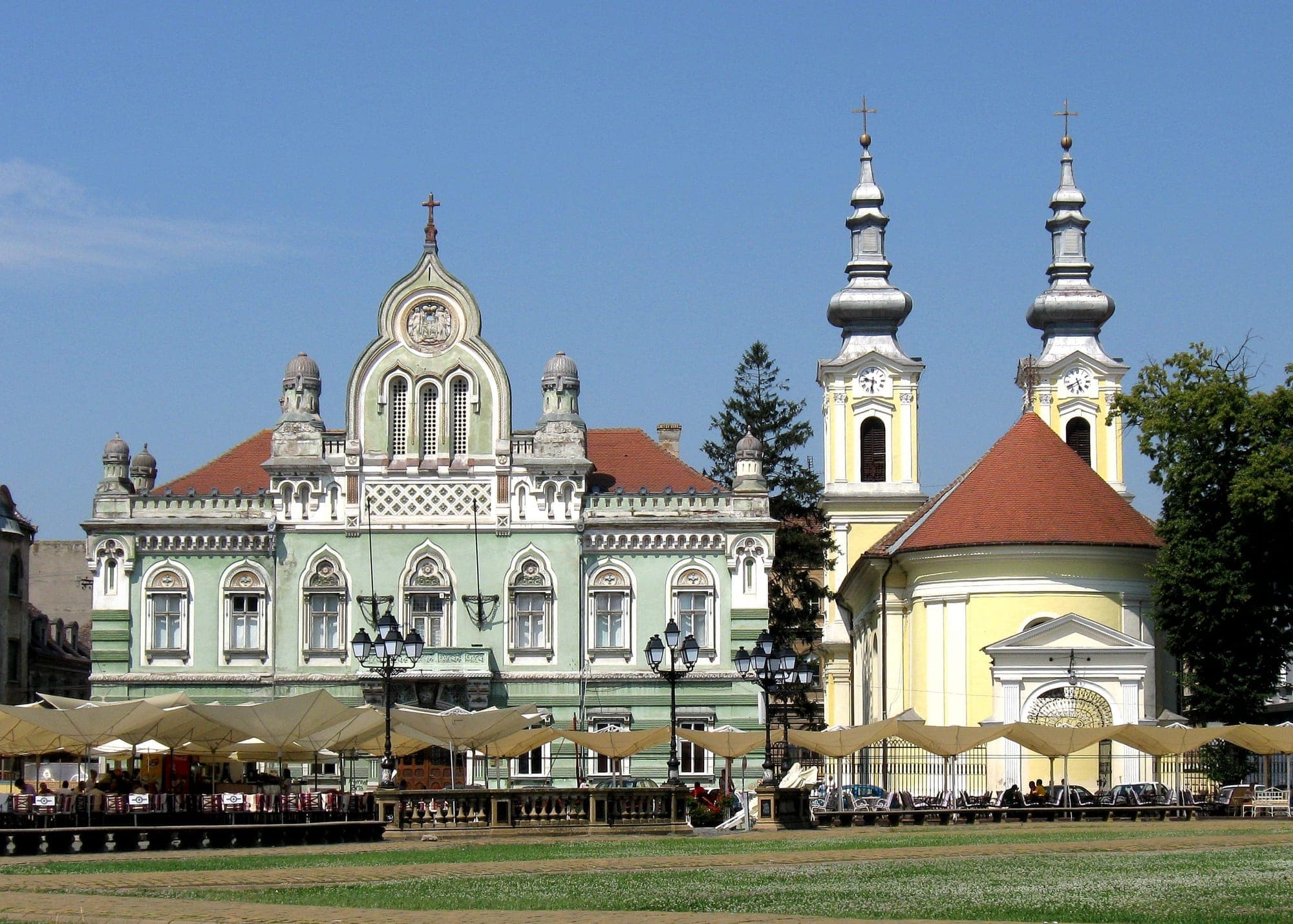
The Baroque church of the Serbian Orthodox Bishopric on Union Square, built between 1744 and 1748, with two clock towers and a carved and gilded wooden iconostasis.

A 13th-century Saxon church in the Bartolomeu district, surrounded by a medieval enclosure wall, with a Saxon cemetery and a sundial on its south wall.

The Orthodox church of the Romanians of Șcheii Brașovului, built from 1495 on the site of a wooden one, with Gothic-Baroque towers, painted façades and Nicolae Titulescu's grave in the churchyard.

A 14th-century Gothic church on a hill in the Niraj Valley, with a stone-and-timber tower, frescoes from the 1490s and the memory of Saint Ladislaus, from whom the village takes its name.

An oak church built by the village's 49 families at the end of the 18th century, with a slender tower of almost 47 m and a trefoil vault unique among wooden churches, part of a UNESCO World Heritage site.

A wooden church of 1798 with a low bell tower over the narthex and paintings from the 18th and 19th centuries, raised with material from the former Cioara monastery, a place tied to Sofronie of Cioara.

A wooden church of 1664, founded by Metropolitan Stephen I, standing on a high limestone plinth with Cyrillic inscriptions on its outer walls, at the edge of a fir forest.

The Evangelical church in the centre of Agnita, with a bell tower over 40 m high and four guild towers around it, surviving from the former ring wall; the ticket includes an exhibition in the towers.



