The Roman Catholic church on the site of the old Benedictine abbey of Mănăștur: a medieval Gothic choir, a bell tower designed by Károly Kós and earth ramparts of the fortification.
ChurchesMonuments and historic sites
The large church in the town centre, built between 1900 and 1905 at King Carol I's suggestion to plans by André Lecomte du Noüy, with three towers and Neo-Byzantine painting; a class A historic monument.
Churches
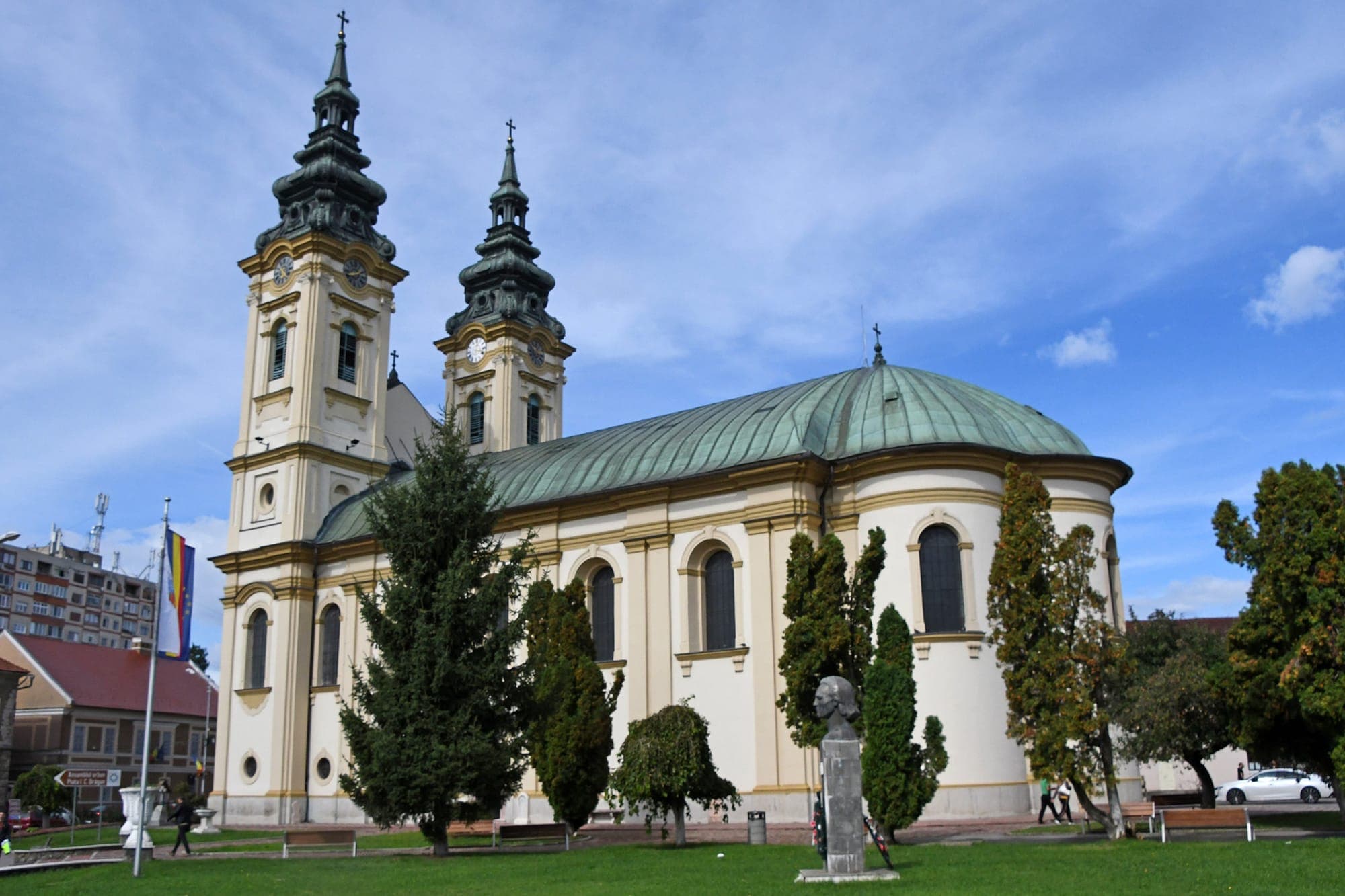
A Baroque church on Piața Victoriei in Lugoj, built in 1759–1766, with two 57 m towers, a single nave and fresco paintings from 1941–1944.
ChurchesMonuments and historic sites
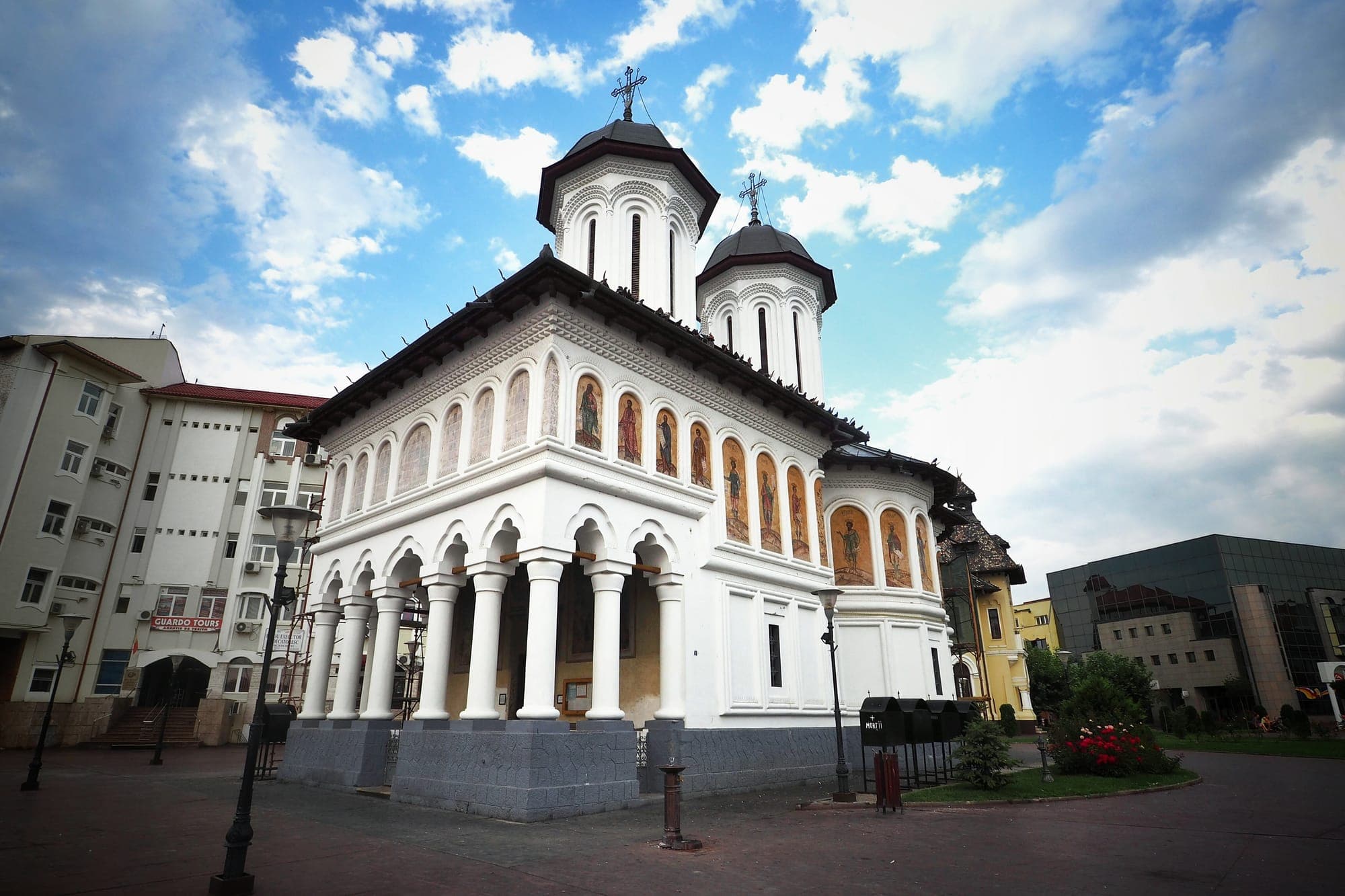
A stone church built in 1636 by Matei Basarab, hidden among the blocks beside Bulevardul Națiunile Unite, with a columned porch, two towers and an inscription of 1715 by Ștefan Cantacuzino.
ChurchesMonuments and historic sites
The three-towered Orthodox church built in 1927–1937 on Heroes' Avenue in Târgu Jiu, halfway along the axis between the Gate of the Kiss and the Endless Column, and part of the UNESCO-listed Brâncuși ensemble.
ChurchesMonuments and historic sitesUNESCO
The two-towered Orthodox church on Victory Square, built in 1748–1764 by merchants, with exterior frescoes of ancient philosophers and a past as a museum under communism.
ChurchesMonuments and historic sites
A 15th-century Gothic hall church in the middle of an oval 85 m enclosure, with a keep-like bell tower, a 1702 coffered ceiling of 252 painted panels and an 18th-century organ.
ChurchesFortresses and fortifications
A Saxon church fortress in the Burzenland, near Brașov: a 19th-century Neoclassical church ringed by a double medieval wall with eight surviving defensive towers.
ChurchesFortresses and fortifications
One of the oldest wooden churches south of the Carpathians, dated by inscription to 1556–1557, very small and unpainted, with an iconostasis decorated with designs scratched into the wood.
Churches
A wooden church of 1765 in the west of Hunedoara County, with a tall, pointed bell tower and old painting on the timber walls and vault inside.
Churches
A Romanesque basilica of the 13th century, strengthened in 1494 with an 8-metre enclosure wall, in the easternmost Saxon village on the Royal Land; its west portal is among the finest stone carving in Transylvania.
ChurchesFortresses and fortifications
A 15th-century Gothic Saxon church with more than 250 sq m of medieval wall paintings, uncovered bit by bit from beneath whitewash and among the largest in Transylvania.
Churches
A small wooden church of 1717 in the cemetery of the Schit Călugărița hamlet, with a carved portal, a twisted-rope belt and 92 blind arcades on its walls.
Churches
A 13th-century Romanesque basilica surrounded by a defensive wall, with frescoes of 1522 and Gothic net vaults; the building is included in a restoration project.
ChurchesFortresses and fortifications
A 15th-century Gothic church, extended in 1819 and ringed by a wall with loopholes; its slender tower is an example of the Ciuc type, and 15th-century frescoes survive inside.
ChurchesFortresses and fortifications