Tihuța Pass
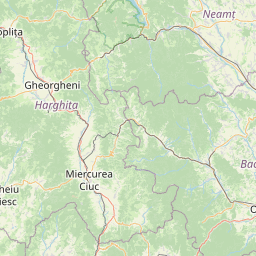
The pass where the DN17 crosses from Transylvania into Bukovina at 1,201 m, between Bistrița and Vatra Dornei: spruce-dotted pastures, a 31 m cross and a hotel inspired by the Borgo Pass of “Dracula”.
Bistrița-Năsăud is a county on the north-eastern edge of Transylvania, held between the Rodna, Bârgău and Călimani Mountains, with hills and broad valleys towards the Someșul Mare. Bistrița, the county seat, is an old Saxon town with an Evangelical church with a tall tower; Năsăud is linked to the 18th-century border regiment and to Hordou, the native village of the poet George Coșbuc. What there is to see in Bistrița-Năsăud belongs mostly to the mountains: passes, lakes and trails that are less crowded than in the rest of the region.
Tihuța Pass, which links Transylvania to Bukovina across the Bârgău Mountains, is known as the Borgo Pass from the novel Dracula. A little further south, Lake Colibița is a reservoir surrounded by forest, with lakeside walks. At Sângeorz-Băi, the Cheilor Waterfall, on the Cormaia valley, is reached along a short path with steps and footbridges, while the Rodna Mountains, with their national park, are for hiking.

14 results

The pass where the DN17 crosses from Transylvania into Bukovina at 1,201 m, between Bistrița and Vatra Dornei: spruce-dotted pastures, a 31 m cross and a hotel inspired by the Borgo Pass of “Dracula”.

A Baroque manor house of the second half of the 18th century in the centre of Beclean, with a vaulted gate and a coat of arms dated 1768; today it houses the Agricultural Technological High School.
A 20–30 m waterfall in the Cormaia Valley, at the foot of the Rodna Mountains near Sângeorz-Băi; a built path of about 1 km, with steps, footbridges and chains, climbs alongside its tiers.

A reservoir on the Bistrița Ardeleană between the Bârgău and Călimani mountains, nicknamed “the sea in the mountains”, with the Colibița resort spread along its shores.

A fortified medieval ensemble in the village centre: a Gothic church left in ruins, a 16th-century bell tower, and an enclosure wall with a gateway.

The only Moorish-Byzantine castle in Transylvania, with four towers topped by red onion domes, set in a dendrological park of over 150 species; the castle can only be admired from outside.

A Romanesque brick basilica built in the 13th century by Benedictine monks, with three aisles and two west towers, on a hill above the village.
A Roman fort on the Măgura plateau, south-east of Ilișua village, built on the northern frontier of Dacia Porolissensis; at ground level the ruins of the baths from the civil settlement are what you mainly see.

All that remains of Bistrița's Saxon fortifications is the 25 m Coopers' Tower and sections of 15th–16th-century stone wall, restored with PNRR funds and reopened in 2026.

A hall church from the second half of the 13th century, with a tympanum relief of a dragon hunt, considered one of the most important early Gothic sculptures in Transylvania.

A 2nd–3rd-century Roman fort, garrisoned by a cohort of a thousand men, over which the village of Orheiu Bistriței was built; no walls remain visible above ground.

A spa resort at the foot of the Rodna Mountains, with numbered mineral springs, a park, the large 1970s hotels and Villa 1, an interwar villa that is a listed monument.

The residence of Count Pál Bethlen, rebuilt around 1900 on the site of the family's old fortress, with two hexagonal towers; a former town hall, now unused and not set up for visitors.
A very deep cave in the southern Rodna Mountains, with gypsum flowers, mirabilite, the “Tăușoare balls” and cave bear bones; a reserve closed to ordinary tourism.