The zoo in the Noua district, at the foot of the forest, enlarged to 10 hectares after the 2012–2014 modernisation, with tigers, lions, bears, sea lions, penguins and a planetarium on site.
The capital's zoological garden, open since 1959 in Băneasa Forest, with tigers, lions, bears, wolves, zebras, monkeys and more than 150 species on almost 6 hectares.
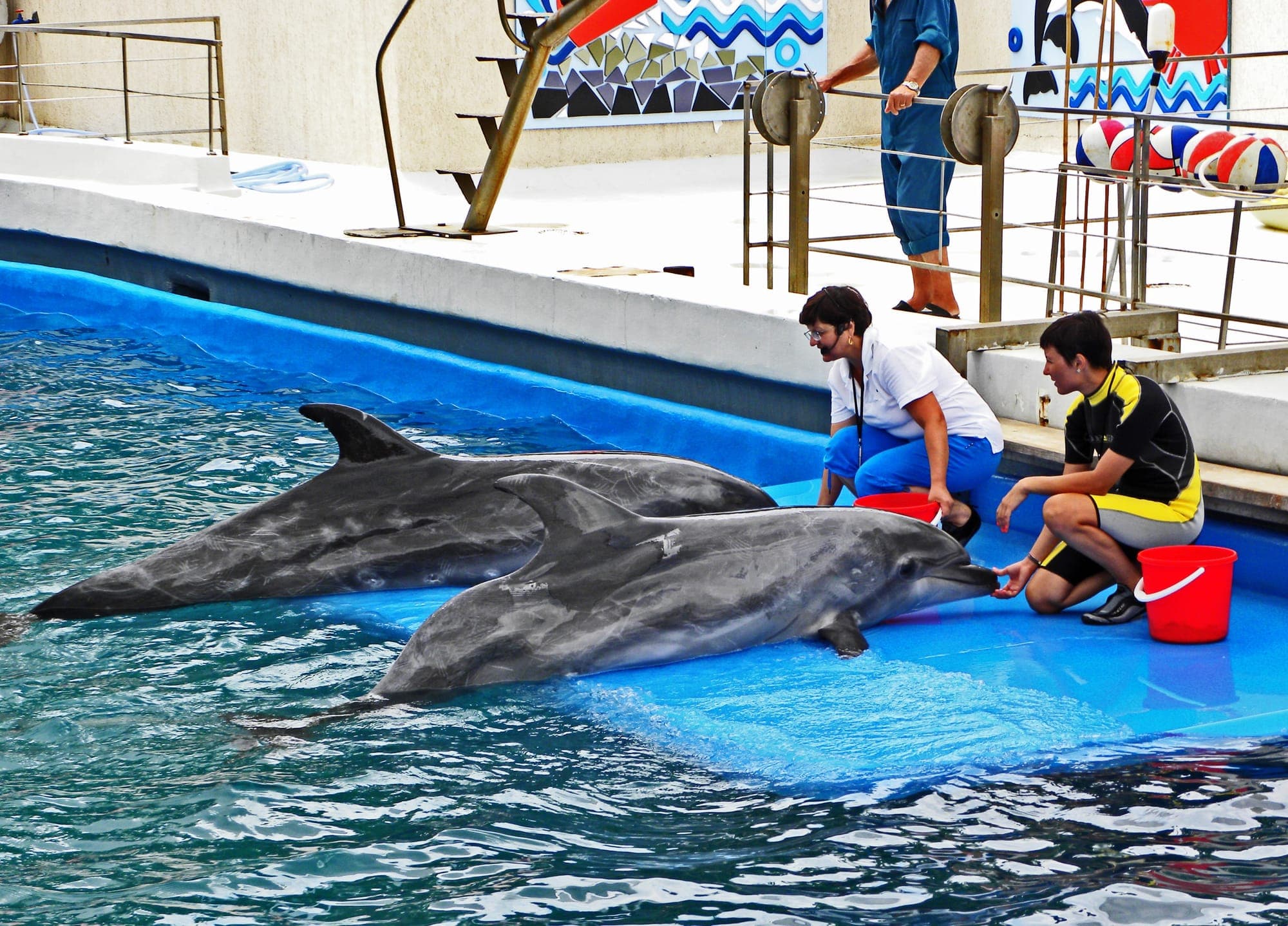
Romania's first dolphinarium, opened in 1972 on Mamaia Boulevard, with dolphin shows in a covered arena and, on the same ticket, a small reserve with Dobrujan birds and animals.
The “Dragoș Vodă” reserve, founded in 1968 in Vânători-Neamț Nature Park: a small zoo with bison, deer and birds, at the edge of the forest where free-ranging bison live.
Oradea's zoological garden, open since 1962 on the grounds of a noble park with a chapel, rebuilt between 2010 and 2013 and now covering 7.5 hectares, with tigers, wolves, bears, zebras and dozens of other species.
The zoo in the Dumbrava forest, opened in 1929 and considered the first in Romania, with tigers, lions, jaguars, white wolves, bears and lakes where you can go boating.
The zoo on the Cornești Plateau, open since 1964 and now spread over 42 hectares of forest, with elephants, giraffes, gibbons, tigers, lions and bears, the largest in Romania by area.
The public aquarium in central Tulcea, with fish from the Danube and the Black Sea, coral reef tanks and a tunnel among sturgeon, plus an exhibition on the Delta's wildlife.
The Libearty Bear Sanctuary, on 69 hectares of forest near Zărnești: home to more than 120 brown bears rescued from captivity, visited only on guided tours. It is not a zoo.