Comana Monastery
Comana, Giurgiu County · Muntenia

About Comana Monastery
At a glance: Monasteries and churches in Comana, Giurgiu County. The visit takes 45 min. Information verified on 10 October 2026.
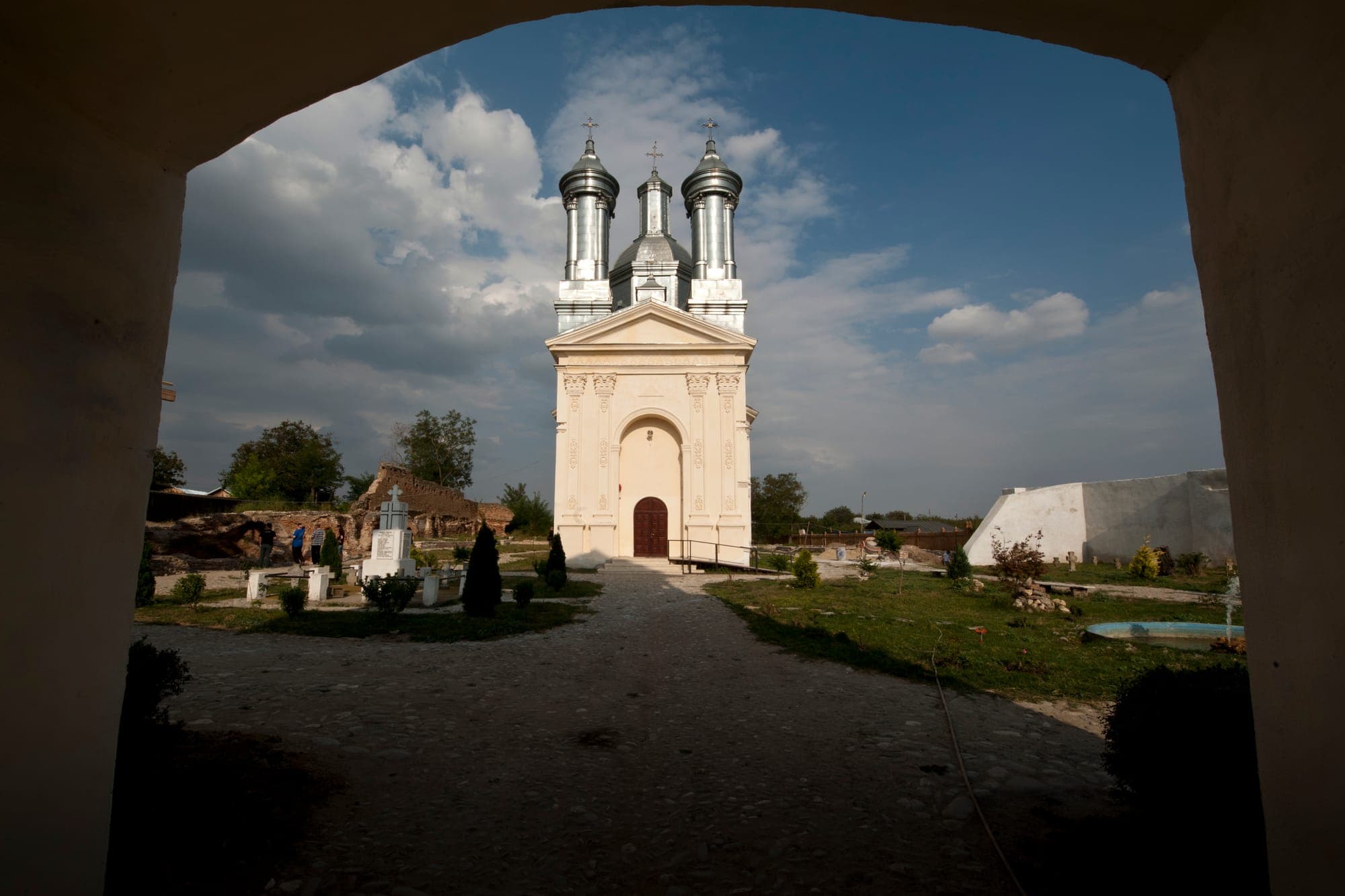
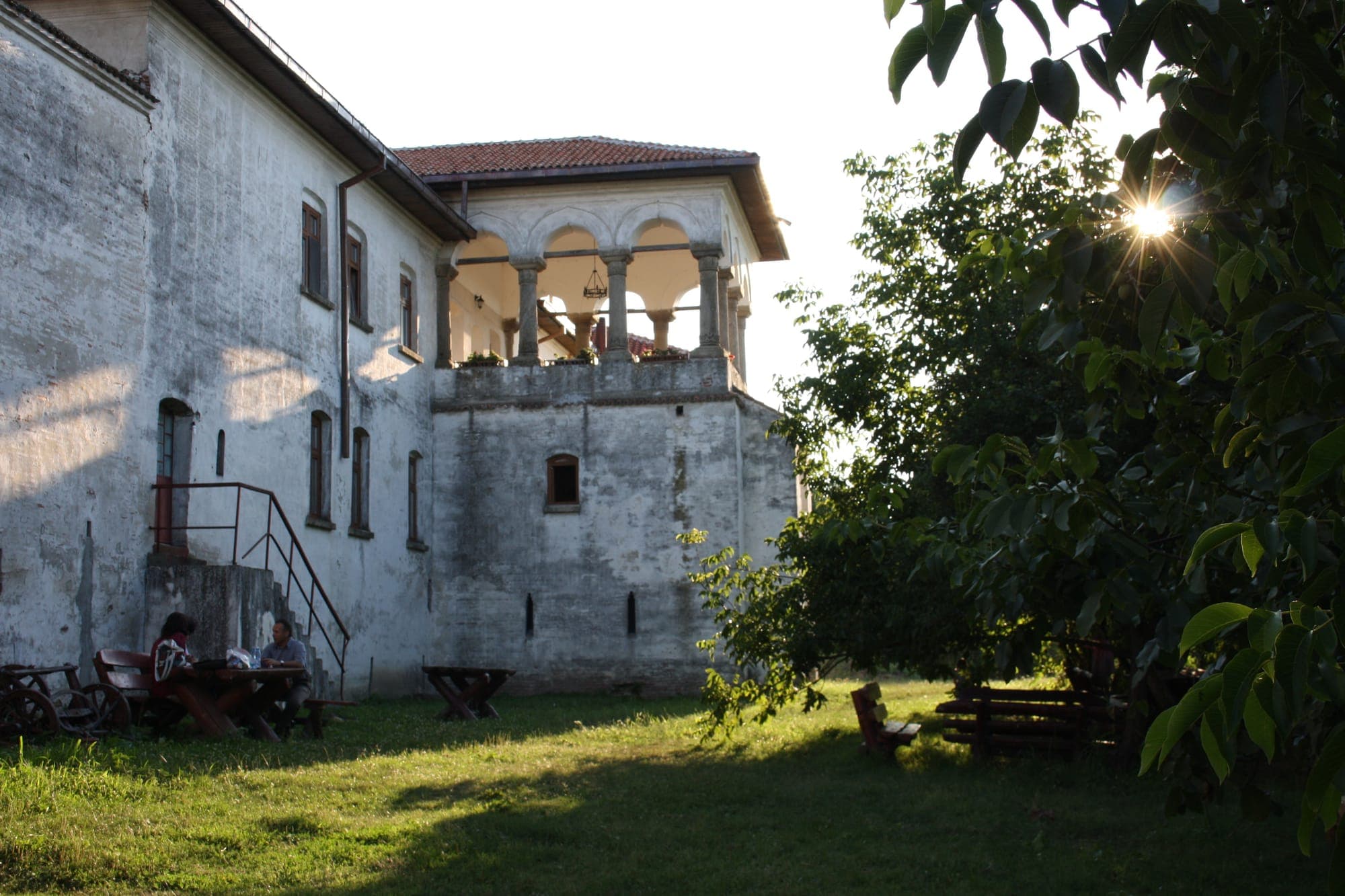
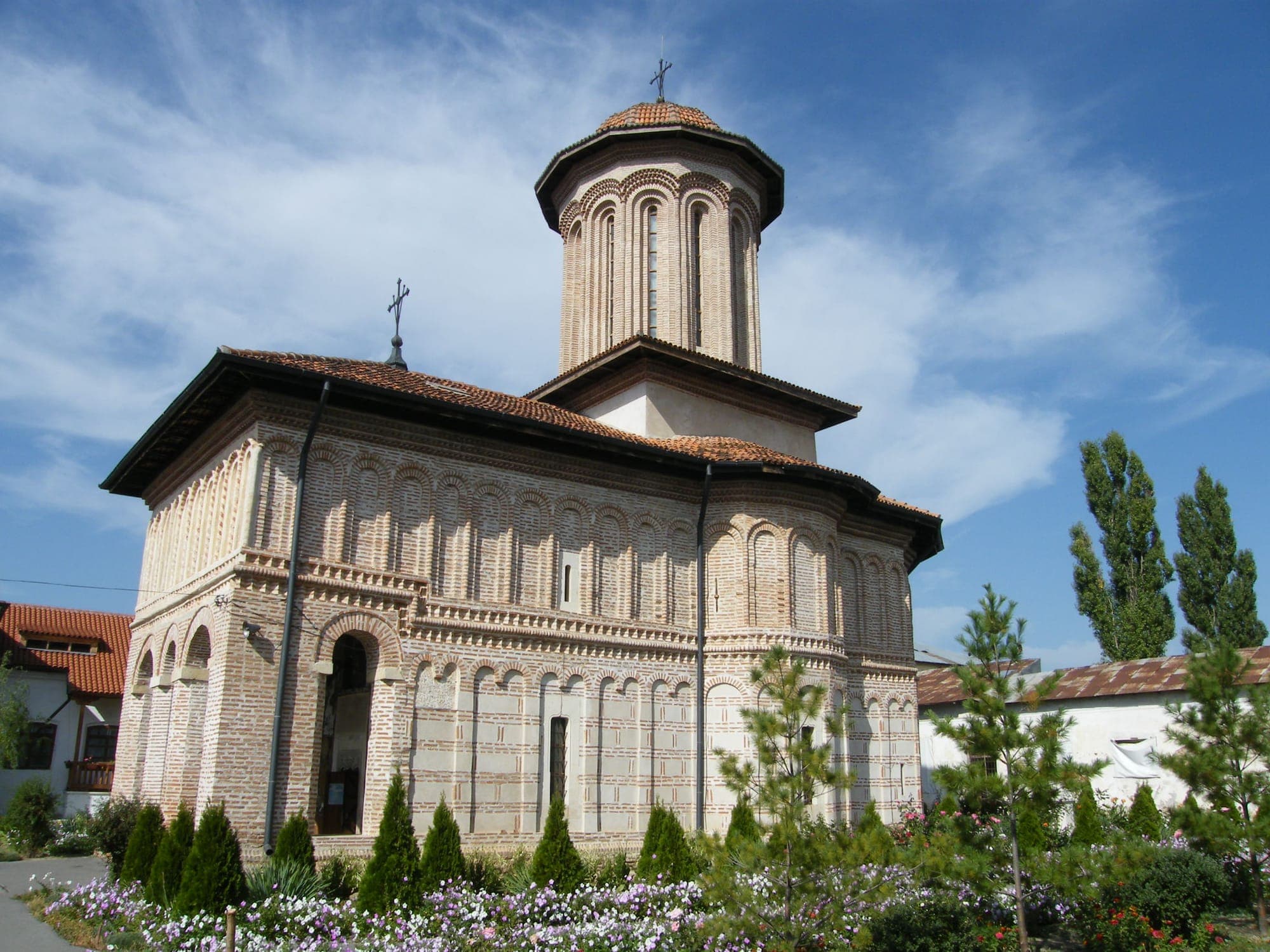
Comana Monastery stands on a former island in the Neajlov marshes, ~35 km south of Bucharest. The first foundation, from 1461, belongs to Vlad the Impaler: a timber church on brick foundations with cells around it, raised in a place that was hard to attack. It fell into ruin towards the end of the 16th century. In 1588 the boyar Radu Șerban, later Prince of Wallachia, pulled down what was left and built a new monastery, a true lowland fortress: an enclosure of about 61 × 55 m, thick walls and defensive towers. It was rebuilt between 1699 and 1703 by the high steward Șerban Cantacuzino, Radu Șerban's great-grandson, who raised the walls and added the elegant loggia on the north side, with ten stone columns. The church of St Nicholas, in the form you see today, was rebuilt from its foundations starting in 1854.
For a long time the church was the resting place of Radu Șerban's family and of the Cantacuzinos. There is no firm evidence that Vlad the Impaler is buried here. The historian Constantin Rezachevici, in a text published on the website of the Diocese of Giurgiu itself, considers it the most probable hypothesis that the prince, killed in 1476–1477 on the Bucharest–Giurgiu road, was buried in his foundation at Comana, in a grave that vanished when the timber church was demolished in 1588. Other versions, Snagov among them, remain open.
What you can see
The best preserved parts are the enclosure with its ranges of cells on two sides and the loggia on the north side, with stone columns and two capitals bearing the double-headed eagle of the Cantacuzinos. On the east side the brick wall, thick and uncovered, stands in ruin and shows what the fortress looked like. In the courtyard are the church of St Nicholas, the mausoleum of the soldiers who fell in 1916 in the fighting on the Neajlov (built between 1926 and 1932) and a small exhibition of objects from the monastery's collection. Comana is also a working monastery of monks, with communal life since 1992.
Good to know
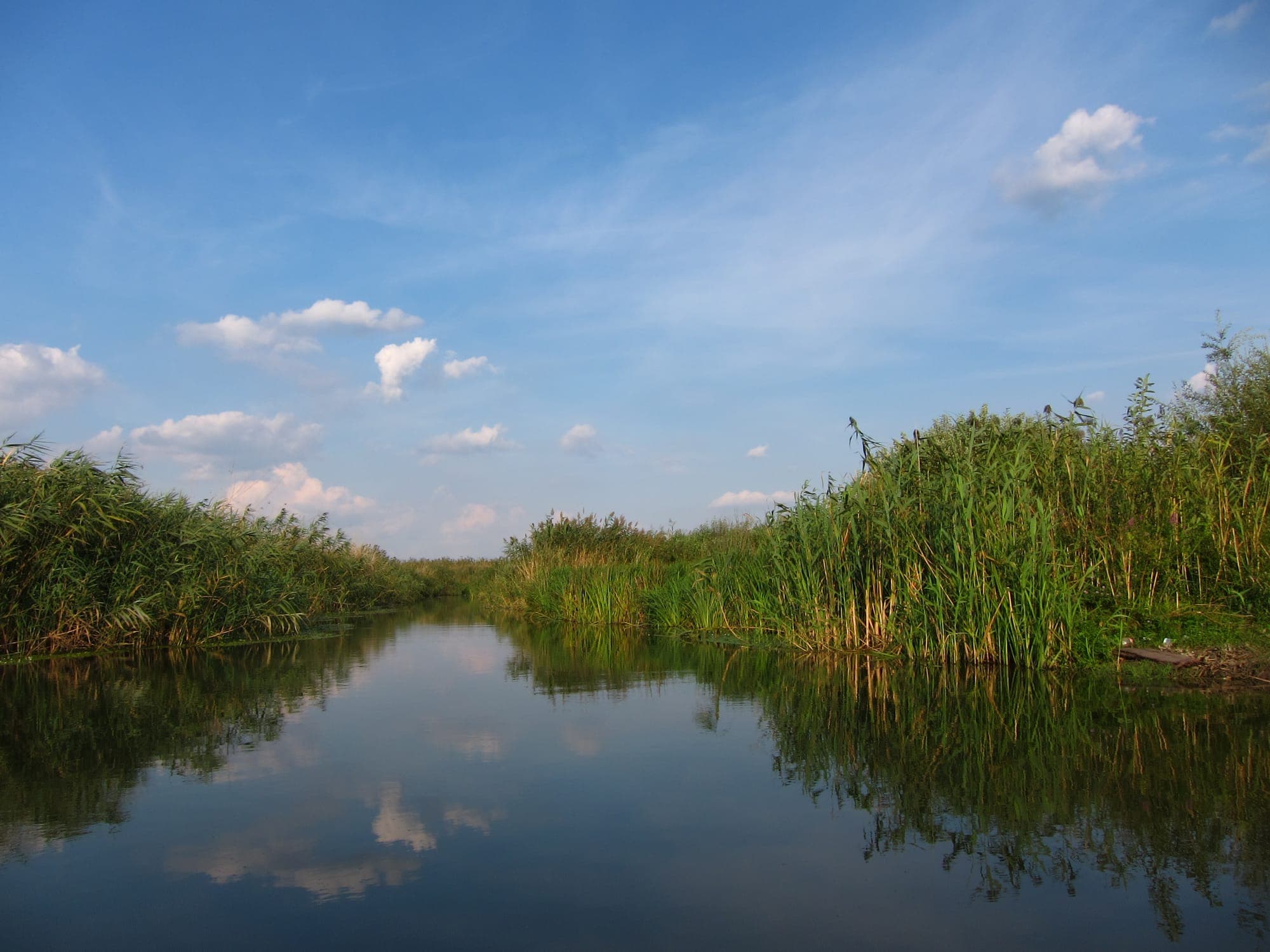
The church of St Nicholas has entered a new consolidation and restoration project: the contracts were signed in early July 2026, with works planned from June 2026 to June 2029. We found no announcement of how access to the site will be limited, so call the monastery before you set out. Comana Natural Park and the Neajlov Delta are a few kilometres away, in the same commune.
- The Brâncoveanu-style loggia of 1699–1703, with ten stone columns and a double-headed eagle.
- The brick walls of the 1588 fortress, with traces of defensive towers.
- The church of St Nicholas, Radu Șerban's foundation and the crypt of his family and the Cantacuzinos.
- The mausoleum of the 1916 heroes, in the monastery courtyard.
Good to know before you go
- Getting there
By car: Comana is ~35–40 km south of Bucharest, about 50–60 minutes: on the DN5 towards Giurgiu, then on county roads towards Comana; the monastery is on Strada Radu Șerban. From Giurgiu it is ~40 km.
Public transport: minibuses to Comana leave from near Eroii Revoluției metro station and from near Progresu railway station; check the timetable before you go.
- Fees & discounts
We found no official admission prices. Do not confuse the 5 lei fee of Comana Natural Park (for the marsh area) with entry to the monastery.
- Rules
This is a working monastery of monks: modest dress (shoulders and knees covered, men bareheaded in the church), quiet, no food or drink in the church. Do not take photos during services and do not use a flash; ask if you are unsure. On the building site follow the markings and instructions.
- Facilities
courtyard with loggia and cells · church shop with candles · exhibition of objects from the collection · toilets in the courtyard · good mobile signal
Frequently asked questions about Comana Monastery
- How long does a visit to Comana Monastery take?
- A visit to Comana Monastery takes about 45 min (estimate).
- Can you visit Comana Monastery with kids?
- Yes, Comana Monastery is suitable for children (large courtyard, no play area).
- How do I get to Comana Monastery?
- Comana Monastery is located at 392 Strada Radu Șerban, Comana, Giurgiu County. By car: Comana is ~35–40 km south of Bucharest, about 50–60 minutes: on the DN5 towards Giurgiu, then on county roads towards Comana; the monastery is on Strada Radu Șerban. From Giurgiu it is ~40 km. Public transport: minibuses to Comana leave from near Eroii Revoluției metro station and from near Progresu railway station; check the timetable before you go.
- When is the best time to visit Comana Monastery?
- The best season for Comana Monastery: All year round (combine it with the marsh, in May–June).
Reviews
Other attractions nearby
The closest attractions to Comana Monastery, sorted by distance.
 1 km from Comana Monastery
 Top 10033 km from Comana Monastery
 34 km from Comana Monastery