About Plătărești Monastery
At a glance: Monasteries and churches in Plătărești, Călărași County. The visit takes 45 min. Information verified on 10 October 2026.
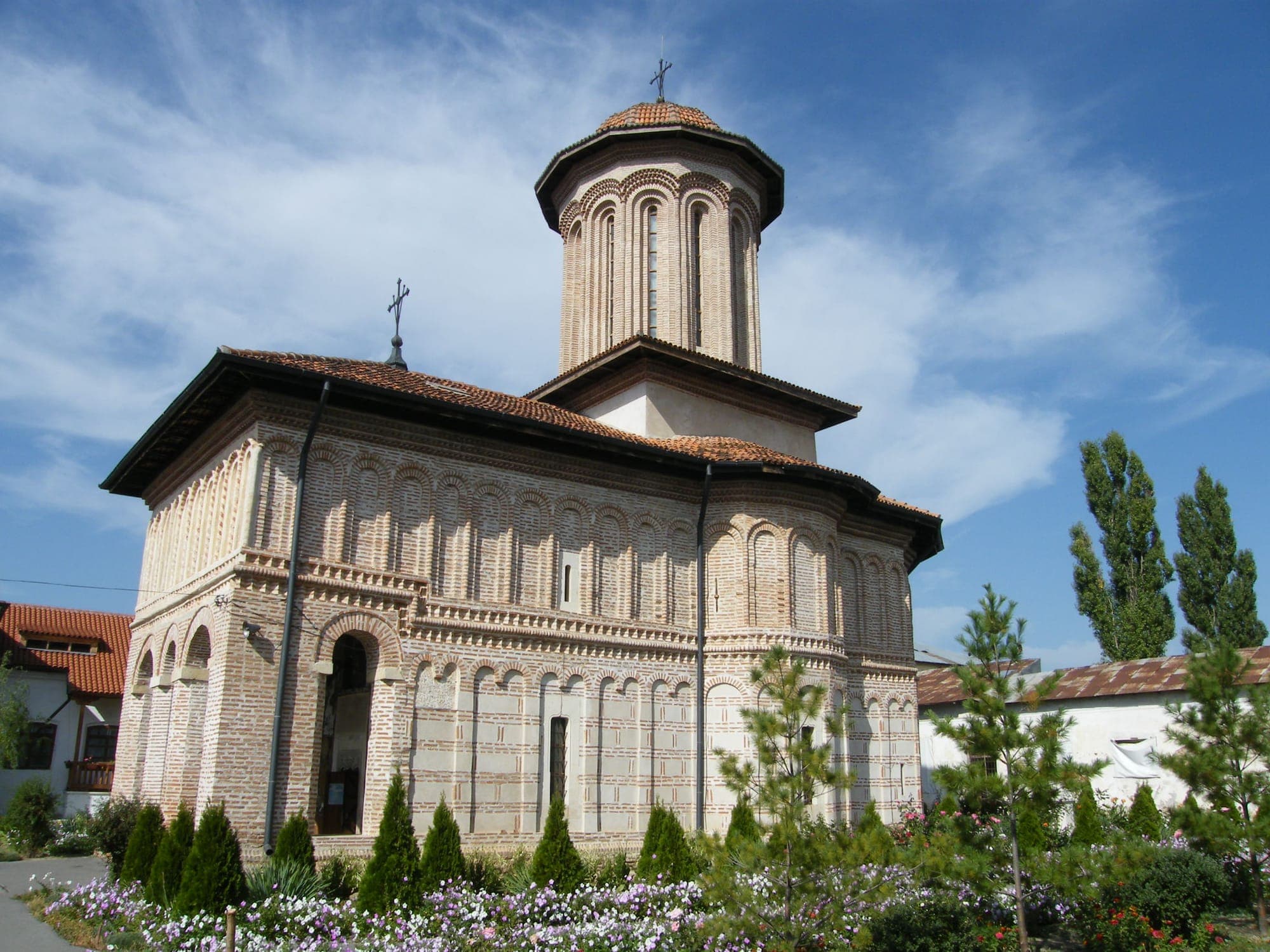
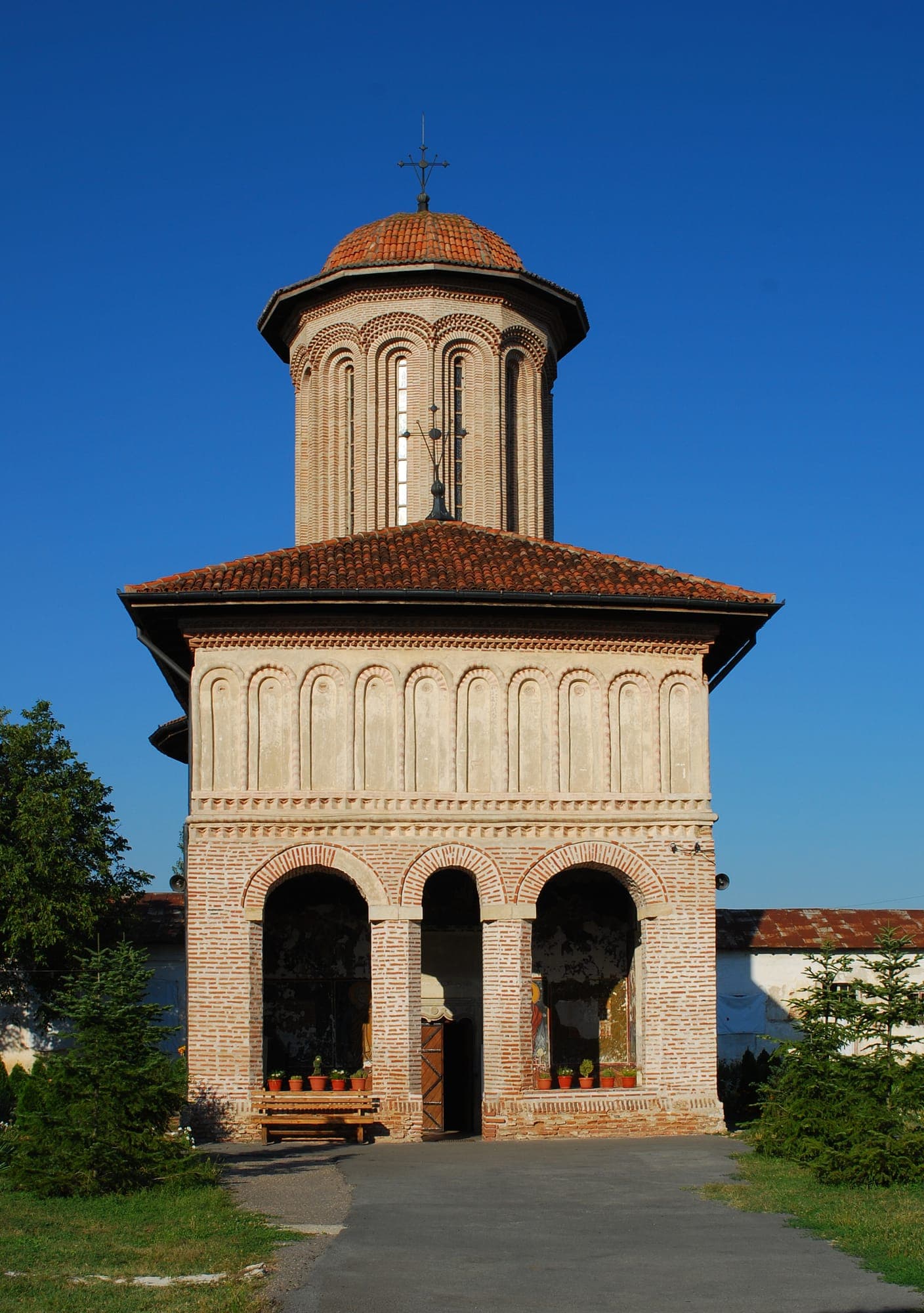
Plătărești Monastery stands on the southern edge of the village of Plătărești, on a terrace of the Dâmbovița river, about 20 km south-east of Bucharest. It was founded by Matei Basarab and his wife Elina. Tradition links it to a victory over Vasile Lupu or to the fight against the Tatars who backed Radu Iliaș, and sources date the start of the settlement either to 1632 or to a charter of 1640. The brick church, dedicated to the Great Martyr St Mercurius, was built in 1642–1646 and consecrated on 3 April 1646, the date carved on the inscription above the narthex entrance.
The complex belonged to the ring of walled monasteries around Bucharest. It was plundered by the Tatars in 1659, sheltered the court of Constantin Brâncoveanu in times of danger, and in later centuries served in turn as a women's prison and a psychiatric hospital. Monastic life resumed in 2000, and since 2009 a community of nuns has lived here, under the Diocese of Slobozia and Călărași. The ensemble is a historic monument of national importance (LMI code CL-II-a-A-14710).
What you can see
The church, with a triconch plan and a single central tower, has exposed-brick façades divided into two registers by a belt course and decorated with arcading and moulded ridges. The original mural painting of 1649, made by a team of foreign painters, survives only in the narthex: the founders' portraits with the prince's relatives and the boyars who gave gifts to the monastery, the portrait of the first abbot, Vasile, and scenes from the life of St Mercurius. The rest of the church was repainted in 1990. The iconostasis holds the four large icons given by Matei Basarab, among them the icon of St Mercurius engraved in gold, considered unique in Romania and said to work miracles. In the rectangular courtyard you can also see the Princely House in the north-west corner, the precinct wall, the bell tower and the monastic cells.
Good to know
It is a working convent, and the official page does not publish visiting hours. The church was restored and re-consecrated in April 2013; some buildings in the precinct, including the Princely House, were still unrestored in the latest available images.
- The original 1649 mural painting in the narthex, one of the few frescoes from Matei Basarab's time preserved in the country.
- The founders' portraits with the prince's relatives and the boyar donors, plus the portrait of Abbot Vasile.
- The icon of St Mercurius engraved in gold, on the iconostasis, dating from the founder's time.
- The exposed-brick façades, with belt course and arcading, returned to their 17th-century look.
- The Princely House in the north-west corner of the precinct, with its vaulted cellar.
Good to know before you go
- Getting there
By car: from Bucharest head south-east on the DJ301, through Cernica, Tânganu and Fundeni, ~20 km (~40 minutes) to Plătărești; from a junction with a wayside cross in the middle of the village, a side road leads in ~500 m to the monastery gate. It is ~12 km from Cernica Monastery and ~20 km from Negoiești Monastery, so the three can be combined in one trip.
Public transport: I could not confirm a direct public transport link to the monastery; the simplest way is by car or taxi from Bucharest.
- Where to park
Cars are usually left on the road in front of the entrance or by the precinct wall; I found no information about a laid-out or paid car park.
- Fees & discounts
From what I found, entry to the monastery courtyard and church is not ticketed; I found no fees for photography. Ask at the gate.
- Rules
Modest dress: shoulders and knees covered, women with their heads covered in the church. Keep quiet within the walls and switch phones off during services. Photography inside the church is done with the nuns' consent; do not touch the frescoes or the icons.
- Facilities
church and courtyard to visit · no accommodation for pilgrims · daily services (lauds and the Divine Liturgy) · shop and toilets unconfirmed
Frequently asked questions about Plătărești Monastery
- How long does a visit to Plătărești Monastery take?
- A visit to Plătărești Monastery takes about 45 min (estimate, no guided tour).
- Can you visit Plătărești Monastery with kids?
- Yes, Plătărești Monastery is suitable for children (modest dress and quiet).
- Where can I park at Plătărești Monastery?
- There is free parking at Plătărești Monastery (on the road in front of the entrance). Cars are usually left on the road in front of the entrance or by the precinct wall; I found no information about a laid-out or paid car park.
- How do I get to Plătărești Monastery?
- Plătărești Monastery is located at Strada Matei Basarab no. 1, ~500 m from the DJ301, Plătărești, Călărași County. By car: from Bucharest head south-east on the DJ301, through Cernica, Tânganu and Fundeni, ~20 km (~40 minutes) to Plătărești; from a junction with a wayside cross in the middle of the village, a side road leads in ~500 m to the monastery gate. It is ~12 km from Cernica Monastery and ~20 km from Negoiești Monastery, so the three can be combined in one trip. Public transport: I could not confirm a direct public transport link to the monastery; the simplest way is by car or taxi from Bucharest.
- When is the best time to visit Plătărești Monastery?
- The best season for Plătărești Monastery: All year round (all year, outside services).
Reviews
Other attractions nearby
The closest attractions to Plătărești Monastery, sorted by distance.
 23 km from Plătărești Monastery
 Top 10026 km from Plătărești Monastery
 29 km from Plătărești Monastery

