Pătrăuți Monastery
Pătrăuți, Suceava County · Bukovina


About Pătrăuți Monastery
At a glance: Monasteries and churches in Pătrăuți, Suceava County. Information verified on 7 October 2026.
In Pătrăuți, 12 km from Suceava, stands the oldest church built by Stephen the Great to survive in its original form. Construction began in June 1487, in the first year of the prince's great church-building programme, and the church was dedicated to the Exaltation of the Holy Cross. Here Stephen founded the only convent of nuns of his reign, intended, according to tradition, also as a place to care for those wounded in the battles fought around the citadel of Suceava.
The convent was plundered and abandoned several times, restored in the early 18th century and dissolved by the Austrians after they annexed Bukovina; for more than two hundred years the church then served as a village church. Monastic life returned in 2021 with a community of nuns. Since 1993 the church has been part of the UNESCO site "Churches of Moldavia", together with Voroneț, Humor, Moldovița, Arbore, Probota and St John the New in Suceava, joined in 2010 by Sucevița.
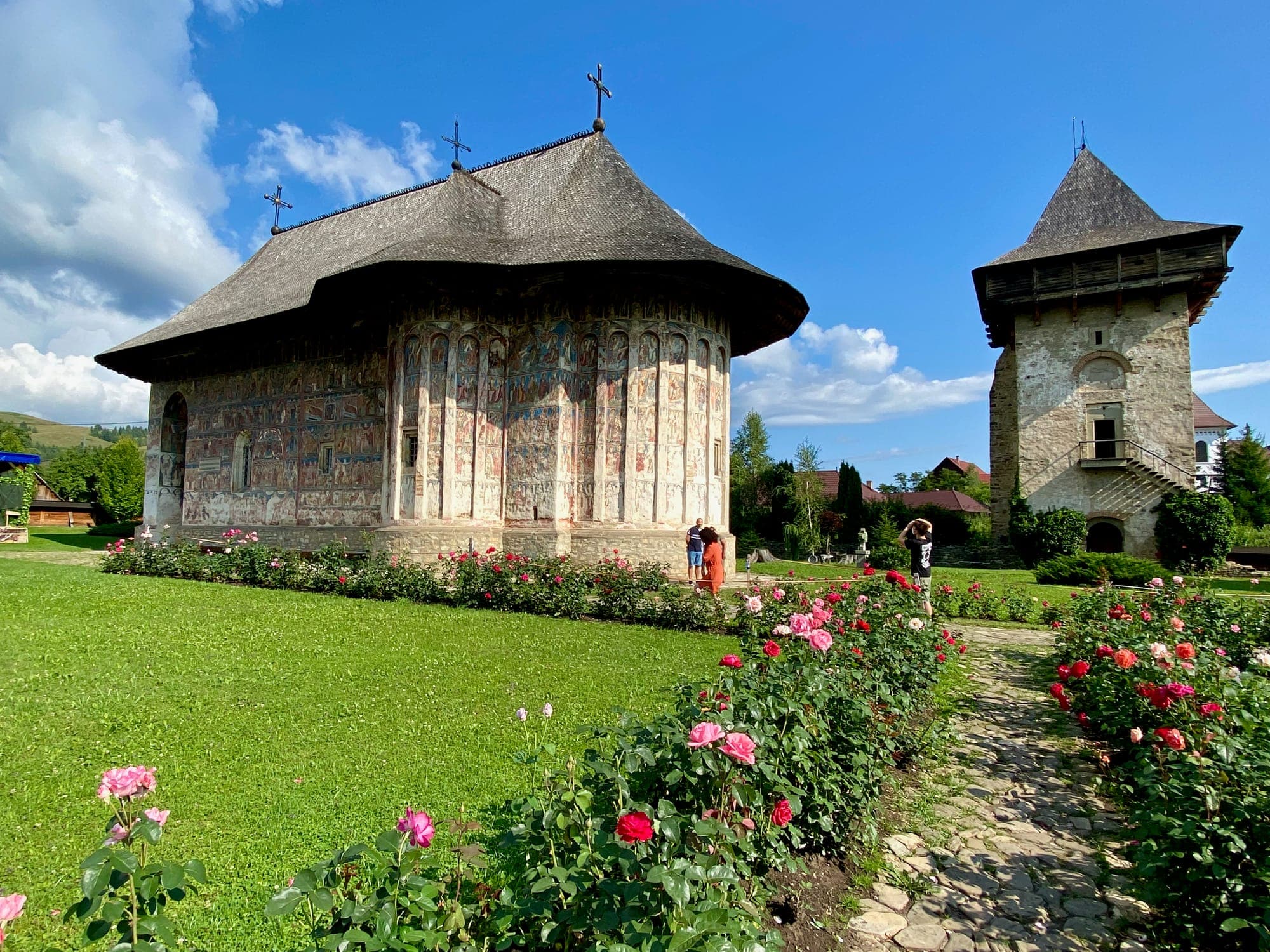
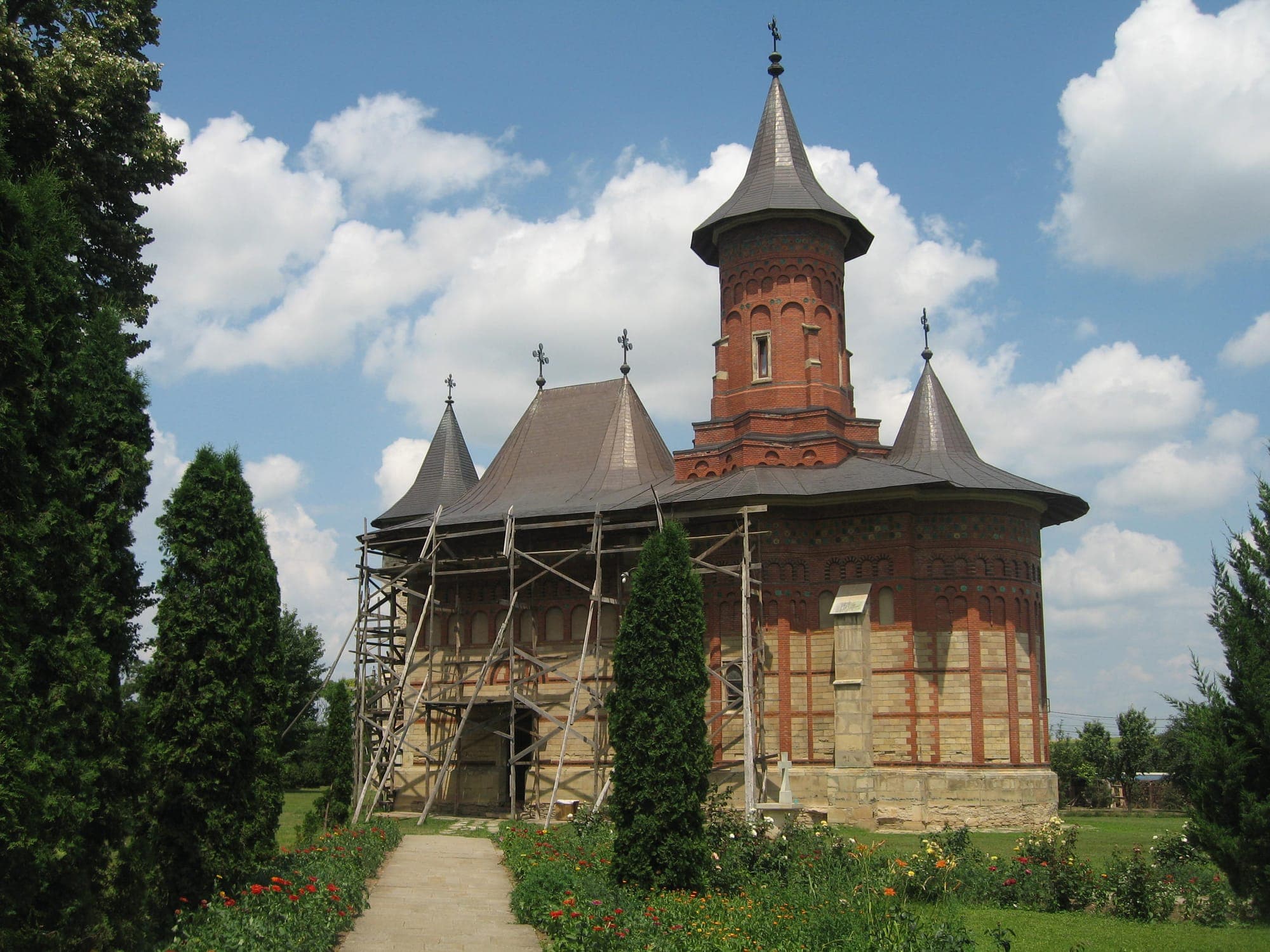
The church is small, trefoil in plan with a tower over the nave, built of rough stone, with Gothic portals and windows and a row of green glazed ceramic discs beneath the shingle eaves. It is considered the oldest surviving church in the Moldavian style, the style that would later produce the painted churches of Bukovina.
What you can see
The treasure of Pătrăuți is its late 15th-century interior painting, cleaned of soot during the 2003–2010 restoration and dominated by a golden ochre known as "Pătrăuți yellow". The west wall of the narthex is taken up by the "Cavalcade of the Holy Cross": Emperor Constantine the Great, followed by sixteen mounted warrior saints, gazes at the cross that the Archangel Michael shows him in the sky. The scene calls on the heavenly host to help Moldavia's army in its wars against the Turks and, in Moldavia, appears only once more, at Arbore.
In the nave, the votive painting shows Stephen the Great with his wife, Maria Voichița, his son Bogdan and two daughters, offering the church to Christ. Outside, on the west wall around the Gothic portal, survive the remains of a Last Judgment, considered the oldest exterior painting in Moldavia, discovered under the plaster only in the 1980s. In the grounds stand the wooden bell tower of 1725 and a round stone table that tradition also links to Stephen's time.
Good to know
Daily services are held in the wooden chapel in the grounds, built in 2004 to protect the old frescoes from candle smoke. The church and bell tower were consolidated between 2020 and 2022. It is a working convent, not a museum: no visiting hours are published, so come during the day and ask the nuns whether you can go into the church.
- The "Cavalcade of the Holy Cross" on the west wall of the narthex, with Emperor Constantine and the mounted warrior saints beneath the cross in the sky.
- The votive painting in the nave, with Stephen the Great, Maria Voichița, their son Bogdan and two daughters offering the church.
- The Last Judgment around the Gothic portal on the west facade, the oldest exterior painting in Moldavia.
- The wooden bell tower of 1725, with its tall shingle roof, right next to the church.
- The round stone table in the grounds, which local tradition links to the time of Stephen the Great.
Good to know before you go
- Getting there
By car: from the centre of Suceava take the DN2 north (towards Siret), then turn left onto the DJ 208V to Pătrăuți; the monastery is at the end of the village (~12 km, ~20 minutes). From Gura Humorului it is ~41 km (~50 minutes), from Iași ~160 km (~3 hours). It combines easily with Dragomirna Monastery, a few kilometres away, and with the Princely Citadel of Suceava.
Public transport: the easiest option is a taxi from Suceava (~12 km). On foot, a ~6 km trail leads from Dragomirna Monastery through the oak and beech woods between the two monasteries.
- Rules
It is a working convent: modest dress (shoulders and knees covered), quiet within the grounds and respect for the services. Ask the nuns before photographing the frescoes inside. The old frescoes are fragile: do not touch them.
Frequently asked questions about Pătrăuți Monastery
- How do I get to Pătrăuți Monastery?
- Pătrăuți Monastery is located at DJ 208V, at the end of the village, at the foot of the wooded hill, Pătrăuți, Suceava County. By car: from the centre of Suceava take the DN2 north (towards Siret), then turn left onto the DJ 208V to Pătrăuți; the monastery is at the end of the village (~12 km, ~20 minutes). From Gura Humorului it is ~41 km (~50 minutes), from Iași ~160 km (~3 hours). It combines easily with Dragomirna Monastery, a few kilometres away, and with the Princely Citadel of Suceava. Public transport: the easiest option is a taxi from Suceava (~12 km). On foot, a ~6 km trail leads from Dragomirna Monastery through the oak and beech woods between the two monasteries.
- When is the best time to visit Pătrăuți Monastery?
- The best season for Pătrăuți Monastery: All year round.
Reviews
Other attractions nearby
The closest attractions to Pătrăuți Monastery, sorted by distance.
 14 km from Pătrăuți Monastery
 Top 10015 km from Pătrăuți Monastery
 26 km from Pătrăuți Monastery