Probota Monastery
Probota, Suceava County · Bukovina


About Probota Monastery
At a glance: Monasteries and churches in Probota, Suceava County. Information verified on 7 October 2026.
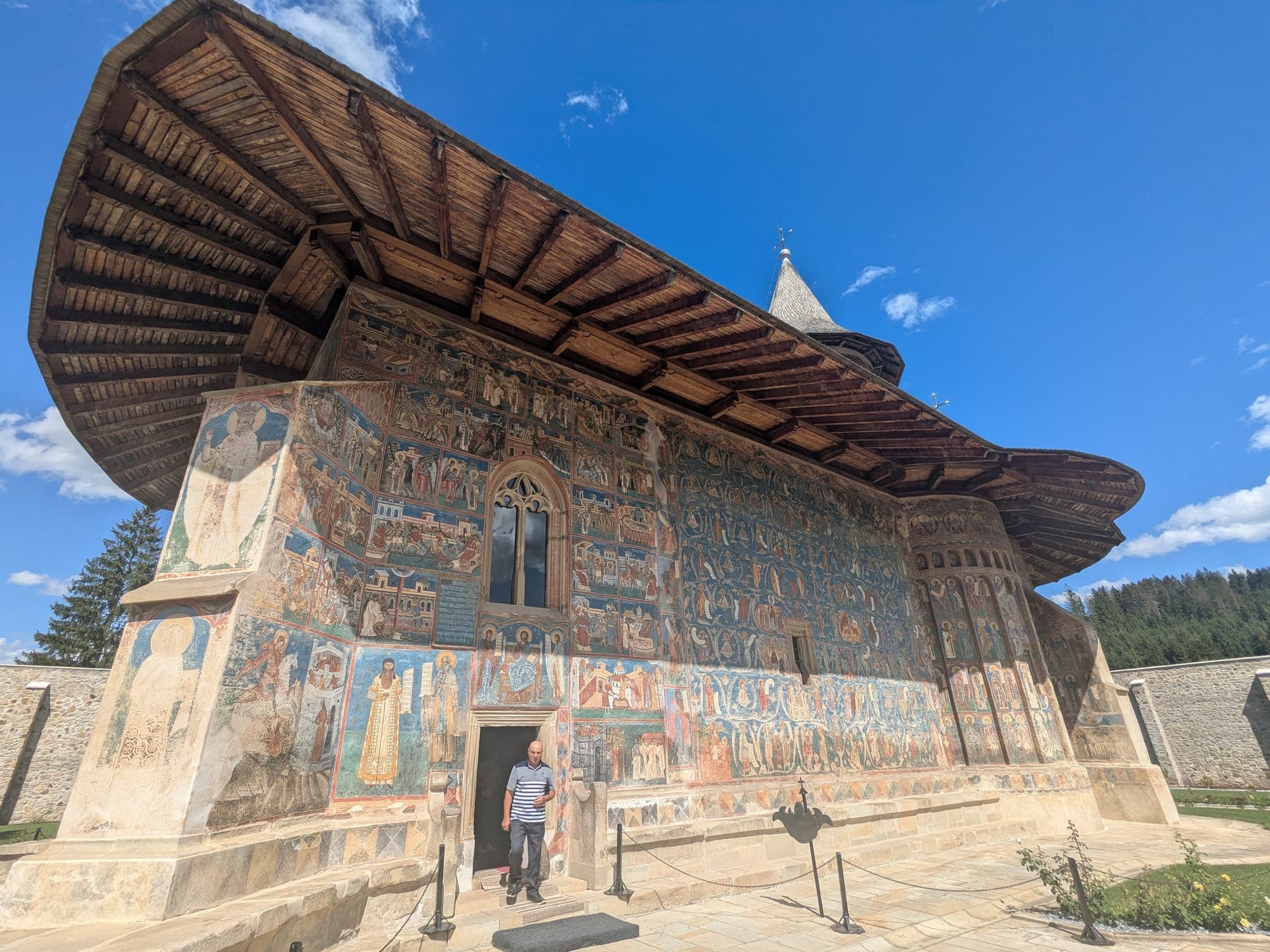
Probota Monastery, called Pobrata in old documents, is one of Moldavia's oldest monastic sites: a hermitage of "St Nicholas in the Glade" is already recorded in 1391. Today's church was built by Peter Rareș, son of Stephen the Great, on a plateau above the Siret valley, about 300 metres from the spot where landslides had brought down the earlier churches. The inscription at the entrance dates its completion to 16 October 1530, and in 1532 it was painted throughout, inside and out, at the urging of Abbot Grigorie Roșca, the prince's cousin and later metropolitan.
Rareș chose Probota as the burial place for himself and his heirs, instead of Putna. Here lie Peter Rareș, his wife Lady Elena, and their son Stephen Rareș, prince from 1551 to 1552. After the founder's death, in 1550, his widow and sons surrounded the church with a thick wall and towers, which gave the monastery the look of a fortress.
Dedicated to the Holy Sepulchre in 1677 and dissolved when monastic estates were secularised in 1863, the monastery declined and the church became a village church. Monastic life returned in 1993 with a community of nuns, the same year the church was inscribed on the UNESCO World Heritage List as part of the "Churches of Moldavia" group. Between 1996 and 2001 a UNESCO project funded by Japan restored it and brought to light the original painting of 1532, hidden under 19th-century overpainting.
What you can see
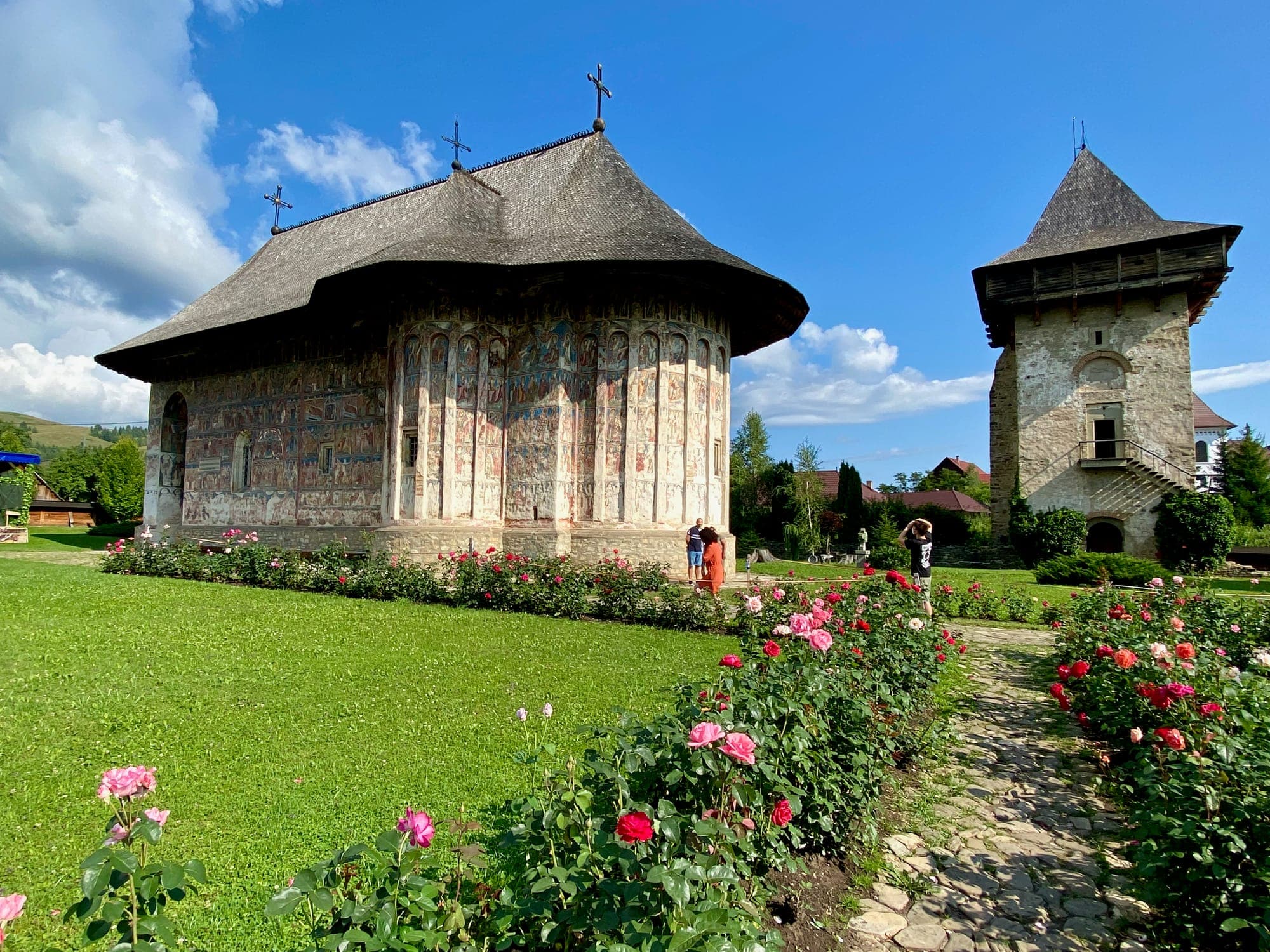
The church of St Nicholas has a triconch plan, a slender tower set on an octagonal and a star-shaped base and a closed porch lit by eight tall Gothic windows, rare in Moldavia. In the porch the Last Judgment is painted on the vault, and in the narthex the seven Ecumenical Councils on the arches and the calendar of saints. The interior painting is among the best preserved from Peter Rareș's time, with vivid colours and highly expressive faces.
In the burial chamber, between the narthex and the nave, are the carved marble slabs of Peter Rareș, Lady Elena and Stephen Rareș; the tombstone of Lady Oltea, Stephen the Great's mother, was brought here in 1904. In the nave, the votive painting shows Rareș and his family offering the church. Outside, the frescoes on the facades are largely worn away; traces can still be seen on the south wall. In the grounds you can see the enclosure wall with its wall-walk, the gate tower with its 1550 inscription and the ruins of the princely houses.
Good to know
The church has a new shingle roof, and the enclosure walls, towers and the cellars of the princely houses were restored between 2018 and 2020 with EU funds. It is a working convent: enter with shoulders and knees covered, and keep quiet.
- The Last Judgment painted on the vault of the porch, lit by eight tall Gothic windows.
- The seven Ecumenical Councils on the arches of the narthex, part of the original 1532 painting.
- The marble slabs of Peter Rareș and Lady Elena in the burial chamber, and the tombstone of Lady Oltea, Stephen the Great's mother.
- The votive painting in the nave, with Peter Rareș and his family offering the church to St Nicholas.
- The enclosure wall with its wall-walk and the gate tower with its 1550 inscription.
Good to know before you go
- Getting there
By car: Probota is ~45 km from Suceava, via Liteni and Dolhasca (about an hour), 20 km from Pașcani, 30 km from Fălticeni and 46 km from Botoșani; from Dolhasca it is another 5 km on a paved road to the monastery. From Pașcani you can also come via Heci, but 4 km of that road are gravel.
Public transport: regional trains on the Pașcani – Suceava line stop at Probota halt, and faster trains at Dolhasca station, 5 km away, from where you continue by taxi.
- Rules
Modest dress: shoulders and knees covered. Keep quiet within the walls and switch phones off during services. Photography rules are not published on the website; ask at the entrance. Do not touch the frescoes or the tombstones.
Frequently asked questions about Probota Monastery
- Can you visit Probota Monastery with kids?
- Yes, Probota Monastery is suitable for children (modest dress and quiet).
- How do I get to Probota Monastery?
- Probota Monastery is located at in the village of Probota, 5 km from the centre of Dolhasca, Probota, Suceava County. By car: Probota is ~45 km from Suceava, via Liteni and Dolhasca (about an hour), 20 km from Pașcani, 30 km from Fălticeni and 46 km from Botoșani; from Dolhasca it is another 5 km on a paved road to the monastery. From Pașcani you can also come via Heci, but 4 km of that road are gravel. Public transport: regional trains on the Pașcani – Suceava line stop at Probota halt, and faster trains at Dolhasca station, 5 km away, from where you continue by taxi.
- When is the best time to visit Probota Monastery?
- The best season for Probota Monastery: All year round.
Reviews
Other attractions nearby
The closest attractions to Probota Monastery, sorted by distance.
 Top 10029 km from Probota Monastery
 Top 10036 km from Probota Monastery
 43 km from Probota Monastery