The Roman Catholic bishops' residence, built in 1762–1777 by Franz Anton Hillebrandt, is Romania's largest Baroque palace; today it hosts church art exhibitions, and the garden is open daily.
Castles and palacesMuseums and memorial housesParks and gardens
Olari Street in Horezu, lined with family workshops where red clay is thrown on the wheel and painted with roosters, spirals and the tree of life; a craft inscribed by UNESCO as intangible heritage in 2012.
Villages and traditionsMuseums and memorial houses
The monastery built by the sword-bearer Mihail Cantacuzino in 1690–1695 that gave the town its name: the old church with Pârvu Mutu's frescoes, the great church rebuilt for Carol I and a museum holding the Bucharest Bible.
A military-themed park at Orăștie, on 88 hectares of forest: an open-air museum of military hardware, an adventure park, a 607 m zip line and a summer water park.
A Neo-Gothic palace of the Sturdza boyars, bought in 1862 by Alexandru Ioan Cuza and made the ruling family's residence; today a memorial museum with rooms recreated from Elena Cuza's inventory.
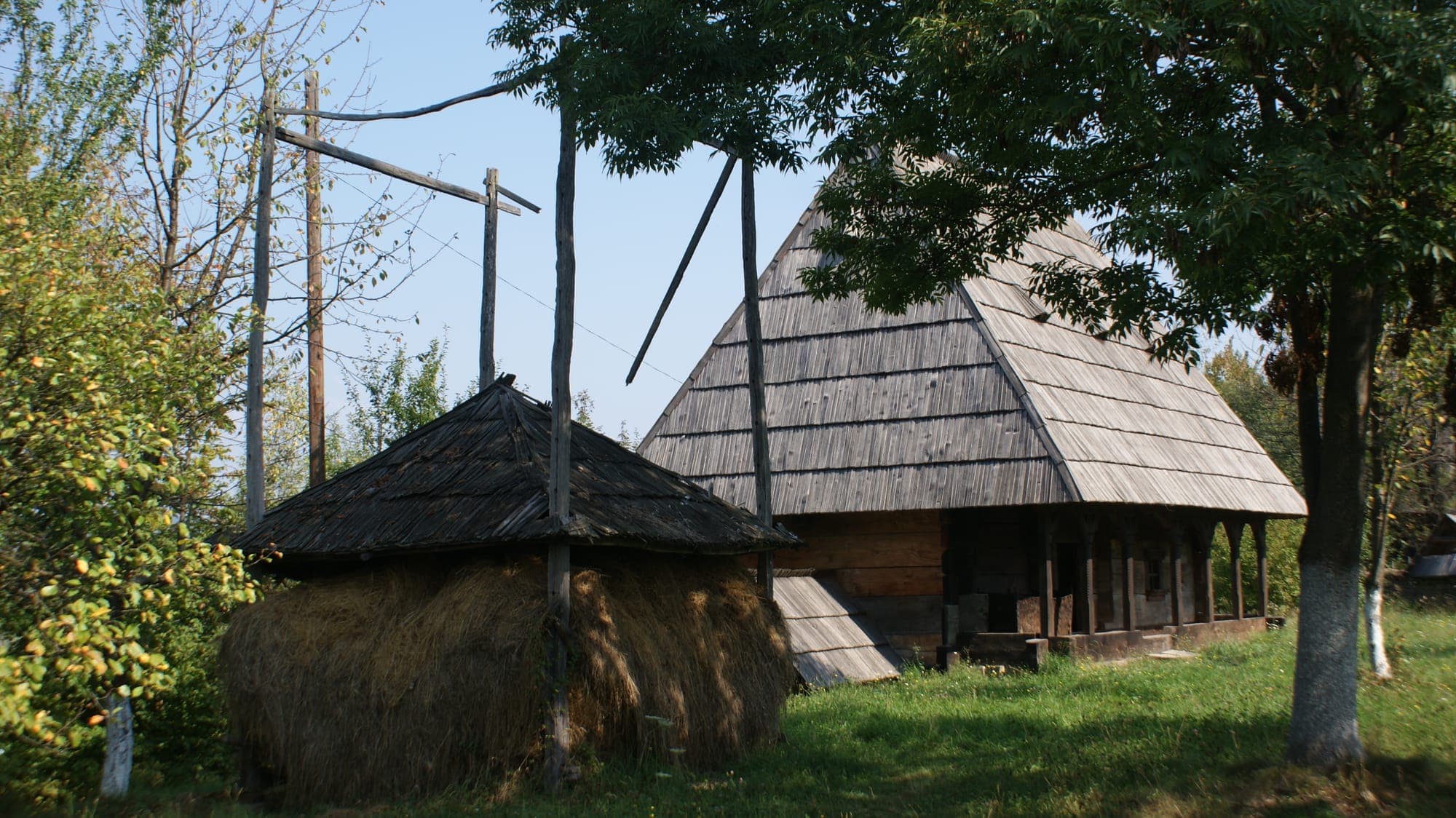
A wooden Maramureș village on Dobăieș Hill: over 30 homesteads from across historical Maramureș, the wooden church from Oncești, and Ukrainian, Hungarian and Jewish houses.
Museums and memorial housesVillages and traditions
The First World War heroes' mausoleum, built between 1923 and 1938 on the 1917 battlefield, with 5,073 soldiers in its crypts and a museum of the battles.
Monuments and historic sitesMuseums and memorial houses
The largest surviving piece of Timișoara's bastioned fortress, built by the Austrians in the 1730s and restored with EU funds, now home to the National Museum of Banat.
Fortresses and fortificationsMuseums and memorial houses
A Classicist castle of 1827 with 19th-century wall paintings, restored with European funds and reopened in September 2026 as the Székely Equestrian Museum.
Castles and palacesMuseums and memorial housesUNESCO
The residence of the rulers of Wallachia for almost three centuries, with the Chindia Tower, the ruins of the princely palace and the Great Princely Church, home to the largest votive painting of rulers in the country.
Monuments and historic sitesMuseums and memorial houses
An open-air ethnographic museum on ~17 hectares at the edge of the Green Forest: houses and outbuildings from Banat villages, a wooden church, a school and an “Alley of Ethnicities”, all gathered into one village.
Museums and memorial housesVillages and traditions
The princely court built by Constantin Brâncoveanu in 1698 for his eldest son, with a loggia-fronted palace, walled courtyards and restored gardens, ~50 km from Bucharest.
A stone rotunda built in 1982–1984 over a Geto-Dacian princely burial mound from the 4th century BC, on Gosan Hill, next to the site that gave the Cucuteni culture its name.
Museums and memorial housesMonuments and historic sites
The house and studio of the sculptor Frederic Storck and the painter Cecilia Cuțescu-Storck, built in 1911–1913: sculpture, paintings and drawings by the Storck family, in a half-timbered building with a garden of stone fragments.