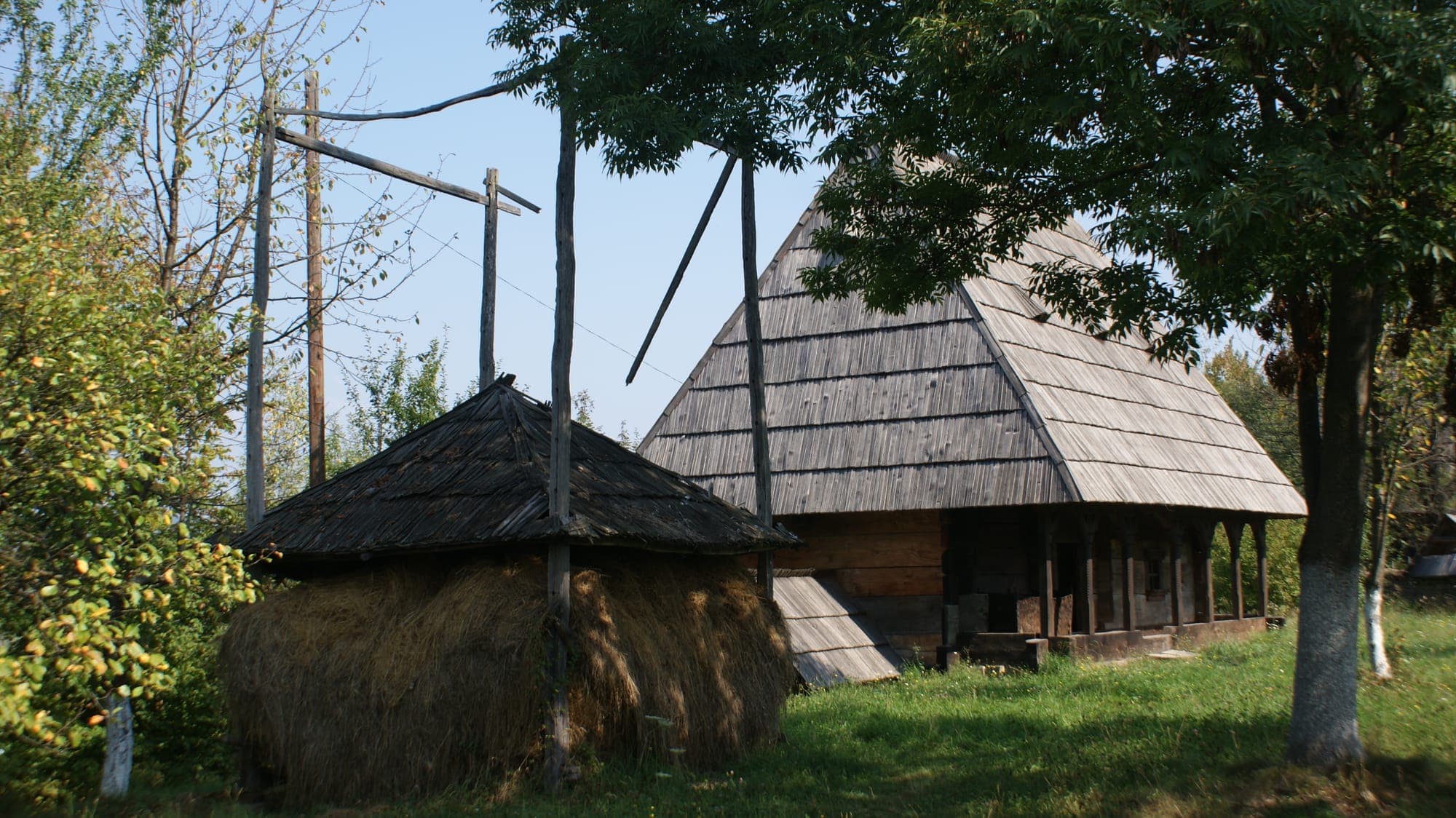
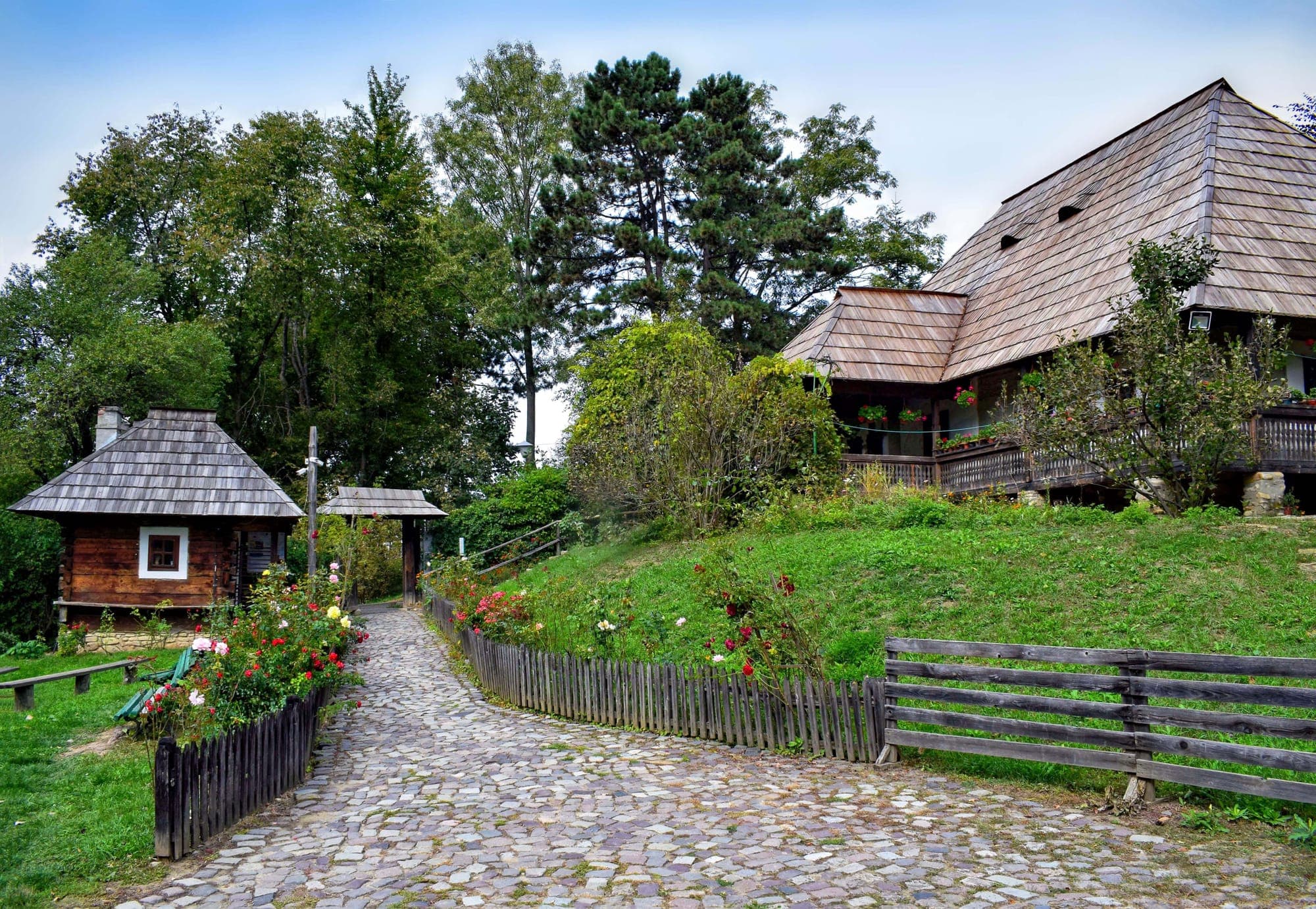
The villages of Romania are still living places, not stage sets: in Maramureș people still build in wood, carved gates mark the houses and folk dress is still worn on Sundays; in Bukovina eggs are decorated and rugs are woven; in the Saxon villages of Transylvania, the row of gable-fronted houses and the fortified church in the middle have stayed almost unchanged for centuries; in the Apuseni, the hamlets of the Moți spread along the ridges. The crafts, the pottery of Horezu and Corund, woodwork, weaving, are still practised and sold at fairs. Villages are best understood by sleeping a night there, not from a stop at the roadside.
The Merry Cemetery at Săpânța, with its painted crosses and witty verses, is the best-known place in the villages of Maramureș. In Sibiu, the ASTRA Museum gathers hundreds of homesteads, mills and churches moved from all over the country and is the best place for an overview. For the Saxon villages, see Transylvania; for the mountain ones, Bukovina.

 Top 20