A Neo-Gothic palace built by George and Maria Sturdza between 1880 and 1904, its façades covered in coats of arms and stone tracery, set in an old park with ponds; reopened in 2026 after a major restoration.
Castles and palacesParks and gardens
The best-preserved bastion of Brașov's city walls, built by the weavers' guild in the 15th and 16th centuries, with timber galleries on four levels and a model of the medieval town.
Fortresses and fortificationsMuseums and memorial houses
The church built in 1502 by Hetman Luca Arbore, with no tower and exterior frescoes from 1541 dominated by green; a UNESCO site, today the church of Arbore Monastery.
ChurchesMonuments and historic sitesUNESCO
A Baroque manor house of the second half of the 18th century in the centre of Beclean, with a vaulted gate and a coat of arms dated 1768; today it houses the Agricultural Technological High School.
Castles and palacesMonuments and historic sites
A bastioned fortress on Citadel Hill, north of the old town, built to stop enemies firing on Brașov from the heights; the interior is closed for works, but the walls and the view can be enjoyed from the paths on the hill.
Fortresses and fortificationsMonuments and historic sites
The capital's zoological garden, open since 1959 in Băneasa Forest, with tigers, lions, bears, wolves, zebras, monkeys and more than 150 species on almost 6 hectares.
Zoos and aquariums
The city's own beaches, from the fish market down to the cliff below the old town: three and a half kilometres of replenished sand, with Modern, Trei Papuci and Tataia one after another.
Seaside
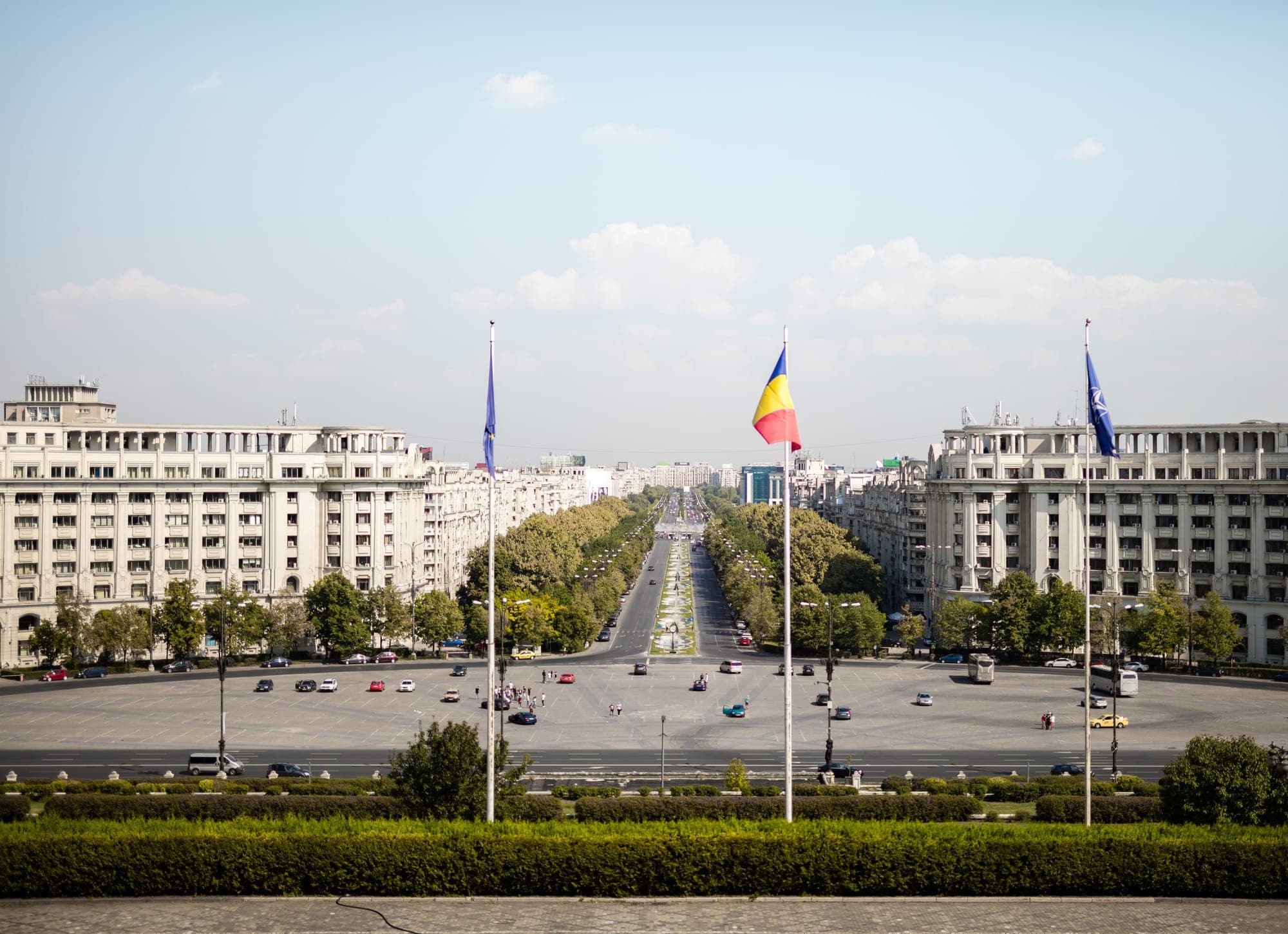
The wide esplanade in front of the Palace of the Parliament, at the end of Bulevardul Unirii: a venue for big concerts and New Year's Eve shows and home to the Bucharest Christmas Market.
Monuments and historic sites
The youth resort of the Romanian coast, 31 kilometres south of Constanța: an east-facing beach, the white obelisk on the sand and the rusting wreck of the cargo ship Evangelia.
Seaside
A Neo-Gothic palace of the Sturdza boyars, bought in 1862 by Alexandru Ioan Cuza and made the ruling family's residence; today a memorial museum with rooms recreated from Elena Cuza's inventory.
Castles and palacesMuseums and memorial houses
A Romanesque basilica of the 13th century, strengthened in 1494 with an 8-metre enclosure wall, in the easternmost Saxon village on the Royal Land; its west portal is among the finest stone carving in Transylvania.
ChurchesFortresses and fortifications
A summer lido on two salt lakes formed in collapsed old salt pits, 100 m from the Durgău entrance of the Turda Salt Mine. The very salty water keeps you afloat; the mine is visited separately.
Resorts and thermal bathsSalt mines
A small 18th-century wooden church in the cemetery of an isolated hillside village, tied to the tradition that Stephen the Great built it from the oak that hid him.
Churches
The Gothic church of the Sibiu Saxons, with a 73-metre tower you can climb, the 1914 Sauer organ, the 1445 Crucifixion fresco and the gravestones of the ferula.
ChurchesMonuments and historic sites
A synagogue built in 1845–1846 by Ashkenazi Jews who had come from Poland, with a neoclassical façade and a painted, gilded hall; it houses the permanent exhibition on the Holocaust in Romania.
Monuments and historic sites