Bohodei Waterfall
Pietroasa, BH
A waterfall of about 80 m on the Bohodei stream, below the peak of the same name, regarded as the tallest in the Apuseni Mountains; reached on a demanding loop from Pietroasa with chain-equipped rock sections.
922 results
A waterfall of about 80 m on the Bohodei stream, below the peak of the same name, regarded as the tallest in the Apuseni Mountains; reached on a demanding loop from Pietroasa with chain-equipped rock sections.

The princely court built by Constantin Brâncoveanu in 1698 for his eldest son, with a loggia-fronted palace, walled courtyards and restored gardens, ~50 km from Bucharest.
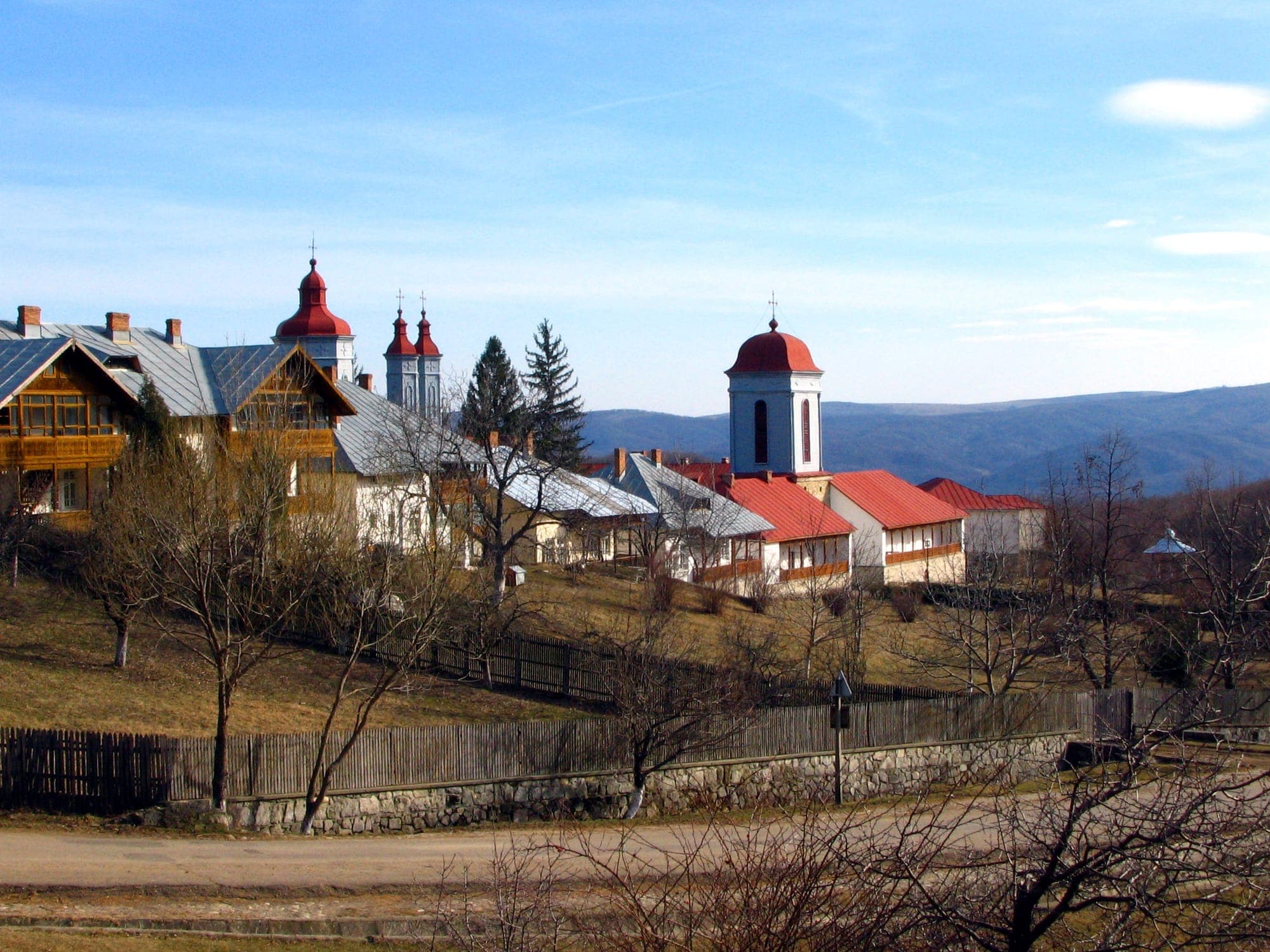
A monastery of monks in the Nișcov valley, first documented in 1600, with a large church built in 1823–1828 and an older one from the 16th century; the Măgura Sculpture Camp lies beside it.

A thermal waterfall that never freezes, spilling over a moss-covered travertine wall, a quarter of an hour's walk from the centre of the Geoagiu-Băi spa resort.

The land of dwarf dinosaurs around Hațeg, Romania's first geopark: small museums with reconstructions and fossils, themed trails through villages, palaeontological sites and traces of 70-million-year-old volcanoes.

The Orthodox cathedral of the Metropolis of Transylvania, built between 1902 and 1906 on the model of Hagia Sophia in Constantinople, with striped brick fronts and a dome painted by Octavian Smigelschi.

A reservoir on the Ialomița at 1,438 m, in the heart of the Bucegi Mountains, held back by a 55 m stone dam and ringed by spruce forest, between the Tătaru and Zănoaga gorges.

A 14th-century Gothic church built by the noble Apafi family, with the largest ensemble of Gothic frescoes in Transylvania and a polyptych altarpiece that has stood in place for more than five centuries.

Romania's longest and highest limestone ridge, 25 km long, with La Om Peak at 2,238 m, the Zărnești Gorge, Curmătura Chalet and trails for every level.
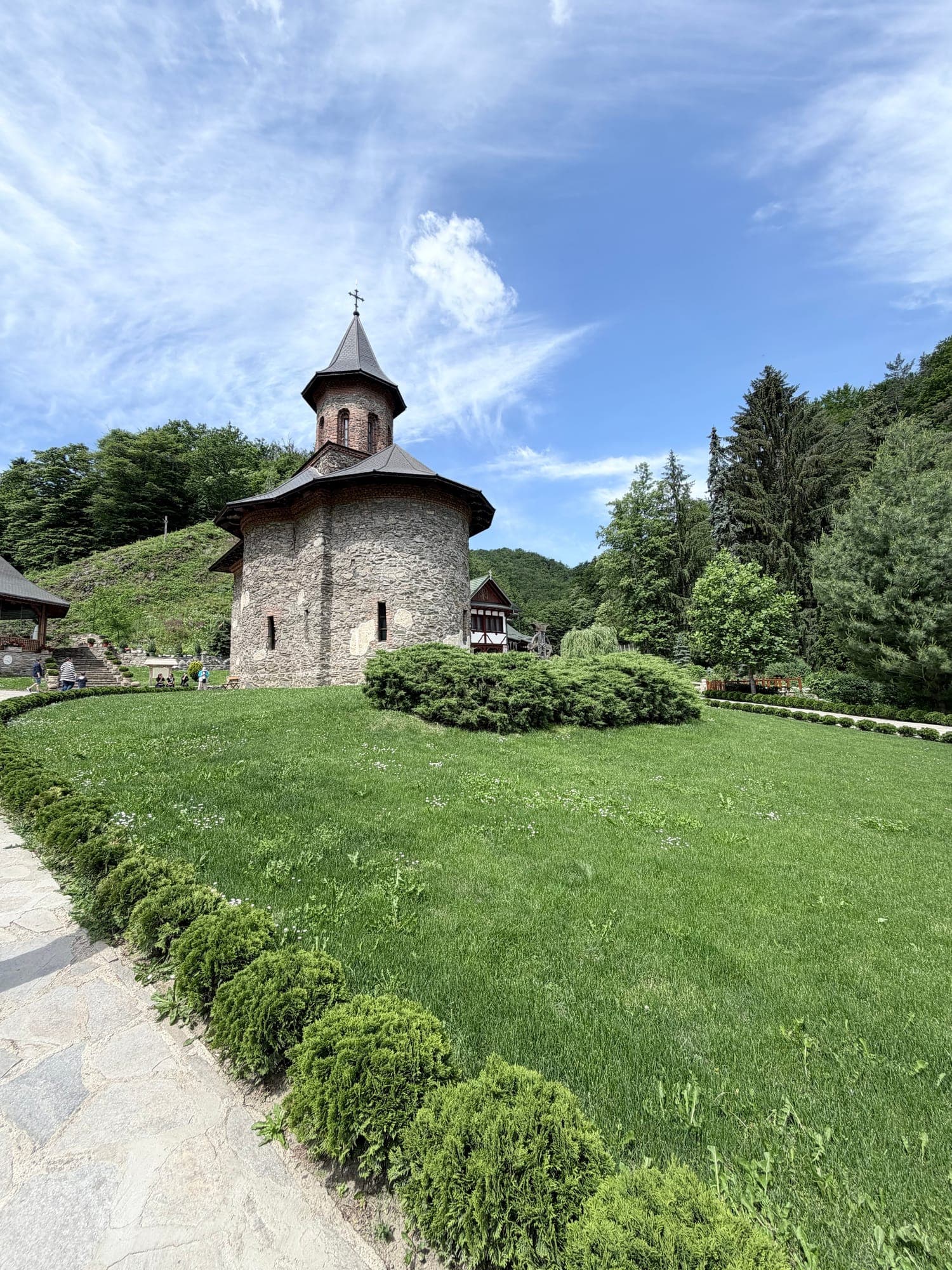
A convent in the Hațeg Country, with a stone church rebuilt in 1564 and the grave of St Arsenie of Prislop (Father Arsenie Boca), one of the largest pilgrimage sites in Romania.

The Church of the Holy Archangels in Rogoz, built in 1663 and part of the Maramureș UNESCO site, has an asymmetric roof over the 'table of the ancestors', horse-head eaves brackets and paintings from 1785.

An auxiliary Roman fort on Urieșilor Hill above the Mureș, near Geoagiu, with foundations, a headquarters building with an underground treasury unique in Dacia, and wide views over the valley.

The second square of old Sibiu, with guild houses arcaded at street level, the Arts House and the Bridge of Lies, the 1859 cast-iron footbridge over Ocnei street.

A small cave in the woods near Ion Corvin, fitted out as a church, where tradition says the Apostle Andrew lived; a monastery has grown up around it and draws pilgrims on 30 November.

A primeval beech and beech-fir forest in Băiuț commune, Maramureș, part since 2017 of the UNESCO site of the ancient and primeval beech forests of Europe.