A chain of travertine cascades on the Șipote stream, below the Bedeleu cliffs in the Trascău Mountains: the last one drops straight into the Arieș by the DN75, the upper ones are reached on a nature trail from Sălciua.
The former metropolitan cathedral of Moldavia, built in 1514–1522 in the centre of Suceava and home to the relics of St John the New; its church of St George is a UNESCO site.
Monasteries and churchesMonuments and historic sitesUNESCO
The Lutheran church in the centre of Mediaș, late Gothic and enclosed in a fortress with walls and towers; its leaning tower, with a five-pointed spire, is the town's emblem.
Monasteries and churchesFortresses and fortifications
A small stone church in the Hațeg Country, built largely from Roman blocks brought from Ulpia Traiana Sarmizegetusa, with a tower over the nave, stone lions on the roof and paintings from 1443.
Monasteries and churchesMonuments and historic sites
The Orthodox church of the Romanians of Șcheii Brașovului, built from 1495 on the site of a wooden one, with Gothic-Baroque towers, painted façades and Nicolae Titulescu's grave in the churchyard.
Monasteries and churchesMonuments and historic sites
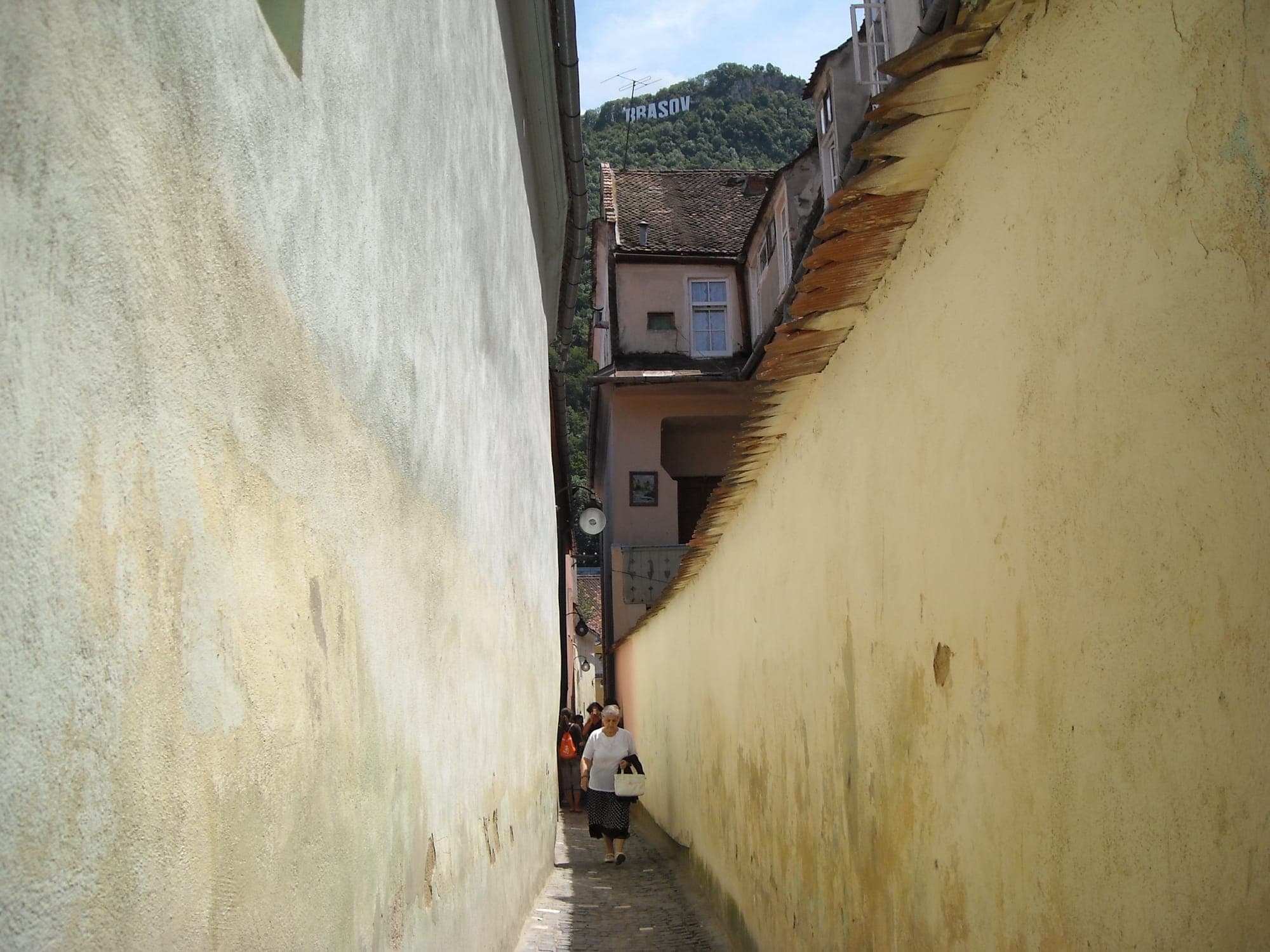
A passage 1.1–1.35 m wide in Brașov's old town, recorded in the 17th century and counted among the narrowest streets in Europe; closed for repairs since November 2025.
Bihor's county museum, housed since its move in the former Royal Cadet School of 1898: archaeology, history, art, ethnography, natural sciences and a vivarium under one roof.
Constantin Brâncuși's round stone table with 12 hourglass seats, in the park on the banks of the Jiu: the western end of the Heroes' Way ensemble, a UNESCO World Heritage Site.
The DJ713 climbs from the DN71 near Sinaia over 16 km of tarmac to 1,925 m at Piatra Arsă: the only road that takes you by car onto the Bucegi plateau.
The public aquarium in central Tulcea, with fish from the Danube and the Black Sea, coral reef tanks and a tunnel among sturgeon, plus an exhibition on the Delta's wildlife.
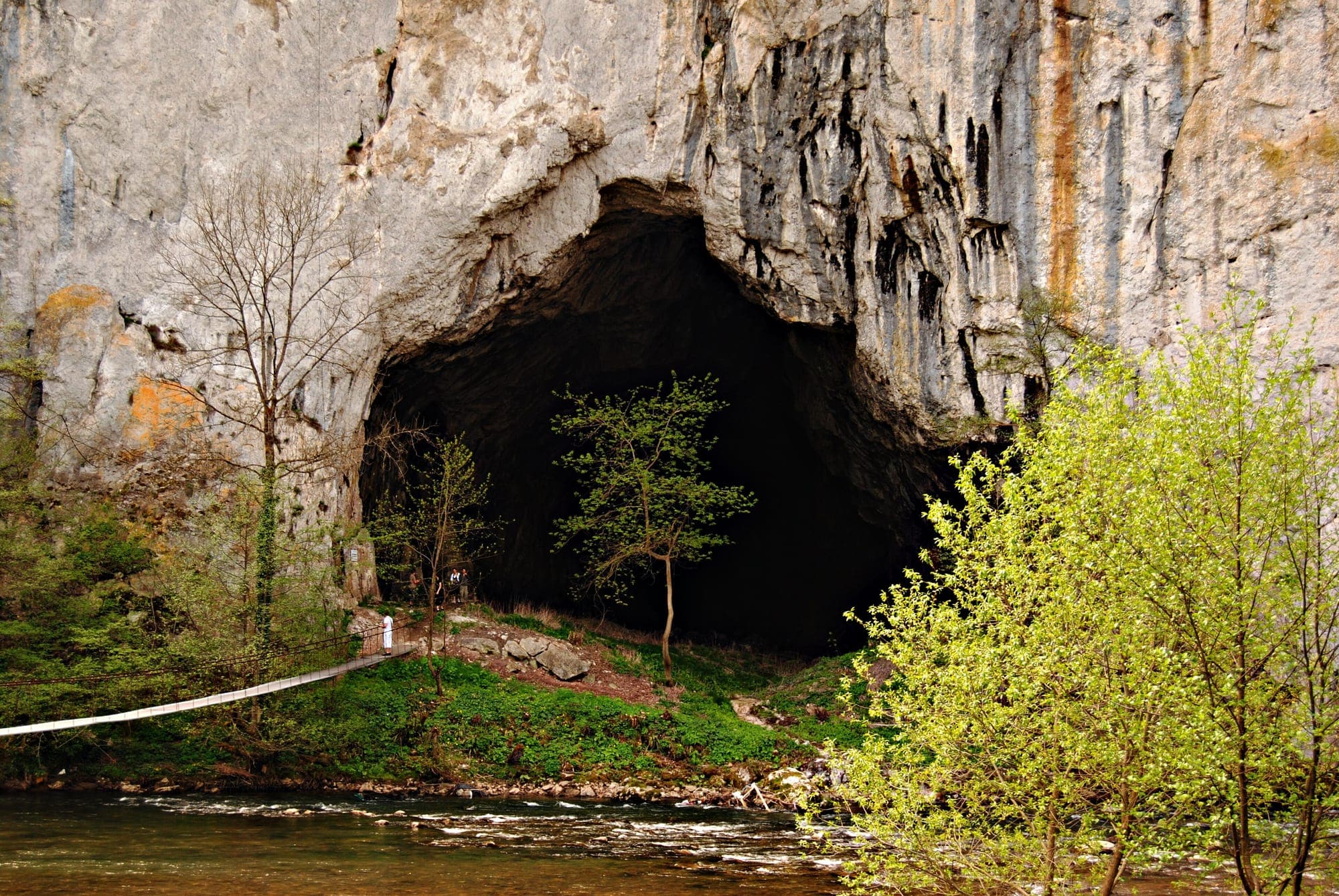
A cave with an entrance more than 30 m high facing the Crișul Repede, reached over a suspension bridge and inhabited by people as far back as the Neolithic.
A roughly 15 m waterfall on the eastern slopes of the Bucegi Mountains, an hour's easy forest walk from Bușteni; the most visited waterfall in the massif and a classic outing on the Prahova Valley.
A lit cave on the slopes of Postăvarul, between Râșnov and Poiana Brașov, with a great hall over 20 m high, visited with a guide and sometimes used for concerts.
A 70–80 m chain of waterfalls, with a 25 m main drop, plunging into a huge sinkhole in the Trascău Mountains and vanishing underground; seen from a wooden balcony a short walk from the road.
A two-tier waterfall of about 50 m in the Cerna Mountains, with Romania's longest free drop (~40 m), above Lake Prisaca; reached by a steep 1.5 km path from the Cerna valley road, 13 km from Băile Herculane.