About Banu Church
Banu Church, dedicated to the Sunday of All Saints (the first Sunday after Pentecost), stands on Banu Street in central Iași, close to the Union Museum and the National College. The name comes from the founder of the first church on the site, the boyar Savin Zmucilă, a "vel ban". His church, built of oak beams and dedicated to the Dormition of the Mother of God, was consecrated on 15 June 1705, and services were held in it in Romanian from the start. It was also called the "church of the beggars", because people who lived on public charity took shelter here.
The present masonry church was built at the start of the 19th century, with money given by Metropolitan Iacob Stamati and the parish community, to plans by an architect named Leopold. The iconostasis, carved in linden wood, is the work of the Moldavian craftsman Eustatie Altini. The church was repaired in 1882–1883, when the porch was rebuilt and the bell tower raised by 3 m, and between 2010 and 2013 it underwent a rehabilitation and consolidation funded by the European Union; the interior painting was reconsecrated in 2017. It is a listed historic monument (LMI code IS-II-m-B-03945).
What you can see
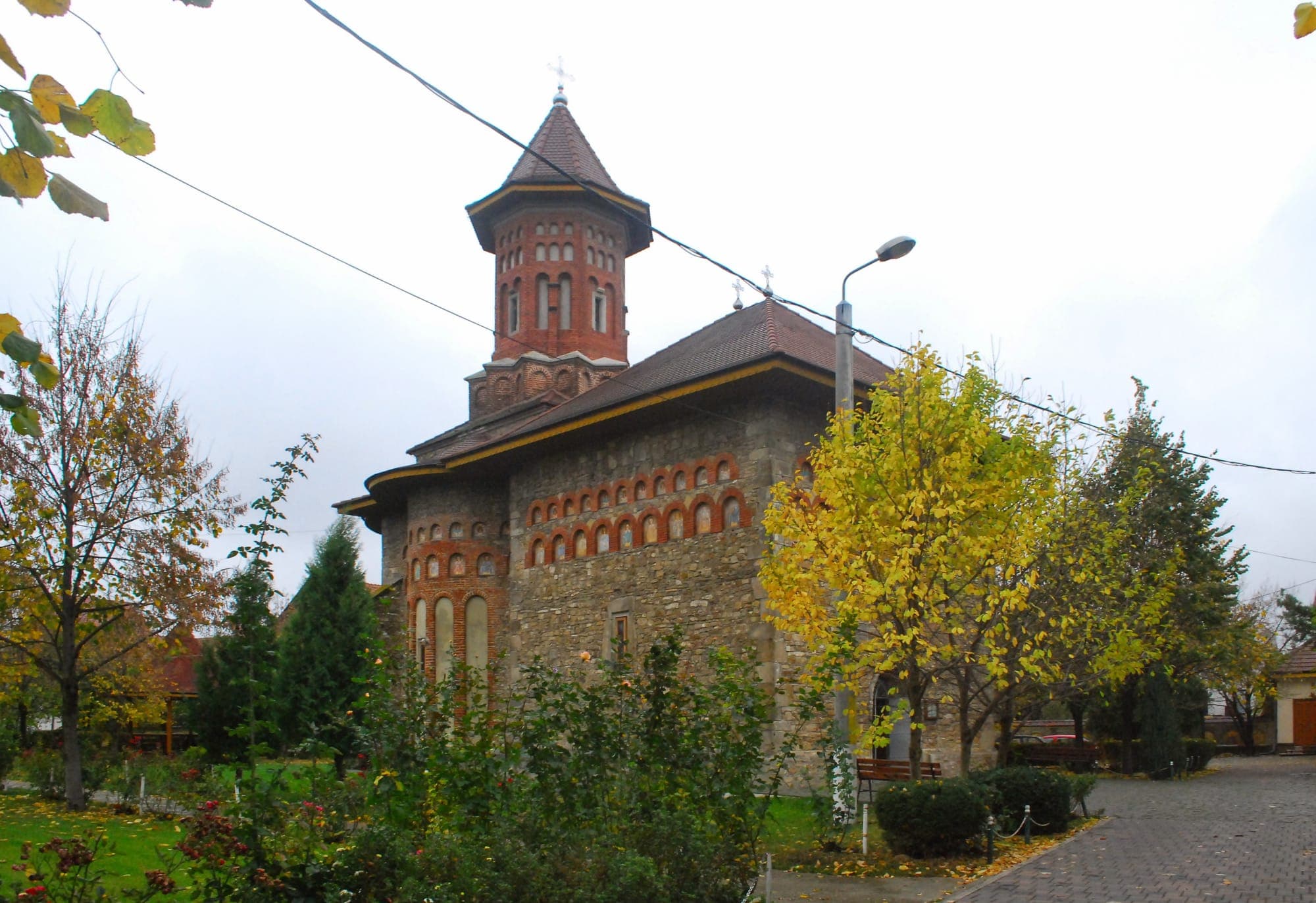
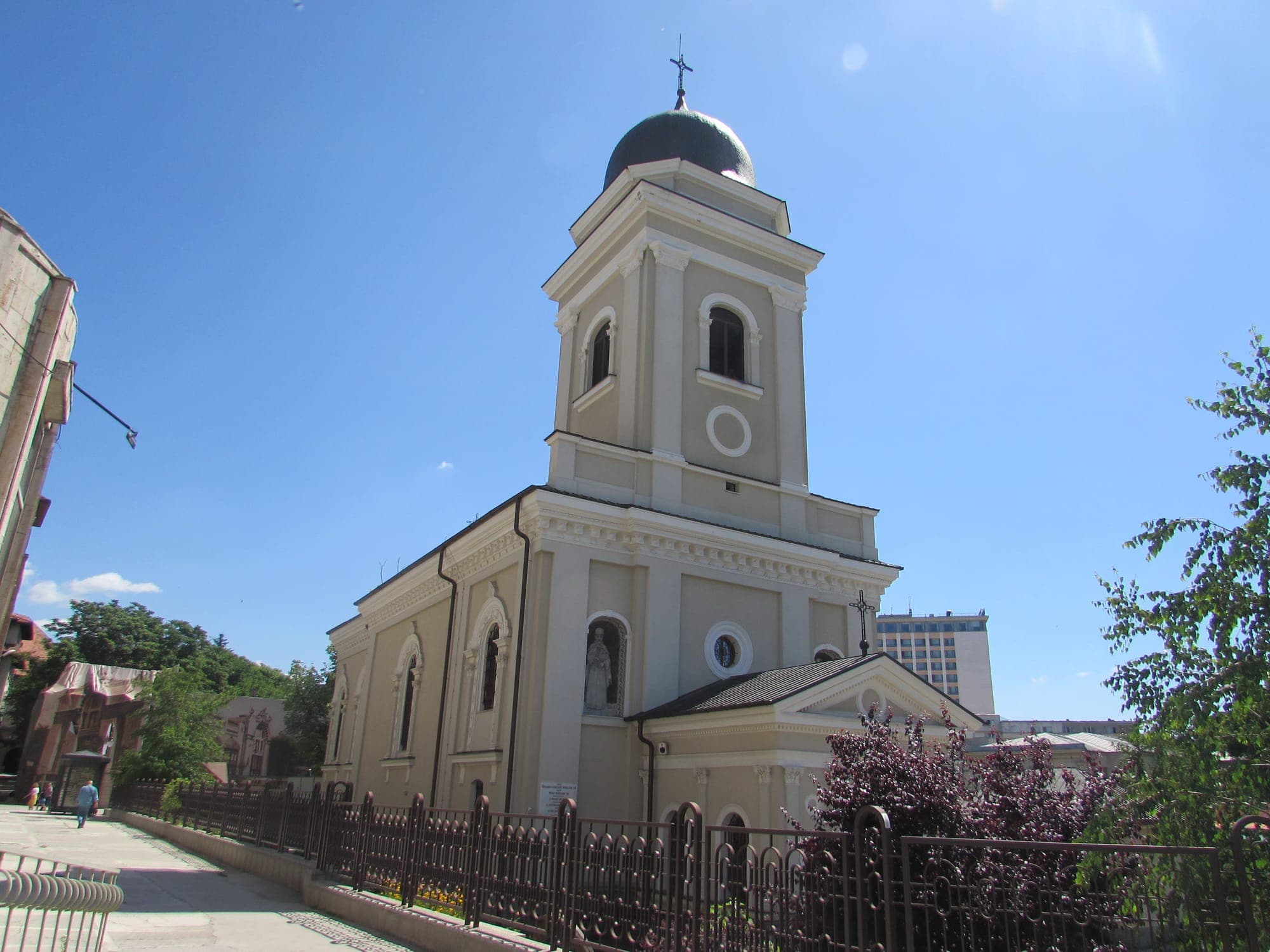
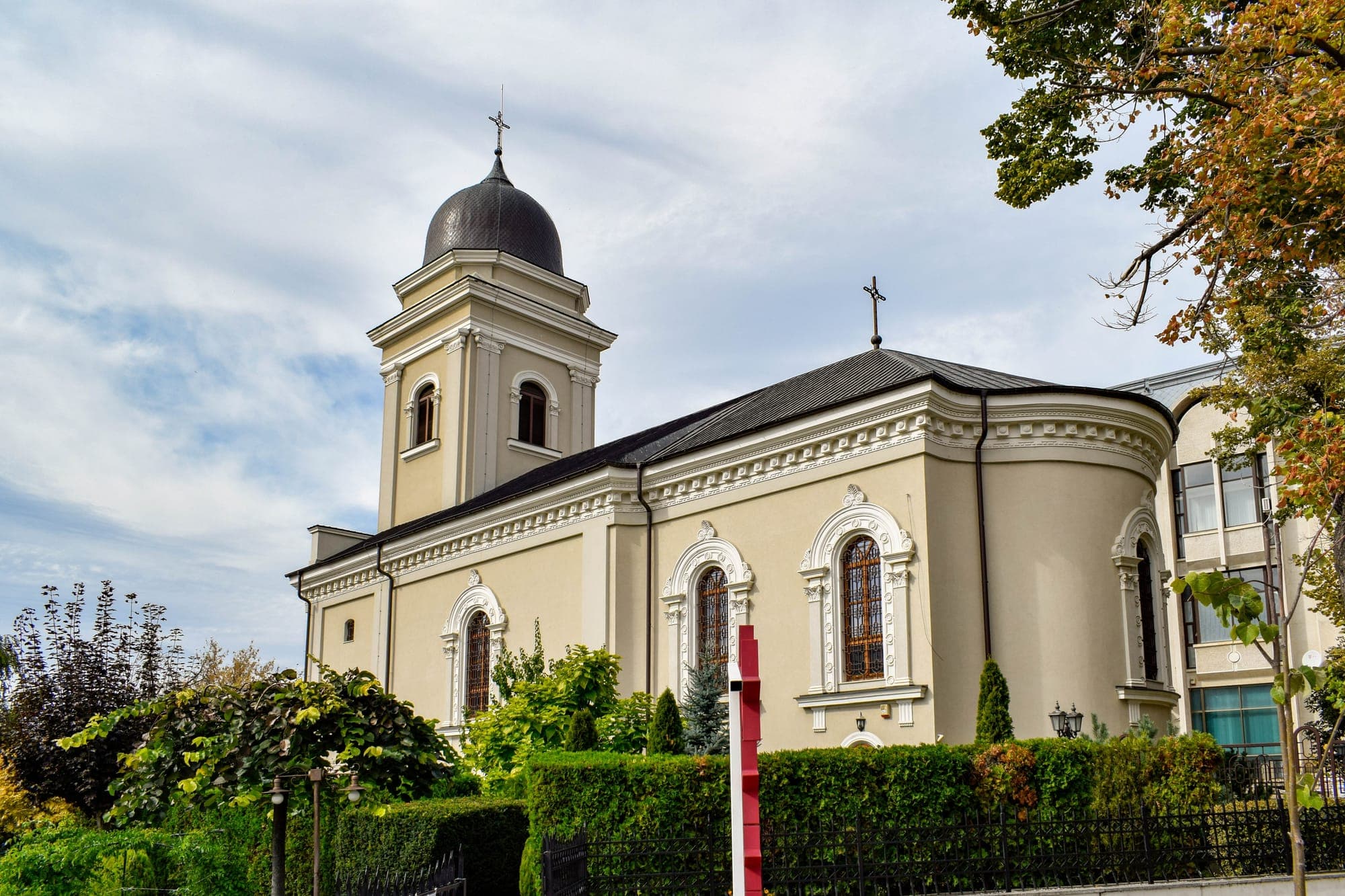
The cream-coloured façades are divided by pilasters and a richly moulded cornice, and the tall windows have white frames with stucco ornaments. The plan is trilobed, with a semicircular altar apse, and the bell tower with a domed spire rises above the porch, which stands on the site of the altar of the old wooden church. Inside, the iconostasis carved in linden wood is preserved, and the walls carry mural painting reconsecrated in 2017.
Good to know
The church is in active use, with services every week; visits are made between services, in decent dress. The façades can be seen from the street, through the iron fence.
- The cream façades, with tall windows in white stucco frames and a richly moulded cornice.
- The bell tower with a domed spire, rising above the porch.
- The semicircular altar apse, seen from the street.
- The iconostasis carved in linden wood, the work of Eustatie Altini.
Good to know before you go
- Getting there
By car: the church is on Banu Street, in central Iași, ~1 km from Iași railway station and ~1.5 km from the Palace of Culture; the simplest is to leave the car in a nearby car park and walk.
On foot: from Iași railway station it is ~1 km (~15 minutes), and from the National Theatre ~900 m (~12 minutes).
- Where to park
The church has no car park of its own for visitors. On the surrounding streets you park in the paid zones, where spaces fill up quickly.
- Rules
This is a working Orthodox church: modest dress (shoulders and knees covered, men bareheaded in the church), quiet, no food or drink. Do not use a flash and do not take photos during services; ask if you are unsure.
Frequently asked questions about Banu Church
How long does a visit to Banu Church take?
A visit to Banu Church takes about 20 min (façades, porch, interior).
Can you visit Banu Church with kids?
Yes, Banu Church is suitable for children (quiet place, no play area).
Where can I park at Banu Church?
There is paid parking at Banu Church (central area, paid zone). More under “Where to park”
How do I get to Banu Church?
Banu Church is located at 9 Banu Street, Iași, Iași County. More under “Getting there”
When is the best time to visit Banu Church?
The best season for Banu Church: All year round (visit between services).
Reviews
Other attractions nearby
The closest attractions to Banu Church, sorted by distance.