The permanent exhibition on Romanian literature, in an early 20th-century house in the Amzei area: manuscripts, books and writers' personal belongings, plus interactive installations, over four levels.
79 results
The permanent exhibition on Romanian literature, in an early 20th-century house in the Amzei area: manuscripts, books and writers' personal belongings, plus interactive installations, over four levels.

The seat of the Bucharest Court of Appeal on the bank of the Dâmbovița, built in 1890–1895 to plans by Albert Ballu and Ion Mincu: a stone façade with allegorical statues and a high French-style roof.

A 16th–17th-century monastery in Colentina, with a church rebuilt by Matei Basarab in 1647, a gatehouse bell tower and an arcaded princely house.

A small convent in the Old Town with a Brâncoveanu-style church from 1724, façades painted with saints in medallions, an arcaded courtyard and a lapidary of stones from vanished Bucharest churches.

A Neoclassical palace on Calea Victoriei, built around 1835 to plans by Michel Sanjouand, with a façade decorated with caryatids; since 2025 it has housed the luxury store TOFF Galleries.

The largest park in the Drumul Taberei neighbourhood, redeveloped in 2013–2015, with a boating lake, a cable-stayed footbridge with a red pylon and greenhouses of exotic plants.

An inn in the Old Town on Strada Lipscani, built in the early 19th century and restored in 2009–2014: today the seat of ARCUB, with a cobbled passage between Lipscani and Strada Gabroveni.

A neighbourhood public garden from 1873, covering 2.4 hectares, with gentle paths, an artificial stream, two fountains and playgrounds, a short walk from Piața Romană.

The former Casa Scânteii, the Socialist Realist building in northern Bucharest with a central tower and antenna, 104 m tall: between 1956 and 2007 it was the tallest in the city. It can be seen from outside, from Free Press Square.
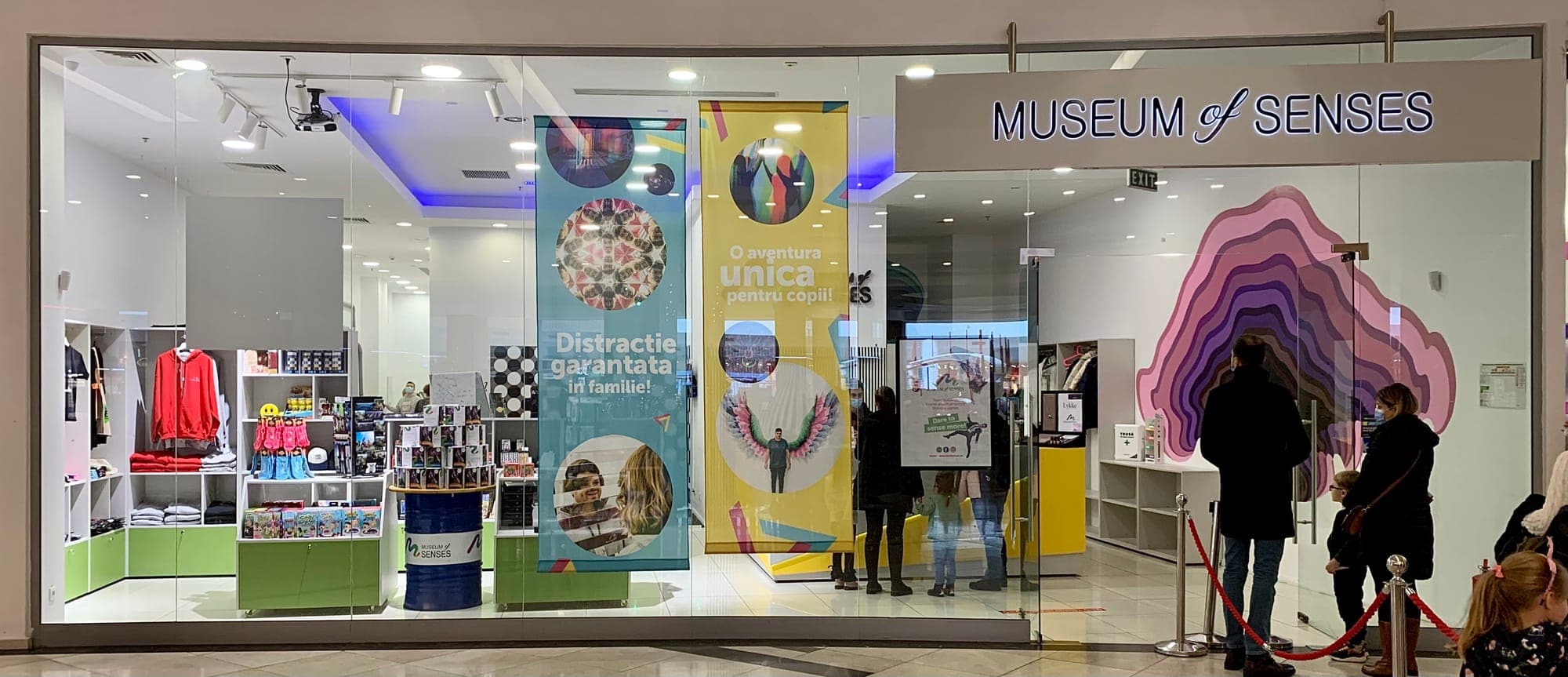
An interactive museum of optical illusions in AFI Cotroceni, with more than 30 exhibits that put perception to the test: the Ames Room, the infinity mirror room and the bed of nails.

The seat of the Romanian Government in Victory Square, built between 1937 and 1952 to plans by Duiliu Marcu, in the simplified neoclassical style of the 1930s.

A monastery in the centre of Bucharest, founded in 1713–1715 by Saint Anthim the Iberian, with a trefoil-plan church, carved stone window frames and a courtyard with a bell tower and abbots' houses.

A park of about 26 hectares in Sector 2, laid out in 1961 on a former clay pit, with a lake of lotus and pond turtles, next to the Globus Circus.

A Brâncoveanu-style church of exposed brick, built in 1720–1722 on Calea Victoriei near Revolution Square, with an open porch on stone columns, two towers and the original painting in the porch.
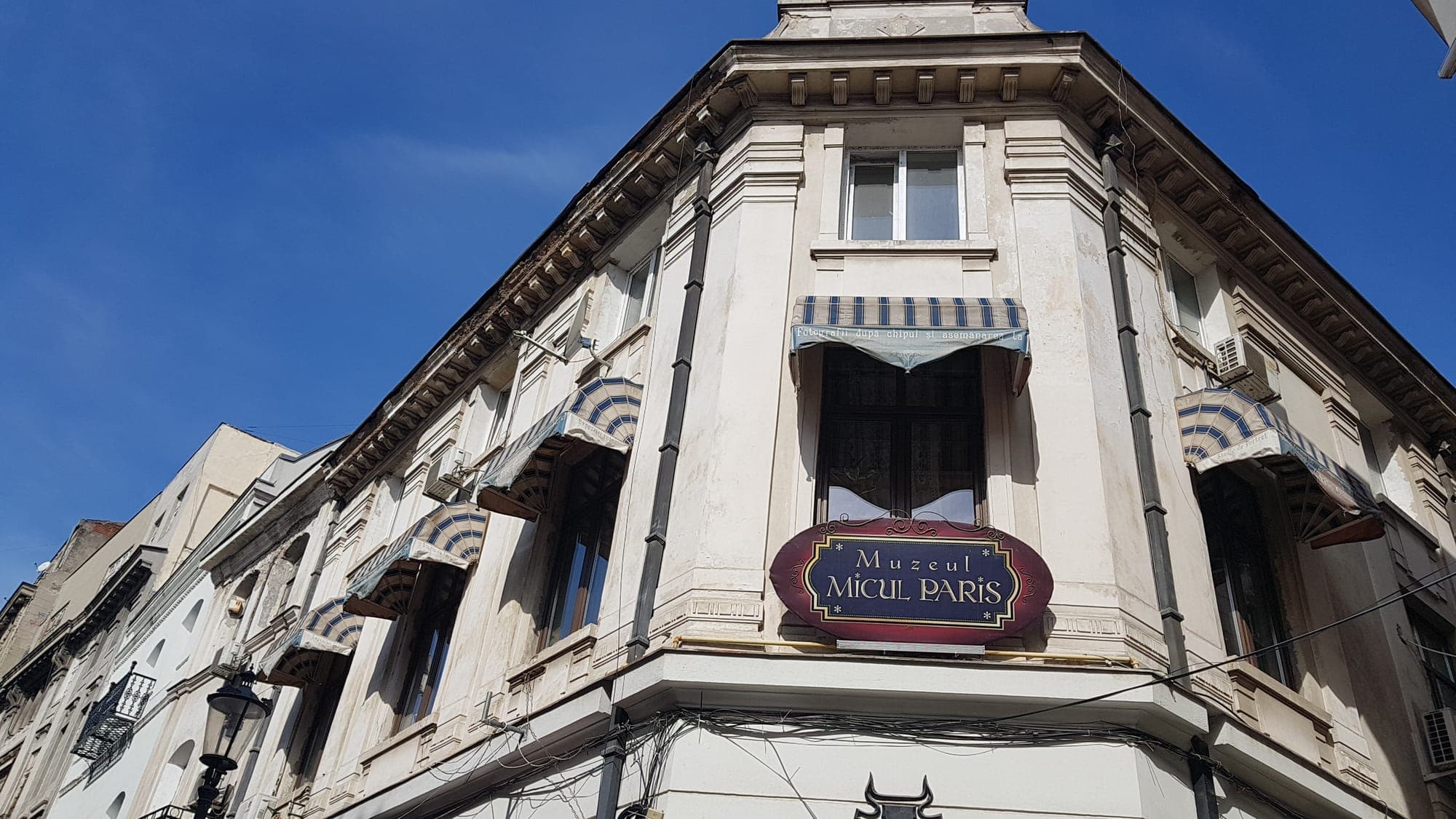
A private museum on Strada Lipscani, in a flat that recreates the home of a Bucharest family of old, with a French salon, an Oriental salon and more than 1,000 period objects.
Audio walk through central Bucharest

Audio tour: from royal to communist Bucharest
Audio tour of communist-era Bucharest
Audio walk along Calea Victoriei
Audio tour of Bucharest's Jewish heritage
Bucharest sightseeing tour + Village Museum

Food tour of Bucharest's markets and old neighbourhoods

Not in București itself, but in the surrounding area — sorted by distance from București.