An Orthodox church on Calea Victoriei, between Lipscani and Stavropoleos, rebuilt from 1850 on the site of a place of worship more than three centuries old, with paintings by Gheorghe Tattarescu and the relics of Saint Cyprian.
ChurchesMonuments and historic sites
An eclectic Orthodox church of 1898–1901 near Amzei Square, with three towers, façades of alternating brick and plaster, and the interior painting of the Italian artist Umberto Marchetti.
ChurchesMonuments and historic sites
Bucharest's largest cemetery, covering 28 hectares, with the first burials in 1859: a necropolis and open-air museum with a monumental gate, a domed chapel and listed funerary monuments.
Monuments and historic sites
A quiet 3.3-hectare park on the shore of Lake Floreasca in northern Bucharest, next to Herăstrău, with paved paths, benches and a playground.
Parks and gardens
The former Carol I University Foundation, built in 1891–1895 to plans by Paul Gottereau on Revolution Square: a Beaux-Arts façade with a pediment and domes, an Aula that survived the 1989 fire, and visits by guided tour only.
Monuments and historic sites
A beer hall founded in 1879, in a Gothic Revival building of 1899 on Strada Stavropoleos: a listed monument with a vaulted hall, wall paintings, stained glass and a carved oak staircase.
Monuments and historic sites
The largest synagogue in Bucharest, built in 1864–1866 in the Moorish style, with a façade of two-coloured brick and a polychrome interior with galleries on two levels; a working place of worship.
Monuments and historic sites
A stone church built in 1636 by Matei Basarab, hidden among the blocks beside Bulevardul Națiunile Unite, with a columned porch, two towers and an inscription of 1715 by Ștefan Cantacuzino.
ChurchesMonuments and historic sites
Bucharest's oldest public park, laid out from 1847 in the landscape style around a lake, with shady avenues, the Writers' Rotunda and romantic stone corners, right in the city centre.
Parks and gardens
The technical museum in Carol I Park, founded in 1909 by Dimitrie Leonida, keeps over 40,000 objects, from mills and steam engines to Aurel Perșu's aerodynamic car.
Museums and memorial houses
The aristocratic residence of 1892 on Calea Victoriei, with a mansard roof and eclectic decoration, houses the Museum of Ages, on home and family life in Bucharest over the last 300 years.
Museums and memorial housesCastles and palaces
The 42 m round tower built in 1890–1892 as a fire-watch lookout, today the National Firefighters' Museum, telling the story of firefighting in Romania.
Monuments and historic sitesMuseums and memorial houses
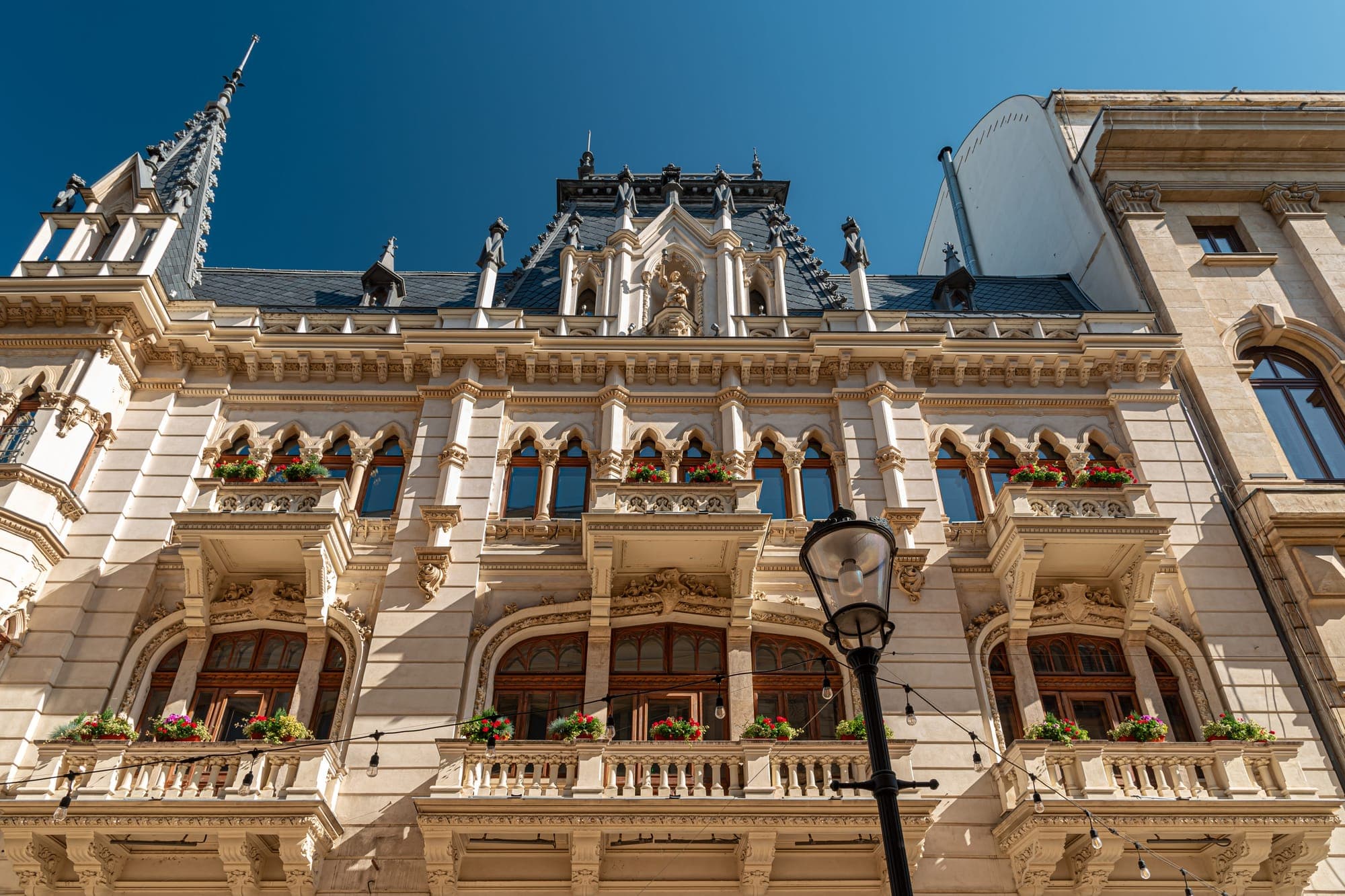
The Beaux-Arts palace on Calea Victoriei, built in 1901–1903 for Gheorghe Grigore Cantacuzino, is the seat of the George Enescu National Museum; the building is closed for restoration, but its façade can be seen from the street.
Museums and memorial housesCastles and palaces
A historic park laid out after 1832 on both sides of Kiseleff Road, with shady avenues, a small lake with a fountain, a wooden gazebo and busts of cultural figures.
Parks and gardens
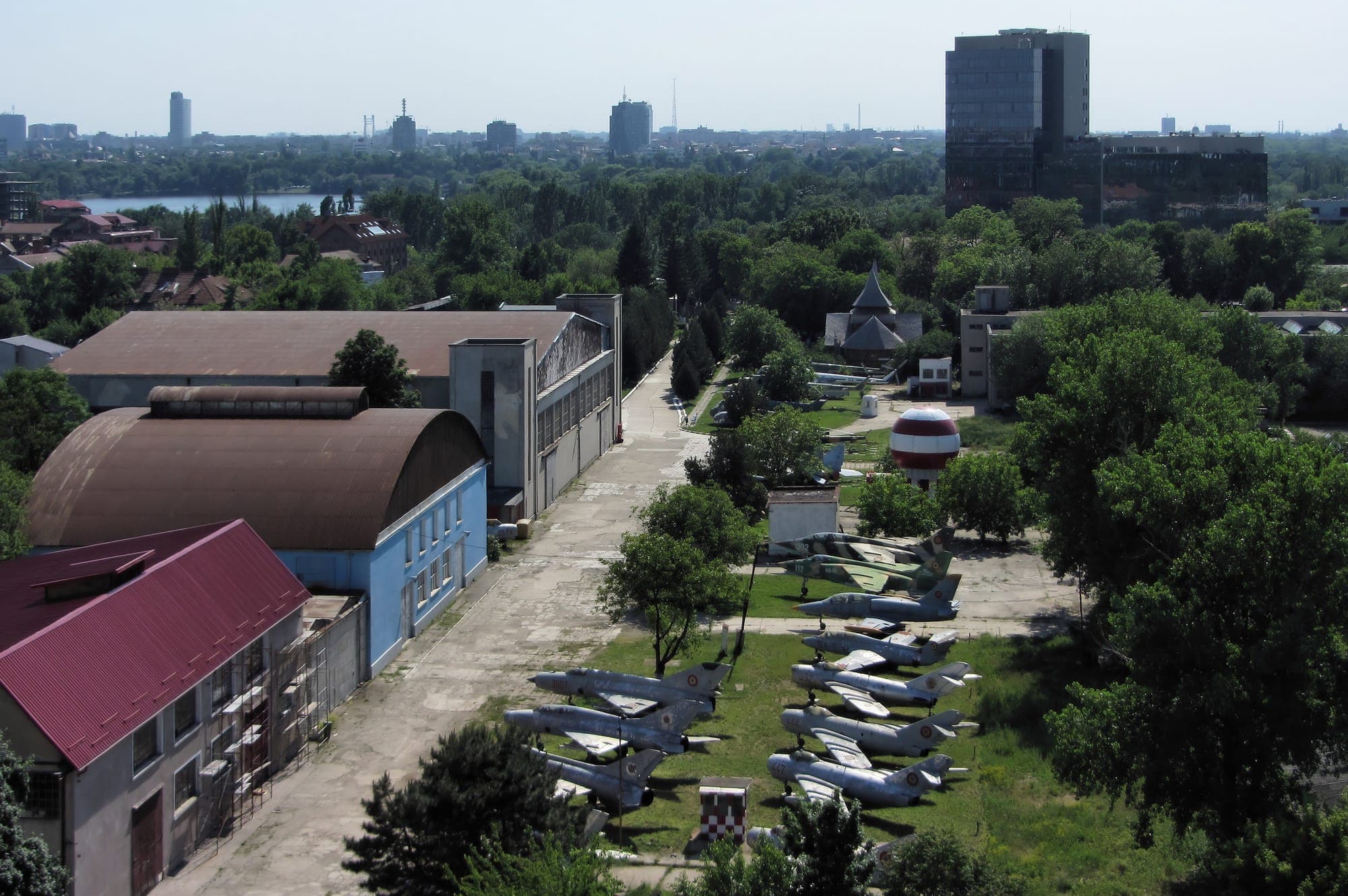
The museum of the history of flight in Romania, in the hangars of the former Pipera airfield: from replicas of Vuia's and Vlaicu's aircraft to MiGs, helicopters and radars displayed in the open air.
Museums and memorial houses